
Arrests, Violent Attacks Against Students Protesting the War on Gaza Causes Trauma
What parents can do to help their college students traumatized by arrests and police violence on campus. And more.
Thursday, May 2, 2024
By Courtney Wise and Diana Hembree

Hey there, MindSite News Readers,
“Just checking in… How is everybody doing?” When Elmo asked that question earlier this year, the internet nearly broke an already precarious X, formerly known as Twitter. 45,000 responses later, people are still reaching out. It’s indicative of a known nationwide problem – many of us are struggling with our mental health – and not connected to the help we need.
But this Mental Health Month, which kicked off yesterday, the Substance Abuse and Mental Health Services Administration (SAMHSA) wants to remind readers that help is available.
In today’s Daily, we also look at what parents and professors can do for U.S. students suffering trauma from being arrested in peaceful protests over Gaza around the country. The right to protest and express dissent is guaranteed under the Constitution, but many college administrators have called in police and even state troopers to break up peaceful protests and demonstrations. Some students have been tear-gassed, hit with rubber bullets and hospitalized, and in a demonstration over Gaza at UT Austin, Texas police threw a Fox TV news reporter covering the event to the ground and arrested him — a move protested by 40 journalism organizations.
And I’m squinting at a NYT article that says where I fall in the birth order doesn’t matter as much as my cousin told me. As a self-proclaimed “youngest-only-child with sibling experience,” I need more time to ponder before deciding what I think about that. Plus, new mental health apps from the state of California.
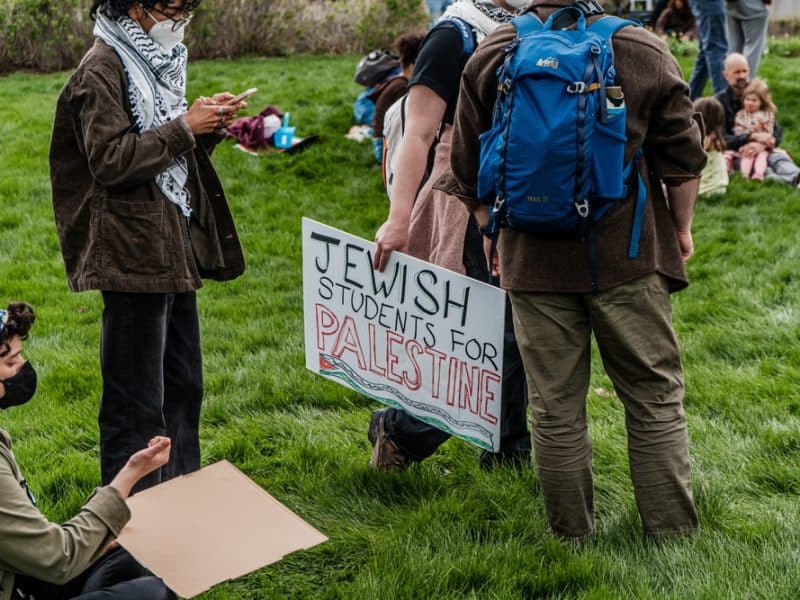
“The mother in me”: How parents can help their children traumatized by arrests, violent counter-attacks at campus protests over Gaza

These last few weeks, many families and professors of college students have been shocked and outraged to find that college administrators had called city police and state troopers to break up peaceful campus protesters demonstrating against the massive killings of civilians in Gaza, where more than 34,000 people have died, including 14,685 children, according to the United Nations High Commissioner’s office. And last night, violent attacks by masked counter-protesters against an encampment at UCLA stoked anxiety and fears of copycat attacks at other campuses.
Professor Noëlle McAfee, chair of the philosophy department at Emory University in Atlanta, described police attacking a protest encampment on campus. “I saw a bunch of police attack a young person and throw them on the ground, where they were pummeling them, just pummeling and pummeling. And the mother in me said, ‘Stop, stop!!’” McAfee said in an interview posted on YouTube.” Although she says she stayed four feet away from the police, she was arrested, handcuffed and detained after she refused to leave the scene, as was another Emory faculty member.
Emory President Gregory L. Fenves had called in both city police and state troopers shortly after the protest began. In scenes reminiscent of protests against the Vietnam War, police and troopers tear-gassed and fired pepper balls at students while handcuffing and arresting them, according to The Nation, “and repeatedly tased a Black medic after he had already been handcuffed and thrown to the ground.”
This kind of scene has been replayed on many U.S. campuses in the last few weeks. Since April 18, police have arrested more than 1,600 people in protests over Gaza at more than 30 colleges and universities across the United States, according to the Associated Press. Protests and encampments against the war have taken place from UCLA, UC Berkeley, and UC Santa Cruz to Columbia, Madison, Arizona State University, UNC, MIT, Tulane and others, while tens of millions of people in other countries have also staged protests against the war.
At Tulane University in New Orleans, student demonstrators said they were “traumatized” by their arrest and police violence at a peaceful protest. Police described the arrests as peaceful, but “several of us were pushed down violently. I was injured, shot by what seemed to be smoke bombs. I was hit in my leg,” said protester Kristin Hamilton. Student Blue Demarco added, “All of the cops informed us they turned off their body cams. They said so with glee and laughter. It was not something that wasn’t important to them, it didn’t matter to them, but it mattered to us.”
McAfee says that some people have claimed protestors are “a bunch of anti-Semites, and that [is] false.” She said that “what is happening [in Gaza] is horrific,” but her primary motivation for entering the quad “was standing up for freedom of speech for students and peaceful dissent. This is about higher education administrators clamping down on free expression and delegitimizing any form of dissent.”
In the wake of the police crackdowns over protests, former Brandeis president Frederick Lawrence says school must support freedom of speech on campus. The American Civil Liberties Union has also sent an open letter to universities and schools calling on them to protect free speech and academic freedom in the wake of these widespread arrests.
The ACLU called on campus administrators “to recognize that armed police on campus can endanger students and are a measure of last resort.” It also said campus officials should resist efforts by politicians to exploit campus tensions and urged them not to single out any students for their political viewpoints. For students – and parents worried about the safety and mental health of their children – facing arrest, possible jail time and expulsion – the ACLU offers a “Know Your Rights l Protestors Rights” that has helpful advice. (We’ll have more on what parents can do in upcoming newsletters.)
– Diana Hembree
The perceived impact of birth order on personality or behaviors may be (socially) inflated
We wrote about this item in a recent newsletter but it was interesting enough to me to take another look. If you’re seeking a greater understanding of yourself, experts hope you don’t assume it rests in your birth order. The studies that suggest it makes a difference haven’t been large enough, said social-personality psychologist Rodica Damian. She actually worked on one that included 370,000 high school students, but the personality differences researchers identified between siblings were minimal and statistically insignificant, she told the New York Times. Culture and family dynamics are greater influencers of sibling behaviors, Damian said.
On the other hand, licensed marriage and family therapist Sara Stanizai admits that research is mixed, but she still hosts a weekly virtual meetup where participants talk about how their birth order has affected their entire lives, from romantic relationships to career and more. Her own life was the inspiration. As the eldest daughter in an Afghan-American family, Stanizai said she felt “parentified” and “overly responsible” for her siblings, both because she was older and a girl. Stanizai admits that research on birth order is mixed, but asserts it still matters, especially if where a person falls in line affects the expectations hoisted upon them. Her group clients focus a lot on familial dynamics.
“I think people are just looking for meaning and self-understanding,” Stanizai said. “Horoscopes, birth order, attachment styles” are just a few examples. People are just looking for a set of code words and ways of describing their experiences.”
California rolls out a pair of mental health apps to support youth and family mental health
The state has launched two digital apps, BrightLife Kids and Soluna, that offer children and their guardians support at their fingertips in a moment of distress. Both apps provide a variety of resources and are funded through Gov. Gavin Newsom’s Master Plan for Kids’ Mental Health, making them free to download, The 74 reports.
BrightLife Kids helps children 13 and younger access mental health resources with the approval of their parents. They can explore the app as families or request one-on-one coaching. Soluna is for teens and young adults, ages 13 to 25. It’s something like a mental health mashup of Cosmo and Teen Vogue, aimed at all genders. It covers a myriad of topics on body image, mood disorders, discovering identity and more. Users engage with topics through multimedia, including articles, podcasts, videos and quizzes.
“It turns out that the needs for the younger kids are quite different than the needs for older kids and young adults,” said Amrita Sehgal, vice president of business operations at Brightline, which developed BrightLife Kids. “Especially for younger kids, there’s a big need to involve parents and caregivers and families into their care; versus for older kids, folks may want to interact more independently.”
In other news…
Communication issues are the #1 reason couples seek marriage therapy, the Washington Post reports. So, how can you resolve or avoid common communication pitfalls in your relationship?
1) Know what it is that you want out of a conversation with your spouse? Do you want help solving a problem or do you really desire a moment to vent and be understood?
2) Tell your partner what you want out of the conversation. We tend to guess (incorrectly) about what our partners want, especially if we’ve been with them for a long time.
3) Pay attention to communication with your partner and notice when you or they are becoming frustrated. Pause in those moments to reset. It could mean there’s a lack of clarity around the conversation’s goals and provide your communication an opportunity to get back on track.
Two years ago, Stephanie Foo’s memoir, What My Bones Know, hit bookstores. The book tells the story of her childhood, which, characterized by violence and other traumas, left her with complex PTSD. A 10-minute segment from the podcast This American Life lays out the basics of how she became her family’s “favorite.” Since then, Foo has been a public advocate for mental health and this May, Foo is featured on Apple Podcasts with some of her favorite episodes about the subject. See MindSite News’ review of Foo’s memoir for more.
If you or someone you know is in crisis or experiencing suicidal thoughts, call or text 988 to reach the 988 Suicide & Crisis Lifeline and connect in English or Spanish. If you’re a veteran press 1. If you’re deaf or hard of hearing dial 711, then 988. Services are free and available 24/7.
Recent MindSite News Stories
The ‘Invisible’: More Women Veterans Are Dying of Suicide and VA Still Lacks Resources, Advocates Say
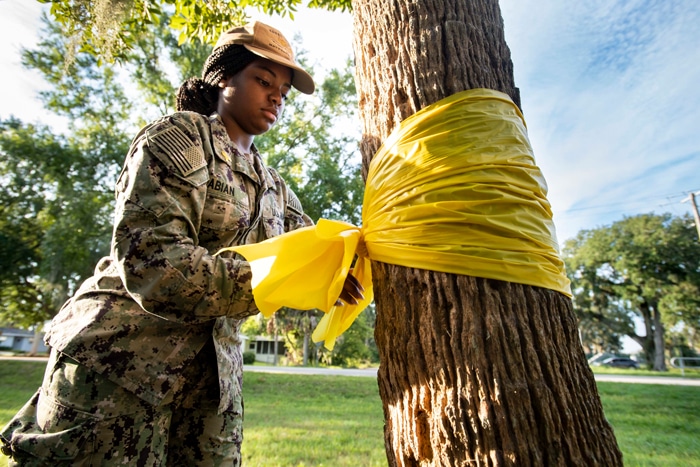
The rate of women veterans dying by suicide nearly doubled from 2001 to 2021, according to a report from the Dept. of Veterans Affairs released in December. Now a new report from Disabled American Veterans offers more evidence that they are not given the resources they need.
A West Side Story: How to Traumatize a Community

For residents of Police Beat 1122 on Chicago’s West Side – and for all who watched on TV or social media – the killing of Dexter Reed last month after he was stopped for an alleged seatbelt violation was deeply tramatizing.
Only 2% of Psychiatrists are Black, Leading Some to Pursue Creative Solutions to Fill the Void

There aren’t enough Black psychiatrists to meet growing demand. Some are finding innovative ways to provide more culturally competent care.
If you’re not subscribed to MindSite News Daily, click here to sign up.
Support our mission to report on the workings and failings of the
mental health system in America and create a sense of national urgency to transform it.
For more frequent updates, follow us on Facebook, Twitter and Instagram:

The name “MindSite News” is used with the express permission of Mindsight Institute, an educational organization offering online learning and in-person workshops in the field of mental health and wellbeing. MindSite News and Mindsight Institute are separate, unaffiliated entities that are aligned in making science accessible and promoting mental health globally.
Copyright © 2021 MindSite News, All rights reserved.
You are receiving this email because you signed up at our website. Thank you for reading MindSite News.
mindsitenews.org

Mental health can't wait.
America is in a mental health crisis — but too often, the media overlooks this urgent issue. MindSite News is different. We’re the only national newsroom dedicated exclusively to mental health journalism, exposing systemic failures and spotlighting lifesaving solutions. And as a nonprofit, we depend on reader support to stay independent and focused on the truth.

It takes less than one minute to make a difference. No amount is too small.
The name “MindSite News” is used with the express permission of Mindsight Institute, an educational organization offering online learning and in-person workshops in the field of mental health and wellbeing. MindSite News and Mindsight Institute are separate, unaffiliated entities that are aligned in making science accessible and promoting mental health globally.


Author

Related Articles
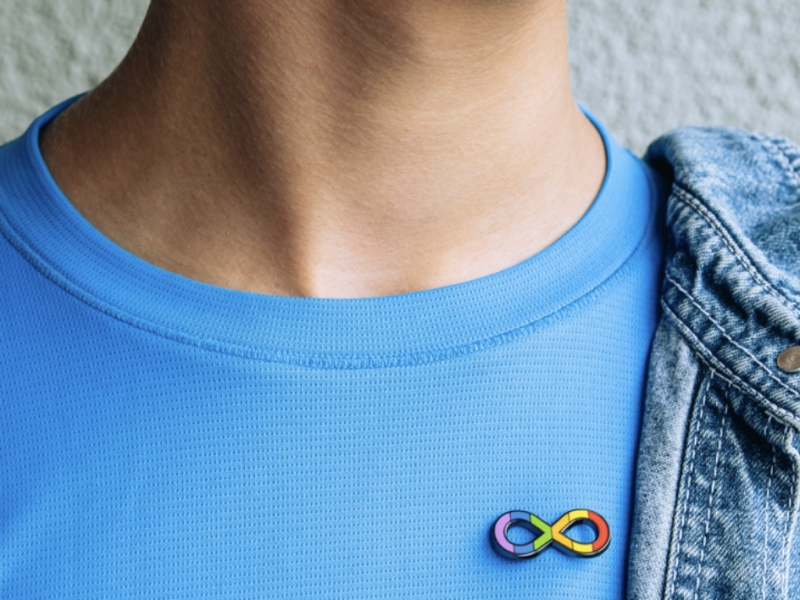
How to Help Your Neurodiverse Child Out of the Cocoon
Neurodiverse burnout can leave children stuck in a “cocoon.” Learn how scaffolded parenting helps them move back to the world.
Chatbots May Spark Delusions Even in People With No Mental Illness
Psychologists say AI chatbots have led people to experience delusions, warning that more of us are at risk than we might think.
Minneapolis Mourns Hero Nurse Killed By ICE, Condemns DHS Gaslighting
We look at another ICE killing of a US citizen in Minneapolis, and the federal government’s ensuing firehose of lies and propaganda.
