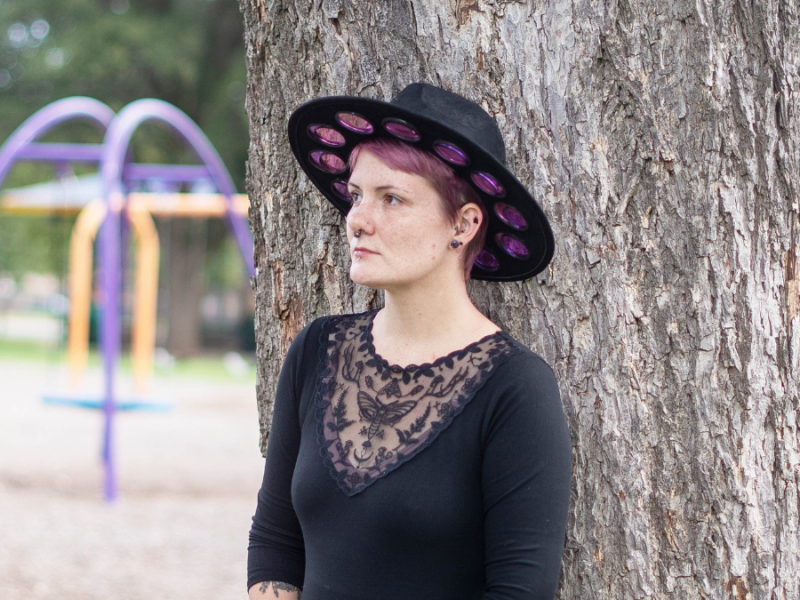

Michigan’s LGBTQ+ student clubs create affirming spaces inside public schools
Such alliances can provide LGBTQ+ students safe, welcoming places to connect
As Ukraine continues to grapple with the aftermath of war, the French game of pétanque has become an unexpected source of mental health relief for seniors and veterans.
A shortage of mental-health providers and other barriers to proving a disabling condition can make qualifying for benefits especially challenging. Federal funding cuts could worsen the picture.
Therapists describe greater stress, anxiety, anger and fear among Latino patients in Los Angeles since immigration raids intensified in June.
In the most-comprehensive look yet at whether people are using Gov. Gavin Newsom’s CARE Court, Calmatters found that far fewer Californians are enrolled in the mental health program than he projected.
A Chicago mental health provider is offering an alternative to police response by sending peer specialists to mental health crises.
About 40% of involuntary commitments over a decade showed a trail of violence, overdose and suicide in Pittsburgh.
Lack of community care has forced children into hospitals and residential facilities. Legal agreement charts a new direction.
The Jeffrey Epstein and Donald Trump story is more than just a political scandal. It is also a story about girls and young women who were viciously exploited and whose mental health is likely to suffer for years to come – perhaps for a lifetime.
At least 34 boys from the Dozier School were later sentenced to death. Did abuse make them more violent?
Operators of mental health support lines are laying off staff and ceasing or curtailing services due to California budget cuts and a 2024 ballot measure.
Rural communities could lose their mental health and substance use disorder funding amid Trump administration cuts to health services.
For the first time, research has linked Head Start with a reduced risk of gun violence among kids when they become young adults.
As Trump administration cuts off the 988 Lifeline's Option 3 for focused LGBTQ+ support, Hopelab and Born This Way Foundation release report showing great needs for LGBTQ+ youth in rural areas and their heavy use of digital tools to connect for support.
To meet a state requirement, San Francisco must examine and potentially redesign its system of behavioral health care over the next year, with input from the public. This could be an opportunity to improve services.
This 6-3 ruling may embolden more states to ban gender-affirming care at a time when the Trump administration has prioritized restricting it for transgender people.
A first-in-the-nation program to create financial support for California children who lost parents to COVID may be trimmed under budget proposals put forward by Gov. Gavin Newsom.
Andrew Holland died from a blood clot after he was strapped down for 46 hours at San Luis Obispo County Jail. His family drew attention to the case, prompting local reforms, federal intervention, a statewide probe and changes to state regulations.
The rate of suicidal thinking among students in Texas has been rising, but not the number of school counselors helping student cope.
Forty years ago, The Tenderloin Times, a community newspaper in San Francisco, marked the 10th anniversary of the end of the Vietnam War with a package of stories. The Tenderloin then, as now, was home to thousands of refugees from Southeast Asia, along with American military veterans who had fought in that war. This story looks at the experience of those veterans.
In 1985, The Tenderloin Times explored the lives of Southeast Asian refugees and U.S. veterans 10 years after the end of the Vietnam War. This story offered a look at the efforts by three very different Southeast Asian refugee communities to rebuild and adjust to their new lives in a new country.
A four-part investigative series supported by the Pulitzer Center.
For people in rural America, finding treatment for eating disorders is nearly impossible. Nearly 20% of patients live in states with no residential treatment in their state.
For years, the media image of an anorexic youth was an emaciated white female teen. The stereotype was so pervasive that eating disorder specialists have an acronym for it: SWAG, or skinny, white, affluent girl.