The power of touch
Why is touch so important to our emotional wellbeing? A startup that uses peer specialists to help seriously mentally ill people gets serious funding. And remembering a psychologist and activist who helped destigmatize homesexuality.


Monday, February 13, 2023
By Don Sapatkin
Good Monday morning! Just in time for Valentine’s Day: Why is touch so important? Plus, a startup that uses peer specialists to help seriously mentally ill people gets serious funding, even as behavioral health investment dropped by half.
Red tape in Washington state stymies young psychologists. And remembering Charles Silverstein, who came out in 1969 and helped declassify homosexuality as a mental illness four years later.
The power of social touch (in relationships) and therapy-speak (on dates): Happy Valentine’s Day!
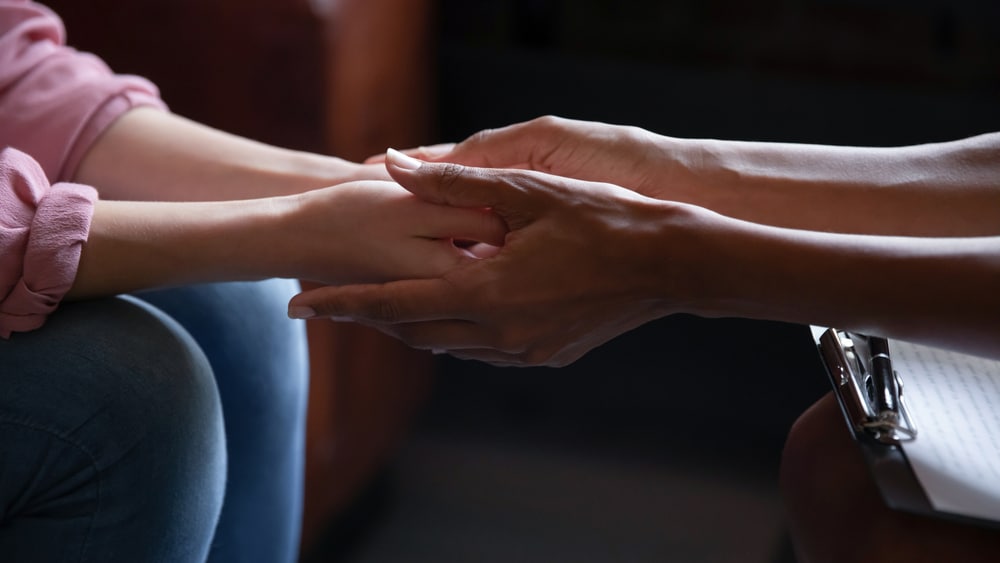
“Social touch,” according to one scientific definition, “is a powerful force in human development, shaping social reward, attachment, cognitive, communication, and emotional regulation from infancy and throughout life.” In plain English, it’s a sense of closeness, a soft caress that feels good, of course, but turns out to be a whole lot more – an essential element of mental wellbeing that can reduce pain and stress while helping us bond with one another. During the pandemic, you may have felt the whump of its absence (“skin hunger,” this Post video calls it). You may miss it still.
Richard Sima, a neuroscientist-turned-journalist, reviews how it works in his latest “Brain Matters” column for the Washington Post. Cells in our skin detect it, and sensors known as C-tactile fibers are optimized to detect gentle strokes. Social touch causes the release of the social-bonding hormone oxytocin, which is thought to reduce anxiety and pain. “With just a hug, a caress or a gentle squeeze of the hand,” Sima writes, we can “take advantage of the power of social touch.”
How did therapy-speak take over dating? Think: “love bombing,” “gaslighting” and “trauma bonding.” These newly common words came with the new openness about mental health. Then dating apps added accelerant, says a New York Times examination of the trend. Hinge, a popular dating app, still lets users post sunglass-clad selfies and proclaim their love for espresso martinis. But now they can also respond to prompts like “Therapy recently taught me___” and “A boundary of mine is___” and “My therapist would say I___.” For heterosexual men, the lingo of psychoanalysis has an added benefit: It can help dispute stereotypes about men avoiding their emotions.
“This is part of the competitive advantage,” said Paul Eastwick, a psychology professor at University of California, Davis. “Instead of being like, ‘I’m 5-11, and I can bench press some large amount,’ it’s like, ‘I have grappled with the challenges of my childhood, and I’ve thought deeply about my issues.’”
Helen Fisher, an anthropologist and chief science adviser for Match.com, leads an annual survey for the app, Singles in America. She was stunned by a finding last year. She asked participants to rank what they were looking for in a prospective partner, expecting the usual answers: sexual attractiveness, trustworthiness, humor. But this time, another characteristic made the Top 5 list: Respondents wanted matches with emotional maturity, the ability to grapple with feelings. “I’m a baby boomer,” Fischer said. “In the ’60s and ’70s, this is not what we were trying to sell.”
Google invests in startup firm that uses a peer-support model
Google Ventures, now renamed GV, has invested $28.1 million in firsthand, a New York-based startup that focuses on serious mental illness. The company is using a peer-support model to forge trust with patients with serious mental illness and help them engage with the health care system, Behavioral Health Business reported. Just 65% of adults with a serious mental illness got treatment in the past year, data show. Founded in 2021, firsthand has contracts with Tennessee, Ohio and Florida and is working in Nashville, Memphis, Knoxville, Tenn., and Jacksonville, Fla. The Google dollars bring investment in firsthand to $42.9 million, according to Crunchbase.
The startup’s peer-support specialists, called firsthand guides, have lived experience with serious mental illness and are trained to engage with patients at home – which could be a shelter, church or private residence. They also help them get benefits.
“Sometimes [guides] have to ask neighbors where [patients] are, and it can take several phone calls or visits,” Joe Parks, firsthand’s chief medical officer told Behavioral Health Business. When they meet the patient, they say, “Your insurance company asked us to help out people that seem to be having trouble and are struggling. We thought you might need help. What can I do for you?” Parks added: “I think the reason that our services are welcome is we start with where the person is. It’s all about where they are and what they need.”
Washington state keeps new therapists stuck in licensing limbo
At a time when growing numbers of kids and adults are seeking help for serious mental health conditions, often languishing on waiting lists, psychologists in Washington state who have completed their training can wait months – and sometimes years – to get licensed by the state. This mean they are unable to treat children with severe mental illness on their own and must work under the supervision of other licensed clinicians, according to a Seattle Times report.
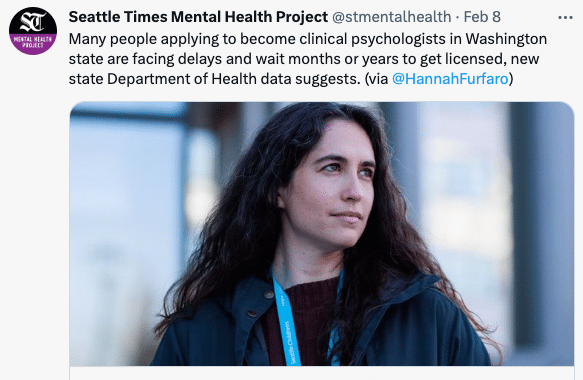
Becoming a clinical psychologist requires at least nine years of undergraduate and graduate education and supervised training. In Washington state, it now also requires months or years of pestering state officials to approve their credentials, the paper reported. A lack of staffing, inefficiencies in the review process and technical malfunctions are messing up the path for hundreds of psychologists who want to enter the workforce each year. They can work without a license, but they must be supervised, have limited caseloads, and their employers can’t bill for some of their services. Pay is lower, too.
Currently, Washington has 3,444 licensed psychologists with another 392 waiting for their credentials to be approved. If all were approved, the workforce would get an 11% boost. “We are certainly committed to quicker and more simplified processes to get people through as quickly as they can,” said Shawna Fox, director of the Department of Health’s Office of Health Professions.
The delays frustrate people like Miriam Rubeson, a “postdoctoral fellow” at Seattle Children’s Hospital who works with seriously troubled children, including some who have made multiple suicide attempts. “This is not just a problem for me,” she told the Times. “It’s a problem because we have this really dire mental health crisis in our youth right now.”
Remembering Charles Silverstein, who fought to declassify homosexuality as a mental illness
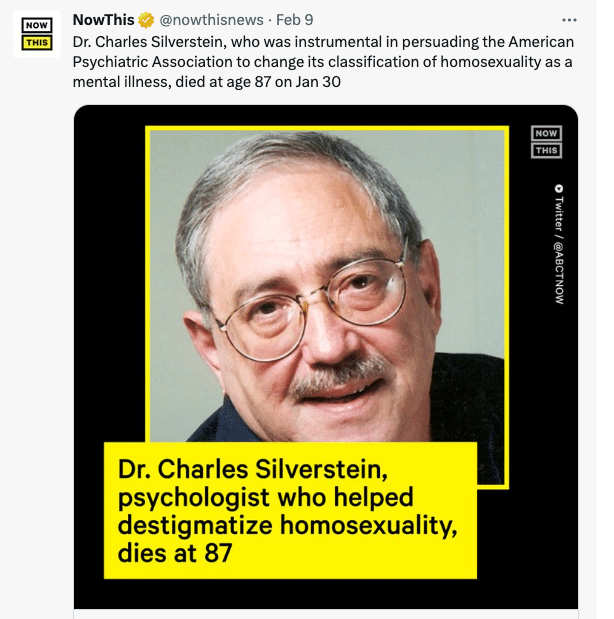
Homosexuality was considered a mental disorder and “sexual deviation” by the American Psychiatric Association when psychologist Charles Silverstein, in 1973, helped challenge the scientific basis of that classification. Ten months later, the APA voted to remove homosexuality from its Diagnostic and Statistical Manual of Mental Disorders (DSM).
It was one of the most significant victories of the gay rights movement and a huge milestone in the quest to destigmatize homosexuality, according to an NPR obituary.
Silverstein died Jan. 30 of lung cancer at his New York City home. He was 87. The Association for Behavioral and Cognitive Therapies described him on Twitter as “a hero, an activist, a leader, and a friend” whose “contributions to psychology and the rights of LGBTQ+ individuals have been felt around the world.”
Silverstein came of age at a time when expressions of homosexuality were stigmatized or illegal, and when gay people were treated as morally deviant and mentally ill. He felt he had no choice but to conceal his sexuality during his early professional years but came out as the gay rights movement gained momentum in the wake of the Stonewall riots in New York in 1969. “Before I came out, I was not very brave,” he told the Rutgers Oral History Archives in 2019. “When I came out, I came out all the way, not just sexually but politically.”
He also played a key role in changing the field’s view of conversion therapy. As a gay man who grew up wanting to be “cured,” Silverstein dedicated his life’s work to helping LGBTQ people live without shame. In 1977, he co-authored The Joy of Gay Sex, a book that sparked outrage with graphic images and frank language. It sought to help men who have sex with men navigate and enjoy sex and eventually became a significant piece of queer literature. He released a follow-up in 1992, The New Joy of Gay Sex, to include safe sex practices in the wake of the HIV/AIDS pandemic.
In other news…
Quote of the week: “We now lose more Americans to ‘deaths of despair’ – drugs, alcohol and suicide – every 10 days than the total of all the service members killed in two decades of war in Afghanistan and Iraq.”
Nicholas Kristof wrote those words last week in a New York Times column about President Biden’s State of the Union speech. The column drove home the importance of the administration’s efforts to tackle the mental health and opioids crises and called the speech the best of Biden’s presidency. See MindSite News coverage of the speech here.
Suicide death rates among ethnic and racial minorities continued rising in 2021, U.S. News & World Report reported. From 2018 to 2021, according to the federal data, the age-adjusted suicide rate increased 26% among American Indians and Alaska Natives, 19.2% among Blacks, 6.8% among Hispanics and 1.5% among Asians. Only among whites did the suicide rate decrease, a data table showed, though they continue to have one of the highest suicide rates. The biggest rise was the 36.6% spike among Black youth and young adults.
More concerns about opioid tapering: Government guidelines released in 2016 urged doctors to get patients off opioids, and many did so quickly, forcing some to buy street drugs to avoid withdrawal sickness. Last fall’s updated guidelines emphasize flexibility in tapering patients off opioids but even doing so gradually can lead to “unintended negative consequences,” according to a new analysis in JAMA Network Open. It found that tapering boosted emergency room visits and decreased primary care visits among patients who had been stable on long-term opioids.
The price of buprenorphine drops, but insurance matters: Policymakers are finally paying attention to buprenorphine. Congress recently made it easier for doctors to prescribe the drug, a key treatment for opioid addiction, and President Biden wants to make it easier for doctors to prescribe via telehealth after the Covid-19 public health emergency ends. It’s also getting cheaper. Out-of-pocket costs for the medication plunged 60% in five years, a JAMA Network Open study found, from an average $4.79 a day in 2015 to $1.91 in 2020. But the cost varies depending on insurance: Medicaid is 10 cents a day, Medicare is 46 cents, private insurance $1.82, and self-pay is $8.44. The self-pay cost, for those without insurance, adds up to more than $253 a month — and $1,544 for the recommended six months.
If you or someone you know is in crisis or experiencing suicidal thoughts, call or text 988 to reach the 988 Suicide & Crisis Lifeline and connect in English or Spanish. If you’re a veteran press 1. If you’re deaf or hard of hearing dial 711, then 988. Services are free and available 24/7.
Recent MindSite News Stories
What is going on with my perfect child?
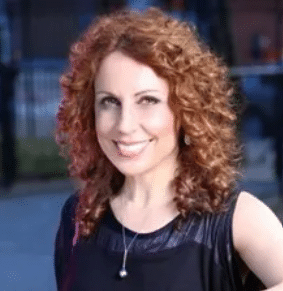
Dr. Barbara Greenberg advises parents not to burden their son by calling him a perfect child and give him more room to grow and make mistakes.
Biden Puts Mental Health at Center of State of the Union Speech
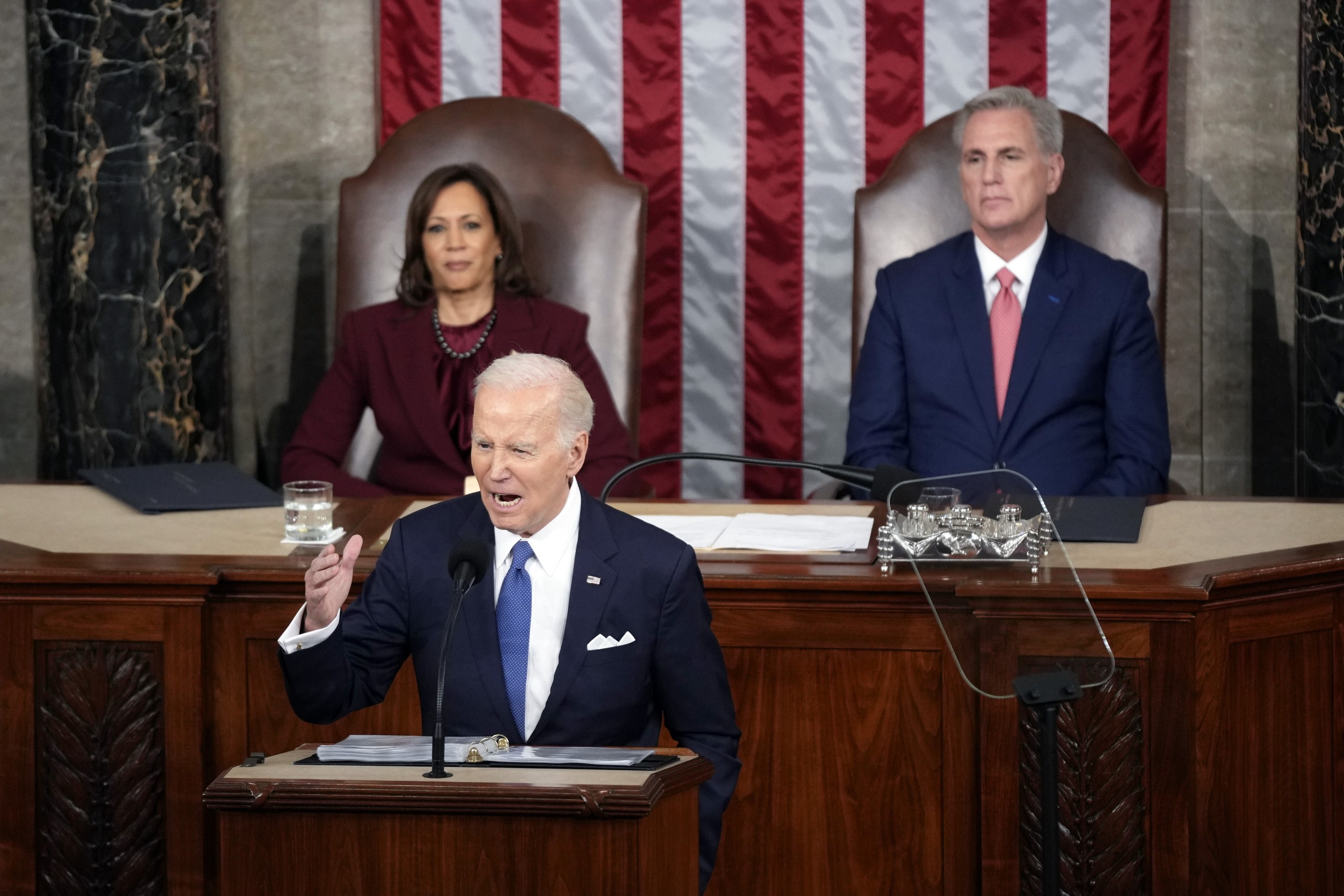
For the second year in a row, mental health played a leading role in a State of the Union message delivered by President Joe Biden.
Immigrants in New York Cope with Grief after Deadly Border Crossings

In the 2022 fiscal year, more than 800 people died attempting to cross the southern border, making it the deadliest year on record for border crossings. Surviving family members now living in the U.S., must cope with the grief and loss.
If you’re not subscribed to MindSite News Daily, click here to sign up.
Support our mission to report on the workings and failings of the
mental health system in America and create a sense of national urgency to transform it.
For more frequent updates, follow us on Facebook, Twitter and Instagram:

The name “MindSite News” is used with the express permission of Mindsight Institute, an educational organization offering online learning and in-person workshops in the field of mental health and wellbeing. MindSite News and Mindsight Institute are separate, unaffiliated entities that are aligned in making science accessible and promoting mental health globally.
Copyright © 2021 MindSite News, All rights reserved.
You are receiving this email because you signed up at our website. Thank you for reading MindSite News.
mindsitenews.org

The name “MindSite News” is used with the express permission of Mindsight Institute, an educational organization offering online learning and in-person workshops in the field of mental health and wellbeing. MindSite News and Mindsight Institute are separate, unaffiliated entities that are aligned in making science accessible and promoting mental health globally.


Author

Related Articles

Rumors of Kids Quitting College En Masse Are Exaggerated
This week: what the data says about Gen Z students quitting college, and why postpartum mental illness is more than depression.

Why Is Georgia Blocking Recovery Homes for Substance Abuse?
Georgia towns are using zoning loopholes to shut recovery homes down, even as addiction and mental illness surge statewide.

Why Are Mothers Punished for Parenting?
Those of us who roamed freely as kids can be arrested for letting our kids do the same.