
The worksite therapist will see you now (discreetly)
More companies are offering employees a new benefit: onsite therapy. A Louisville program is making mental health care more accessible to the hearing-impaired.


Wednesday February 21, 2024
By Courtney Wise

Greetings, MindSite News readers. Ever wanted to connect with the 12th dimension? Transport thyself to the Conscious Mind Expo, described by the LA Times as the city’s “wackiest spiritual convention.” (Or at least scroll to the end of this newsletter.) … In more terrestrial news, more companies are offering employees a new benefit: onsite therapy. A Louisville program is making mental health care more accessible to the hearing-impaired. And an agonizing choice for LGBTQ+ people: to stay or leave the church.
The latest employee perk: onsite therapy
What if you could get in-person therapy on your lunch break – without leaving the office? As high costs and a shortage of providers make accessing therapy increasingly tough, corporations like Comcast, Delta Airlines, and Shaw Industries Group have started offering onsite therapy as an employee benefit.
“Our employees, just like everybody else in the country, are struggling to get access to providers, so we are making it as easy as possible,” Dorothea Scattaglia, Comcast’s senior director of emotional well-being, told the BBC. “There’s still a little bit of a stigma surrounding mental health, but that breaks down the barriers – just having somebody they’re familiar with that is the entry point to other services and programs.”
Shaw Industries has offered onsite therapy since January 2020 – part of an employee retention strategy. Delta added therapists to its fleet in 2019 and now boasts 20 across 15 sites in the US, with more in Tokyo, London, Paris, Amsterdam and São Paulo. Some are stationed at airports, giving flight attendants who just managed belligerent passengers the chance to walk from a plane to a seat in the therapist’s chair. The airline has social workers at two flight hubs to support employees dealing with domestic abuse, financial difficulties, and other life struggles, and makes clinicians also available at odd hours, so employees can meet before or after work. It’s not just one-on-one therapy either: Delta’s therapists spend time walking around, checking on people and going to team meetings to make themselves visible to staff members, said Alyson Smith, Delta’s managing director of health and wellness.
On-site therapists stationedin workplaces are generally employed by third parties and are bound by the same privacy standards as therapists in traditional settings. Brad Smallwood, who spent three years as an onsite therapist at the tech company Square, said he wouldn’t acknowledge clients at the coffee machine or lunch tables unless they did first. Some providers also prioritize diversity in placement efforts. “We pay attention to the demographics of the company to make sure that people have support from providers who may be representative of them,” said Althea Varra, VP of clinical care for Lyra, a global provider of workplace therapists.
A Louisville mental health program reaches out to the hearing-impaired community
For people living with hearing loss, getting mental health services can be important – and challenging. A 2019 study suggests that mental illness affects the deaf community twice as much as the general population. In Kentucky, Bridgehaven Mental Health Services is working to reduce the barriers with a new program to serve the hearing-impaired.
A significant chunk of that community probably needs services, said Brad Leedy, chief operating officer at Bridgehaven, told the Louisville Courier Journal. “[They] may not be seeking the service because they have encountered other barriers,” he said. “It’s hard to continue to put yourself out there if you don’t get the services that you need.”
To attract and better serve people with hearing impairments, Bridgehaven is using peer support specialists – people who have personal experience with hearing loss and mental health challenges. “We think it’s really important to have peers on our staff because our peers are helping us make sure that our programs are effective,” said Leedy. “They know what’s been effective because of their own life experience.”
Dominique Harding is one of Bridgehaven’s peer support specialists. He offers support by co-leading groups, and working with people one-on-one. To date, the organization has received just five referrals, but is prepared to immediately support as many as 50 people, officials said. “It won’t happen overnight but everyone with deaf or hard of hearing will see [Bridgehaven] as a beacon of hope,” said Harding. “This is the only mental institution that I know of that is doing this type of work, and they really really do care about the community. I’m glad to be a part of this team.”
How to make amends – and be real – according to experts
A proper and genuine apology can fix a lot. At the least, it can lay the foundation for healing. So why are so many of us bad at doing it? We’re avoiding the vulnerability required, apology researcher Lisa Leopold told the New York Times. “We have to admit our own wrongdoing, our own failings and that requires tremendous humility,” she said. But the temporary discomfort yields a worthwhile outcome. The Times cites research showing how tremendously apologies influence forgiveness and simultaneously benefit the receiver and giver.
So what’s the right way to apologize? Leopold presents six parts of a proper apology:
1. Express regret. (That’s the part when you simply say, “I’m sorry.”)
2. Explain – but keep it brief. Be specific about what you’re apologizing for, but leave out attempts to defend or justify your actions. That can weaken the apology.
3) Acknowledge the harm you caused – and leave it at that. It can be tempting to offer excuses, but don’t.
4) Say that you will do your best to not commit the harm again – and mean it. It’s an opportunity to hold yourself accountable.
5) If there’s room for repair, offer it.
6) Ask for forgiveness – but don’t demand or expect it. Your apology shouldn’t be to “get yourself off the hook,” said Karina Schumann, head of the Conflict Resolution Lab at the University of Pittsburgh, but rather to confirm how much you care about the other person.
In other news…
A spiritual convention like no other: I think of myself as fairly far out, but somehow, I’ve lived the past 22 years completely unaware that the Conscious Life Expo exists – the perfect place, apparently, to hang with people who commune with aliens, along with “a lot of UFO stuff and a lot of healing,” according to Robert Quicksilver, 75, who co-founded the expo in 2003.
But even if talking with spirits isn’t your thing, there’s something for you at the expo, UC Riverside religion professor Amanda Lucia told the LA Times, including real mental stress relievers like tai chi and yoga. “People who believe they can create their own destiny, people who believe they can contact divine presences — that’s very common across religious traditions,” she said. “California and Los Angeles are the epicenters of it, but it’s a common belief among the general populace.”
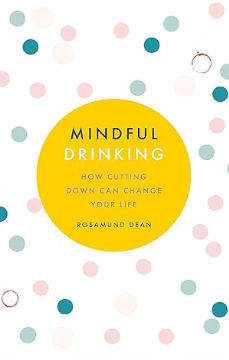
How to be a mindful drinker: Is there a middle ground between sobriety and drunkenness? Is thoughtful moderation possible? In her book, Mindful Drinking: How Cutting Down Can Change Your Life, Rosamund Dean argues the affirmative. In Slate’s How To podcast, she shares with readers how she found a happy middle ground through mindfulness — and suggests that you can, too.
Almost two-thirds of LGBTQ+ adults who were raised Christian have left the faith, according to a new study by the Williams Institute at UCLA School of Law and Utah State University. “The data shows a religious exodus,” Tyler Lefevor, lead researcher of the study, told The 19th. “Religions do a shit job of affirming queer folks.” LGBTQ+ Americans of all races report stigma and stress from their experiences in the church – and that’s certainly true for Black people. But Blacks are also more likely than other LGBTQ+ folks to stay in the church, the study finds.
If you or someone you know is in crisis or experiencing suicidal thoughts, call or text 988 to reach the 988 Suicide & Crisis Lifeline and connect in English or Spanish. If you’re a veteran press 1. If you’re deaf or hard of hearing dial 711, then 988. Services are free and available 24/7.
Recent MindSite News Stories
A San Francisco Program Helps Older People Manage Their Hoarding – and Stay Housed

Every year, 20 or more elderly San Francisco renters are threatened with eviction because of their hoarding disorder. A unique peer-support program helps them make changes – and keep their apartments.
The Night Parade: A genre-bending memoir that helps reshape the cultural narrative on bipolar illness and grief

Jami Nakamura Lin has written a rich, exquisitely illustrated memoir that expands the cultural narrative on mental illness and grief.
If you’re not subscribed to MindSite News Daily, click here to sign up.
Support our mission to report on the workings and failings of the
mental health system in America and create a sense of national urgency to transform it.
For more frequent updates, follow us on Facebook, Twitter and Instagram:

The name “MindSite News” is used with the express permission of Mindsight Institute, an educational organization offering online learning and in-person workshops in the field of mental health and wellbeing. MindSite News and Mindsight Institute are separate, unaffiliated entities that are aligned in making science accessible and promoting mental health globally.
Copyright © 2021 MindSite News, All rights reserved.
You are receiving this email because you signed up at our website. Thank you for reading MindSite News.
mindsitenews.org

The name “MindSite News” is used with the express permission of Mindsight Institute, an educational organization offering online learning and in-person workshops in the field of mental health and wellbeing. MindSite News and Mindsight Institute are separate, unaffiliated entities that are aligned in making science accessible and promoting mental health globally.


Author

Related Articles

He Almost Killed His Father. Now He Helps Others At Risk.
In today’s newsletter, we explore how one man healed after a dangerous psychotic break that nearly led him to murder.
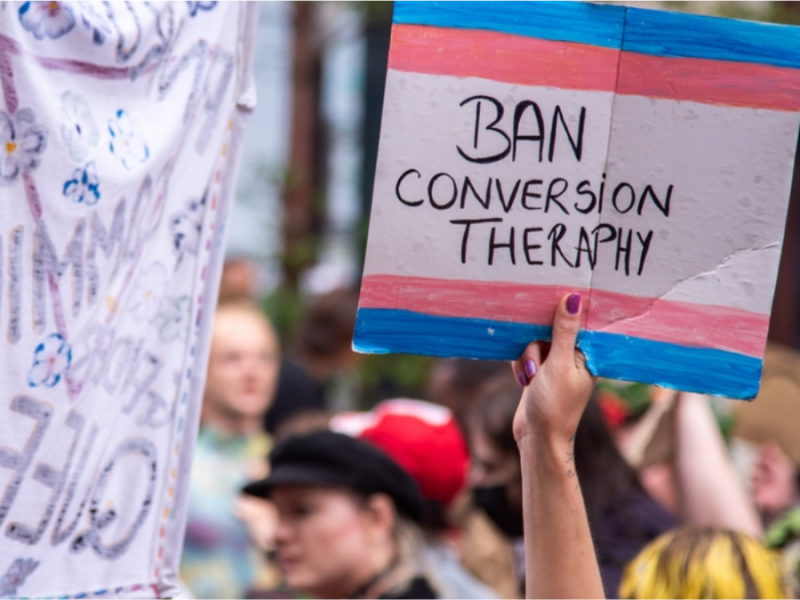
Fallout Over Supreme Court Ruling on Conversion Therapy
Despite the Supreme Court ruling, conversion therapists can still be sued for a practice the United Nations calls “torture.”

On No Kings Day, Millions Rallied to Denounce Trump and “Epstein War”
Anti-Trump protests took place in all 50 states, Puerto Rico and other US territories and in countries around the world.
