
Male Predators Stalk Girls’ Instagram Influencer Accounts
Parents should think twice before helping their young children create influencer accounts. A Facebook mom’s group in LA helps members get through crises and thrive. And more.

February 29, 2024
By Courtney Wise
Good morning, MindSite News parents, families and caregivers! Thinking about saving some college money for your young daughter by helping her create an Instagram influencer account? Read the massive New York Times investigation about the male predators following these girls online, pelting them with messages, requests, and threats, and posting sexual fantasies about them on sites like Telegram.
Said one mom who deeply regrets helping her daughter become an influencer: “I’ve been stupidly, naïvely, feeding a pack of monsters.”
Also in this week’s parenting newsletter: A beloved LA Facebook mom’s group helps members through good times and bad. A young woman in Detroit continues to create a new life after surviving harrowing gun violence. An Atlantic writer challenges the “myth” of co-dependency. And more.
Child influencer accounts on Instagram buoyed by pedophiles, NYT investigation reveals
The internet has made such an indelible impact on our culture that careers unthinkable 15 years ago are viable today. Think social media manager, YouTuber, or Instagram influencer. Influencers in particular have a unique marketing relationship with brands – in some cases, according to the head of a children’s dancewear company in Los Angeles, converting more readers to sales than traditional ad campaigns. Despite the shift, parents hoping to use social media as a launchpad to their daughter’s stardom may want to think again. An investigation by the New York Times revealed that many accounts featuring underage girls are bombarded by messages, demands, and even threats from an underworld dominated by male pedophiles.
Times reporters focused on Instagram for the investigation, saying it’s an easier app for parents (who tend to run the child accounts ) to use – and brands prefer it, too. They reviewed 2.1 million Instagram posts from 5,000 accounts, online chats of professed pedophiles, and thousands of pages of police reports and court documents. They also interviewed more than 100 people, including parents from the United States and three other countries, their children, child safety experts, tech company employees and followers of the accounts, some of whom were convicted sex offenders. What they found was highly disturbing.
Of the 5,000 child influencer accounts the Times reviewed, there were an estimated 32 million connections to male followers. On the messaging app Telegram, “men openly fantasize about sexually abusing the children they follow on Instagram and extol the platform for making the images so readily available,” the Times reported. “It’s like a candy store ,” one of them wrote. “God bless instamoms ,” wrote another.
Though parents run the accounts, some explicitly offer special photos, private chat opportunities, and even their daughters’ worn leotards to a largely adult male following. The incentive is money; child influencers can earn six-figures annually from monthly subscriptions and other forms of follower engagement. The more followers and engagement accounts get, the more looks they get from brands, yielding more sponsored posts, brand discounts, and free products. In some cases, child influencers earn $3,000 for a single post. One mom told the Times that she hopes the earnings translate into a debt-free college degree.
But while some parents and children confirmed that they enjoy being on social media, with one girl excited about her ability to influence people to buy the products she posts, others shared regret and worry. Kaelyn ran an account that featured her now 17-year-old daughter for years. She believes it’s damaged her girl’s self-image and stunted her ability to see herself as capable of doing anything else for a career. “She’s written herself off and decided that the only way she’s going to have a future is to make a mint on OnlyFans,” a website that sells adult content to subscribers, she says. “She has way more than that to offer.” Kaelyn added, “With the wisdom and knowledge I have now, if I could go back, I definitely wouldn’t do it. I’ve been stupidly, naïvely, feeding a pack of monsters, and the regret is huge.”
Equally alarming, there’s little that Meta, Instagram’s parent company, has done to stop the predatory behavior many of these child accounts attract. Typically, as the girls’ gain more followers, the attention of adult males comes next. Interacting with the men, which the app’s algorithm encourages, triggers online harassment and abuse. Reporting account holders who leave sexual comments or messages often yields no response from Instagram. The Times reported more than 50 accounts that caused them concern; the app responded to just one of the filings. In response to an inquiry as to why, Andy Stone, a Meta spokesman, said that parents can handle it. “Anyone on Instagram can control who is able to tag, mention or message them, as well as who can comment on their account,” Stone said. “On top of that, we prevent accounts exhibiting potentially suspicious behavior from using our monetization tools, and we plan to limit such accounts from accessing subscription content.”
Child safety experts warn parents to be aware of the questionable interactions the accounts can attract, as some of the men reaching out truly believe they have a special connection to the girls. The girls may also feel obligated to respond to the mens’ needs, said Sally Theran, a clinical psychologist who studies online relationships. “I have reservations about a child feeling like they have to satisfy either adults in their orbit or strangers who are asking something from them,” she said. “It’s really hard to give consent to that when your frontal lobe isn’t fully developed.”
Why these LA moms say their Facebook group is “the best advice group on the Internet”
It’s Moogle – short for “Mom Google” – for 6,000 moms, says the Atwater Village Moms’ Facebook Group. Some members claim it’s better than the globe’s favorite search engine. Plus, it’s useful beyond the kid stuff, several moms told the Los Angeles Times. They can search the group for the best child care, summer break activities and advice on good schools, but there’s tons of tips for date nights and harder life situations, too, including how to navigate a battle with cancer.
“It’s mama mutual aid,” actress and toddler mom Swati Kapila explains. When Daryl Dickerson prepared for her divorce, an Atwater Mom sold her a car. When Sharon Sognalian lost her housing, she and her daughter were welcomed into a member’s home. And Tanya Reyes, who teaches at a school for pregnant and parenting teens in Echo Park, said the Atwater Moms have helped to supply her students with parenting supplies, including big ticket items like strollers and car seats. “This community has allowed me to serve my community of students,” she said. “It’s moms supporting moms.”
The group began in 2011, shortly after the Facebook Groups feature launched and when cofounder Brandi Jordan’s now 16-year-old son was just 3. She and a friend, Lenora Pitts, wanted to connect with other new moms for support. Their goal, despite Jordan’s ties to the celebrity world as a doula to the stars, was to be unpretentious and welcoming. “I’m not trying to figure out how to get my baby’s eyebrows waxed,” she said. ”But good on you if that’s your thing.” Hoping to reach 25 moms, she and Pitts were shocked as the group quickly attracted hundreds. Membership requirements are as follows: Be a parent, identify as woman or nonbinary, and receive an invite from a current member. Where one lives is irrelevant. Jordan, who is Black, said she doesn’t have demographic information for the group, but most members are wealthy and White. But over time, she added, “We’ve had more women of color joining. As people have seen it is a safe space, they are sharing with more women of color.”
The “safe space” also refers to the large group’s ability to avoid mom shaming and have tough conversations about social justice and race. The group became especially politicized after the 2016 election, Jordan said. “It was difficult, but as a group we didn’t give up. We have this idea that this place is not safe — it’s brave,” she said. “We’re going to make mistakes, we’re going to get over it, we’re going to talk about it and we’re going to hear different sides. And we started making rules to support that.” Clear rules and active moderation maintain the group’s health and function, Jordan added, and members are encouraged to discuss anything on their hearts that affects women and moms.
After experiencing horrific gun violence as a teen, a young woman rebuilds her life
Amedy Dewey was a popular, athletic, confident and outgoing teen at the start of January 6, 2018. But by that night, her life as she knew it would be over. That afternoon, Amedy’s mother, Lisa Foster Somers, would stumble upon evidence that her husband, David Somers, was engaged in an illegal sexual affair with a teenage girl. Immediately after being confronted by Lisa’s horror, David threatened to end his own life. Instead, hours later, he would shoot off half of Amedy’s face with a shotgun in an attempt to end her life, moments before successfully ending his and her mother’s.
In a gut-wrenching series from Detroit Free Press, Amedy’s story is told in 5 parts by Jeff Seidel, a sports columnist for the paper It’s the first such story he’s ever written, prompted by an invitation from a childhood friend who had a close relationship with Foster Somers. “I didn’t know anything about a shooting,” he wrote. “Didn’t know anything about Amedy—and that’s one of the subtle messages in this story: Gun violence is so prevalent in America that it can wash up to us even when we don’t realize it.” He accepted the offer based on what his friend, Becki Hoon, said in a Facebook message asking him to write it: “[Amedy] wants her story out there of what happened. She wants to talk to people. I call her Amazing Amedy because she got shot in the face and she’s blind, but she still has her brain.”
For the past 6 years, Amedy has been traumatized by the memory of the night her stepfather tried to kill her. But her story, now available in all five parts, spotlights her resilience of the human spirit and the price we pay for sustaining a culture that is numb to gun violence.
In other news…

Although many therapists would disagree, there’s no such thing as codependency, writes Elissa Strauss in this article for The Atlantic. For starters, she argues, we can’t even come to (mostly) universal agreement on what codependency means. Mental Health America defines it as “relationship addiction.” Co-Dependents Anonymous says it’s a whole list of things, including being too submissive, too bossy, too sensitive, and too avoidant. All of that, Strauss goes on, and codependency isn’t even in the DSM. Throughout the rest of the piece, Strauss lays out the modern history of the term, what she thinks people really mean when they use it, and why, to her mind, “Codependent is a fairly accurate description of the human condition.”
Tokophobia and how to treat it: “Tokophobia is an extreme or pathological fear of pregnancy and childbirth,” clinical psychologist Aimee Danielson explained to the HuffPost. But there are ways to cope if your worries about pregnancy or childbirth have started to overwhelm you or make it difficult to function in your everyday life. Arming yourself with knowledge via birthing classes is a great place to start, Danielson said. It’s also a good idea to seek out positive stories of pregnancy and childbirth from friends and associates. Cognitive behavioral therapy can also help. And if your desire to parent a child is strong, but your unwillingness to carry or birth the child is stronger, surrogacy and adoption offer sound paths to parenthood.
The rate of teens prescribed antidepressants skyrocketed during the pandemic, according to reporting from NPR. Their data comes from a study published earlier this week in Pediatrics. After analyzing a dataset of 221 million prescriptions written for Americans between the ages of 12 to 25, from 2016 to 2022, researchers found that the overall monthly rate of antidepressant prescriptions rose 64 percent faster during the pandemic. Increases were far higher among adolescent girls, with the monthly rate jumping 130 percent faster among girls ages 12 to 17. Conversely, the rate of prescriptions for adolescent boys ages 12 to 17 decreased.
If you or someone you know is in crisis or experiencing suicidal thoughts, call or text 988 to reach the 988 Suicide & Crisis Lifeline and connect in English or Spanish. If you’re a veteran press 1. If you’re deaf or hard of hearing dial 711, then 988. Services are free and available 24/7.
Recent MindSite News Stories
How psychedelic drug therapy became a rare bipartisan issue in California
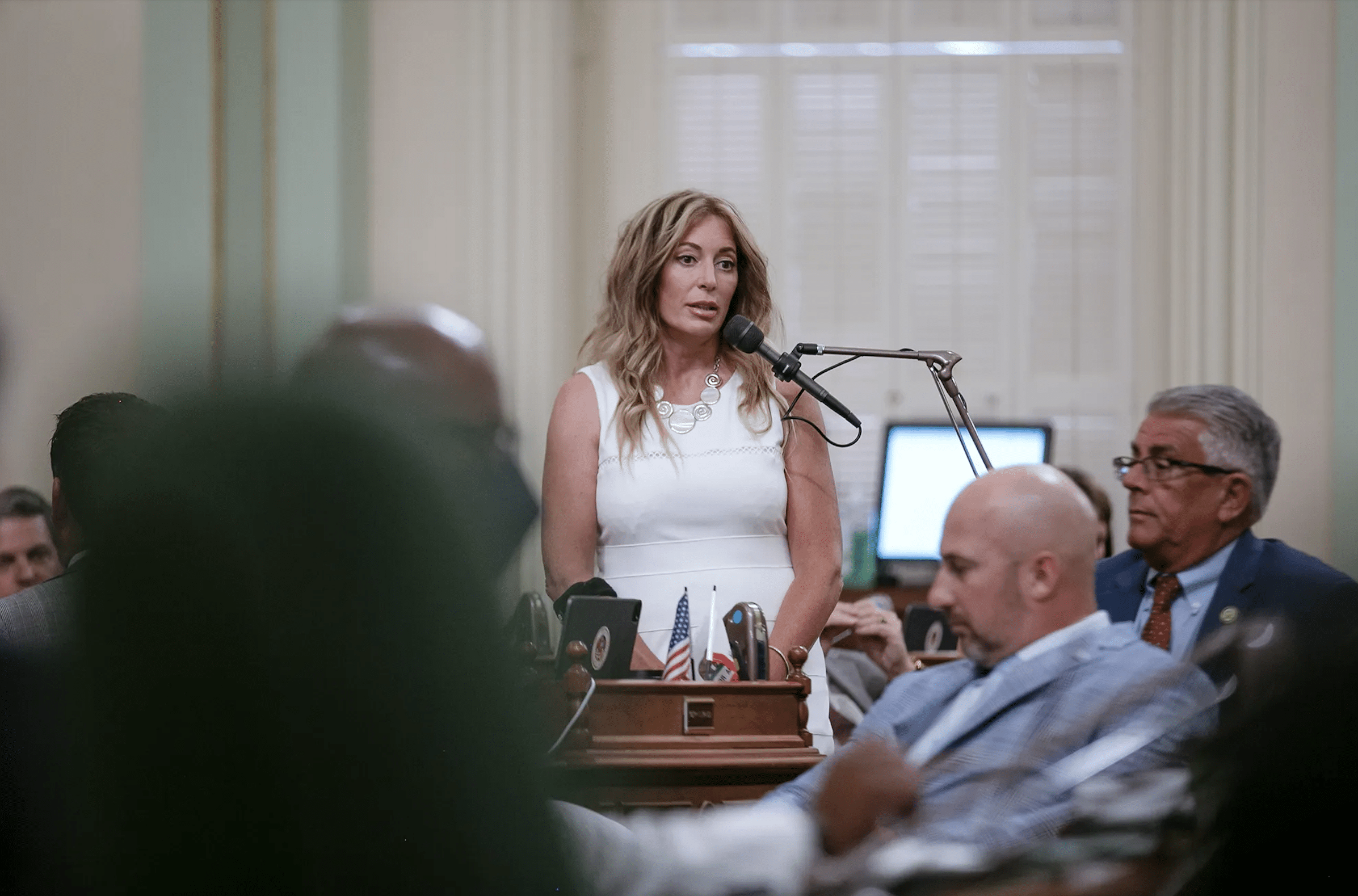
Republican Marie Waldron and Democrat Scott Wiener may seem to have little in common. But they have formed an unlikely partnership on an unusual issue: legalizing psychedelic drugs to treat mental illness. Continue reading…
California Voters Will Decide on Newsom’s Mental Health Overhaul. How Did We Get Here?
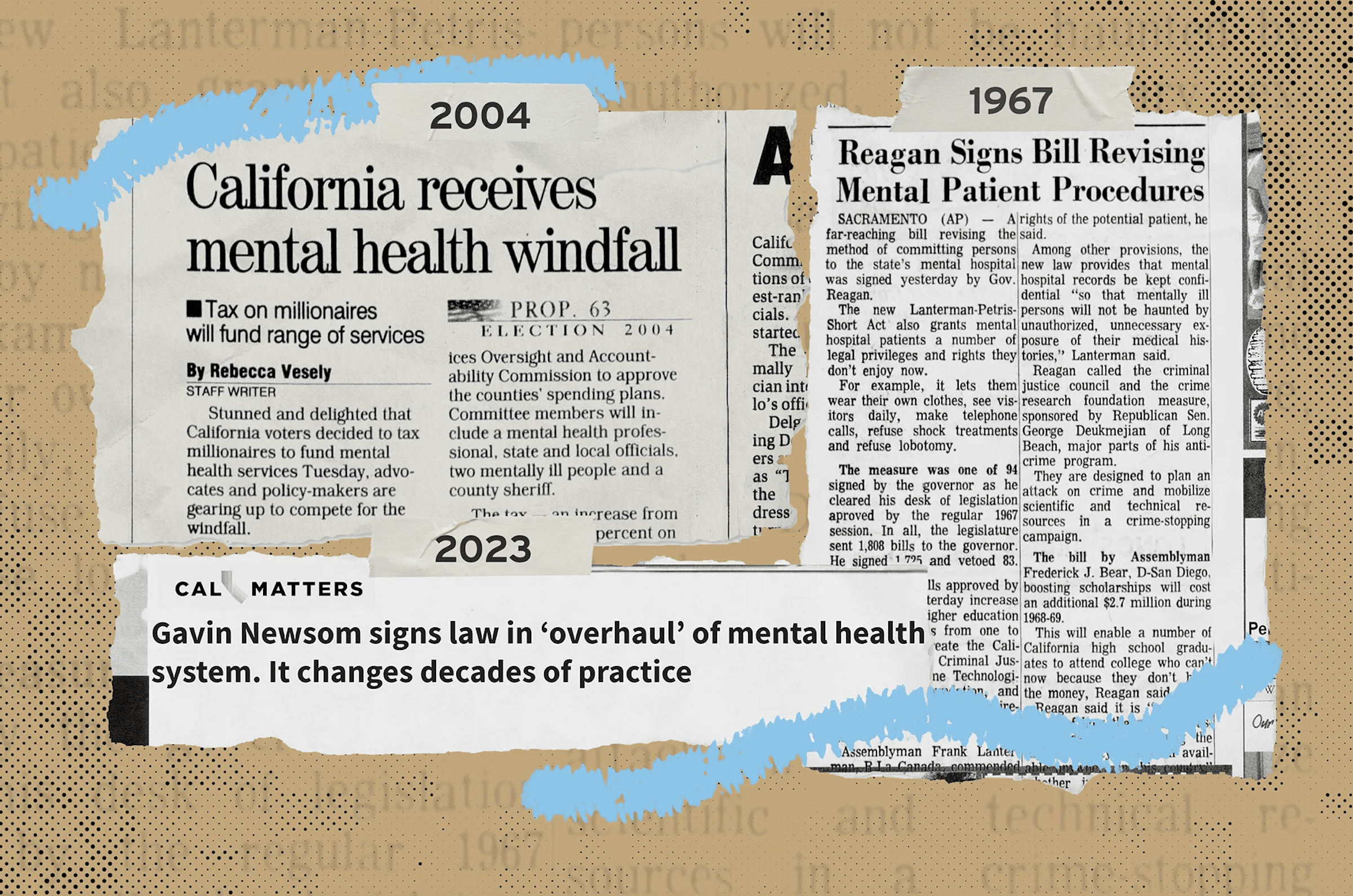
Proposition 1, a March ballot measure in California, is the latest state proposal that aims to make major changes in mental health policy. Here’s a look at some of the others over the past 75 years. Continue reading.
An Initiative Promised 20,000 Homes for Mentally Ill Californians. It Delivered Far Less

Proposition 1, a March ballot measure in California, promises to build 4,350 supportive housing units for homeless people with chronic mental illness. Can it succeed where previous measures fell short? Continue reading…
If you’re not subscribed to MindSite News Daily, click here to sign up.
Support our mission to report on the workings and failings of the
mental health system in America and create a sense of national urgency to transform it.
For more frequent updates, follow us on Facebook, Twitter and Instagram:

The name “MindSite News” is used with the express permission of Mindsight Institute, an educational organization offering online learning and in-person workshops in the field of mental health and wellbeing. MindSite News and Mindsight Institute are separate, unaffiliated entities that are aligned in making science accessible and promoting mental health globally.
Copyright © 2021 MindSite News, All rights reserved.
You are receiving this email because you signed up at our website. Thank you for reading MindSite News.
mindsitenews.org

The name “MindSite News” is used with the express permission of Mindsight Institute, an educational organization offering online learning and in-person workshops in the field of mental health and wellbeing. MindSite News and Mindsight Institute are separate, unaffiliated entities that are aligned in making science accessible and promoting mental health globally.


Author

Related Articles
How Some Black Women Are Coping in a Time of Stunning Job Loss and Racism
An essay by Sheree Crute on finding solace and even joy in these dark times.

Helping Farmers Weather Uncertainty, Stigma and Depression
Farming is one of the industries with the highest risk for suicide. Mental health experts say financial pressures are a common reason why.
1 of 1 CA Guards Force Violent Gladiator Fights Onto Youth in Juvenile Hall
Inside a juvenile detention center in California where “gladiator fights” are part of a larger, violent guard culture.
