
‘Cheerful Weirdos’ Who Can Move Mountains With Their Joy
A joy-on-the-margins writer with autism has something he wants you to hear. In other news: Philadelphia’s jail remains awful. And a mother in New Mexico reckons with the loss of her daughter – and mourns the health system’s failings.


Wednesday April 10, 2024
By Courtney Wise
Greetings, MindSite News Readers. In today’s Daily, the Philadelphia Dept. of Prisons is back in the spotlight for continued failure to improve conditions in its jail. A mother in New Mexico reckons with the loss of her daughter to drug overdose, days before she cleared the waitlist for transitional mental health support. For-profit companies swooping into mental health care.
But on a more triumphant note, author Rafael Frumkin says that although his diagnosis of autism prompts many people to expect a deep dive into his pain, he’s not required to give it, and he won’t. He’d rather write about his joy and wonder.
“Trust me without needing endless elaboration and justification,” he writes. “Because it’s far truer than you’d think, this story, and it has a moral: us cheerful weirdos are not an exclusive lot. In fact, the only requirement to join is that you recognize the potential of your happiness to move mountains.” (Read more about Frumkin at the end of today’s newsletter).
Philadelphia Still Failing to Clean Up Its Jail, Could Face Fines for Contempt of Court
Two years after the city of Philadelphia settled a class-action lawsuit alleging conditions in the city’s jail violate the US Constitution, things have only gotten worse, The Philadelphia Inquirer reports.
Civil rights groups representing more than 4,600 incarcerated people in Philadelphia are seeking contempt charges against the city for its “pattern of systemic violations of the constitutional rights” of inmates, according to a motion filed on Monday.
Lawyers for the Pennsylvania Institutional Law Project, Abolitionist Law Center, and the civil rights law firm Kairys Rudovsky Messing Feinberg & Lin LLP are seeking a fine of $23,700 – or $5 per prisoner – per day, paid to every inmate upon their release, until the two most critical conditions of the settlement are reached. Those are:
1) filling correctional officer vacancies with qualified hires until no more than 30 percent of budgeted positions are empty
2) ensuring prisoners get a minimum of one full hour per day outdoors. Leaving these issues unaddressed, they say, has led to four inmate escapes, violence, and several homicides.
“It’s been going on so long, with so many deprivations, that action has to be taken immediately,” said David Rudovsky, one of the lawyers handling the case. The staffing shortage, in particular, is huge – 44% of department jobs are vacant, and nearly half of all correctional officer positions are unfilled. “Frequent staff assaults, fights, stabbings, rampant contraband and extortion, and security breaches have been made possible or exacerbated by the staffing shortage,” court-appointed monitor Cathleen Beltz wrote in her most recent report. “Any recruitment or hiring gains are negated by attrition and an expanding incarcerated population.”
Beltz added that the city agreed to further monitoring through 2026. Despite the lack of critical staff, prisoner numbers continue to rise, making way for the violence and inadequate support for medical or mental health care. The department also lacks a commissioner to lead the prisons, since the exit of Blanche Carney earlier this month. Her tenure was marked by conflict with the correctional officer’s union.
For New Mexico mom, a daughter’s mental health care came too late
For Holly Lovejoy, the “what-ifs” keep coming – she can’t stop thinking about her daughter dying while waiting for mental health support from the state of New Mexico.
“I think that if there were just more resources, and I think if we had a culture here that was a little bit more about prevention, then we would be in a different space,” she told the Sante Fe New Mexican.
Kudra Hernandez, Lovejoy’s daughter, periodically struggled with addiction and homelessness during her brief 22 years, but things seemed to change last fall. Hernandez had finished detox and two 30-day programs at Sante Fe Recovery Center, Lovejoy said. She’d even partly completed the center’s 90-day program before leaving the recovery center and returning to her mother’s home due to struggles with group therapy.
But by the time a therapist for one-on-one support became available, it was too late for Hernandez. The glam punk-rocker who loved to dance died of an overdose of methamphetamine and fentanyl four days after being called from the waitlist. “People finish one program and they’re on a waiting list for the follow-up, and they don’t get it,” said State Sen. Jerry Ortiz y Pino, a Democrat who has advocated for systemic change in the state’s administration of mental health treatment. “We’re just playing Whack-A-Mole.”
There’s little support for people once they emerge from an acute crisis, said Lupe Sanchez, a residential services manager at the Santa Fe Recovery Center where Hernandez was treated. “We deal with people who have a lot of behavioral health issues,” she said. “As soon as they leave, it’s like, ‘Where are they going to go?’” The problem is real and symptomatic of a provider shortage across the state, said Betty Sisneros Shover, president of the National Alliance on Mental Illness in Santa Fe.
As a stop-gap measure, some crisis providers have extended their services to informally include transitional support for people who need the help. It’s to keep them from being without any help at all on months-long waitlists, said Kate Field, a crisis services director at La Sala Center in Santa Fe County. “The problem with the philosophy [of] ‘one and done’ is these individuals have not had services for years. It’s not a simple process to say, ‘Now we have this contact and they’re fixed.’ … If they’re not stable, we’re not going to discharge them.”
For-profit companies keep pushing into behavioral health care
In line with a national trend, Hickory Recovery Network (HRN), a for-profit chain that operates addiction treatment centers in Indiana, is looking to convert a shut-down nursing home into a psychiatric hospital in an underserved community.
No other inpatient mental health facilities exist in rural Poweshiek County, or any of the eight other counties nearby, KFF Health News reports. In fact, Iowa ranks last in access to state-run psychiatric hospitals, creating a prime opportunity for private companies to step in.
At present, Iowa has only two beds for every 100,000 residents – about 4% of the number recommended by the Treatment Advocacy Center (TAC), a nonprofit that pushes for increased hospital and oupatient mental health services. For-profit centers aren’t necessarily bad, added Lisa Dailey, TAC’s executive director. They’re just less transparent and prioritize turning a profit. “Private facilities are private,” she said. “As a result, you may not have a great insight into why they make the decisions that they make.”
Advocates hope the potential new facility can help resolve the state’s critical shortage of inpatient psychiatric care, but there are also concerns – largely because the nursing home that previously occupied the building got poor reviews from Medicaid, and it was run by a company affiliated with HRN. Medicaid rated the facility’s overall quality two out of five stars, and in 2020, the facility faced an indefinite suspension from Iowa’s Medicaid program because of billing issues.
In other news…
Now back to self-described “cheerful weirdo” Rafael Frumkin. For decades, stories about autistic people have been told from the perspective of others. Frumkin is thrilled that people are finally open to hearing his voice. Still, he argues in this essay published by Electric Lit, he wants people to receive his voice for what it is. “With the increased visibility of autistic subjecthood has come an increased demand for “authenticity” far in excess of the desire to read someone being themself and exploring ideas on the page,” he writes. “There’s an implicit insistence that autistic writers do one of two impossible things: 1) exactly recreate the reader’s own, hyper-individual autistic experience; or 2) write autofiction so laden with their own pain and misery that the reader must drop their criticism and concede to the writer the title of Perfect Sufferer.”
Frumkin’s desire? The space to write without having to qualify his autism. “There is a vanguard of joy-on-the-margins fiction: I am a part of it because I am also living it. And yes, I realize that doing so is not without risk, that there is immense cultural inertia when it comes to acknowledging that I…could actually be happy. But if there’s one thing you learn from a lifetime of being different, it’s that you can’t rely on a broad public consensus to tell you anything true about yourself.”
“The worry is worse than the wear,” Mrs. Lankford used to tell me. It’s a lesson I’m still learning. My cousin’s grandmother shared that wisdom with me as I agonized and fretted about “what ifs.” Some psychologists have even given the fear of the unknown a name and acronym: IU, intolerance for uncertainty. Being intolerant of uncertainty can be a survival aid, said Brady Nelson, an associate professor of clinical psychology at Stony Brook University. “It keeps us attentive and alert in uncertain and unfamiliar environments that could be associated with danger or threat,” he said. We all feel fear of uncertainty to an extent, writes Shayla Love in a column for The Guardian, but too much focus on the unknown can harm our wellbeing. The goal: plan as you can but don’t let those worries stop you from living your life.
#LupusChat: If you’re still active on X, the platform formerly known as Twitter, it’s possible you’ve come across LupusChat. Started in 2012 as a bi-weekly online conversation to spotlight the voices of lupus patients and caregivers, it has since expanded to become a vibrant online community that connects people for learning and support. Though the illness isn’t specifically one of the mind, the pain and fatigue associated with lupus greatly affect the mental health of lupus warriors. In a brief interview with STATNews, LupusChat co-founder Tiffany Peterson recounted the challenges she had navigating lupus early on, and the emotional and mental value the LupusChat community provides.
If you or someone you know is in crisis or experiencing suicidal thoughts, call or text 988 to reach the 988 Suicide & Crisis Lifeline and connect in English or Spanish. If you’re a veteran press 1. If you’re deaf or hard of hearing dial 711, then 988. Services are free and available 24/7.
Recent MindSite News Stories
Spending Packages Signed into Law Will Keep Federal Mental Health Funding at Historic Levels

Last month, Congress escaped from gridlock to approve two spending bills that kept the government open while maintaining high levels of mental health funding. The Congressional action shows that mental health continues to command uniquely strong bipartisan support.
Michael Johnson Spent 3 Years in Solitary and Was About to Give Up on Life. Then He Got a Letter from his Daughter

He took his case, arguing that extended solitary confinement was cruel and unusual, all the way to the Supreme Court – and lost. Today he’s out of prison working to rebuild his life.
Booted From the Army, He Spiraled. Now He Works to Solve the Veteran Homelessness Crisis
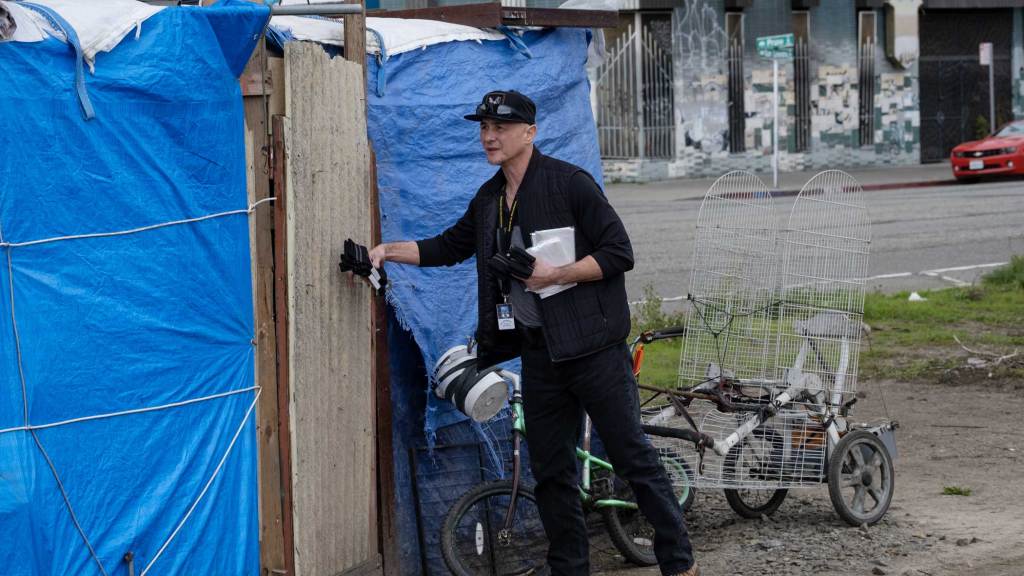
California has more homeless veterans living on the street than any other state – an estimated 7,400. Dennis Johnson was once one of them. Today, he works to help his fellow vets get into housing – and get the help they needs.
If you’re not subscribed to MindSite News Daily, click here to sign up.
Support our mission to report on the workings and failings of the
mental health system in America and create a sense of national urgency to transform it.
For more frequent updates, follow us on Facebook, Twitter and Instagram:

The name “MindSite News” is used with the express permission of Mindsight Institute, an educational organization offering online learning and in-person workshops in the field of mental health and wellbeing. MindSite News and Mindsight Institute are separate, unaffiliated entities that are aligned in making science accessible and promoting mental health globally.
Copyright © 2021 MindSite News, All rights reserved.
You are receiving this email because you signed up at our website. Thank you for reading MindSite News.
mindsitenews.org

The name “MindSite News” is used with the express permission of Mindsight Institute, an educational organization offering online learning and in-person workshops in the field of mental health and wellbeing. MindSite News and Mindsight Institute are separate, unaffiliated entities that are aligned in making science accessible and promoting mental health globally.


Author

Related Articles
Rumors of Kids Quitting College En Masse Are Exaggerated
This week: what the data says about Gen Z students quitting college, and why postpartum mental illness is more than depression.

Why Is Georgia Blocking Recovery Homes for Substance Abuse?
Georgia towns are using zoning loopholes to shut recovery homes down, even as addiction and mental illness surge statewide.

Why Are Mothers Punished for Parenting?
Those of us who roamed freely as kids can be arrested for letting our kids do the same.