
Phone Bullying in School Cafeterias Hurts Everyone
A cruel digital trend known as “lunch shaming” is driving students to hide, highlighting the toxic rise of school cafeteria bullying.

Greetings, MindSite News readers.
In today’s Daily, a peek at lunch shaming, a new form of bullying made possible by cell phones. “Loneliness influencers” are taking over Instagram and TikTok. Experts offer advice on supporting people in deep grief, and one teen uses personal experience to encourage her peers to seek a trusted adult if they find themselves struggling with mental health and caught in a cycle of bad choices.
But first, facility dogs work full-time in children’s hospitals to help sick kids heal.
How camera phones turned the cafeteria into a minefield
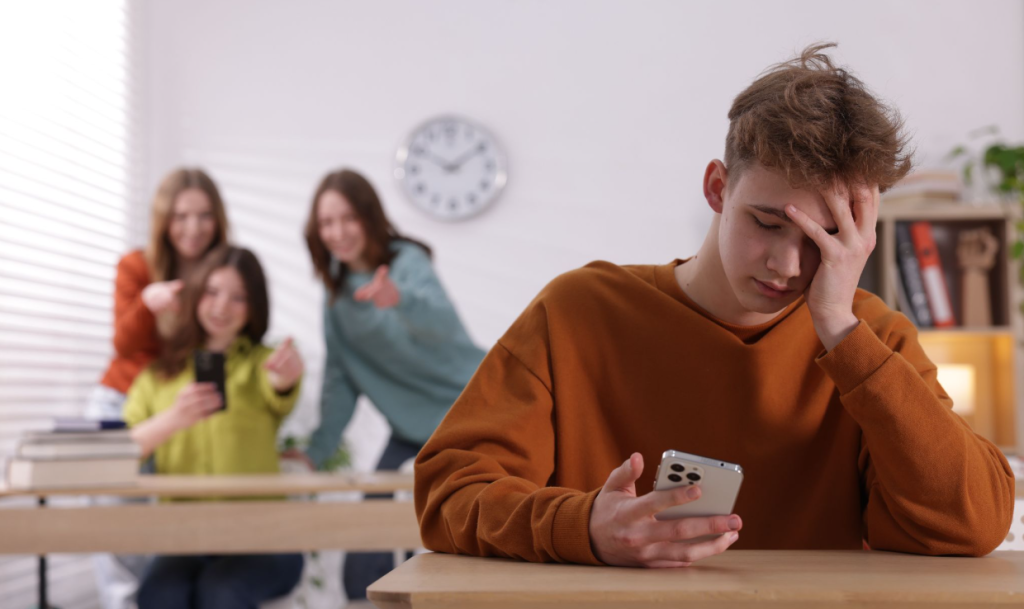
Lunch shaming, a quiet but cruel form of bullying, has taken root in school cafeterias across the country. Students snap and share unflattering photos of their peers eating lunch. Targeting kids taking an awkward mouthful or students eating alone, the behavior might seem trivial but its effects are not.
“It makes you feel self-conscious and like you have to hide while eating,” Christian Okafor said. The 18-year-old high school senior told The Wall Street Journal he’s been subjected to lunch shaming around 30 to 40 times. The experience made him seek isolated spaces beyond the lunchroom to eat. He has returned to the cafeteria after learning to brush it off, but said he hasn’t reported the behavior to school administrators, believing not much would change.
For those struggling with body image, the impact is deeper. One student in Fairfield, OH stopped eating at school entirely — and in front of anyone for some time — after a photograph of her mid-bite was posted to the class Snapchat page. Cafeterias are ripe for bullying because of their high student-to-staff ratios relative to classrooms, making mischief certain and supervision difficult. Among 25,000 students asked where at school they’d been bullied in the past month by Catherine Bradshaw, professor and associate dean for research at the University of Virginia, 14% of elementary schoolers and 18% of middle and high schoolers pointed to the cafeteria.
What makes lunch shaming particularly insidious, added Stine Kaplan Jørgensen, an associate professor of social psychology at University College Copenhagen who has studied bullying for over a decade, is how many existing vulnerabilities it can exploit: body image, food allergies or socioeconomic status, for instance. “It’s the subtle hidden bullying that’s the worst,” she says.
School phone bans have emerged as one of the most effective responses, curbing the behavior so successfully that one district in Washington noticed a meaningful jump in middle schoolers taking school-provided lunches after implementing one. Still, phone bans aren’t a cure-all. One student told the WSJ that cyber bullies simply migrated to an Instagram page mocking bad student drivers once they could no longer photograph peers at school. But for kids who once dreaded lunch time, getting to eat without fear is a start.
The rise of “loneliness influencers”
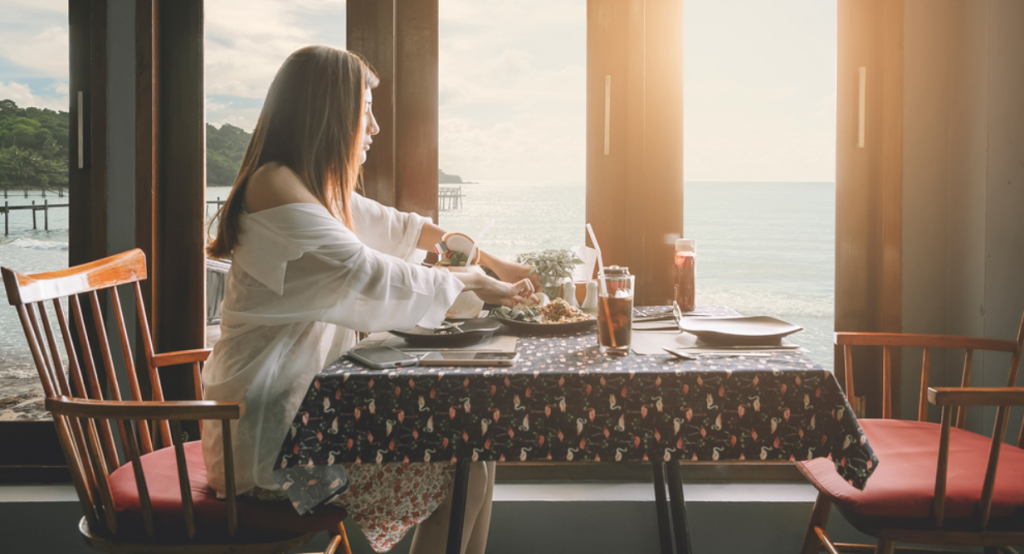
A new corner of social media has emerged, focused less on aspirational luxury or a perfect social life and more on having no friends at all. “Loneliness influencers,” as they’re called, are predominantly young women who post brief clips of solo moments from their quiet private lives. These include brief videos of them arriving home from work, plating a simple dinner or even watching TV alone. Captions like, “You’re single, have no friends, live alone and won’t be having kids so this is your Friday night,” have drawn hundreds of thousands of viewers who see themselves in the content.
Lana Isa (@lanasololife), a 24-year-old Toronto-based software-sales manager with nearly 200,000 Instagram followers, told The Cut that she stumbled into loneliness influencing after a breakup and cross-country move left her feeling isolated. “My only texts were with my mom, my sister, and my phone company letting me know that my bill is ready,” she said. The authenticity of her approach made her first video go viral. “I was never trying to romanticize having no friends. I was just trying to romanticize making the most of the current stage of life that you’re in,” Isa said. “I don’t think anyone wakes up one day and decides they want to have no friends,” she added.
Still, the comments left on her posts demonstrate that there’s a strong audience for “loneliness” focused content. ’“I lost a huge group of my friends in the last couple of years,” a viewer wrote on one post. “It feels good not to feel FOMO because I know I’m not missing out anymore.” Another comment reads, “I spend my Friday nights like this too. Humans have caused lots of pain in my life.”
The popularity of these videos is indicative of a larger emotional crisis. A 2021 study published in Psychological Bulletin found that loneliness among young adults climbed every single year between 1976 and 2019. Three years ago, then-U.S. Surgeon General Vivek Murthy called loneliness a public health issue. Last year, a survey from the American Psychological Association found that more than half of U.S. adults report feeling isolated often or some of the time.
But as the trend continues to spread online, the irony of creators building careers and massive followings for posting about intense loneliness isn’t lost on viewers. Some have even begun to suggest that “loneliness influencers” aren’t truly lonely, but rather exploit viewers who are, racking up followers while their audience struggles with real isolation. Isa rejects that idea, saying that her platform opened up pathways for real-life connections. “Making videos brought out these people that live the same life,” she said. “We’re making the choice to be alone but not feeling lonely. Social media and the world never really used to make you feel like that was normal.”
In other news…
Offering support amidst tremendous grief: This July will mark one year since devastating flash floods claimed the lives of 139 people in Central Texas on the Fourth of July, including dozens of children at Camp Mystic, a summer camp along the Guadalupe River. As the date nears, psychiatrist Julie Kaplow, executive director of the Trauma and Grief Center at the Meadows Mental Health Policy Institute and professor of psychiatry at Tulane University, says she’s hearing a familiar yet imprudent message — that one year after a tragedy, survivors ought to move on and celebrate how far they’ve come.
“I understand the impulse to want to put tragedy behind us, but grief does not adhere to a calendar,” she writes in USA Today. “In fact, the one-year mark is often the most painful time for the bereaved, as this is when the reality and permanence of their loss begin to sink in.”
So how can we help instead? Don’t wait for people to name what they need and give them what anyone can always appreciate: dinner for the night, help with house or yard chores, childcare for the evening. Support with everyday needs can make a huge difference. More than that, speak about their loved one. Share a memory of them or say their name. People appreciate hearing how their loved one was seen and valued by others. Most importantly of all, though, don’t try to fix or avoid their grief. “Grief needs to be witnessed, not solved,” Kaplow says. “Just being present is enough.”
Principals and school social workers can be strong sources of guidance for teens: Principals are many a teen’s last resort for help — just after their parents — but high school junior Natalia Rincon credits assistant principals Jeremy Smith and Scott Wooldridge, and school social worker Tyson Harris, with keeping her on track toward graduation. “I was drowning in an ocean of mental health challenges and personal issues,” she began in an op-ed for the Salt Lake Tribune, recalling a tough year marked by skipping school and earning suspensions. She needed guidance to make healthier decisions, and they provided it. “They gave me advice that helped me see my worth and showed me I could do what I needed to,” Rincon wrote.
Research backs up Rincon’s experience. Teens with a trusted adult in their corner show higher self-esteem, more academic motivation, better mental and physical health and more positive economic outcomes later in life. Rincon’s message to her fellow teens is simple — the next time you’re feeling stressed and alone, give talking to a trusted adult a try. “They have gone through things, and they are able to give you advice on what you’re going through.”
The name “MindSite News” is used with the express permission of Mindsight Institute, an educational organization offering online learning and in-person workshops in the field of mental health and wellbeing. MindSite News and Mindsight Institute are separate, unaffiliated entities that are aligned in making science accessible and promoting mental health globally.

Author

Related Articles

Why Is Georgia Blocking Recovery Homes for Substance Abuse?
Georgia towns are using zoning loopholes to shut recovery homes down, even as addiction and mental illness surge statewide.

Why Are Mothers Punished for Parenting?
Those of us who roamed freely as kids can be arrested for letting our kids do the same.