
Project 100 Seeks Equity for 100+ Babies in This NorCal Community
West County Health Centers seeks to level the playing field for all babies in the area with the aid of the community, ACEs science and systems thinking.


August 1, 2024
By Courtney Wise

Ellen Bauer, the chief administrative officer of West County Health Centers in Sonoma County, California, wanted to level the playing field for all the babies in her community, including the approximately 100 babies born each year in the beautiful lower Russian River area — one of the poorest parts of the county.
The name Project 100 spoke to her, she said, because it seemed like a way to elevate prevention, resilience and healthy early childhood development for those 100+ babies — one of the most effective ways to transform the long-term health of a community, especially one contending with poverty, childhood trauma and toxic stress. Read more about it below!
Also in this issue: The popularity (and hazards) of energy drinks for your teens. For the kind of behavior you want from your kids, a psychologist advises “connection before correction.” And with the Olympics in swing, see what three college athletics departments are doing to ensure their young athletes’ mental well-being.
With Project 100, a Sonoma County health care hub declares poverty should not preclude a child’s chance for a healthy life

A provider at West County Health Centers greets her small patient (WCHC)
One day Ellen Bauer, chief administrative officer of the West County Health Centers in northern California, had a brainstorm: She decided that the health hub needed a way to elevate everything that would positively transform the long-term health prospects of the 100 babies born each year in the lower Russian River area – a low-income community where many residents struggle with housing, food insecurity, poverty, mental health and natural disasters like floods and wildfires.
A tall order, the health center and its partners would make it happen by focusing on preventing and treating adverse childhood experiences (ACEs) like neglect and abuse, which lead to toxic stress. The guiding question may have seemed broad: ‘What did the 100 babies born there each year need to live their best lives?’ Bauer told the nonprofit Center for Care Innovations (CCI). Still, “We thought this is something that is incredibly important but small enough that we can wrap our arms around it,” she said.
Project 100 was born. The three conveners – West County Health Centers, the Guerneville School District and River to Coast Children’s Services – employ a Self-Healing Communities model to engage local residents from all walks of life, including parents and non-parents, educators, healthcare workers, addiction counselors, nonprofit employees and business leaders, in creating a nurturing environment for children. The project is in its systems mapping and learning phase at present.
The idea is to benefit from what the community already knows about solving “seemingly intractable problems,” said physician Jason Cunningham, chief executive officer of West County Health Centers, who says he is excited to use the design thinking tools he and other staff members learned in programs with the Center for Care Innovations. “We have to work collaboratively with the community, because we can only do this together,” he said. “We want to use human-centered design and systems thinking to help us learn and tap into community wisdom.”
Such systems thinking may seem new, but it is actually a longtime practice of First Nations communities and other Indigenous peoples, designed to bring clarity to challenges that seem onerous or even impossible to solve. Systems mapping tools, including actor mapping, iceberg mapping, and forces mapping, engage communities in exercises that help people uncover patterns and mutual connections that nurture healing and growth.
Through mapping meetings that included representation from all members of the community, including Latino families that are often isolated due to language and transportation barriers, Project 100 learned the necessity of mental health services and a youth-focused community center. “It’s not a good idea to leave teenagers with nothing to do all summer,” one local nonprofit director said. Families also need support in managing the trauma of sudden separation, especially when media brings a torrent of anti-immigrant rhetoric which leaves them feeling “scared and vulnerable,” said Soledad Figueroa, executive director of River to Coast Children’s Services. Bauer is working on grant proposals to secure funds to make the suggestions from the community a reality.
“There’s a saying in public health that “what’s predictable is preventable,” Bauer said. “That’s echoed in our work to prevent the impacts of toxic stress in our community. It is predictable that unbuffered toxic stress in early childhood significantly increases the risk of poor outcomes over the lifespan. You can predict what’s going to happen. With Project 100, we’re seeking to get to the root cause of what makes us sick and identify community solutions to address those needs.” She and the health center, along with its partners in the community and government, are working to ensure the project succeeds for at least 100 years. Read more about it in CCI’s story about the transformative power of Project 100.
“We’re all tired and burnt out before we’re even 30.”
“The first time I tried a Celsius energy drink,” writes college sophomore Natalie Kaufman in this op-ed for the Boston Globe, “it made me sick.” The 12-ounce liquid supercharged her system with 200 milligrams of caffeine, triggering the shakes and a violent headache. But being a busy student athlete, she drank it again. Now, “dutifully dependent on the sleek aluminum cans of human-grade jet fuel,” her Celsius consumption is worse than the average coffee obsessive’s caffeine habit. She’s a lot like her Gen Z peers. Fully assimilated into our nation’s productivity-crazed hustle culture, young adults says they require the jolt it provides “because we’re all tired and burnt out before we’re even 30,” Kaufman’s fellow undergrad said. And it’s corroding their mental health.
A solid amount of caffeine every day shouldn’t hurt you—up to 400 milligrams a day —but chronic Celsius drinkers regularly exceed that limit. The drink crudely clips Red Bull’s wings, packing twice as much caffeine as the average cup of joe; more than two normal-sized Celcius drinks or a can and a couple cups of coffee will exceed the recommended limit. College-age people who consume energy drinks like their grandparents drank basic cups of coffee are more likely to have trouble sleeping and suffer from anxiety than those who do not, research finds. Excessive caffeine also hinders motor and cognitive function.
In addition, parents may want to let their Celsius-loving kids know that the drinks also contain green tea extract, which is very concentrated (unlike green tea itself). Too much green tea extract may cause liver damage, researchers warn.
Unfortunately, marketing emphasizing Celcius’ “health benefits” with claims that the drink “accelerates metabolism” and “burns body fat” keep plenty coming back for more. PepsiCo brand deals with colleges like the University of Florida, which Kaufman attends, where cans of the energy drink are available in the average vending machine and make it easy for students to forgo the time it takes to prepare a cup of coffee in the first place. “The culture around Celsius keeps college-aged students engaged. [It’s] already infiltrated the Greek institutions through advertising and PR events, and the drinks are very sweet . . . so people see it as a good deal,” said 22-year-old student Brandon Rahim.
So encourage your college kids not to exceed 400 milligrams of caffeine daily through too many Celcius drinks. The better deal for the long term, Kaufman wisely writes, is a good night’s sleep.
‘Connection before correction’ to encourage the behavior you want to see in your kids
Years ago, I joined a new church and decided to help out with the children in the Sunday School program. I’d just started teaching third grade and was curious how those skills applied outside of the classroom. The group I’d been assigned was practicing their speeches for Easter—a very serious matter in any Black church. But the children (and a couple of adults) weren’t paying any attention to the young speakers in front. To me, that was a violation—a show of blatant disrespect to those practicing and for the standards of behavior we had been taught. Armed with my best teacher voice, I walked to the front of the room, chastised everyone having side conversations, adults included, and ran rehearsal the way it had been run the prior 27 years of my life at my old church. (Watch 20 seconds of this clip of the legendary Mattie Moss Clark to see what I mean). Rehearsal moved forward. The children said their speeches. The audience listened.
I floated through the air when we wrapped, certain I had done The Right Thing. So you know my co-teacher burst my bubble as we walked toward the sanctuary for church service. “Why would you stand up and chastise those kids like that? They don’t even know you,” she said. Speechless, I just stared at her in disbelief. I salvaged the rehearsal by clearing the environment of distractions. I put those out-of-order grownups in check. Easter was in two weeks; I saved the day.
It took a couple of years for me to see her point, ingrained as “churchy” is in me, but clinical psychologist Becky Kennedy wrote a book about it. Good Inside: A Guide to Becoming the Parent You Want to Be emphasizes connection before correction, to nurture the behavior from your children that you want to see. In this 17-minute episode of NPR’s Life Kit, she explains how it works.
Generally, it looks like learning why your kid smacked their sister before fussing. “Let’s say my three-year-old son just hit his sister,” she begins in the interview. “That is not at all good behavior. But if I base my mindset on the idea that my kid is “good inside,” then I can activate curiosity. Why is my kid hitting his sister? When I don’t operate from that foundation, it’s easy to put frustration, anger and judgment in the driver’s seat…The idea of “good inside” [helps parents] see the identity of our kid as separate from a descriptor of a behavior.”
Those Sunday School students weren’t my biological babies, but I’d positioned myself as a Trusted Adult by taking on the teaching role. They’d had an entire history of Sunday School before I arrived, and though I was frustrated by what I saw, I’d taken no time to understand what was really going on. I just jumped in to correct what I saw as wrong behavior. My methods worked, but not for any of the reasons I wanted them to.
Other people’s kids are still with me plenty of time, but these days, I take a different approach to engagement. “I know you’re a kind person, so this yelling and hitting isn’t your kind of behavior. Take a deep breath and tell me what’s going on” is my go-to line.
In other news…
Teen uses film to raise awareness about mental health: At just 17, Anah Ambuchi is an award-winning filmmaker. The young actress with a recurring role in Showtime’s “The Chi” wrote, produced, and directed her first film at age 11, titled “In His Image.” That movie was featured in more than one dozen film festivals across the US and won 4 awards, including the Rising Star Award at Diversity in Cannes. Today, she’s focused on “Don’t Tell Me Ur Sorry,” which follows two Black teens grappling with challenged mental health amidst racial injustice in the wake of the COVID pandemic.
Ambuchi told Reckon that she hopes the film will help youth to be aware of their mental health and show adults how to listen and address the concerns their teens share. “We’ve seen those statistics about suicide. We’ve seen the effects of bullying and how mental health can really be a damper on someone’s [well]-being,” Ambuchi said. “I feel like seeing these types of films can engage the mind and create positive messages.”
With the Olympics in full swing, the mental health of elite athletes is front of mind. Likewise, collegiate competitors are looking ahead to the start of their seasons and the supports their universities will have in place to protect their mental health. So, the MinnPost checked in with three nearby schools—the University of St. Thomas, Augsburg University and Macalester College—to learn how athletic departments are ensuring the wellbeing of their students.
Extreme heat doesn’t just make you physically uncomfortable, it can wreak havoc on your mental health. With school already back in session in certain parts of the country, even in buildings that lack air conditioning, it’s causing trouble with students’ ability to focus and learn. The 19th has more.
If you or someone you know is in crisis or experiencing suicidal thoughts, call or text 988 to reach the 988 Suicide & Crisis Lifeline and connect in English or Spanish. If you’re a veteran press 1. If you’re deaf or hard of hearing dial 711, then 988. Services are free and available 24/7.
Recent MindSite News Stories
The Burnout Crisis Isn’t Over. Here’s What We Can Do About It.

Healthcare and social services workers are experiencing enormous burnout. But a closely evaluated pilot program offering therapy, wellness sessions and coaching is helping lower depression and anxiety in three-quarters of participating healthcare workers. Continue reading…
‘I Was Terrified, Actually. It Could Be Me Next’

Even before the Israeli-Hamas war broke out last October, rates of depression among Palestinian adults in the West Bank and Gaza were 10 times the global average. Among children, the rates were higher still. Continue reading…
Relief Funds Offer Help for the Mental Health of Farmers with Land Poisoned by ‘Forever Chemicals’
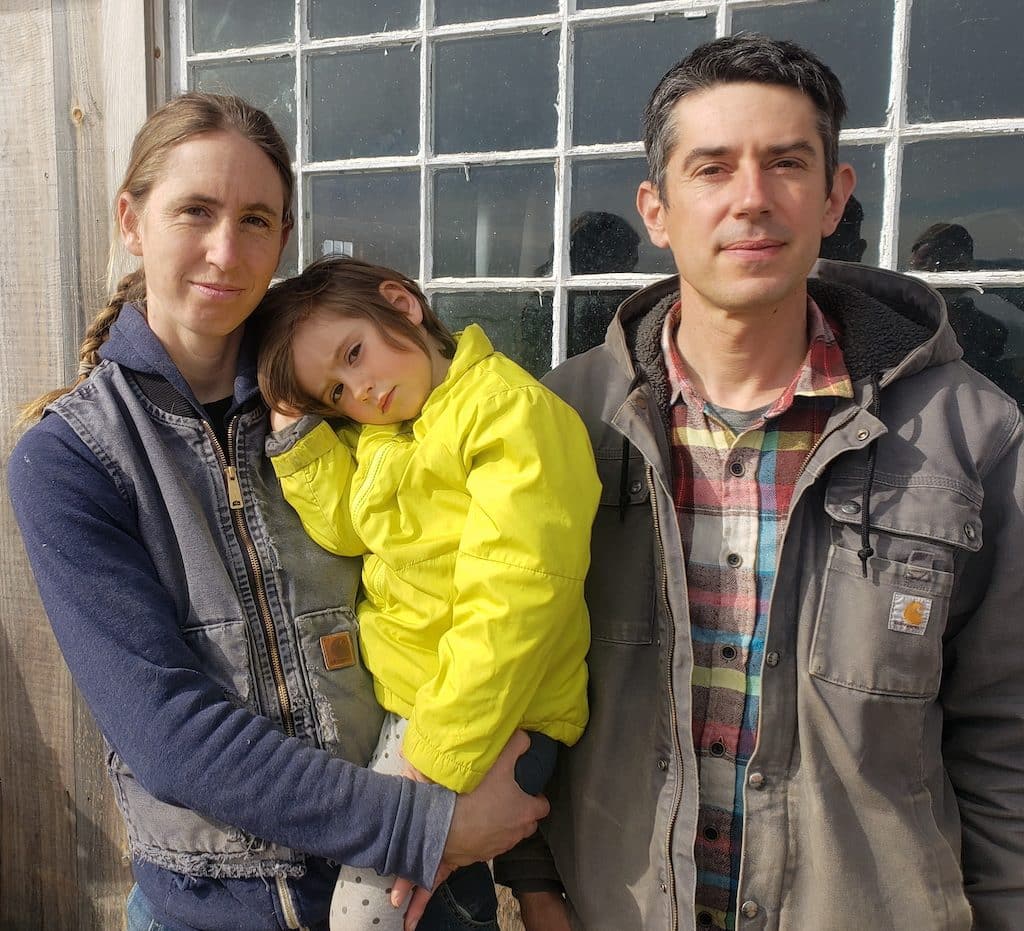
In Maine, state agencies and nonprofits are working to help farmers distressed by the discovery of PFAS – better known as “forever chemicals” – on their land.
If you’re not subscribed to MindSite News Daily, click here to sign up.
Support our mission to report on the workings and failings of the
mental health system in America and create a sense of national urgency to transform it.
For more frequent updates, follow us on Facebook, Twitter and Instagram:

The name “MindSite News” is used with the express permission of Mindsight Institute, an educational organization offering online learning and in-person workshops in the field of mental health and wellbeing. MindSite News and Mindsight Institute are separate, unaffiliated entities that are aligned in making science accessible and promoting mental health globally.
Copyright © 2021 MindSite News, All rights reserved.
You are receiving this email because you signed up at our website. Thank you for reading MindSite News.
mindsitenews.org
The name “MindSite News” is used with the express permission of Mindsight Institute, an educational organization offering online learning and in-person workshops in the field of mental health and wellbeing. MindSite News and Mindsight Institute are separate, unaffiliated entities that are aligned in making science accessible and promoting mental health globally.


Author

Related Articles

Meta Pays $17 Billion Settlement for Lawsuit Over Child Harm
Meta will pay up to $17.1 billion and reshape how its platforms operate after 47 states argued that they are harmful and also addictive to children by design.


Dads’ Paid Parental Leave Is Good for Families
A look at how the whole family benefits when dads receive paid parental leave.