
Parenting Stress Is An ‘Urgent Public Health Issue,’ Says U.S. Surgeon General
U.S. Surgeon General Vivek Murthy highlights the need to better support parents, caregivers and families to reduce their stress.

August 29, 2024
By Courtney Wise

Greetings, MindSite News Readers. In today’s Daily, we talk about the rising levels of stress among our country’s parents and U.S. Surgeon General Vivek Murthy’s warning that stressed-out parents need our government’s support. (And no, Murthy did not issue a Surgeon General warning that parenting is bad for your health, as some outlets proclaimed.)
In other news, educators hope that cell phone bans will boost engagement and participation in school. California considers banning food dyes in public schools as the debate about their potential to harm children reignites. And tips on how to approach your children in a way that leads to meaningful conversations.
Plus, the American Exchange Project seeks to reduce our nation’s many interpersonal divides by exposing high school students to different cultures and people in other parts of our country.
Also, be sure to look for our hard-hitting reports on the horrific abuses of the troubled teen industry, which we will publish tomorrow!
Surgeon General warns that the stress of parenting can be hard on our mental health – and that we need more support

There was a newborn baby at the birthday party I attended for my nephew last Sunday. The infant’s mother talked about appreciating access to paid maternity leave, while enthusiastically looking forward to returning to work. I felt similarly right after the birth of my child – and still do. Besides enabling me to provide for my family, working offers me a deeply personal and invisible value. It also offers me one of the few “breaks” I get from parenting, as my child is still young and requires constant adult supervision and care. I have had extremely limited time apart from her this summer, and I promise, every back-to-school commercial featuring exuberant parents makes sense now.
There’s a lot of new pressure around raising children these days. It comes with lots of criticism but few solutions. It takes a toll on the psyche. That’s all without the tangible worries about screen time, school safety, and my kid’s mental health. US Surgeon General Vivek Murthy published another advisory suggesting that he gets it, in the hopes of raising awareness and resources to support parental mental well-being. We published the forward of his report today. Not only have stress levels risen over the past decades, Murthy says, but for many parents, they are omnipresent: “41% of parents say that most days they are so stressed they cannot function and 48% say that most days their stress is completely overwhelming compared to other adults.”
California may ban food dyes in public school foods. Here’s why.
Science doesn’t wholly agree that synthetic food dyes are harmful. But there’s reasonable suspicion that they might negatively affect behavior in some children, said Joel Nigg, a professor of psychiatry at Oregon Health and Science University. “So why expose them to it?” he asked the New York Times.
Eyes are now turned to California, as the state senate debates a bill to ban six specific dyes from K-12 public schools: Blue No. 1, Blue No. 2, Green No. 3, Yellow No. 5, Yellow No. 6 and Red No. 40. Researchers have debated since the 1970s whether synthetic food dyes promote behavioral issues in children, particularly hyperactivity.
Curiosity was sparked by a pediatric allergist who suggested that a diet free from artificial food colors, flavors and preservatives could treat ADHD. Science conducted in the 1980s “largely debunked” those claims, said L. Eugene Arnold, a professor emeritus of psychiatry and behavioral health at the Ohio State University. The Food and Drug Administration has also approved 9 synthetic dyes since 1963 – and maintains they are safe.
Still, British studies conducted in the early 2000s reignited the date, finding a slight, yet scientifically significant, increase in hyperactivity in children consuming food dyes, leading to warning labels being placed on foods in Europe about their potential effects on children’s attention and activity. Just a few years later, a small committee in the FDA considered taking the same action, but ultimately decided not to, concluding that there wasn’t enough evidence to prove the dyes cause harm.
Then, three years ago, scientists working for the State of California published a report that summarized their findings from a review of 27 trials involving children. Though limited in size, the review asserts that food dyes do impact the behavior of some kids. Scientists who reviewed the report say that it was “fair, unbiased and very thorough,” leaving the subject open for further discussion and study.
The FDA says that it will continue to research the question and is currently reviewing the safety of Red Dye No. 3, which is set to be banned by 2027 from all foods sold in California under legislation passed last year.
In other news…
The benefits of diversity: In an effort to eliminate what founder David McCullough III calls “toxic polarization,” The American Exchange Project connects high school students from vastly different regions of the nation to experience the diverse cultures within our very own United States. “We’re defining people by fractions of who they are…we’re pretending that because we know one of their views, we know all of their views, which is very rarely true,” McCullough told the Los Angeles Times.
The most recent cohort sent 13 teens from LA to cities in rural Arkansas, Ohio and South Dakota, while 10 students from Texas, Pennsylvania and elsewhere visited Los Angeles. Wendy Rojas of Koreatown had to immediately debunk assumptions about her experiences with gangs and gun violence when she landed in Sioux Falls, South Dakota. “No more gunshots right?” a member of her host family joked. “Maybe we’ll shoot outside your window to make you feel at home.” By the end of the week, they’d changed their tune and were asking questions about what LA was really like, Rojas said.
“We have our own perceptions of different places and different people but I feel like when we come together like this and we talk face to face, there is always a connection,” she said. “Even if we disagree on maybe our political views or whatever, we can find something in common.”
I missed this article from Vox last summer, but its contents are still relevant – especially for parents and other adults who wonder about the best ways to strike up meaningful conversations with kids. The most critical piece of advice: Treat them like people, rather than kids. There’s an assumption we adults make about kids that’s socialized into us; it says their ideas and interests aren’t important – or at least, not important as ours. But, the article argues, focusing on shared interests, asking open-ended questions, and genuinely listening – like you would to a fellow grownup – can help you build authentic and strong connections with kids.
Notice yourself switching from video to video on your phone? Turn it off. I let my daughter watch videos on YouTube Kids. When I notice the flickering becomes nonstop, it lets me know one of two things: She’s bored or sleepy. I then make her turn the device off. I assume there’s no more enjoyment to be had from the screen – and this post from the American Psychological Association totally validates my conclusion. “If people want a more enjoyable experience when watching videos, they can try to stay focused on the content and minimize digital switching,” said Katy Tam, lead author of a new study that found endless swiping increases boredom. “Just like paying for a more immersive experience in a movie theater, more enjoyment comes from immersing oneself in online videos rather than swiping through them.”
If you or someone you know is in crisis or experiencing suicidal thoughts, call or text 988 to reach the 988 Suicide & Crisis Lifeline and connect in English or Spanish. If you’re a veteran press 1. If you’re deaf or hard of hearing dial 711, then 988. Services are free and available 24/7.
Recent MindSite News Stories
‘The Toughest, Most Rewarding Job I’ve Ever Had’ – Vivek Murthy on Parenting
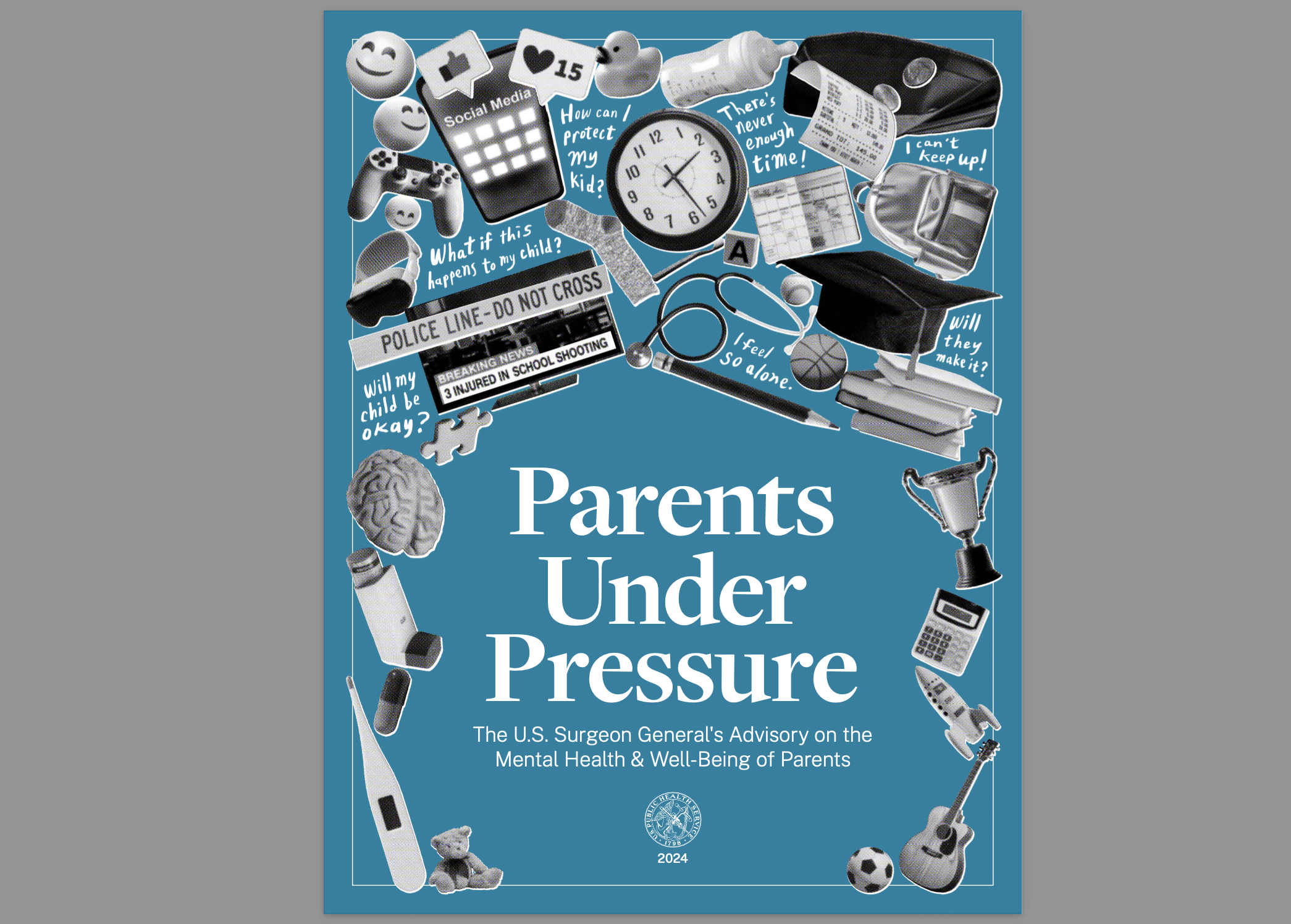
U.S. Surgeon General Vivek Murthy, the father of two young children, turns the focus in his latest advisory to the stresses faced by parents.
‘I Felt a Lot of Freedom’: Midwest Summer Camp for LGBTQ+ Youth Offers Sanctuary and Life Lessons

Summer camps offer outdoor fun for kids, but for LGBTQ+ teens, they’re not always welcoming. Enter Camp 4 All – a place for friendship and adventure for LGBTQ+ kids in Michigan and Ohio.
If you’re not subscribed to MindSite News Daily, click here to sign up.
Support our mission to report on the workings and failings of the
mental health system in America and create a sense of national urgency to transform it.
For more frequent updates, follow us on Facebook, Twitter and Instagram:

The name “MindSite News” is used with the express permission of Mindsight Institute, an educational organization offering online learning and in-person workshops in the field of mental health and wellbeing. MindSite News and Mindsight Institute are separate, unaffiliated entities that are aligned in making science accessible and promoting mental health globally.
Copyright © 2021 MindSite News, All rights reserved.
You are receiving this email because you signed up at our website. Thank you for reading MindSite News.
mindsitenews.org
The name “MindSite News” is used with the express permission of Mindsight Institute, an educational organization offering online learning and in-person workshops in the field of mental health and wellbeing. MindSite News and Mindsight Institute are separate, unaffiliated entities that are aligned in making science accessible and promoting mental health globally.


Author

Related Articles

The Lindsey Clancy Murder Trial
Women nationwide watch the Lindsay Clancy trial and see themselves in her story, plus an investigation into hospitals that fail patients with addiction.

Grief and Rehabilitation in a California Prison
This month: a DUI offender’s path to rehabilitation, Lindsay Clancy revisited, Illinois prison protests, a fatal cell fire, and Missouri’s competency crisis.
Meta Pays $17 Billion Settlement for Lawsuit Over Child Harm
Meta will pay up to $17.1 billion and reshape how its platforms operate after 47 states argued that they are harmful and also addictive to children by design.