
Older Men With Low ‘Social Fitness’ Face Loneliness, Isolation
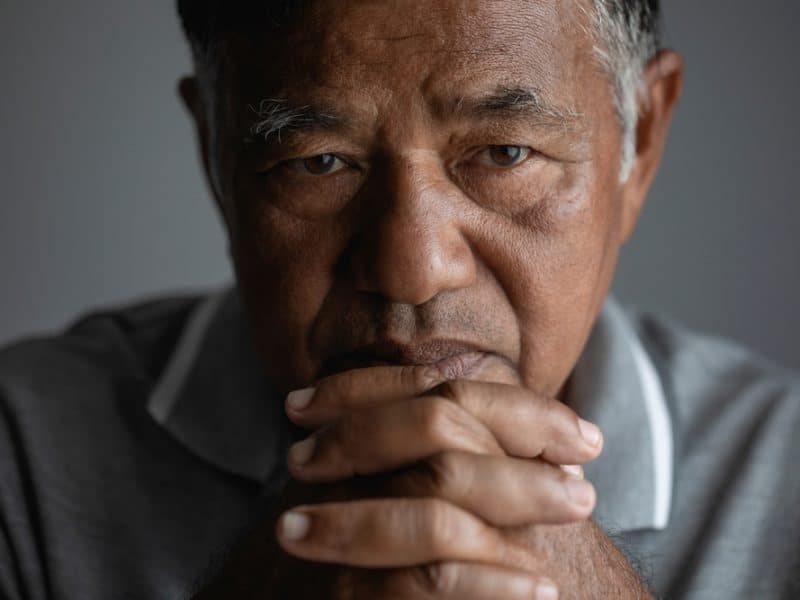
More older men than ever find themselves living alone. And many battle loneliness, isolation and a lack of social connections, harming their mental and physical wellbeing.

Hello there, planning to watch the vice-presidential debate tonight? We will take a look and see if and how both candidates address the subject of mental health. In today’s Daily, we bring you an update on the progress of California Gov. Gavin Newsom’s CARE Court legislation. One year in, just 630 people have filed petitions for the program—one-third of which have been dismissed.
In other news, isolation and loneliness place older men at serious mental health risk. Plus, a stack of memoirs therapists say you should read.
Older men with low “social fitness” face loneliness and isolation as they age
Paul Rousseau, 73, told the Washington Post that he’s finally embracing isolation. Retiring at 66 after a long career as a “somewhat distinguished physician,” he said he initially felt unsettled, uncertain, and completely alone — without friends, family or a professional identity. He’d lost his wife 10 years earlier, had little to no contact with his two daughters, and one by one, had had to say goodbye to each of his 3 dogs. “Now, I’m ‘no one,’ he wrote in the Journal of the American Geriatrics Society earlier this year, “a retired, forgotten old man who dithers away the days.”
It’s not exactly a hopeful sentiment, but hope is focuses on the future, and Rousseau doesn’t think about the future much. Now living in a 150-square-foot cabin with no running water and no bathroom, surrounded by 25,000 undeveloped acres in Wyoming, he’s learned to appreciate solitude. “I’m still lonely,” he said, “but the nature and the beauty here totally changed me and focused me on what’s really important.”
More older men than ever find themselves living alone. That includes just over 20 percent of American men ages 65 to 74, and 25 percent for those 75 or older. It’s a sharp increase from the year 2000, according to the Census Bureau, when only 16 percent of older men lived by themselves. Nearly 40 percent of them are divorced, 31 percent are widowed, and 21 percent never married. Many battle loneliness, isolation and a lack of social connections, deeply affecting their mental and physical well-being. Pointing to the need for more study on the demographic, psychologists and psychiatrists say older men can be extremely vulnerable. The rate of suicide among American men over age 85 towers over all other age groups.
“Older men have a tendency to ruminate, to get into our heads with worries and fears and to feel more lonely and isolated,” said Jed Diamond, 80, a therapist and the author of Surviving Male Menopause and The Irritable Male Syndrome. The Post points to the decline of men’s clubs and a decreased ability to play sports over time, as other factors leading to diminished mental stimulation and social connections.
“Men have a harder time being connected and reaching out,” said Robert Waldinger, director of the Harvard Study of Adult Development, which has studied hundreds of men’s lives over more than 80 years. His research has shown the importance of “social fitness,” or the ability to build and maintain relationships with others. Those men with the worst health, Waldinger said, “didn’t have friendships and things they were interested in — and couldn’t find them.”
To improve their wellness, Waldinger says men should seek out connection with others every day. Develop hobbies and pursue them, he said. “Put yourself in a situation where you’re going to see the same people over and over again. Because that’s the most natural way conversations get struck up and friendships start to develop.”
One year since its launch, CARE Court dockets are short on cases
Nearly one year after its launch, California’s CARE Court has helped just five people in San Francisco. That’s a far cry from the 1,000 to 2,000 city residents estimated to be eligible for the program, according to the San Francisco Chronicle. It’s not a surprise for something so new, said state Sen. Tom Umberg, author of the CARE Court law which is meant to get people struggling with severe mental illness into treatment. Other cities face similar rates of low participation. San Diego, a city 4 times the size of San Francisco, boasts only 57 CARE agreements so far. Though rates of participation vary across the nine counties that have implemented the legislation, it’s all minimal.
Roughly half the state’s residents live in its 9 CARE Court counties, with Newsom’s office assuming that 7,000 to 12,000 residents are eligible for help. As of July 31, just 630 petitions had been received across all 9 counties, one-third of which were dismissed. The 5 largest counties report only 100 cases with completed agreements, meaning a treatment plan is in place that county officials must provide.
That’s in part, says Algenib Collin of Fremont, because some people who need the program can’t use it. She wants to file a petition for her daughter, whose addiction to fentanyl has her living unhoused on the streets, but the San Francisco Department of Public Health said she likely doesn’t qualify for CARE Court. To be eligible, adults must be diagnosed with schizophrenia or another psychotic disorder. Their condition must also be medically unstable and declining. Though Collin’s daughter has cycled in and out of jails and emergency rooms over the past 2 years, exhibiting psychosis all the while, she does not have an official diagnosis.
“If they had talked to her and run some tests and come to that conclusion, that’s different. But they haven’t seen her. They don’t know her,” Collins said. “I’m desperate to get help for my daughter and it’s urgent. Each day counts.”
Angelica Almeida, who led CARE Court implementation at the health department, said it can be hard for some families to hear that CARE Court isn’t the right option for them. The department tries to connect people who don’t qualify with other services “whenever possible,” she added. The San Francisco Superior Court and City Attorney’s Office declined to speak with the Chronicle about the program’s first year.
The voluntary program, which stands for Community Assistance, Recovery and Empowerment, was envisioned by Gov. Gavin Newsom as a compulsory program in which the state could force people into stabilizing mental health and addiction treatment, and subsequently, off of the streets. Newsom backed down from mandatory treatment after heavy pushback from fellow lawmakers and other opponents of the legislation. More voluntary treatment programs are needed, said civil liberties advocates. Low participation highlights the difficulty of trying to fix such a massive problem with an under-resourced, fragmented mental healthcare system of which some people are leery.
Atty. Kaitlyn Wilson, who represents people in San Francisco’s CARE Court, said she walks around the city’s downtown in search of folks who have had petitions filed on their behalf, hoping to build enough trust to get them into the program. “The thing that creates the most success is trust,” Willison said. “But it’s the heaviest lift and the most time consuming.”
In other news…
Are you stressed? I can’t remember the last time I wasn’t stressed. NPR is hoping to change that for us with a special 5-part, multiplatform series, Stress Less: A Quest to Reclaim Your Calm. Each week, reporter Allison Aubrey will bring stories on the science of stress and resilience, spotlighting people who have learned to thrive despite the chaos of life.
If you’ve been feeling unsettled for an extended time, like me, you may welcome this New York Times story, which tapped several therapists, psychologists and other mental health experts for their fave memoir recommendations. The true stories of people who struggled with mental illness and survived, or better yet, thrived, are a good reference for people struggling emotionally.“The way the narrator makes meaning offers us an invitation to think about the meaning that we’ve made in our lives,” said psychologist Jonathan Adler. “It’s an invitation to realize that you are interpreting your story, and that you have choices about how you want to do that.”
The books include The Glass Castle (Jeanette Walls), Just Kids (Patti Smith), An Unquiet Mind (Kay Redfield Jamison), The Noonday Demon (Andrew Soloman), Strangers to Ourselves (Rachel Aviv), and Wave (Sonali Deraniyagala). Readers, we’d love to hear your recommendations for memoris as well.
“Happiness is more than just a mood…the literal pursuit of happiness may be shaping decisions at the ballot box,” wrote Carol Bishop Mills, co-founder and co-director of the Florida Atlantic University MainStreet Political Communication and Public Opinion Research Lab. Her research finds that happier voters tend to support the incumbent and favor stability, she continues in The Conversation, while unhappy voters are more inclined to seek change or support anti-establishment candidates. A newer shift, she has found, is younger voters becoming more open to Republican candidates as older Americans trend toward Democrats. The growing unhappiness of younger voters is one explanation for the change, while older voters show greater concern over losing existing social benefits, including abortion and social security.
Adult ballet is back, baby! In Los Angeles, at least. “During COVID, children and adults found themselves in some tough places emotionally and mentally and the studio was a haven for them,” Richard Tahvildaran-Jesswein, the managing director of LA’s Westside School of Ballet, told the Los Angeles Times. “Now, in the wake of COVID, we’re experiencing this magic resurgence.” Students can learn resilience and skill as they “fail better,” or improve after each mistake, and reconnect to the joy they felt dancing in youth.
If you or someone you know is in crisis or experiencing suicidal thoughts, call or text 988 to reach the 988 Suicide & Crisis Lifeline and connect in English or Spanish. If you’re a veteran press 1. If you’re deaf or hard of hearing dial 711, then 988. Services are free and available 24/7.
Recent MindSite News Stories
Treatment Not Trauma: The Push to Transform Chicago’s Mental Health System Takes Some Big Steps
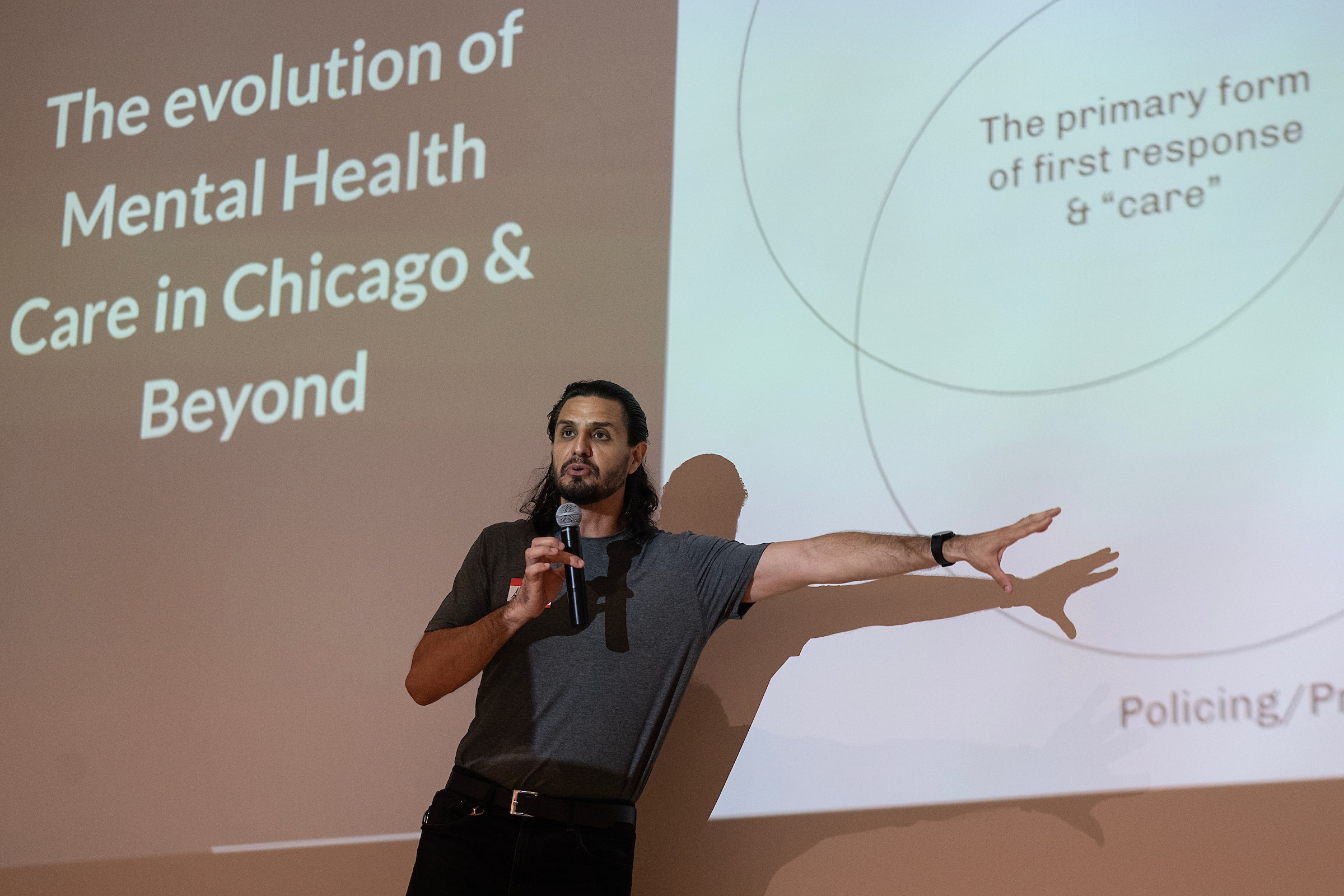
A coalition of community advocates and mental health professionals have been demanding change in Chicago’s mental health landscape for years. For the moment, at least, they’re taking a victory lap. Continue reading…
Docile: Memoirs of a Not-So-Perfect Asian Girl

Hyeseung Song tackles head on the expectations she faced growing up and the journey she had to make to find her self-worth. Continue reading…
New Report: Mental Health Philanthropy Inches Up, but Still Lags Far Behind the Need

Mental health giving is rising slowly, but it’s still a small percentage of overall giving.Continue reading…
If you’re not subscribed to MindSite News Daily, click here to sign up.
Support our mission to report on the workings and failings of the
mental health system in America and create a sense of national urgency to transform it.
For more frequent updates, follow us on Facebook, Twitter and Instagram:

The name “MindSite News” is used with the express permission of Mindsight Institute, an educational organization offering online learning and in-person workshops in the field of mental health and wellbeing. MindSite News and Mindsight Institute are separate, unaffiliated entities that are aligned in making science accessible and promoting mental health globally.
Copyright © 2021 MindSite News, All rights reserved.
You are receiving this email because you signed up at our website. Thank you for reading MindSite News.
mindsitenews.org

The name “MindSite News” is used with the express permission of Mindsight Institute, an educational organization offering online learning and in-person workshops in the field of mental health and wellbeing. MindSite News and Mindsight Institute are separate, unaffiliated entities that are aligned in making science accessible and promoting mental health globally.


Author

Related Articles

The Lindsey Clancy Murder Trial
Women nationwide watch the Lindsay Clancy trial and see themselves in her story, plus an investigation into hospitals that fail patients with addiction.
Grief and Rehabilitation in a California Prison
This month: a DUI offender’s path to rehabilitation, Lindsay Clancy revisited, Illinois prison protests, a fatal cell fire, and Missouri’s competency crisis.

Meta Pays $17 Billion Settlement for Lawsuit Over Child Harm
Meta will pay up to $17.1 billion and reshape how its platforms operate after 47 states argued that they are harmful and also addictive to children by design.