
The 2024 Presidential Election is Bad for Our Mental Health
Pretty much everyone is anxious about November 5, with 72% of Americans worried that the election results could lead to violence.


October 29, 2024
By Don Sapatkin

Good Tuesday morning! In today’s Daily: Everything you (perhaps didn’t) want to know about mental health and the presidential election. Why Covid can be more severe for people with mental illness.
And your Tuesday bonus: What Is “Pink Cocaine”? The New York Times will tell you.
A personal note: I’ll be on vacation for most of November, hiking in national parks and visiting friends and relatives in the West. See you after Thanksgiving.
This year’s presidential election is not good for the nation’s mental health

Pretty much everyone is anxious about Nov. 5. Nearly 7 in 10 adults said the presidential election (69%) is a significant source of stress in their lives, behind just two other factors, both election-related: the future of the nation (77%) and the economy (73%), according to a comprehensive American Psychological Association survey of 3,000 adults conducted by the Harris Poll between Aug. 1 and Aug. 23 – before some of the candidates’ most anxiety-provoking statements were even uttered.
Some 72% of Americans surveyed said they were worried that the election results could lead to violence, 56% said this could be the end of democracy and 32% said the political climate caused strain with family members, with 30% saying they limit their time with family because they don’t share the same values. Some 41% even said that the state of the nation has made them consider moving to a different country, although it’s hard to imagine many actually would. (A MindSite News colleague wishes to interject at this point that a number of friends worried about the direction the country is going have already moved to a different country.)
An unrelated survey conducted for Forbes Health by Talker Research that asked slightly different questions recorded similar responses. This one also asked how people are coping with election anxiety and found that 44% are avoiding the news, 35% are talking with friends or family members, 29% are avoiding social media, 21% are exercising more and 21% are avoiding family and friends with differing views. Emotional eating is also common – 14% overall, but 23% among Gen Z, and 9% say they’re talking with a therapist. And a look at political substacks reveals that many readers have reported regular heavy drinking, includng day drinking, as a result of election anxiety.
The National Council for Mental Wellbeing’s tips for managing your mental health in a tense political climate agrees that unplugging is No. 1, followed by taking action, practicing self-care, excusing yourself from political conversations that affect your mental health, but also being open to others’ opinions. Hm.

Some polls have also asked about mental health issues.
Nearly 4 out of 5 Americans say they either strongly or somewhat strongly support the federal parity law requiring insurance companies to provide equivalent coverage for mental health, substance-use disorder, and physical health services, an online West Health-Gallup Healthcare Survey of 3,660 adults found, including large majorities of Democrats, independents and Republicans.
Yet mental health issues have gotten far less attention from the press and the presidential candidates than the mental health of their opponents. Both candidates have talked about mental health and substance abuse on the campaign trail, physician and former New York Times medical reporter Lawrence K. Altman writes in an opinion piece for STAT. Kamala Harris has highlighted the Biden administration’s efforts to fund more mental health counselors in schools and to enforce parity rules, and her campaign has pledged to increase mental health resources for veterans.
Donald Trump has said little about improved access, but he’s campaigned on related mental health issues like children’s well-being in the wake of school shutdowns during the pandemic, substance abuse, and managing chronic illnesses, Altman writes. He has also repeatedly demonized people who are homeless, are immigrants or who don’t support him as needing to “have your head examined.” He also has vowed to “bring back mental institutions” and lock up people experiencing mental health problems on the streets. Philadelphia Inquirer columnist Will Bunch talked with MindSite News’ Rob Waters about Trump’s stigmatization of mental illness earlier this month.
Altman’s STAT column noted that Trump and Harris “are trading direct and unrelenting vitriolic attacks on each other’s mental health,” in a way that “distracts from the urgent mental health crisis” and is “obscuring and trivializing the suffering of millions of Americans with mental health issues.” Trump routinely refers to Harris as “Crazy Kamala” and “a lunatic.” (SNL’s Weekend Update has a good take.) Harris, on her part, has said that Trump “is increasingly unstable and unhinged.” (Editor’s note: The book The Dangerous Case of Donald Trump includes 37 leading psychiatrists and mental health experts who expressed similar opinions about Trump in 2017.)
Tidbits: The Arkansas Supreme Court voted 4-3 to kill a ballot initiative titled the Medical Marijuana Amendment of 2024, saying that the name is misleading because the measure includes a provision that would allow Arkansans to possess up to one ounce of marijuana for any purpose if the federal government decriminalizes cannabis, Politico’s Pulse newsletter reported.…Psychiatric nurse practitioner Sheri Biggs, a Republican, is expected to win a heavily GOP and rural South Carolina congressional district. Biggs has said that America is afflicted with “mental, fiscal and spiritual problems” that she hopes to treat while zeroing in on immigration, tackling wasteful spending and protecting “the sanctity of life.”
Why do mental health conditions raise the risk for severe Covid?
Doctors have known for a while that when people with serious mental illness develop Covid, they fare worse than others. We reported here two years ago on the stark differences in mortality rates: Among Medicare recipients during 2020, the first year of the pandemic, the number of deaths among people with schizophrenia was 33% higher than usual, compared to a 15% rise among the general Medicare population. Mental illness became recognized as a risk factor for severe outcomes and hospitalization from Covid-19 – just like better-known risk factors such as cardiovascular problems, chronic kidney disease and asthma.
Now scientists are starting to understand some of the reasons why, the New York Times reports. Many mental health conditions can lead to chronically high levels of stress, which in turn causes the immune system to flood the body with hormones like cortisol and adrenaline. Those hormones make it harder to produce certain immune cells that are crucial for fighting off illnesses. Elevated stress can also lead to persistently high blood pressure and more plaque deposits in the heart, contributing to cardiovascular disease — which is linked to worse Covid outcomes.
Some antipsychotic drugs might weaken the immune system, and both they and some antidepressants can also lead to weight gain − obesity is a separate risk for factor for hospitalization from Covid. People with mental illness are also more likely to smoke and therefore have worse lung health. And people with severe mental illnesses are also more likely to experience poverty and not be able to afford health care.
The infection works the other way around, too: Covid raises the risk of mental illness because the virus causes inflammation in areas of the brain that control emotion and cognition. For people who already have a mental illness, Covid can make things worse. In some patients, long Covid symptoms like depression, anxiety, fatigue and brain fog might even be signs that a Covid infection has exacerbated a pre-existing mental illness, experts said.
If you or someone you know is in crisis or experiencing suicidal thoughts, call or text 988 to reach the 988 Suicide & Crisis Lifeline and connect in English or Spanish. If you’re a veteran press 1. If you’re deaf or hard of hearing dial 711, then 988. Services are free and available 24/7.
Recent MindSite News Stories
He attempted suicide. Peoria Jail restrained him in a chair for five days.

Peoria County Jail in Illinois has kept mentally ill charges in restraint chairs far past industry recommendations. Continue reading…
A mentally ill man was restrained in a chair for 68 hours at Franklin County Jail, violating policies, report says

The United Nations has declared that chair restraints are torture. But Illinois jails use them routinely, according to this story from the Illinois Answers Project. Continue reading…
Dissociative Identity Disorder Through The Ages

From the Renaissance to the controversial book Sybil and beyond, the existence of multiple personalities has been explored for centuries. Continue reading…
If you’re not subscribed to MindSite News Daily, click here to sign up.
Support our mission to report on the workings and failings of the
mental health system in America and create a sense of national urgency to transform it.
For more frequent updates, follow us on Facebook, Twitter and Instagram:

The name “MindSite News” is used with the express permission of Mindsight Institute, an educational organization offering online learning and in-person workshops in the field of mental health and wellbeing. MindSite News and Mindsight Institute are separate, unaffiliated entities that are aligned in making science accessible and promoting mental health globally.
Copyright © 2021 MindSite News, All rights reserved.
You are receiving this email because you signed up at our website. Thank you for reading MindSite News.
mindsitenews.org

The name “MindSite News” is used with the express permission of Mindsight Institute, an educational organization offering online learning and in-person workshops in the field of mental health and wellbeing. MindSite News and Mindsight Institute are separate, unaffiliated entities that are aligned in making science accessible and promoting mental health globally.


Author

Related Articles
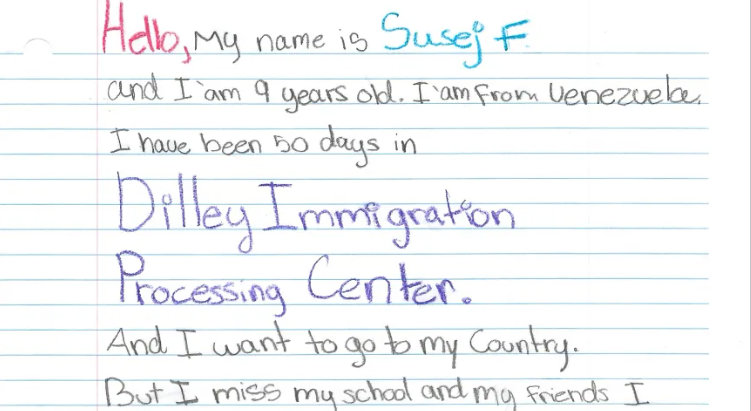
Health Organizations Condemn Traumatic ICE Raids, Family Separation
According to letters from children living in an ICE detention facility, living conditions are inhumane and their mental health is suffering.
In Teens, Social Anxiety Often Looks Like Anger
A study finds that some teens’ aggressive behavior may be due to social anxiety, not straightforward reactivity.
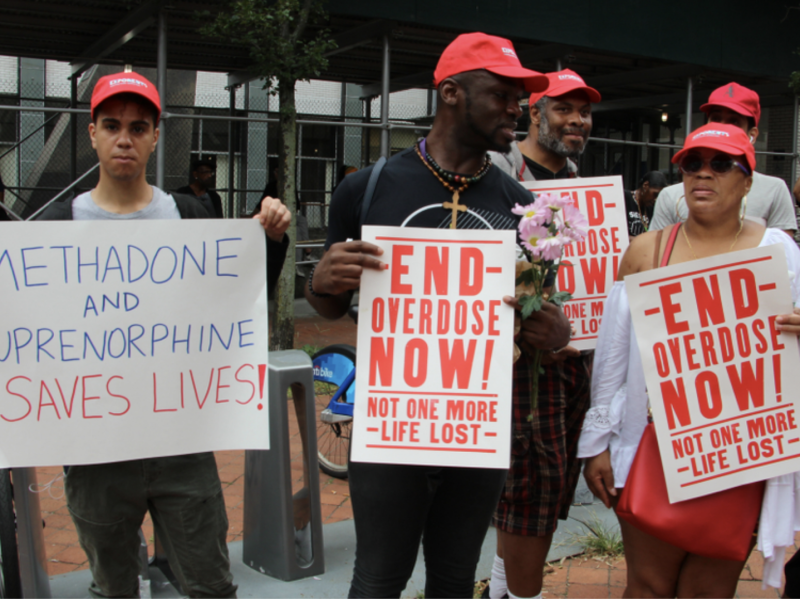
Expert Calls for Harm Reduction, Not Punishment, to Resolve Our Overdose Crisis
As the Trump administration pulls funding from harm reduction, an expert on the overdose crisis says it’s the best way to save lives.
