
Therapist Uses Dungeons and Dragons to Help Heal Patients
Katrina Serrano, a certified therapeutic dungeon master, says clients can challenge themselves with D&D in a safe environment.

Wednesday, Jan. 15, 2025
By Courtney Wise

Greetings, MindSite News Readers. In today’s Daily, one Philly-based therapist finds a way to incorporate her love of Dungeons and Dragons into her practice, and her clients are jazzed about it. Arizona becomes the 11th state to join a crisis helpline for anyone involved in agriculture in the state, including farmers, ranchers, lumberjacks and farmworkers.
In other news, a eulogy for Carol Acosta (Killadamente), a popular Dominican American influencer with a modest lifestyle who died last week at 27. Plus, stories on how to help free yourself from constant self-criticism and a profile of a neuroscience superstar.
Philadelphia therapist runs group sessions as a dungeon master
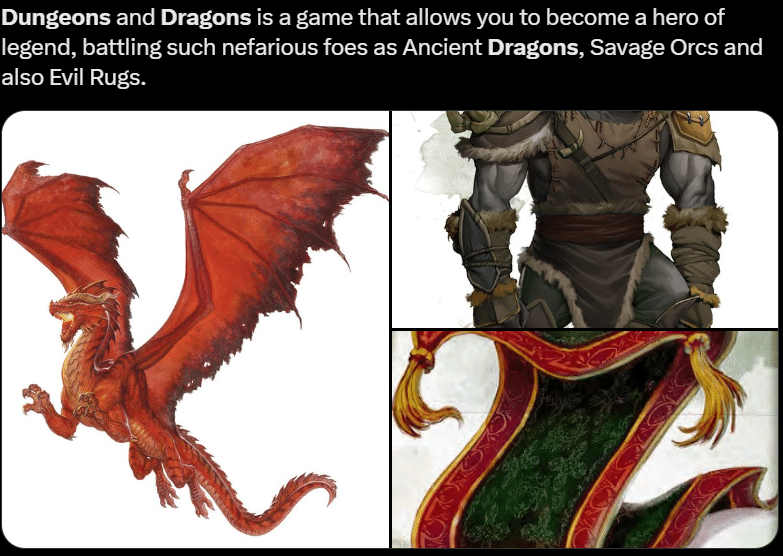
Katrina Serrano, a therapist and licensed clinical social worker, grew up playing and loving Dungeons and Dragons (D&D). So imagine her delight when she learned she could incorporate the game into her therapy practice benefitting her patients in the process. During the COVID shutdowns, Serrano completed training to become a certified therapeutic dungeon master in D&D therapy, and immediately found lots of enthusiasm for the service among her existing clients. The game doesn’t replace individual therapy, Serrano told WHYY, but serves as a tool to enrich clients’ broader growth.
“It’s the world where you can help people explore things, [do] exposure therapy — I would say that’s one of the biggest things,” Serrano said. “It’s a safe environment where someone can challenge themselves in a way they know they can leave and be OK. That’s the beauty of it.”
Serrano’s D&D therapy is conducted online, in small cohorts. Each group meets for two hours, twice per month, for six to seven months. The 90-minute games are bracketed by traditional therapy discussions at the start and end. Each game consists of players and a dungeon master, Serrano in this case, who crafts a world for the players to experience. Serrano’s is called Asora, and is filled with all the elements you’d expect in a fantasy world – gems, mythical creatures, jungles, swamps and mountains. Players determine – and embody – their character’s background, personality, and emotional skills and attributes during play.
Characters could be an “ideal self” players would like to work towards in real life, perhaps a persona that shares characteristics clients hope to work on, or something else entirely. One client, Serrano said, “was a half-orc druid and was this run-into-the-fray, confident, ‘I’m going to make decisions, I’m a leader’ character. Because that’s who she is on the outside, that’s her mask.” The game’s exercises, smaller challenges that make up longer campaigns, allow players to explore their real-life fears, behaviors, and circumstances.
For Serrano, D&D therapy has been a great way to indulge her love of the game as she genuinely helps people transform their lives. She also finds that it’s a good way for people to make a soft entry into therapy, if they’ve never tried it before. Best of all, players need no prior knowledge or experience of playing D&D.
What do clients make of it? In their feedback notebook, one wrote, “Through the game, I am learning how to trust my instincts when it comes to decision making and to be comfortable with the possibility of making the wrong choice sometimes, and learning how to forgive myself for real or perceived mistakes.”
Arizona launches a crisis helpline specifically for farmers
Farmers, ranchers, loggers, farmworkers, fishers and anyone else involved in agriculture in Arizona have a new place to seek help during a mental crisis. The AgriStress Helpline is free, confidential, and available 24/7 through phone call or text message. Its staff are trained specialists who understand the unique stressors Arizona’s farmers navigate on a daily basis, and can guide callers to much-needed resources or clinical treatment. With the launch, the state becomes the 11th to use the agriculture-specific helpline, joining Colorado, Connecticut, Missouri, Montana, Oregon, Pennsylvania, Texas, Virginia, Washington, and Wyoming, AZCentral reports. (Note: After publication, a reader alerted us that Minnesota also has a rural-stress helpline.)
Farmers face unique occupational demands, including an inability to take days off work when struggling with stress or depression, as doing so could compromise the farm itself. It’s therefore crucial that helpline operators are specialists, with an appropriate cultural understanding.
“One of the challenges that we talk about most often is the added pressure of managing a family farm and being a multi-generational family farm,” said Phil Bashaw, CEO of Arizona Farm Bureau – one of five agencies that collaborated to get the hotline up and running in the state. It’s a concern most US farmers face, as some 96% of all farms in the nation are family-owned. “Everybody wants to leave that farm better than when they found it and nobody wants to lose the farm on their watch. That’s a huge pressure for agricultural operators.” Bashaw also noted that the organization has worked to normalize conversations about prioritizing mental health in recent years. “It’s OK not to be OK and ask for help when you need it,” he said.
As a group, agriculture workers like farmers, commercial fishers, farmworkers and foresters face some of the highest occupational rates of suicide in the nation, according to the Centers for Disease Control. The Arizona Department of Health Services found that the risk of suicide among agriculture producers in Arizona was 2.5 times that of non-producers in the state. Moreover, a 2024 report from Mental Health America found that Arizona ranks among states with the highest incidence of mental illness but lowest access to treatment.
For now, the helpline is funded for just one year, with support from the USDA’s Western Regional Agricultural Stress Assistance Program. A collaborative of five agencies in the state, made up of the University of Arizona Cooperative Extension, Arizona Department of Agriculture, Arizona Farm Bureau, Arizona Department of Health Services and Arizona Health Care Cost Containment System, continue to seek permanent funding.
They’ve also built in an incentive to call the helpline – even for those not necessarily ready to seek help for their mental health. Besides emotional support and suicide intervention and prevention, AgriStress helpline specialists are equipped to guide callers to resources tailored for the agriculture industry, including drought relief funds, natural disaster assistance, loans and grants, contacts for technical assistance, and housing support and health care services.
“The message is that you’re not alone in this,” said Michele Walsh, associate director for family, consumer, and health sciences for the UA Cooperative Extension. “This is an unpredictable occupation, there are a lot of growing challenges in the field, and…you can take steps. It’s for your and your family’s well-being.”
(See also MindSite News’ stories on a relief fund for Maine farmers whose land was poisoned by ‘forever chemicals,’ racism worsens mental health woes for Black farmers in Georgia, farmworkers and the mental health crisis in Colorado and California.)
In other news…
Don’t miss this STAT News profile of Kafui Dzirasa, a neuroscience superstar and mental illness researcher. Kafui Dzirasa is brilliant. And yet, the pioneering neuroscientist, whose research was deemed “likely to change the way psychiatrists think about mental illness” has faced nasty discrimination while ascending to the top of his field. Still, like air, he rises. Not even ADHD has delayed him.
His research takes a departure from chemistry-based experiments around treatments for severe mental illnesses, including psychosis, schizophrenia, or treatment-resistant depression. Dzirasa instead seeks to understand how the brain’s electrical networks affect responses to treatment. It’s a bold move. “He realizes such research is taking on not one stigma, but two,” Usha Lee McFarling writes in STAT News. “Mental illness is stigmatized but so are attempts to use electricity to treat it.”
Freeman Hrabowski adds that Dzirasa “is a force of nature: I’ve known that about him since he was 17.” Hrabowski was president of the University of Maryland, Baltimore County when Dzirasa earned his bachelor’s degree there, and the pair remain friends. “When Kaf talks to me about his science, I get tears. It’s like the universe opening up.”
Wanna care less about what others think? Neuroscientist Daniel Glaser told Vogue that caring about what others think isn’t really a thing. Well, more specifically, Glaser said that we don’t actually know what others think. So, what we’re actually caring about is the story we’ve made up in our heads about what others think. “I have this person in my head called the ‘critic’ or the ‘editor,’ and at my worst, I’m incredibly good at conjuring up the person who would be most critical of my performance,” he explained. “As a species, we’ve evolved to tell stories about ourselves, to create narratives. We make things real, and then those things change how we act.” Our job, then, isn’t to care less about what others think. It is to change the story we tell ourselves.
But how do we contend with the fact that our species is incredibly social and what people think about us does, in many circumstances, matter? Maybe by accepting the fact that other people tend to like us more than we think they do. A 2018 study discovered as much, revealing what researchers call the “liking gap.” We tend to assume people are as critical of us as our least generous thoughts about ourselves are, but it’s not true. That’s just the story we tell ourselves. So if your struggle is “caring about what others think,” resolve this year to remember that’s not the real issue. “The trick isn’t to stop yourself thinking of other people,” Glaser said, “but to vividly conjure up someone who’s delighted with what you’ve done.”
Remembering Carol Acosta, the Dominican American influencer millions knew as Killadamente: Though she was just 27 years old when she died on January 3rd, friends of Carol Acosta told the New York Times that she achieved the things she wanted to. “I’m so happy for her, so proud of her,” longtime friend Evelyn Calle said. Acosta built a career for herself as a lifestyle influencer, reaching 6.7 million followers on Instagram with frequent messages of self-love and body positivity, sharing her experiences of motherhood and encouraging people to take care of their mental health. As her profile rose, she remained down-to-earth and relatable to her core base, the Dominican diaspora. That’s different from a lot of high-profile influencers, according to NYU media studies professor Isra Ali. Unlike others who lean toward an image of curated perfection, Acosta projected a life accessible to the average person. “It is a way of saying that they’re not going to acquiesce to a desire to be assimilated,” Ali said. “They are going to assert identity.”
If you or someone you know is in crisis or experiencing suicidal thoughts, call or text 988 to reach the 988 Suicide & Crisis Lifeline and connect in English or Spanish. If you’re a veteran press 1. If you’re deaf or hard of hearing dial 711, then 988. Services are free and available 24/7.
Recent MindSite News Stories
Thousands of Callers Are Giving Up On Calls to Texas’ 988 Suicide Hotline As It Grapples with a $7 Million Deficit
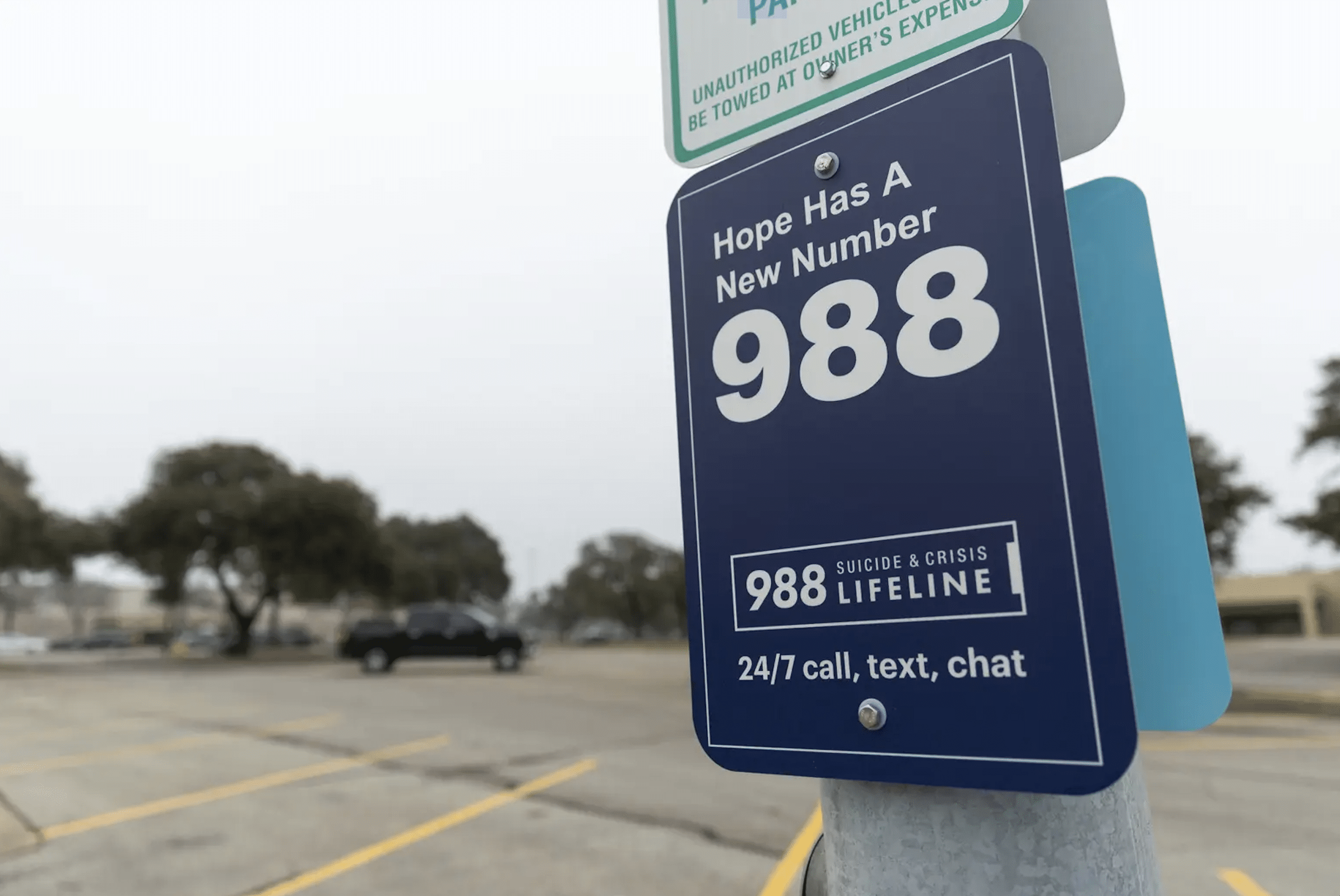
Thousands of Texans are abandoning the state’s suicide hotline mid-call as call centers struggle under a $7 million funding deficit and a growing suicide rate. Continue reading…
Long-Acting Injection Helps Heal ‘Beautiful Mind’ of Husband with Schizophrenia
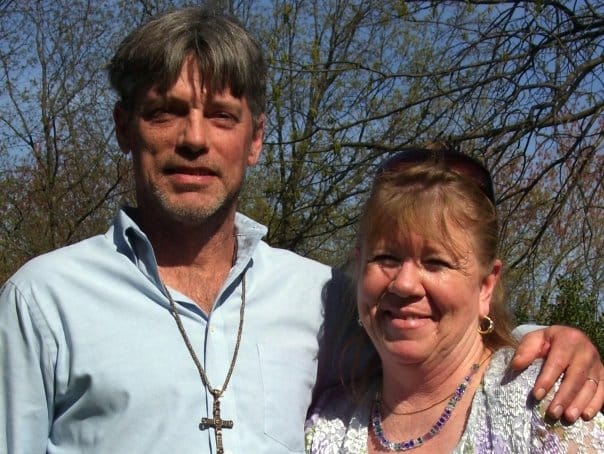
A long-acting monthly injection and counseling have helped heal problems linked to a beloved husband’s schizophrenia.. Continue reading…
Forgotten Children: The Unseen Victims of Gun Violence Are the Children Left Behind

Parental death has been rising in the U.S. due to COVID-19, the overdose epidemic and gun violence. In this first part of Forgotten Children, we look at efforts to help children grieving from the loss of parents to gun violence.
If you’re not subscribed to MindSite News Daily, click here to sign up.
Support our mission to report on the workings and failings of the
mental health system in America and create a sense of national urgency to transform it.
For more frequent updates, follow us on Facebook, Twitter and Instagram:

The name “MindSite News” is used with the express permission of Mindsight Institute, an educational organization offering online learning and in-person workshops in the field of mental health and wellbeing. MindSite News and Mindsight Institute are separate, unaffiliated entities that are aligned in making science accessible and promoting mental health globally.
Copyright © 2021 MindSite News, All rights reserved.
You are receiving this email because you signed up at our website. Thank you for reading MindSite News.
mindsitenews.org

The name “MindSite News” is used with the express permission of Mindsight Institute, an educational organization offering online learning and in-person workshops in the field of mental health and wellbeing. MindSite News and Mindsight Institute are separate, unaffiliated entities that are aligned in making science accessible and promoting mental health globally.


Author

Related Articles
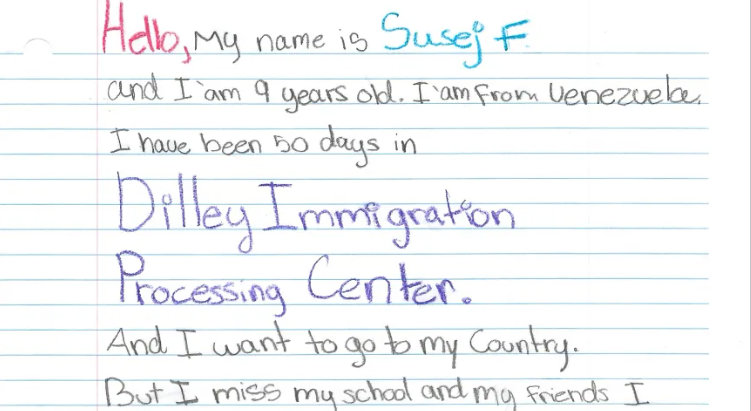
Health Organizations Condemn Traumatic ICE Raids, Family Separation
According to letters from children living in an ICE detention facility, living conditions are inhumane and their mental health is suffering.

In Teens, Social Anxiety Often Looks Like Anger
A study finds that some teens’ aggressive behavior may be due to social anxiety, not straightforward reactivity.
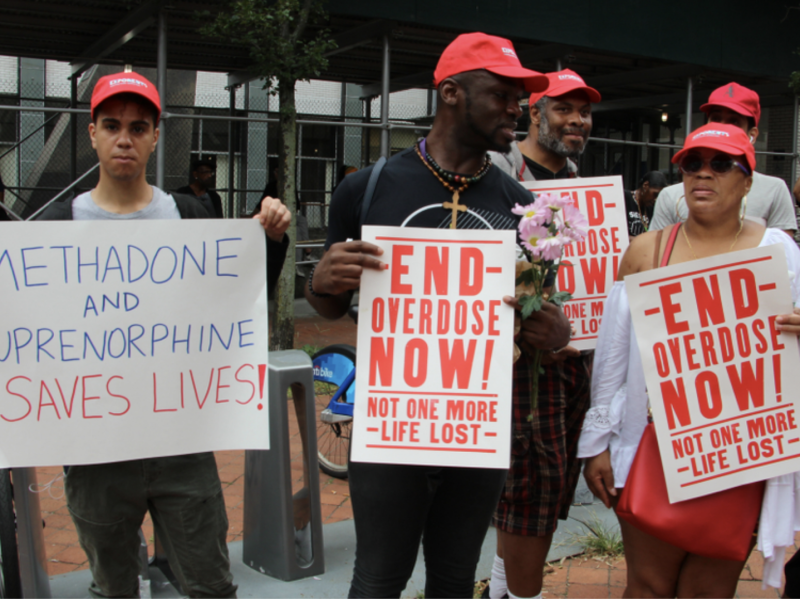
Expert Calls for Harm Reduction, Not Punishment, to Resolve Our Overdose Crisis
As the Trump administration pulls funding from harm reduction, an expert on the overdose crisis says it’s the best way to save lives.
