
Georgia Police Department Forges a Healthier Path for Officer Mental Health
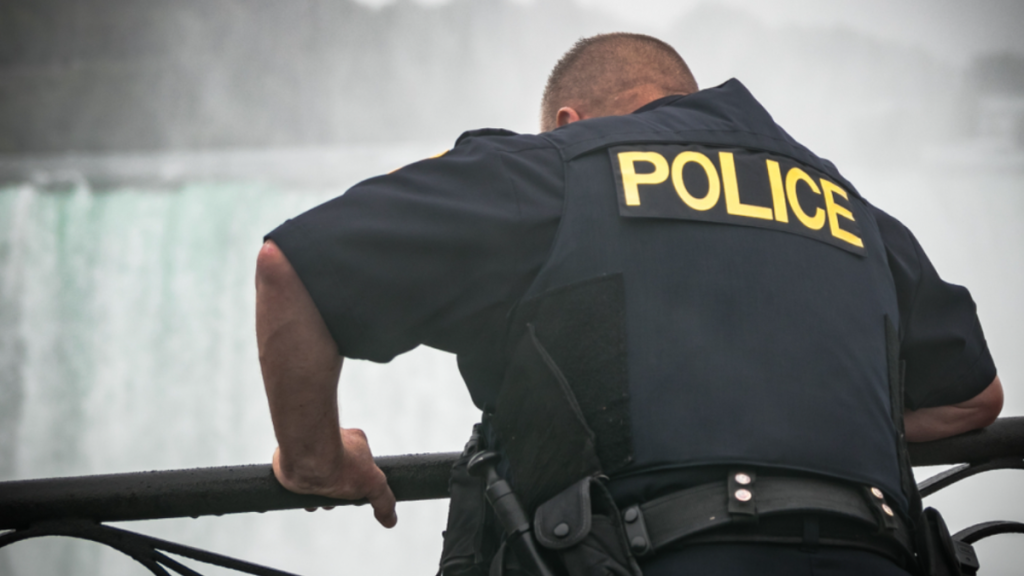
On average, police officers are exposed to 188 traumatic events in their lifetime. The toll in terms of mental health and suicide is huge. A police department in Georgia has launched an innovative effort to support police mental health.

Greetings, MindSite News Readers.
In today’s Daily, a police department in Georgia has launched innovative programs to support police mental health. A federal trial attorney voices concerns about Trump’s mental fitness on the grounds of dementia. And one licensed therapist suggests that society’s picture of “self care” promotes avoidance – dodging discomfort, rather than fostering resilience for navigating life’s inevitable stresses and conflicts.
But first, some good news: Last year, the Wall Street Journal reported on Rob Dart’s mental breakdown, which took him away from his life as a lawyer, writer and father and into homelessness. He’d ended treatment for his schizoaffective and bipolar condition during the pandemic, but after two violent, difficult years on the street, he’s finally in recovery. His healing began with a simple note to his sister, who, like the rest of his family, never gave up on him: “I need help and I am willing to take medications. I’d love to see you as well.” Stable once more, Dart told the WSJ he’s taking online courses to reinstate his law license and thinking of writing a book. “Maybe like a really gentle graphic novel with very beautiful scenery and very picturesque with just a little bit of emotional healing and that’s all that happens in it,” he said. A happy ending, he hopes.
In Marietta, Georgia, police department launches mental health initiatives for officers
The killing of George Floyd by Minneapolis police in May 2020 sparked a flood of protests against police brutality – and also underscored the issue of officer wellbeing. “It was a catalyst moment – not just for social and racial justice in the US, but also for police officers’ mental health,” Andy Carrier, a retired Georgia State Trooper, told NPR.
Where the average civilian encounters two or three traumatic events in their lifetime, the average cop is exposed to 188 over the span of their career. Suicides among police have risen in recent years, and some estimates suggest that they kill more officers than line-of-duty incidents. There’s evidence that police face much higher rates of PTSD, depression, burnout, and substance abuse, and are more likely to die an early cardiac death.
National conversations around the issue took place in earnest under the Obama administration, when demonstrations condemning police use of excessive force were springing up around and beyond the nation. Resignations in the wake of the 2020 surge in protests put more pressure on understaffed departments, according to Carrier. These days he is COO of Valor Station, a nonprofit behavioral health center that exclusively serves first responders, and is also a licensed social worker. He feels Georgia is one of the states leading the charge.
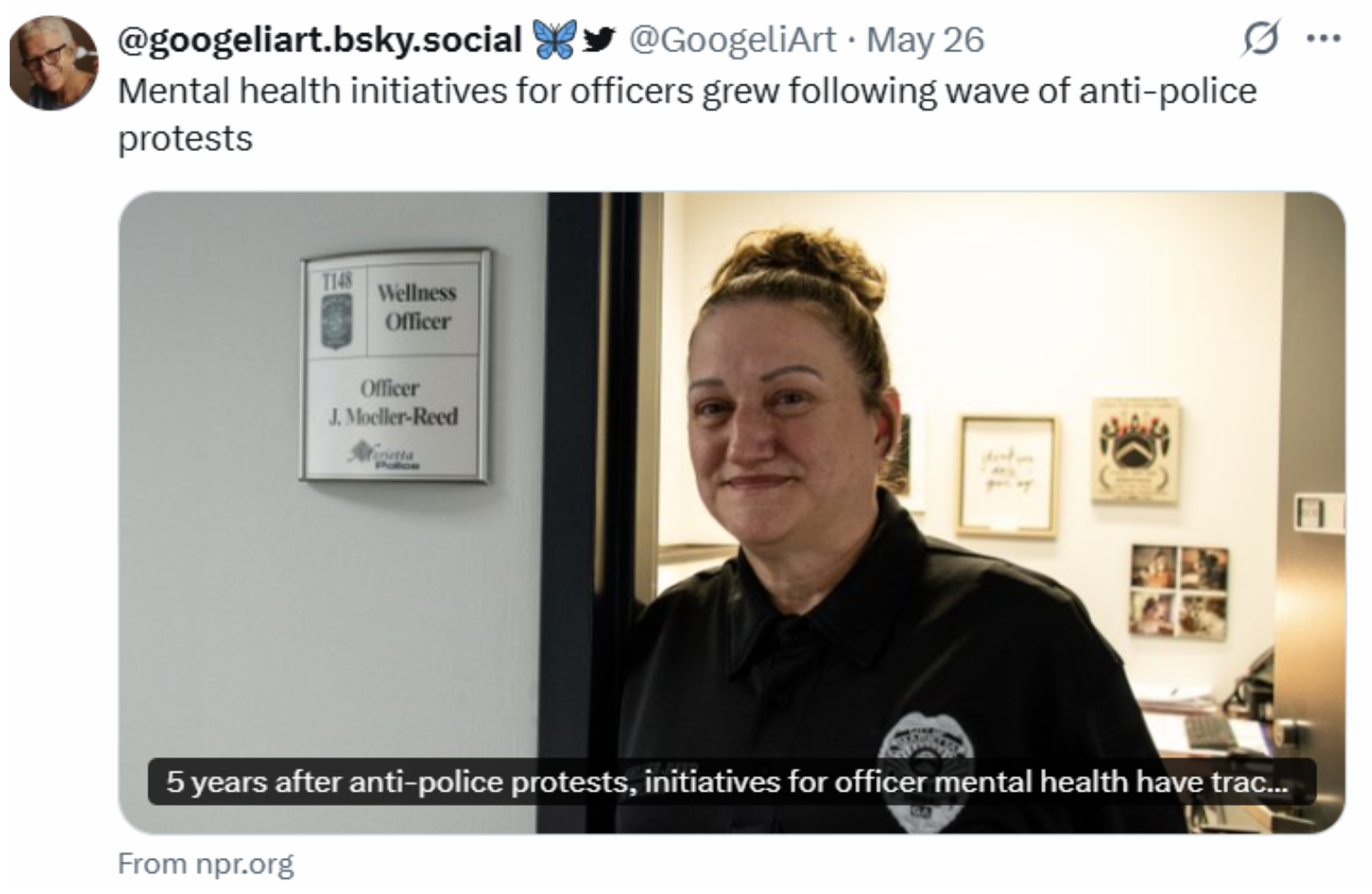
The Marietta Police Department, for instance, recently created the role of wellness officer, held by 25-year-veteran Officer Jonnie Moeller-Reed. Some tools they’re using are intuitive – officers can confide in a trained peer support team – others less so. Brazilian jiujitsu classes, for example, seem to have improved officer health and reduced the team’s use of force. As a cop, “you have to be very self-aware; you’ve got to be cognizant of the energy you’re putting out to the public,” Moeller-Reed said, and an equine therapy pilot aims to improve that. Animals, especially horses, can serve as an emotional barometer. Dismissive or uncooperative behavior from a horse, she explained, tells an officer to stop and check-in: “What kind of vibe am I putting off? Am I being too tense? Too aggressive? Too anxious?”
Police careers often last over 20 years, and “the trauma builds up over thousands of shifts,” according to Dr. Matthew Carpenter, a former officer turned behavioral scientist, and co-founder of Valor Station. Police academy training around mental health is important, but it needs regular reinforcement, he said. Carrier added that one tough point comes around 10 to 15 years in: when “innocence becomes cynicism, curiosity becomes arrogance and compassion becomes callousness.” Stigma around seeking help is still an issue, but it’s one that’s improving – Valor Station’s clinical staff are largely former officers, who can speak to the particular cultural context of law enforcement. Along with state legislative mandates around first-responder wellness programs, it amounts to a shift in law enforcement culture, mirroring a generational one, where young people view mental health as increasingly crucial.
Remembering the colleagues she’s lost to suicide, Wellness Officer Moeller-Reed advises current police to get comfortable needing and accepting help. “Be honest to yourself. Realize if the job has changed you, and not in a good way. We see ourselves as the fixers and the helpers and the problem solvers,” she said. “But if we can humble ourselves to do that, I think we can save a lot of lives.”
Related: A Marietta police officer a few years back saves life by performing infant CPR on a baby who’s choking.
Trump’s bizarre West Point commencement speech renews questions over his fitness
Questions over Trump’s mental unfitness ballooned after his commencement speech at West Point, in which he rambled about “trophy wives” and forgot to salute the graduates. Esquire magazine ran a story headlined “Surely Trump’s Wacko West Point Commencement Speech Proves He’s Mentally Unfit to Serve.”
Other telling moments, from the last few weeks: Trump trying to name the U.S. presidents on his Oval Office wall, getting the first two right but having a tough time with the third, eventually stammering Monroe, “from the Monroe document” (he meant “the Monroe Doctrine”); making baseless televised claims that South Africa had engaged in ‘white genocide,’ and posting an “unhinged” Memorial Day rant at perceived “SCUM” in one all-caps, 110-word-long sentence reviling judges, Democrats and other opponents.
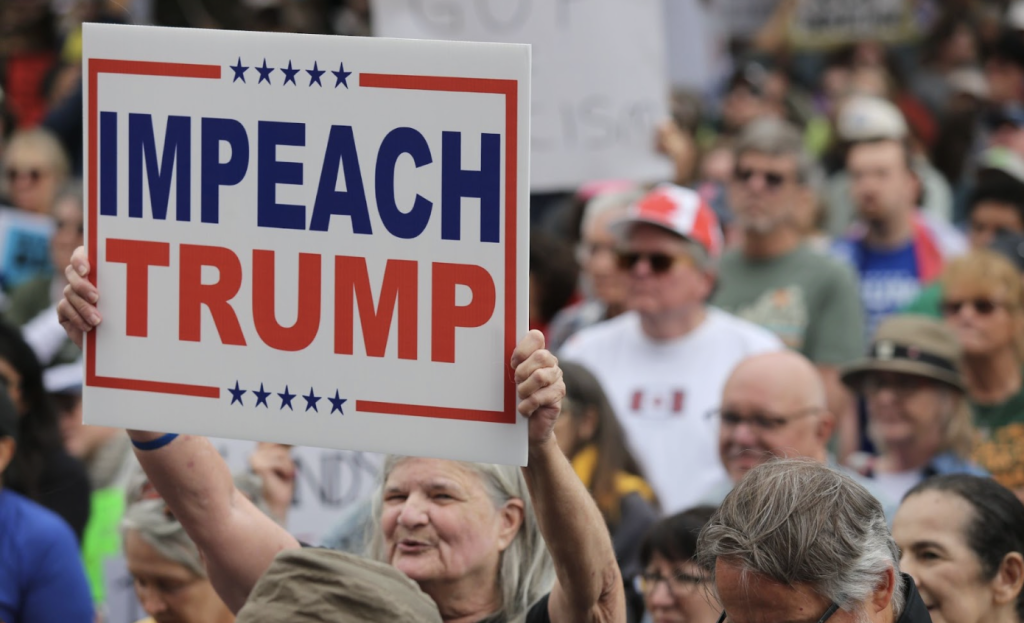
Federal trial attorney Sabrina Haake called for Trump’s impeachment in an editorial entitled Struggles to ‘even finish a sentence’: Behind the obvious signs of Trump’s growing dementia, quoting psychologist John Gartner from his interview last month with MindSite News (an interview that is the most-read story ever on the MindSite News website.)
Haake reminds readers that Trump, “who caused global destruction with his mindless tariff wars, now has the sole authority to launch nuclear weapons.” She calls for immediate action to protect the country – and the world. “Congress now has a duty to listen to the professionals. Republicans, on the whole, have a duty to act,” she writes. Many of those professionals, she says “have sounded the alarm, and met their professional duty to warn the world about Trump’s dementia.”
“Section 4 of the 25th Amendment allows the Vice President and either the Cabinet, or a body approved ‘by law’ formed by Congress, to jointly agree that ‘the President is unable to discharge the powers and duties of his office,’ she adds. “Democrats need to proceed under this clause, and frightened republicans need to join in before Trump commits another, potentially world annihilating, blunder.”
In related news, last week House Democrat Shri Thanedar announced he would not yet force a vote to impeach President Donald Trump as he had planned. Rep. Thanedar said he was holding off on his bill partly because he wants include in his impeachment articles Trump’s plans to accept a Boeing 747 from Qatar.
– Diana Hembree
See these updates to related MindSite News stories: “The Media Has Sanewashed Trump’s Dementia and Mental Illness” and “‘A Public Health Emergency’: The Crusade to Assess Trump’s Mental Fitness for Office.”
In other news…
Therapy is not about shortcuts to feeling good, says licensed mental health counselor RaQuel Hopkins. It’s about learning “to navigate life with a sense of confidence and grace, no matter what life throws,” she told Essence magazine. Real self care is not about relaxing, doing less, and being comfortable – it’s actually about doing more mental and emotional work.
Therapy can be part of that, she says, but it’s not just about picking up terminology like “boundaries, capacity, and gaslighting” – it’s about understanding why you feel overwhelmed in the first place. That work, something “no one sees,” takes discipline, in Hopkins’ view. “It’s exercising, consistently moving your body, and actively communicating. …It’s the outcome of being more grounded.” Real self care is, according to her, “about how you choose to show up in the world.”
Heavyweight from Jonathan Goldstein: He’s no therapist, but Jonathan Goldstein’s Heavyweight podcast sure facilitates some healing. Each episode focuses on one person’s overwhelming emotional baggage, something they’ve been quietly carrying for years. Goldstein helps those folks reconnect – facilitating the connections that’ll lift their burden. Sometimes, that crucial conversation is just a thank you, like for Nick, whose life was saved by an unknown stranger more than 30 years ago. When Scott was in the throes of heroin addiction, he pawned an irreplaceable, historically significant family heirloom – he came on the show because he wants to make things right and release that guilt.
The name “MindSite News” is used with the express permission of Mindsight Institute, an educational organization offering online learning and in-person workshops in the field of mental health and wellbeing. MindSite News and Mindsight Institute are separate, unaffiliated entities that are aligned in making science accessible and promoting mental health globally.


Author

Related Articles

Most Americans Think Trump Mentally and Physically Unfit to Be President
59% of Americans think Trump is not mentally sharp enough to lead the country, according to the Washington Post/ABC News/Ipsos poll.
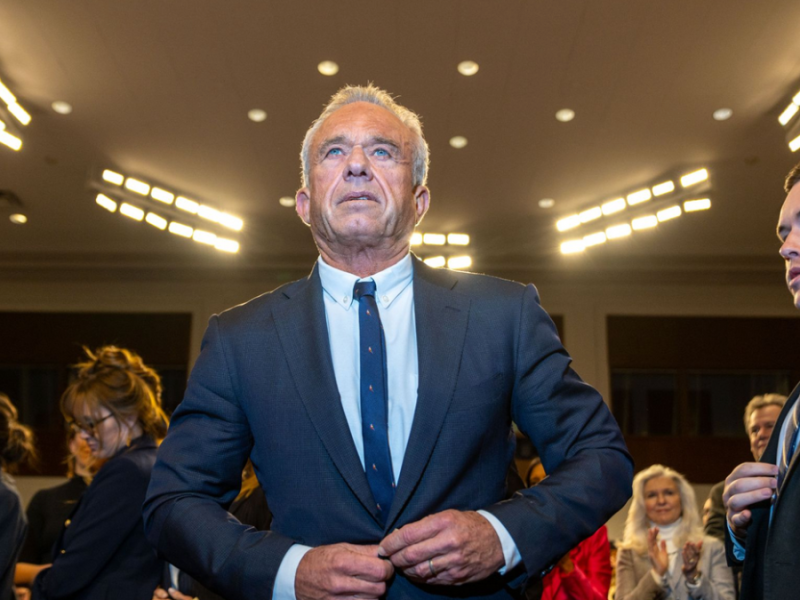
RFK Jr. Pushes to Curb Overprescribing of Psychiatric Drugs
Experts are worried about the Health Secretary’s proposal for work and farm camps for kids with drug or mental problems.

Foster Kids in D.C. Aim to Change a Failing System
A new bill would empower youth in foster care to define their own family networks and maintain critical financial resources.
