
The Link Between Eating Disorders and Too Little Food at Home
New research reveals a surprising link between food insecurity and eating disorders in diverse populations, including both men and women.
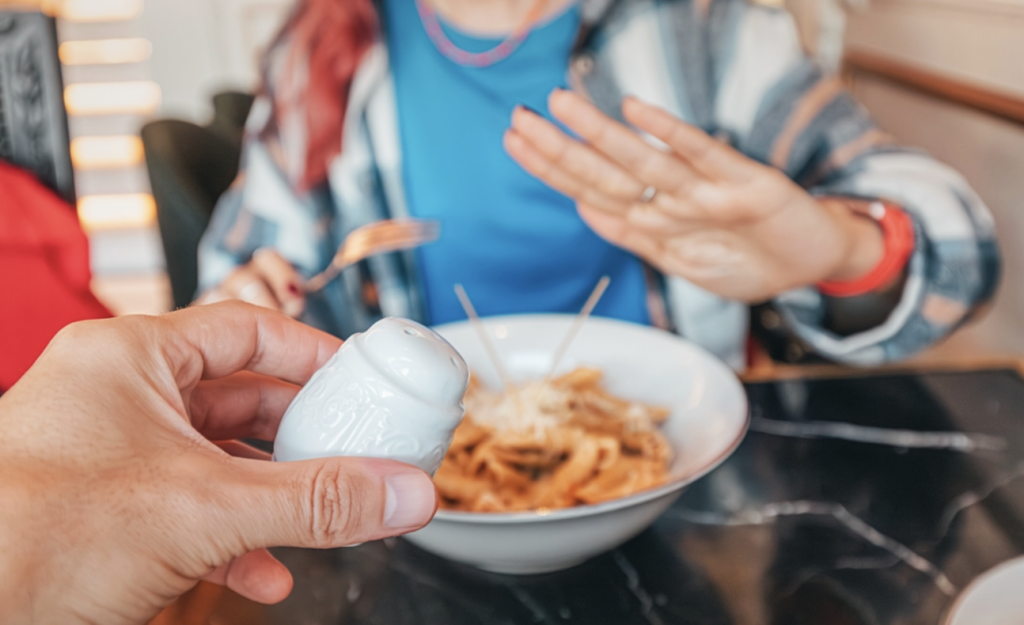
Though the zeitgeist continues to associate eating disorders with SWAG – skinny, white, affluent girls – “eating disorders do not discriminate,” as Christine Peat, director of the National Center of Excellence for Eating Disorders, told MindSite News earlier this year. Peat’s declaration is especially resonant in light of research out of San Antonio revealing food insecurity’s close connection to disordered eating.
“When I first mentioned that I was studying eating disorders and food insecurity, everyone looked at me like I had two heads,” clinical psychologist Carolyn Becker told Texas Monthly. But her data speaks for itself. One of Becker’s earliest studies, conducted with Keesha Middlemass and published in 2017, collected data at the San Antonio Food Bank. Looking at those with the highest levels of food insecurity – adults who reported having a child going hungry at home – they found that 17% exhibited clinical signs of disordered eating, such as bulimia, vomiting after eating, or using laxatives or diuretics to lose weight. That’s nearly double the highest estimates for the lifetime prevalence of eating disorders nationwide, and researchers found prominent issues in both men and women.
“It was eye-opening,” Middlemass says. “We had been missing an entire population with eating disorders.” Perhaps most astonishing: Many food-insecure participants continued to restrict their eating even when food became available.
Evidence suggests that shame is a significant mental driver of the behavior, though persistent social ills, including poverty, inadequate food assistance, unstable housing, and gaps in health coverage also perpetuate the problem. Susan Mengden, founder of the Esperanza Eating Disorder Center in San Antonio , recalls the story of one middle-aged client who had suffered from anorexia since her early teens. Her wages couldn’t cover all of her expenses, including food.
“When she runs out of money, the shame overwhelms her, and then she won’t eat for the rest of the month. Her diet then consists of water,” Mengden says.
She estimates that about a quarter of her center’s patients need help from the food bank, so she now works with them to “address the shame” as well as their nutritional needs.
“My entire relationship with food was solely just created around shame,” San Antonio native Eric Dorsa explains, about their struggle with disordered eating. “For me to have more, someone else in my family would have less.”
Eating disorders and food insecurity
Raised in a household with adults who struggled with addiction and finances, Dorsa learned that self-starving could help household funds stretch farther. “My eating disorder was very economical. For someone who was poor and not eating, it just felt very normal,” Dorsa said. Their anorexia was so severe it landed them in the hospital with heart failure at age 11, but doctors failed to diagnose an eating disorder – Dorsa just didn’t fit the stereotype.
Becker’s concern is that this blind spot among medical professionals contributes to a majority of people with eating disorders going undiagnosed, and therefore untreated. She continues to conduct her research, expanding it further with the help of gerontologist Lisa Smith-Kilpela to study the effects of food insecurity and binge eating in women over age 50.
While they know it won’t solve the material reality of food insecurity, Becker and Smith-Kilpela are both hoping that their research can address some of its silent consequences.
For more on the issue, check out Deadly Denials, MindSite News’ four-part series on eating disorders and health insurance written by journalist Melanie Haiken and supported by the Pulitzer Center
The name “MindSite News” is used with the express permission of Mindsight Institute, an educational organization offering online learning and in-person workshops in the field of mental health and wellbeing. MindSite News and Mindsight Institute are separate, unaffiliated entities that are aligned in making science accessible and promoting mental health globally.


Author

Related Articles

When Survivors of Violence Get to Own Their Own Stories
To survivors of violence, writer Kahn Davison says what’s beautiful is “we get to be our own biographers…and every day is a new chapter.”
Could GLP-1 be dulling your joy?
Anhedonia, the clinical term for “Ozempic personality,” is described as a general loss of pleasure in life.

Trump Order Fast-Tracks Psychedelic Testing, Bypassing Regulators to Control Science from White House
To get a good sense of how policy gets made these days in Washington, look no further than Saturday’s signing event at the White House. The bottom line: Damn the clinical trials. Full speed ahead.
