“The Eyes Have It”: Why Regular Eye Care is Key for Our Mental (and Physical) Health
Dr. Alex Martin’s work with Eyebot encourages people to get free vision tests that will alert them to possible eye issues.
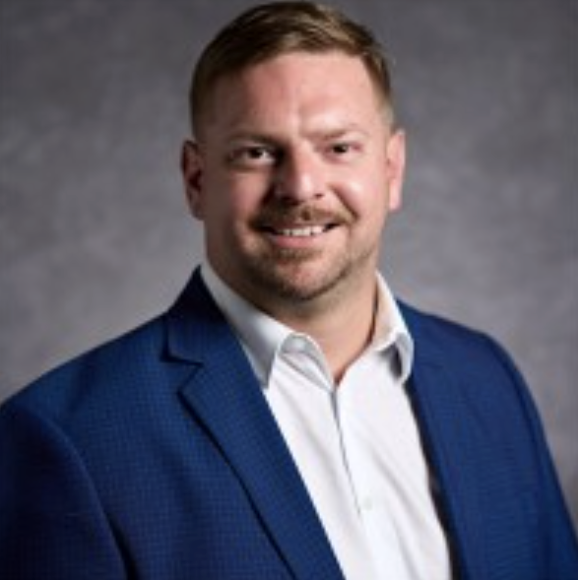
Dr. Alex Martin, chief medical officer of Eyebot, is an eye doctor on a mission: He’s passionate about ensuring that everyone has the right to eye care. And as medical director for Boston Vision in Lawrence, Massachusetts, he is also well aware of the relationship between vision and mental health, and was able to take time from his packed schedule for an interview with MindSite News about his work, including his role for Eyebot, a company that has removed traditional barriers to vision testing through the use of kiosks where people can test their vision for free in 90 seconds (and for $20, send the test results to telehealth eye doctors to generate eyeglasses).
MindSite News: Many people associate a visit to the optometrist with great new glasses or contact lenses, but you’ve mentioned there is also a close association with eye health and mental health. Could you talk about that?
Dr. Alex Martin: The relationship between vision and mental health is complex, acting as a two-way street. Losing your sight or living with a visual impairment can be incredibly difficult, leading to a range of emotional challenges. People with vision loss are significantly more likely to experience anxiety and depression than those with normal vision. This can stem from feelings of loneliness and social isolation, a loss of independence, a fear of being a burden on others, and the grief associated with losing a sense that is so central to how we navigate the world. For younger people, the risk of anxiety and depression is even higher, perhaps because they have less experience and fewer coping skills to manage a life-altering change.
I understand that 93 million adults in the US are at high risk for serious vision loss, but only half visited an eye doctor in the past 12 months. What’s behind this?
This is quite a problem, and it’s tough because part of it is how difficult it is to get an eye exam. For example, if you tried to call my office to get an appointment with me, I believe I’m booked out four months and I’m seeing a huge number of patients every day. I’m seeing about 40 people a day. Most eye doctors see somewhere around like 25 a day. There’s just a huge need.
And then there are barriers to care, such as taking time off from work or not realizing that a disease that can rob you of sight might go so slowly and undetectable that you won’t know it until there’s already a huge problem. And that’s where the power of the annual eye exam comes in. We’re the big screener of eye disease. If there’s anything we see, we’ll take care of it or make a referral. But the key is that you still have to come in every year, every two years.
I confess that I am one of those patients who doesn’t come in every year or two.
Oh, you’re not alone.
It seems that if patients don’t have eye problems during a visit, we sometimes get a false sense of security. Just yesterday, I noticed I was having a little trouble reading and I closed one of my eyes and realized I couldn’t read with the other. I couldn’t really even see out of it – there was a gray circle hovering in the middle. That was a shock.
One of our best attributes of having two eyes often covers up for the fact that one might be less dominant, one might lag behind, one might have a cataract in it. There’s tons of reasons. I can’t tell you the number of people who come in and we’re like, okay, so let’s test your right eye and then let’s test your left eye. And they’re like, whoa, wait a second. I had no idea how bad this was.
I’ll be making an appointment right after this interview, that’s for sure [laughs]. Tell us more about Eyebot, the visual screening kiosk, and how that might help alert people to a vision problem.
The company has been working on being able to reformat a lot of the components of an eye exam into a vision test in a kiosk. You’d be able to walk up to this kiosk for free and get your vision tested in about 60 to 90 seconds. At the end of that, if you wanted to know your results, we will let you know. Or there’s the option to ask for a doctor to review it. Or even if you just needed a pair of glasses there, as long as we get really high quality, good measurements and data, then an eye doctor would be able to review it and actually get you glasses while you’re at the kiosk. (It’s) to be able to get people into the system quickly, and even just from an education standpoint: Do you need urgent care? Do you have refractive error? Do you actually need glasses? All of those questions can be answered with high quality screening tools, like what we’re creating.
The whole point is that there’s small changes over time and we’re all busy, but if you had a machine that was available at your local pharmacy or grocery store, you might think, you know what? It’s free, so let’s just try it and see if I do need something.
I’m curious – how did you get interested in this field to begin with?
It’s partly because the most interesting class I ever took was neuroscience, where I was able to see how much of the brain is dedicated to processing vision. I myself needed glasses from the age of 8, so I knew the power of a pair of glasses. I was already at that point blind enough to not be able to see leaves on trees or people’s faces. So that moment of putting glasses on was just such an incredible shift, even as an 8-year-old realizing how much of the world was I really missing all this time? Those two major pathways led me to optometry.
I’m wondering why dental care and eye care, which should be part of our regular healthcare system, seems to be in a kind of optional or add-on category in terms of health insurance.
That’s a great question. A lot of people think that they’re completely separate, and if you only have one, you can’t have the other. And the best thing I can say is health insurance in general does cover annual eye exams once a year or once every other year, depending on the plan. With vision insurance you’re able to do the annual eye exam every year, and it gives you a discount on glasses and contacts.
But health plans do cover going in for eye conditions such as new blurry vision, going in for cataracts, going in for dry eye, going in for itchy eyes or pink eye. All of these things are medical conditions that yes, we do actually have coverage for, but nobody thinks of it that way. So I would just encourage anyone who’s watching, listening, or reading this to know that even if you’re not sure of your coverage, just call your local eye doctor and ask what your options are. They are going to be more than happy to try and figure out a way to use that insurance in the best way possible and get you in to see them.

Related Reading
After Physical Recovery From Severe Illness, Patients’ Mental Care is Often Forgotten
By Courtney Wise • Quick Takes • August 27, 2025
The name “MindSite News” is used with the express permission of Mindsight Institute, an educational organization offering online learning and in-person workshops in the field of mental health and wellbeing. MindSite News and Mindsight Institute are separate, unaffiliated entities that are aligned in making science accessible and promoting mental health globally.

Author

Related Articles
Checking for ICE Before Every Class: The New Reality for Minnesota’s International Students
Since the start of Operation Metro Surge, S, an international student in St. Paul, has lived in a state of high alert.

As Muslims Across the U.S. Face Mounting Stress, We Revisit Our Story about a Detained Filipino Journalist
Ya’akub Ira Vijandre, a Filipino photojournalist and DACA recipient, was detained by ICE last October for posts extolling Islamic principles.
New Mexico Investigates Allegations of Abuse, Buried Bodies on Epstein’s Zorro Ranch
State lawmakers say their state’s Epstein Truth Commission is the first full investigation into the property.
