
‘That Day, I Died’: The Ongoing Psychological Toll of the Uvalde School Shooting
Three years after the Robb Elementary School massacre, the Uvalde community continues to grapple with unmeasurable trauma.

This project was produced with support from The Carter Center, the Economic Hardship Reporting Project , the Mesa Refuge, and the Commonwealth Fund, and co-published with Impremedia. A version of this work was republished in English by The Pulse (WHYY /NPR ).
Text and photos by Aitana Vargas
Warning: The content and descriptions in this report may be disturbing to some individuals. If you need emotional support, call or text 988, the Suicide Prevention and Crisis line, which offers free and confidential assistance 24 hours a day, 7 days a week.
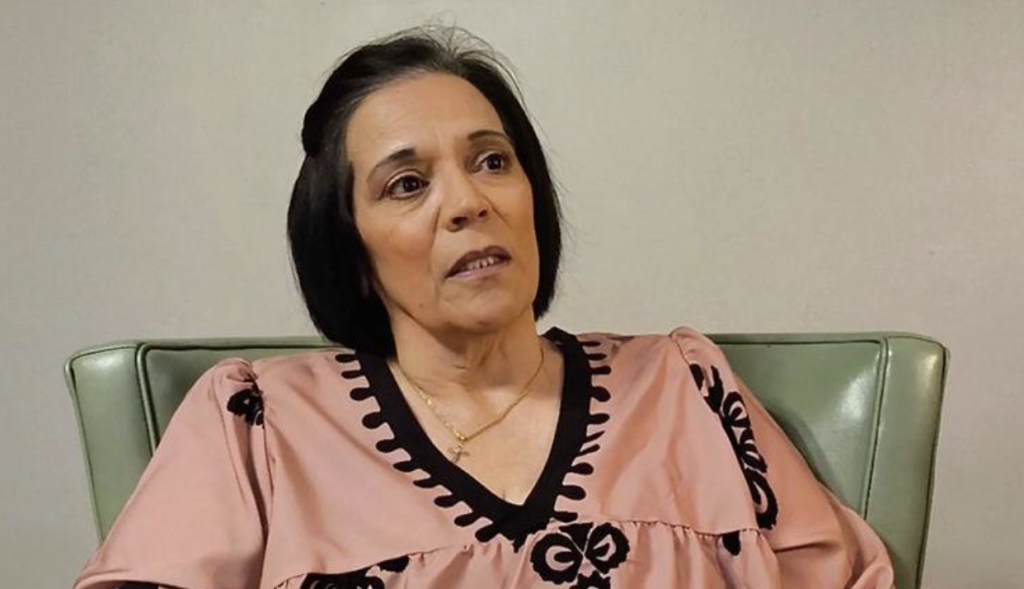
“I closed the door! I closed the door!” Amy Franco shouted from the hospital emergency room as she was being treated for an anxiety attack. That May 27, 2022, has been etched in this Latina’s memory and spirit like a burden that will stay with her until her last breath.
Barely three days had passed since the mass shooting at Robb Elementary School in Uvalde, Texas — one of the deadliest ever to occur on U.S. soil. Franco had just watched a televised press conference during which an officer blamed her for leaving a school gate open, a charge later disproven by security camera footage.
In fact, Franco, who had only been working as an educator at the school for a month, had closed the door while rushing to warn staff and students about the presence of a gunman on the premises. But the accusations from law enforcement had already caused irreparable damage.
“That day, I died,” Franco says.
More than three years have passed since Salvador Ramos, a former student at the center, killed 19 children and two teachers with an AR-15 rifle and wounded 17 others, and Franco is still struggling to find the Amy she was before the massacre. “It’s a mental, physical, and emotional battle,” she says.
Franco embodies the aftermath that mass shooting survivors often face on their long and lonely road to recovery, processing grief, trauma, depression, and other psychological and psychiatric disorders. Added to this are the daunting and endless bureaucratic hurdles to access government aid, the devastating economic consequences of prolonged sick leave, and, in Franco’s case, the loss of her home. But in Uvalde, the 77 minutes it took the shooter to wreak havoc also created deep fissures in the social fabric of this rural, majority-Latino community. Three years later, for some survivors and affected families, the twilight lingers on the horizon.
Located about 54 miles from the Mexican border, 26.3% of Uvalde’s 15,300 residents live below the poverty line , a socioeconomic reality that became even more prominent after the massacre. The tragic shooting became a showcase for the systemic barriers the city had historically faced, including a lack of access to basic needs — such as clothing and shoes for some students — and a limited supply of psychotherapy services.
Franco’s psychological and physical scars are palpable in her voice and body. When she recalls the security forces’ unfounded accusations against her, her face tenses, and she tries to contain her tears and anger. “Did you hope that the attacker would kill me and that their version (of what happened) would be accepted as the truth?” she asks.
During the interview, Franco trembles uncontrollably. “Everything comes from that day,” she says. At home, she keeps the blinds and windows closed to preserve darkness. She fears going outside to take out the trash and collect the mail and often delegates these tasks to her children. She is undergoing treatment for PTSD (post-traumatic stress disorder), depression, and anxiety, and she walks with the aid of a cane after suffering a foot injury the day of the attack.
Yet she was frequently denied workers’ compensation insurance for her injures. “That’s a battle in itself, and it’s horrible,” she laments. Even when insurance approves claims, “it’s crazy how hard it is to find a doctor who will accept workers’ compensation insurance,” she says.
Over the past three years, Franco has seen several psychotherapists. “It’s sad because I would have liked to stay with the same one forever,” he says. And when he finally found one who specialized in EMDR (eye movement desensitization and reprocessing) – a psychotherapeutic technique that helps patients process traumatic experiences – Franco had to abandon treatment because her insurance hadn’t paid the provider’s bills. For the past few months, she’s been receiving free psychological support through the Uvalde Juntos Resilience Center.
After the shooting, Franco never returned to her job. Eventually, she retired. Now 60 years old and in continuing physical decline, she relies on social assistance and her children to stay afloat. But the assistance is falling short: After the latest evaluation of her health, her employer’s insurance cut her compensation from $487 to $315 a week, a decision that is causing her difficulties making ends meet, especially since she stopped living with her daughter a year and a half ago.
Despite the persistent financial problems, a glimmer of hope appears on the horizon. Franco is 89th on the waiting list for a program that provides rental assistance for a year. Although Franco’s face fills with joy as she shares details about the program, it is underfunded, and it could take at least another year before she begins receiving payments.
Unlike other affected families, Franco embarked on a cumbersome bureaucratic process to apply for assistance from the Texas Attorney General’s Crime Victims Assistance Program (CVC). For a year, she received checks. One day, they ran out.
“I applied for the second year thinking, ‘OK, you know what? It’ll help if I get (money).’ But they sent me a check for $2,000 and told me, ‘You’ve exceeded the amount of funds available to you,’” she says. Now she fears her workers’ compensation insurance payments will also stop.
Double Victim: Bureaucratic Obstacles in Uvalde
Three years after the shooting, the lack of support and constant bureaucratic obstacles continue to remain insurmountable barriers for Franco. Not a day goes by that she doesn’t wish she’d died at the hands of the attacker, she says. The emotional scars that haunt hier are as profound as the frustration she feels when she details the lack of centralized and coordinated efforts to ensure critical assistance to the survivors and affected families.
Despite the initial outpouring of aid from various agencies in the days and weeks following the shooting, chaos ensued in Uvalde, to the detriment of those affected. Most organizations disappeared from the scene within weeks. Franco didn’t know where to turn for help, even though it was available. Nor did others.
According to statements from the Texas Department of State Health Services (HHSC) sent to this reporter via email, Texas made an initial disbursement of $5 million to the Uvalde Juntos Resilience Center to provide community services and crisis counseling. Additionally, Texas awarded $1.25 million to the Uvalde Consolidated Independent School District (UCISD) to provide various mental health services to students and staff. School district officials canceled a scheduled on-site interview with this reporter, and the Uvalde City Council did not respond to multiple attempts to obtain their version of events.
Franco, however, says she had to learn to navigate the system independently, and word of mouth became an essential tool for learning about and accessing some of the services she needed. One day, someone told her about the generosity of Father Michael K. Marsh, and Franco went to St. Philip’s Episcopal Church in Uvalde to ask for help. She needed money for gas and a doctor’s appointment in San Antonio. When she stood up to shake Marsh’s hand and he handed her a check, Franco was perplexed: “It was a $1,000 check.” Franco used that money to pay for her rent. “I had to make sure I had a home,” she says.
Despite the constant financial need and difficulties accessing medical services, Franco has been reluctant to seek help. “I don’t feel comfortable because… I was raised with the belief that I have to work. You’re supposed to be self-sufficient,” she says.
The Indestructible Wounds of Uvalde
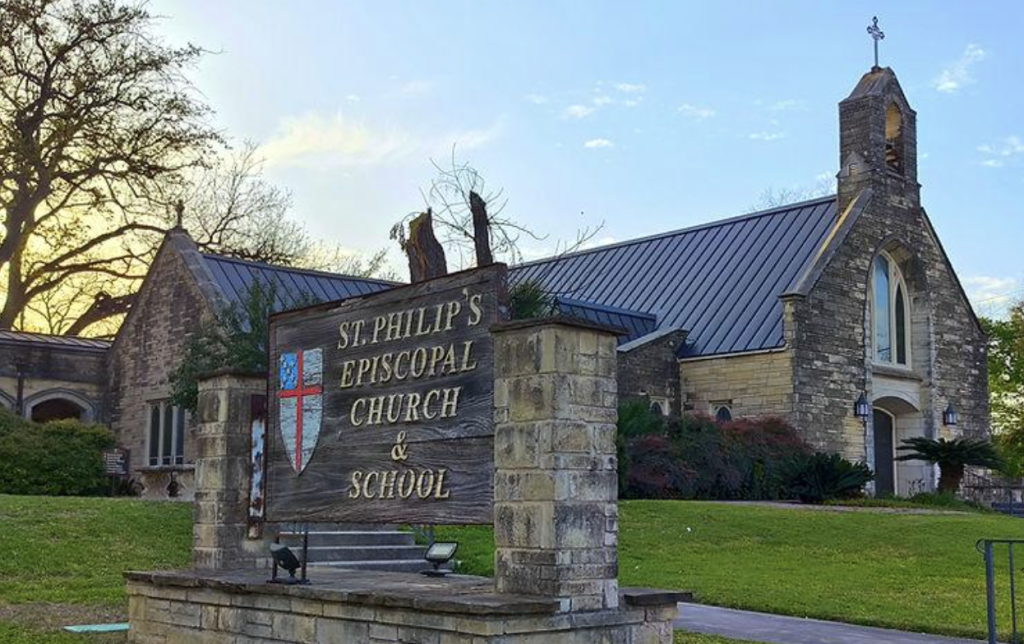
It’s a rainy morning when Father Marsh, who traded his career as a civil lawyer for the cassock in 2000, greets me with a smile in his office. The Texas clergyman articulates his thoughts and impressions eloquently, calmly, and with compassion. His face reflects concern for the well-being of his community and the pressing difficulties it is currently facing — challenges he believes will persist into the future.
Since the day of the massacre, Marsh has played a central role in providing spiritual support and financial assistance to the affected families, as has Sacred Heart Catholic Church and a group of volunteers from the Fire Department.
“I think many (impacted families) were already experiencing economic problems, and the shooting created even more problems,” Marsh says.
Marsh says that, until November 2022, his church used the generous donations it received from third parties to cover rent, food, and other bills for those affected — not medical expenses. The circumstances for which families requested assistance varied: from mothers who quit their jobs to homeschool their children, to families who, according to Marsh, couldn’t get to work because they had medical appointments in San Antonio.
The shooter’s family also benefited from Marsh’s financial charity and understanding. After the shooting, the father lit 22 candles in tribute to all the lives lost that fateful day: 21 in memory of the children and teachers killed in Robb; the other in the name of the shooter. This latter decision, however, did not sit well with some members of the community.
“But who am I to exclude him (the shooter)?” Marsh asks. “I can’t help but think about what exclusions he suffered throughout his life that may have contributed to this (the mass shooting).”
Despite his commitment, Marsh is concerned that money alone will not address the needs of a community that must heal its wounds and recover from tragedy. To truly recover, he says, it is crucial to create a space that allows for difficult and uncomfortable conversations about the loss of a loved one, grief, mourning, social fractures, conflict between different members of the community, as well as to learn to accept different experiences and perspectives about what happened.
According to Marsh, the lack of a community committee leading the response to the shooting has also contributed to the community’s inability to regenerate from the tragedy. “(Groups) have emerged in isolation…but there hasn’t been a centralized way to do it. Maybe it’s not possible…but we all have a responsibility in this,” he says.
The shooting, he continues, created deep divisions between families who lost a loved one and those with survivors. “There are so many broken hearts in so many places, and in so many different ways, that it’s hard to know where to begin… How do we begin to heal the wounds of the community?” he asks.
The attack, in turn, generated a climate of tension between those who defend police intervention and those who reject it. Adding to these conflicting feelings, Marsh says, is the fact that, while part of the community yearns to look to the future and put the tragedy in the past, this step is unfeasible for the vast majority of affected families.
“Healing is going to take decades,” he adds.
The massacre has also left an indelible emotional mark on the clergyman. It can be felt through his warm brown eyes, which overflow with tears when the pain becomes too acute. On the day of the shooting, Marsh went to the hospital and accompanied Gloria and Javier Cazares to identify their daughter, Jackie, who died on the way there. She was 9 years old.
“I was also asked to pray for a murdered child who couldn’t be identified (initially) because he had been shot in the face,” he said.
Marsh’s words and thoughts are filled with empathy and emanate from years of reflection. He also draws from his personal experience, since he knows firsthand the grief of losing a child. Fifteen years ago, his eldest son, Brandon , died in a work-related accident, and Marsh was forced to confront human mortality and the searing pain it instills within us when we face deaths that shatter — or regenerate — our faith in the existence of a higher being. For years, Marsh has been working with a spiritual guide who has helped him process his loss. He believes the community needs to confront and articulate its grief, but he acknowledges that doing so in public spaces may not be the most appropriate option for everyone affected.
“They are conversations that take place between two people or in small groups, because they are vulnerable conversations, and they are conversations from the heart, not the head,” he says.
“Protect Children, Not Guns”
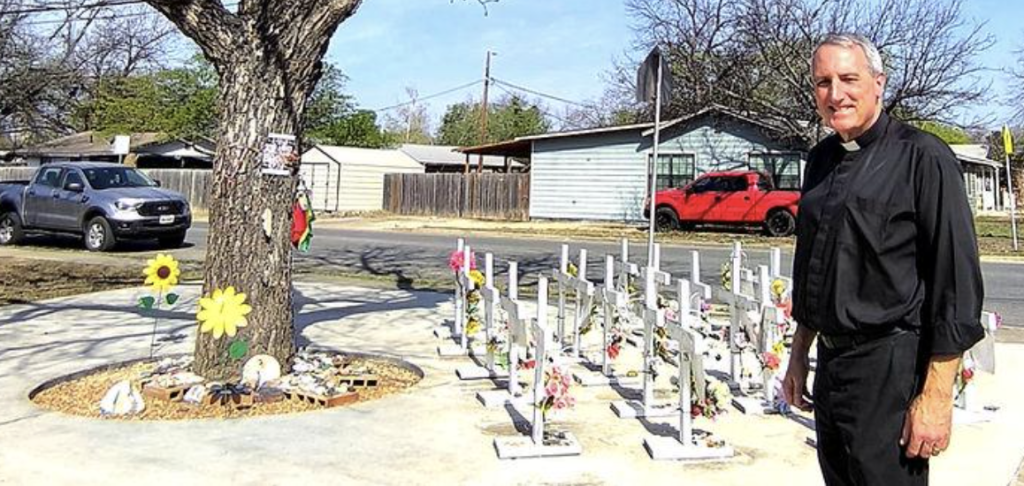
One hot and humid morning, Marsh and I drive through the streets of Uvalde, some of which are covered with colorful murals honoring the victims. We first stop at the local cemetery. Then, we stop at Robb School. A black tarp covers part of the school’s facade. The rest of the tarp hangs barely aloft, like an abandoned building. After getting out of the car, we walk toward the humble memorial that pays tribute to the victims. The passage of time and inclement weather have eroded the white wooden crosses, photographs, and some mementos of the victims. On each cross rests a bouquet of flowers: one of the few touches of color in this bleak scene. Marsh silently approaches each cross, pauses at each one, and observes them carefully. As he looks up, he sighs, and his watery eyes meet mine.
Three years after the massacre, the school is still a crime scene, Marsh explains. While the legal proceedings are being finalized, the school grounds are under police surveillance. As we walk through the area, a patrol car stops momentarily in front of us, and from the vehicle, an officer nods to Marsh. The police presence and ongoing investigation are yet another open wound on this long path toward an uncertain future.
After a few minutes of reflection, Marsh approaches me and breaks the silence. His words take a political turn, questioning the almost unlimited right to bear arms in the United States and the impact they have on community security — or insecurity.
“We have more guns than people in the US,” he says. “What drives this need and desire to own them? … People say gun ownership isn’t the problem, it’s mental health. So why does the US have mental health problems that others don’t…and we give them access to guns?”
This sentiment is also shared by some of the victims’ families. A modest memorial to the students and teachers remains in the town square. Beneath a cross lies an orange-painted stone with a clear call to action: “Protect children, not guns.”

Uvalde’s deep emotional wounds and social fissures are difficult to digest for those directly affected, its residents and visitors alike. But they are also an undeniable reminder of the high price this small town has paid for the Second Amendment of the U.S. Constitution and the country’s rampant gun crisis, which is taking a toll on some ethnic minority groups.
According to a September 2024 report from the Johns Hopkins Center for Gun Violence Solutions, between 2020 and 2023, gun violence was the leading cause of death among children and adolescents under 18 in the U.S. Gun violence has a disproportionate impact on young people of color, and the death rate for Latino youth doubled between 2013 and 2022. This upward trend is compounded by the fact that the number of firearm homicides increased by 70% from 2013 to 2022 among Hispanic males.
Uvalde’s Battle for Mental Health

In his efforts to address the community’s trauma in the aftermath of the shooting, Marsh played a key role in the creation of the Uvalde Children’s Bereavement Center. Located just a few yards from his church, this mental health center offers free services to the community in English and Spanish. The facility is located in what was once an abandoned auto repair shop with no running water. Despite the extensive facelift, Marsh says residents are reluctant to receive psychotherapeutic care. He, however, has never stopped referring them to the center, and even set up a large room in the church where the center’s staff conduct activities with patients.
Over the years, the center’s staff has grown from two mental health specialists to a team that includes three psychotherapists, a music therapy specialist, a community manager, and an operations manager. Currently, 114 weekly appointments are held with individuals ranging in age from 3 to 70. The majority are minors, and 10% are Hispanic men. But, from the beginning, it hasn’t been easy to gain the community’s trust.
“Getting children to come in for treatment was initially quite difficult because of the large number of agencies in the city and because those affected were directed to the Ecumenical Center and the (Uvalde Juntos) Resilience Center,” says Brenda Faulkner, who moved from Dublin, Texas, to Uvalde a few months after the attack to direct the center and contribute her extensive experience as a psychotherapist.
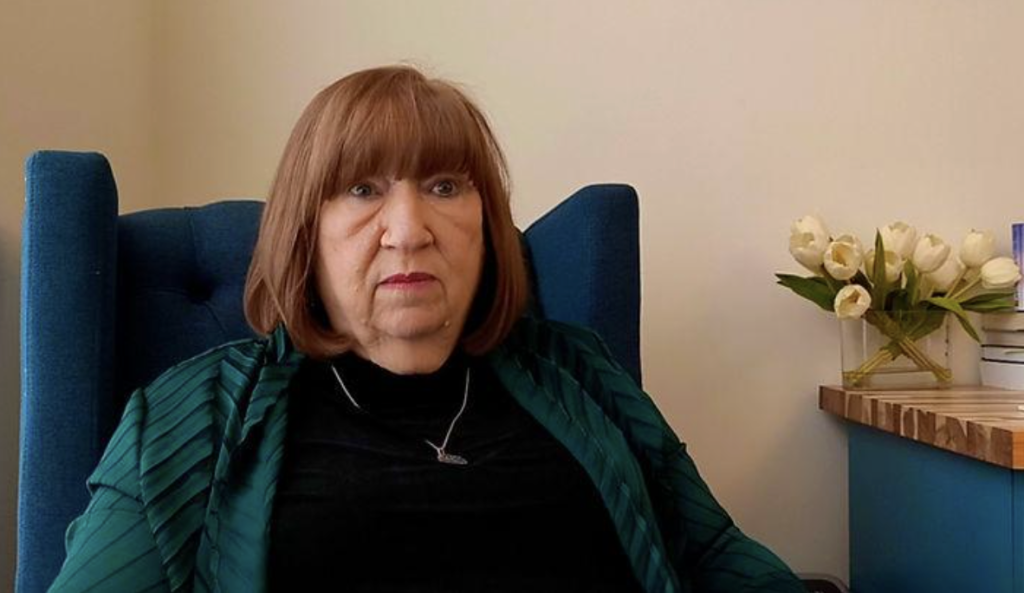
According to Faulkner, another initial barrier was the lack of community education about the benefits of psychotherapy, the available treatments, and the center staff’s obligation to ensure confidentiality. As a result, efforts were focused on door-to-door psychoeducation.
Part of this process focused on children. Faulkner asserts that some children mistakenly believe their parents bring them to the center to address problematic behaviors. In these situations, the therapists’ job is to dissuade these concerns and ensure a nurturing and safe space where children feel comfortable expressing their feelings, processing grief, and building healthy interactions at home and at school — all at the individual’s pace, because it is impossible to predict how long each individual will take to recover. In fact, Faulkner warns that society has created illusory expectations about death and grief.
“You lose someone close to you — even a classmate, as happened with Robb — and they expect you to recover from the pain and loss in three days,” Faulkner explains. “It’s just not realistic.”
This type of social pressure is compounded by the low income of most Uvalde residents. “A lot of people are poor, so they don’t have the resources they might have in Parkland and other places,” Faulkner says, referring to the mass shooting at Marjory Stoneman Douglas High School in Parkland, Florida, in 2018.

Despite Faulkner’s efforts to ensure free services for the community, some families whose children were killed in Robb have created alternative support systems. This is the case for Gloria Cazares, mother of Jackie; Kimberly Mata-Rubio, mother of Lexi; and Veronica Mata, mother of Tess. Together, they lead Lives Robbed, a nonprofit organization that provides support to families affected by the massacre. One of their goals is to honor the victims’ legacy through activism and the pursuit of legislative changes aimed at reducing gun violence.
After losing Jackie, Cazares experienced emotional paralysis and denial, and she quit her job as a home health nurse for a year. Still, for two years, she managed to channel her loss through political and legislative activism, spending money she received from a victims’ fund on trips to Washington, DC and Austin, Texas. When legislative sessions began to become more frequent, Cazares noticed a dramatic change within herself. “I don’t know if I’m finally allowing myself to feel the pain, but now it’s much harder for me to get out of bed,” she reflects.
Cazares has never sought the support of a mental health specialist, but she knows she probably needs to share her grief with one. Her husband, a glassmaker who has worked only odd jobs since their daughter’s death, initially received psychotherapy, but stopped attending when he was told he had to change specialists.
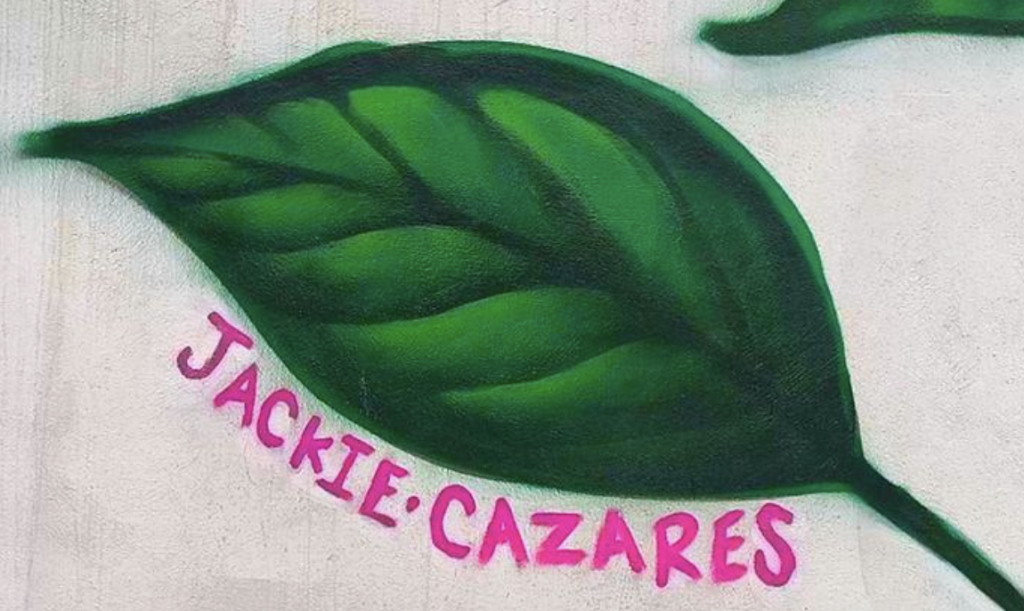
The domino effect of the shooting has created financial hardship for his family. It’s also true for Mata-Rubio’s family, who acknowledges that many families in Uvalde are barely making ends meet. Theirs is one of them — both before and after the shooting.
Mata-Rubio, her husband, and their five children moved to another home after Lexi’s death. Their landlord was a police officer, which added to the family’s tensions and worries. As a large family with limited financial resources, finding a new home was a huge challenge, Mata-Rubio explains.
Lexi’s murder also derailed her career: She quit her job as a crime reporter at the local newspaper and transferred to the sales department — a more emotionally supportive position. Although Mata-Rubio has devoted much of her time to activism and even ran for mayor of Uvalde, one constant has always been her heartache.
The alliance that Mata-Rubio, Cazares, and Mata have forged has become a judgment-free platform for sharing their struggles, feelings, and reminiscing about their daughters. For all three, Lives Robbed is a safe space that has replaced the lack of the centralized, community-based group they would have liked. Yet, they have managed to fill that void.
While these mothers continue to fight for legislative changes, Marsh has already packed his bags and said goodbye to his community. After 20 years leading the church, last July he hung up his cassock and left Uvalde — a crushing blow to a small town that hasn’t been able to process the tragedy and heal the chasms created in the community three years ago by an 18-year-old gunman. But wherever Marsh goes, Uvalde will always be present in his spirit and prayers.
“In many ways,” he says, the community “is treating the symptoms, not the disease,” which he sees as gun violence, economic inequalities, and systemic barriers. “We have to move forward and treat the disease.”
The name “MindSite News” is used with the express permission of Mindsight Institute, an educational organization offering online learning and in-person workshops in the field of mental health and wellbeing. MindSite News and Mindsight Institute are separate, unaffiliated entities that are aligned in making science accessible and promoting mental health globally.


Author

Related Articles
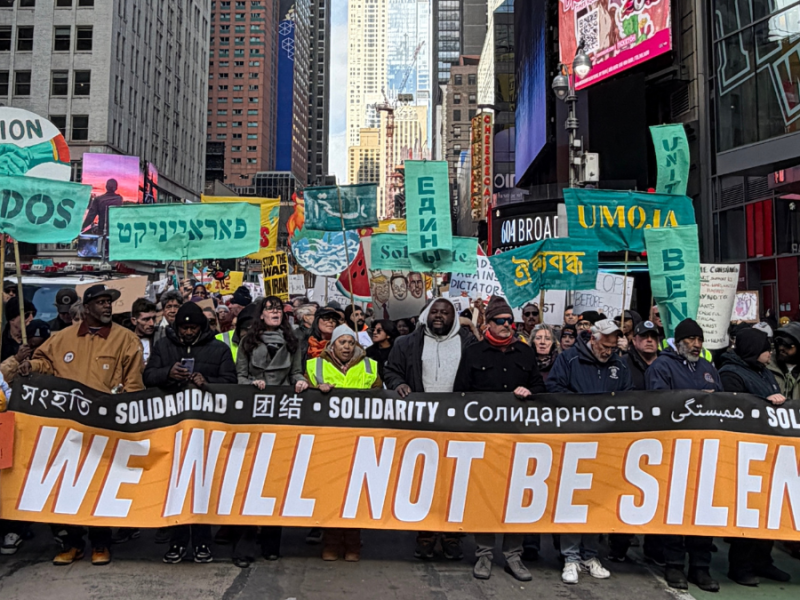
As Millions Protest, Marchers Raise Mental Health – Their Own and Trump’s – with Biting Humor
The No King’s protest drew millions of people around the U.S. on Saturday. Demonstrators made clear in signs and interviews that they were there to improve their own mental health – and to express their outrage at Donald Trump’s policies and mental status. This photo essay offers a glimpse.
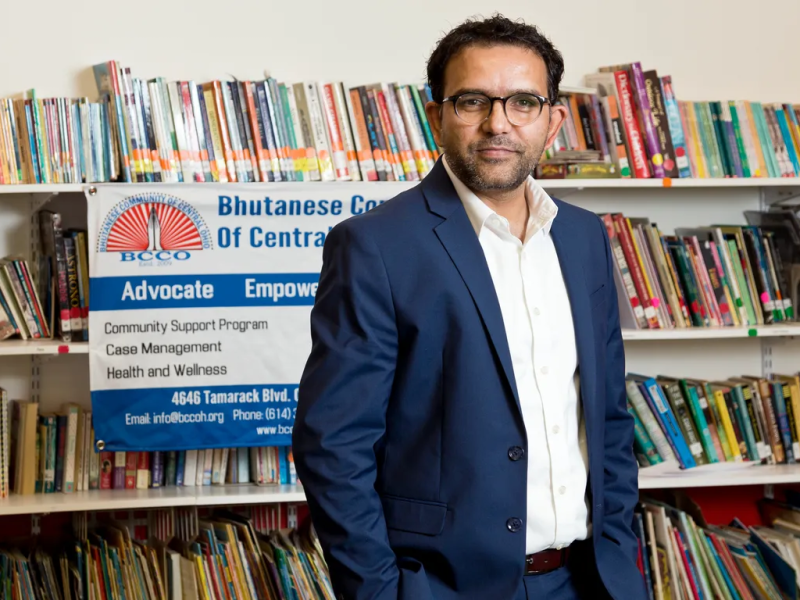
‘Uprooted Over and Over, You Are Nowhere’: A Refugee from Bhutan Ties Forced Relocation to Shocking Suicide Rates Among Fellow Exiles
Ohio nonprofit leader Sudarshan Pyakurel on third country relocation and other immigration policies that retraumatize highly vulnerable Bhutanese refugees in the U.S.

For High School Athletes, Running Can Benefit Mood and Focus Just as Much as Physical Health
The parts of your brain devoted to memory and learning are actually bigger in people who exercise regularly.
