
Torment and Trial: A Boston Globe Columnist Discusses Her Series on Race, Insanity and Criminal Prosecutions
A MindSite News interview looks a a columnist’s seven-part series on the insanity defense in criminal cases.
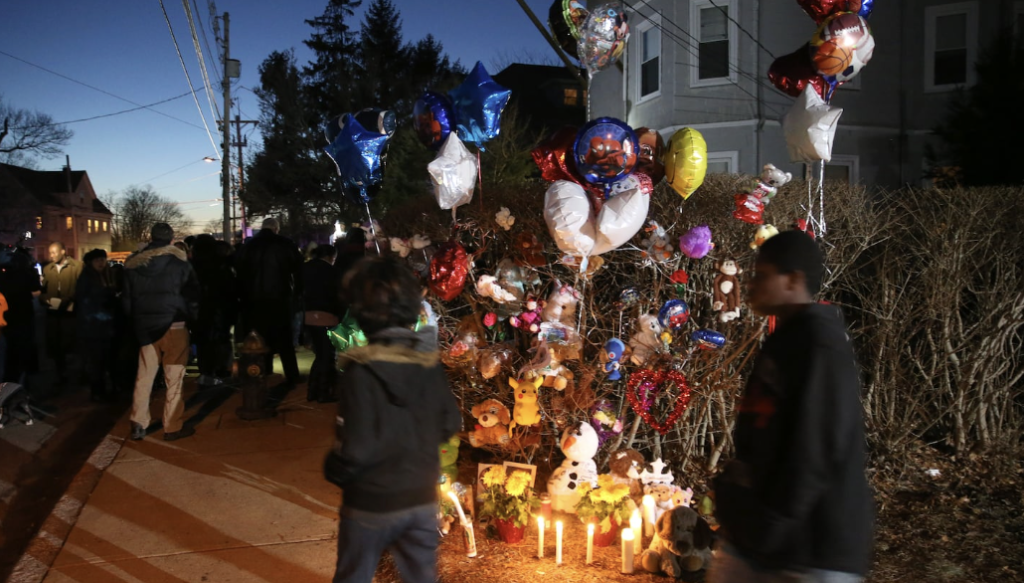
Warning: This story contains some distressing information about the death of children. If you think it might be too disturbing, consider not reading it. If you or someone you know is in crisis or experiencing suicidal thoughts, call or text 988 to reach the 988 Suicide & Crisis Lifeline and connect in English or Spanish.
The 911 calls came rolling in just after noon on Feb. 5, 2018. They reported that a woman was in distress in Brockton, Massachusetts. While her neighbors thought she was having a seizure, it was clear to the emergency responders who arrived that Latarsha Sanders was in the midst of a psychiatric episode.
She warned them that people were trying to kill her. Then, screamed, kicked and flailed when the EMTs put her on a stretcher. Her neighbor volunteered to babysit her two boys, until their older siblings got home.
But when the neighbor entered the bedroom in the rear of the apartment, he found the first of her two young boys stabbed to death underneath a blanket.
“Oh my God!” he screamed. “Oh my God!”
The story is extremely tragic and gruesome. There isn’t a happy ending. It’s the story of two dead boys, who were killed by their mother.
In the days before the killing, Sanders was disintegrating. She ranted about the Illuminati and wanting to kill her 18-year-old son. While her mother had seen her act bizarrely before, this was terrifying. She would go on to attack her mother and daughter before being hospitalized on Feb. 5th.
Over seven intense chapters, Boston Globe columnist Yvonne Abraham chronicles the mental health issues that preceded her killing of the boys, the problematic interrogation conducted by police in the hours after their deaths, a prosecution determined to make Sanders the face of evil and the incredible burden placed on juries to determine criminality versus sanity.
Abraham also juxtaposes Sanders — an impoverished Black mother — with the case of Lindsay Clancy, a white woman from the affluent seaside suburb of Duxbury who killed her three children four weeks after Sanders was convicted.
Clancy, like Sanders, was charged with first-degree murder, a charge that doesn’t allow defendants to waive their right to a jury trial. That’s important because judges are far more likely to find someone not guilty by reason of insanity, while juries seldom do, Abraham notes.
Mindsite News spoke with Abraham about the case and what more we can learn from it. This conversation has been edited for brevity and clarity.
Josh McGhee: What made you want to dig into the Latarsha Sander’s case?
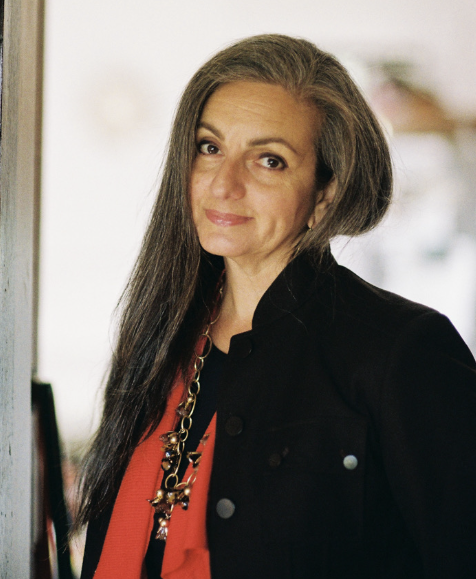
Yvonne Abraham: In January of 2023, a woman named Lindsay Clancy, in a pretty well-to-do town south of Boston — Duxbury — had been battling postpartum mental illness when she killed her three children at home. The story was huge in our region and it became a huge national story.
Most often, I cover politics, inequality, race and gender, and this was really at the intersection of a lot of my interests. I do a lot of columns on the criminal justice system. I was writing about this case of Lindsay Clancy when my colleague Felice Freyer alerted me to the case of Latarsha Sanders. So I wrote a column centered on Latarsha.
I did a couple of interviews for that and her case really amazed me. It was really clear from all of the coverage, including ours – and through the massive outpouring of sympathy for Lindsay Clancy – that people were pretty accepting of the notion that this was clearly a mental health episode. There was no reason to expect this woman to have killed her children, if not for a terrible mental health episode. I wanted to look at why Latarsha Sanders’ case had not evoked the same compassion, understanding and nuance.
Why did you decide to compare the two cases?
It’s a story more complicated than I expected it to be when I first started writing about it. This is what I often find when I’m writing about the intersection of race and class within institutions in our society. It’s not simply that a jury may or may not be more likely to believe a prosecutor when she says a Black woman, a Black defendant, is evil. What happened in Latarsha’s case, it’s about the more subtle ways in which race comes into play, not just in the criminal justice system, but in the child welfare system as well.
Here is Latarsha Sanders family, a normal working-class family with all of the struggles, joys and milestones that every other lower working-class family deals with. But when you are a member of a less lucky strata of society, whether you’re talking about race, class or a combination of the two, you don’t have the same resources, as say, a middle-class white family like Lindsay Clancy’s.
The Sanders’ family was suspicious of therapy. Always were. Her mother and brother say that they were reluctant to get Latarsha help. Not just because they were suspicious of therapy, but because they were afraid the kids would be taken away from her. That pattern of feeling like they don’t own the institutions of society continued through the whole case.
It made it less likely that she would seek help and be able to get help. Then, after she killed the boys, it made her family more afraid to speak publicly about Latarsha. It made it more difficult to work out how to get her an attorney. It meant that she spoke to the police without an attorney present. The third part of the series is about that problematic interrogation.
It took a long time for prison officials to diagnose her with schizophrenia. I read studies that showed that malingering — faking mental illness — is rare and is easily detected. I came across one study showing that where it is detected, it is diagnosed twice as often in Black patients as in white patients. So there was that as well.
By the time she got into the courtroom, it’s hard to draw definitive conclusions. I tried not to go beyond what the transcript and the data showed me, but it’s not too much of a stretch to believe that a jury will more readily believe a Black woman is evil than a white woman is evil. But having said that, I have to add an asterisk that I didn’t just want it to be about these two cases. I wanted to make sure I had an accurate picture of how insanity pleas play out in the justice system in Massachusetts.
What did your research tell you about the insanity defense?
Juries absolutely hate it.
We looked at 41 jury trials since 1990 where a defendant charged with first-degree murder raised an insanity defense. Juries rejected that defense in all but five of them and delivered 36 convictions. (Since our conversation last Monday, another guilty verdict was handed down by a jury.)
Why do you believe juries struggle with the insanity defense?
Two reasons. The first is that we’ve made a lot of progress on mental illness over the decades, but the courtroom is still a place where caricatures of mental illness — out of old movies and cartoons — still fly.
The second reason is harder to fix. It is this kind of very human feeling that somebody who did something really horrific should pay for it. When you have two beautiful children killed in this manner — it was really, really brutal, the way in which Latarsha killed them — you want someone to pay: justified or not. It makes people feel safer. It makes people feel like there’s order.
Almost all of these cases are indictments of a much wider set of circumstances. Almost all of them are failures of the mental health system, but you can’t indict a system. Those problems are much harder to fix. A guilty verdict brings a sense of closure. It brings a sense of justice, whether or not that’s true. That’s why juries reach for that guilty verdict again and again.
Prosecutors don’t let them forget the brutality of killings like these. You’re asking a lot of them to put all of that aside and make a decision that means someone will not be held responsible for this horrific thing. Furthermore, that person is going to be committed and possibly allowed to walk out of a psychiatric hospital one day.
It seems mental health has become a more accepted problem in society. Do you think that’s being reflected in these prosecutions?
No, I don’t. I looked at about 100 cases in which a defendant mounted an insanity defense and in just under half of them prosecuters reduce charges to second degree murder, which allow defendants to waive their right to a jury trial. Those cases are heard by judges, who almost always rule the defendant was not guilty by reason of insanity.
I also came across a lot in the other 50-something percent. I came across a lot of cases in which it was clear that the defendant was gravely mentally ill when they killed somebody. And, again, prosecutors are reluctant to reduce charges for a lot of these cases, particularly ones that have captured a lot of news coverage, because they are elected officials and they don’t want to appear soft on crime. Until we do a better job of educating the public in general and jurors in particular about mental illness, it’s going to keep happening.
The prosecution repeatedly alluded to Latarsha being ‘evil.’ Did this case and research change the concept of evil for you?
I don’t think evil, the concept, has any place in a courtroom. We do not decide in a courtroom whether or not someone is a bad person. The justice system decides facts. If they do what they are accused of, are they criminally responsible for what they are accused of? As I see it, there’s no place for a moral judgment in a courtroom. The criminal justice system would be chaos.
How does the media play a role in these kinds of cases?
That’s such a hard one to answer. The media was clearly far more interested in the Lindsay Clancy case than in the Latarsha Sanders case. Again, though, it’s a complicated picture.
I would love it if readers were as intrigued, fascinated, sympathetic to Latarsha Sanders at the time that she killed Marlon and La’son as they were when Lindsay Clancy killed her children. Latarsha’s family felt like they didn’t know how to speak publicly to counter the narrative that the prosecutor was building. It also affects coverage.
Reporters are going to have a much easier time writing stories when a family is like Lindsay Clancy’s family, where they have somebody guiding them in how to deal with the press, where her husband, Patrick Clancy, feels comfortable writing this beautiful, heartfelt plea for forgiveness for his wife.
Latarsha’s family was afraid of saying the wrong thing. They were reeling from this horrific weekend and unable to do that, so it feeds itself. You cannot deny that race plays a factor here. We have to do a better job, all of us, at covering the unluckiest people who live in our area. We have to try harder.
These are obviously extreme cases, but what do they tell us about race, mental illness and the criminal justice system?
We just still have an enormously long way to go. I really believe the answers to the problems this case exposes are not necessarily in changing people’s attitudes towards Black defendants and changing people’s attitudes towards mental illnesss. For me, the faster and most effective fixes are about changing the system itself, making it easier for defendants facing these charges to waive jury trials and have their cases heard by a judge alone.
For example, making sure that every suspect who is demonstrating that they’re suffering an episode has access to somebody quickly who can assess the state of their mental health, not to mention, quick access to an attorney, who can be there when they’re being questioned by police. We can’t rely on good intentions to bring justice to Black defendants who are mentally ill. We have to build institutional, systemic change.
Why did you choose to tell this story over 7 short chapters?
I’m normally a columnist, so I will write 700-word columns a week, and so that’s the shorter form I’m more used to and that my readers are more used to from me. I wanted to break it up, because I wanted each installment to sit with readers, and I felt like each installment revealed a different dimension of the story.
I wanted to tell it slowly. if I tried to do all of that in one go, in one day or two days, it might have asked too much of readers. I wanted each one to be like a self-contained episode. The subject matter was super tough, I really wanted people to stay with it. And I felt people needed a rest in between.
Is there anything I’m missing or readers might miss from this story?
I’ve got lots of emails from people who appear to be grappling with all the issues I was trying to raise in the story. I don’t know if people are going to miss it, but I think the part of the story that stands out, and I’m sure it’s going to be difficult, is how much love was in this family.
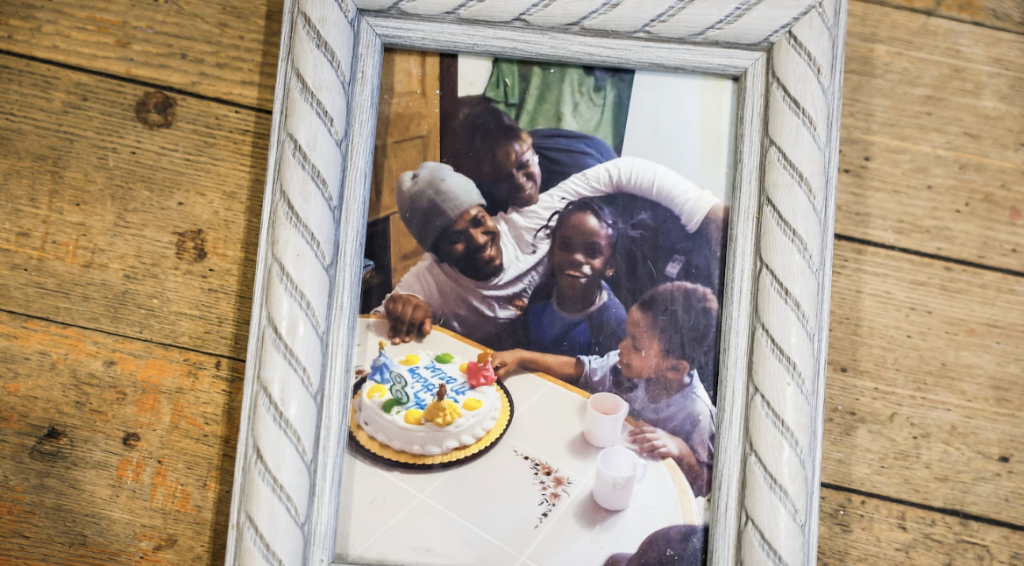
I was grateful that three members of Latarsha’s family spoke with me and shared so much about their lives before she killed the boys. The photos are really affecting, she loved the boys. It’s so obvious and the most vivid illustration of that is how not just how accepting, but how fully they embraced who Marlon was. That little boy loved girl things, as Shalea put it. He wanted hair extensions. He would go into his sister’s or his grandmother’s wardrobe and pull out their heels and put them on. Shalea told me that he would have grown to be part of the LGBT community. If you look at the picture of them celebrating Marlon’s last birthday, the cake has little princesses on the cake. That’s a family. That is love.
The name “MindSite News” is used with the express permission of Mindsight Institute, an educational organization offering online learning and in-person workshops in the field of mental health and wellbeing. MindSite News and Mindsight Institute are separate, unaffiliated entities that are aligned in making science accessible and promoting mental health globally.

Author

Related Articles

Insomnia, Fear and Dread: The Ordeal of Awaiting Word from Relatives in Iran
Iran’s internet blackout has left relatives in the U.S. frantic with worry.

Checking for ICE Before Every Class: The New Reality for Minnesota’s International Students
Since the start of Operation Metro Surge, S, an international student in St. Paul, has lived in a state of high alert.
As Muslims Across the U.S. Face Mounting Stress, We Revisit Our Story about a Detained Filipino Journalist
Ya’akub Ira Vijandre, a Filipino photojournalist and DACA recipient, was detained by ICE last October for posts extolling Islamic principles.
