
Fear, Stress, Anxiety: Minnesota’s International Students Struggle to Cope with ICE Surge and Aftermath
College administrators say international and immigrant students continue to feel anxiety, stress and isolation stemming from the ICE occupation and looming threats of arrest or detention.
This story was originally reported and published by MinnPost.
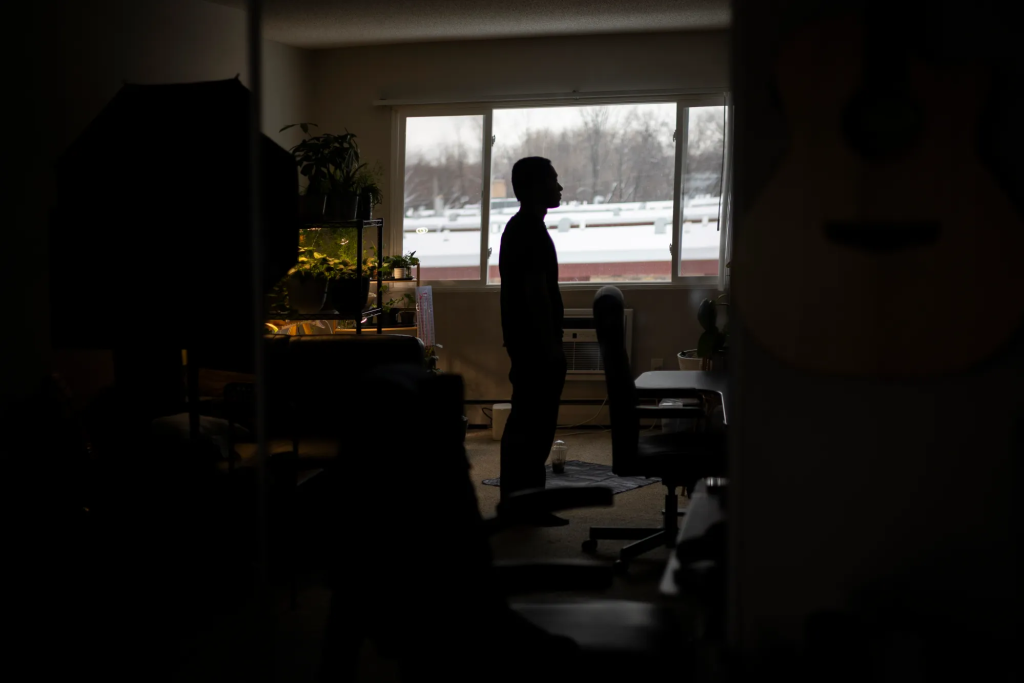
Before heading to his college classes each morning, S scans iceout.org to check for ICE activity between his apartment and campus. He packs his driver’s license, photo copies of his passport from Myanmar, his F-1 visa and his I-94, marking his legal arrival in the U.S.
“I have to make sure there is a safe route,” said S, who is earning his degree in computer graphics and design. He did not want to use his name in this story for fear of arrest.
Since the start of Operation Metro Surge in December, S – one of nearly 15,000 international students attending Minnesota colleges and universities – has lived in a state of high alert. And despite U.S. Border Czar Tom Homan’s announcement on Feb. 12 that the surge would end, he remains anxious.
“I am afraid of [ICE] being around in the neighborhood,” he said. “I am afraid they would try to get me for being an immigrant.”
In January, one of his friends, an asylum seeker, was forced off the road by ICE agents and arrested. “They asked for his ID and they detained him,” S said. “The next day, in the afternoon, he was sent to Texas.”
Two days later, ICE agents pulled a fire alarm in S’s friend’s apartment building to lure residents outside, he said. His friend, overwhelmed with anxiety, attempted suicide.
“This has caused a lot of stress on the whole community,” he said, adding that his friend was treated at an area hospital and released.
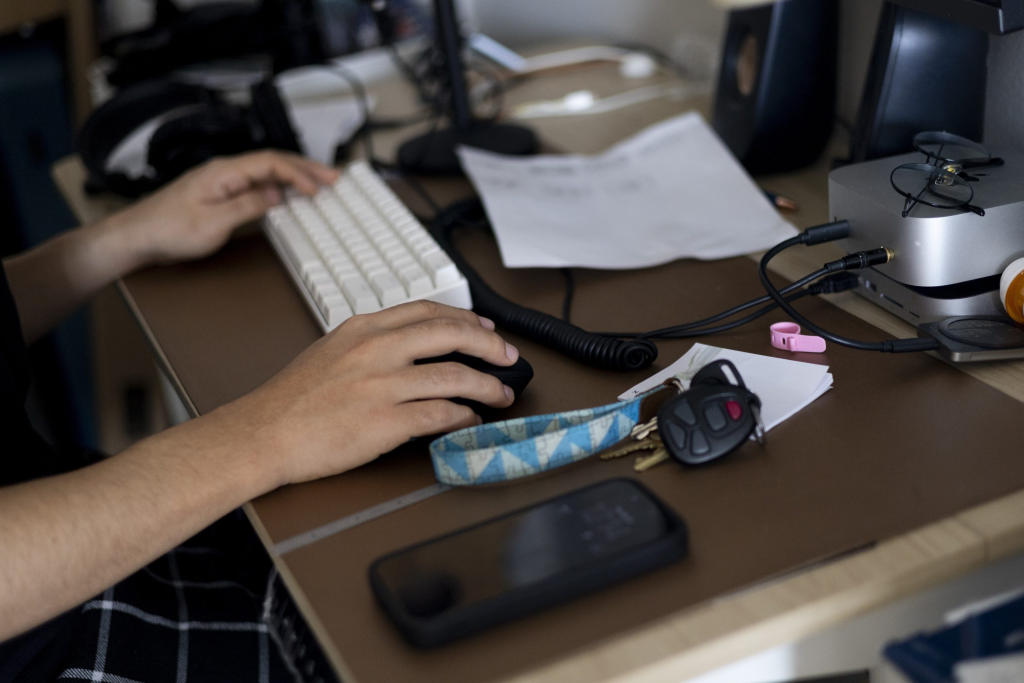
S, like many international students, chose to study in the U.S. in part to escape conflict in his home country. As a condition of his international student visa, he is required to attend the majority of his classes in person. Now, though many international students feel safer hiding in their dorm rooms or apartments, they know they must risk arrest to attend class.
“I reached out to a professor about this and she advised me to drop the class and move online,” S said, “which I cannot do if I want to keep my visa.”
Increased supports for the long term
Twin Cities colleges have responded to international students’ concerns with amped up support, from financial aid for safe housing to extra counseling appointments and legal resources.
Macalester College in St. Paul takes pride in its longstanding commitment to internationalism, said Kathryn Kay Coquemont, vice president for student affairs. International students account for 16% of Macalester’s student body, with 315 students representing 78 different countries.
Coquemont said that many students at the college, including international, immigrant and domestic students of color, are experiencing increased feelings of anxiety, stress and isolation stemming from the ICE occupation and the looming threats of arrest or detention.
“Students who are from vulnerable populations are very much limiting their movements,” she said. The college is working to help some students who live off-campus make the move back into the relative safety of dormitories, she said: “We have financial aid available to help them if they are not able to get out of their lease.”
At Augsburg University in Minneapolis, armed, masked ICE agents detained a student on December 6. Augsburg President Paul Pribbenow called it illegal and students spoke out in protest. More than half of Augsburg’s student body identify as students of color.
International students make up 3.2% of Augsburg’s population. As Operation Metro Surge ramped up, the university’s international student department scheduled one-on-one meetings with every international student to assist with visa compliance, academic advising and psychological support, said Rebecca John, Augsburg’s vice president for operations.
Teams of student mentors and members of the Augsburg International Student Organization have been assisting international students with “rides, store runs and other daily-life needs,” John said. These supports will continue despite the surge’s announced end.
Gigi Giordano, director of counseling and psychological services at the University of St. Thomas’ Center for Well-Being, said that the ambiguous, unsettled feelings created by the ICE surge, and even the slow drawdown, is having a negative impact on students across campus. “Whenever students experience a period of prolonged uncertainty, fear for family members or feel unsure, there is a real psychological consequence, including increased anxiety, difficulty concentrating on school and a sense of isolation.”
S, from Myanmar, said he is experiencing similar symptoms: “I couldn’t study well this semester. It is hard to focus. Even when I am on campus, where it is supposed to be safer, I am on high alert.”
Seeking help, and offering it
In Myanmar, S said, therapy isn’t as widely practiced as it is in the U.S. But as his stress built up amid the ICE surge, he decided to pay a visit to a campus counselor. “I hadn’t thought of going to a counselor or therapist before,” he said. But his two appointments so far have been helpful, he said – and free. He expects to book more.
Many schools, including Augsburg, Macalester and St. Thomas, expanded the availability of walk-in counseling appointments for students during the ICE surge. They also expanded “wrap-around services,” like creating emergency funds to support rent, food, emergency housing and transportation needs. Officials expect the services to continue throughout the drawdown process and likely for weeks or months afterward.
Augsburg is connecting students with alumni who work in immigration law to support them in answering their questions, John said. The university has also hosted several “Know Your Rights” sessions for students.

In the fall, St. Thomas admitted 120 international students, the largest number in the university’s history. Giordano said that the school also has many students who self-identify as members of at-risk communities. “We have students on campus who are international or just immigrants. We have many first- and second-generation students. We have many students with mixed-status families. We have many students who are not concerned about their own safety but are worried about their family members and what they would do if someone was detained.”
S said that speaking with a counselor at first felt awkward, almost like, “a scene from a movie,” but he learned from the experience. She taught him practical ways to work on reducing his anxiety. “She walked me through how to do a meditative process of breathing in and out, trying to remember times when I feel at peace, trying to come back to reality,” he said. “She helped me see that even though things are hard now, on the inside at least I am still safe.”
The name “MindSite News” is used with the express permission of Mindsight Institute, an educational organization offering online learning and in-person workshops in the field of mental health and wellbeing. MindSite News and Mindsight Institute are separate, unaffiliated entities that are aligned in making science accessible and promoting mental health globally.


Author

Related Articles
‘Uprooted Over and Over, You Are Nowhere’: A Refugee from Bhutan Ties Forced Relocation to Shocking Suicide Rates Among Fellow Exiles
Ohio nonprofit leader Sudarshan Pyakurel on third country relocation and other immigration policies that retraumatize highly vulnerable Bhutanese refugees in the U.S.

For High School Athletes, Running Can Benefit Mood and Focus Just as Much as Physical Health
The parts of your brain devoted to memory and learning are actually bigger in people who exercise regularly.
Music Therapy in Puerto Rico Helps Youth Recover from Hurricane Trauma
Music therapy has helped children in the archipelago recover from natural disasters. But the work needs more support.
