
College Employment Scams Undermine Students’ Mental Health
At UC Berkeley, students have lost thousands to employment scams. Victims said they now experience shame, fear, anxiety and depression.

Hello, MindSite News readers!
Today we look at the rise of student employment scams — as detrimental to students’ mental health as they are to their wallets. Plus, a new report on digital gambling finds it is alarmingly popular – and also a threat to mental health. And, in other news, a judge temporarily blocked RFK Jr’s changes to the country’s vaccine schedule.
College Employment Scams Are Costly – and Undermine the Mental Health of Students Already Anxious About Money

A couple of weeks ago, my son spotted an intriguing job posting on his college’s website. A professor at the school’s New York headquarters was looking for a student assistant — and would pay $475 a week for part-time work.
Excited by the prospect, my son rushed in an application and was thrilled to be offered the job. But his excitement turned to suspicion when he got a check before a contract. He began to wonder: Could this be a scam?
He was right to worry. Doing some research together, we found that it looked like a variation of a popular student employment scam: A scammer, posing as a real-life professor, recruiter or employer, posts an ad offering high pay for minimal work.
When a student applies, they send them a check, telling them to cash it and then send part of the check to someone else (either the scammer or an accomplice).
In my son’s case, the scammer sent him a check for $2000 to buy a special computer and equipment with the help of an “equipment specialist” assigned to him. The purchases would have gone to the fraudster, of course, leaving my son liable for a bounced check and repaying all the money.
He didn’t cash the check, and eventually stopped responding to the “professor,” who continued to bombard him with emails. Meanwhile, he alerted his advisor and IT department to the scam, and it was confirmed as a fraud.
At UC Berkeley, students have lost thousands of dollars each year to scams like these, an average of $2515 each. Victims have posted about the scams online, describing how being scammed has caused shame, fear, anxiety and depression.
On Reddit, one student wrote recently that their bank closed their account after they deposited a suspicious check from a scammer.
“I am scared though, for everything,” the student wrote. “i can’t believe i really fell for that. I am fresh out of high school eighteen years old going on nineteen in a few months so this is indeed an unfortunate lesson learned. If anyone have any ideas on what i can do next please let me know.”
The scams speak to – and prey on – students’ already precarious financial situation and threaten to further harm students’ mental health.
With job numbers falling, and war-linked recession a risk, students are jumping at any opportunity – especially given the well-known mental health implications of student debt, which include alcohol problems, anxiety and depression, according to this piece in Scientific American.
It was painful to see my son so excited only to feel embarrassed and disillusioned soon afterward. But I’m glad he spotted it, and I hope more students do. The FTC has posted a ‘Consumer Alert’ about this online swindling, including tips on “how to spot and avoid job scams.”
To that end, this guide from Montclair State University is useful: It warns that fake job offers are marked by urgency, high pay for easy work, requests for things like social security numbers, messages with typos or generic greetings, and Yahoo or Gmail email addresses rather than company or college domains.
Ultimately, as the old saying goes, if something looks too good to be true, it probably is.
New Report: Online Gambling Puts Youth, Members of the Military and Others at Great Risk of Financial Harm, Addiction and Depression

Online gambling has exploded – and that explosion is undermining the finances and mental health of millions of people, especially young men, according to a new report from the Kindbridge Research Institute in partnership with UCLA.
The numbers cited in the report are stark: Since the Supreme Court overturned a federal ban on most sports betting in 2018, participation in online gambling has soared from 15% in 2018 to 22% in 2024.
Almost 20 million U.S. adults reported problematic gambling behavior multiple times in the past year in a recent survey. And 2.5 million US adults meet criteria for a severe gambling problem in a given year, with 5 to 8 million more likely to meet some portion of the diagnosis.
Approximately 15% of people ages 18 to 34 showed “concerning gambling behavior,” compared to just 2% of adults 55 and older. The report attributes that vulnerability to poorer financial literacy, limited safeguards, the spread of highly visible “gambling-adjacent content” and heightened exposure to digital payments.
The report also highlights gambling’s harms. It cites research noting that states that legalized sports betting after 2018 recorded 28% more personal bankruptcy filings than states that didn’t.
And financial stress short of bankruptcy also takes a toll – some studies estimate significantly higher risks of suicide in people with gambling disorder, as well as detectable differences in the brain in areas connected to stress and emotional problems. And some groups are especially susceptible.
“Active-duty service members and veterans face distinct financial and psychosocial stressors that increase vulnerability to gambling-related harm and warrant tailored, culturally informed prevention approaches,” the report noted.
The authors attribute the rise in gambling to digital access, both to money and to betting. People used to bet with cash in casinos, but they can now bet online on almost anything, including sports and politics, from their phones.
“This shift has outpaced existing public health, financial, and regulatory frameworks, leaving early indicators of gambling-related financial harm largely undetected,” according to the report.
The report also highlights a troubling pattern of normalization, using online prediction market Kalshi as an example. In December, Kalshi entered into a visible partnership with CNN, which places its real-time prediction data into its broadcasts and includes a live on-screen chyron showing odds for political, economic, and cultural events.
High-profile settings like this, the authors note, “blur distinctions between gambling, investing, and financial participation.”
This always-on digital access to gambling, frictionless funding, and scant early intervention is allowing harm to skyrocket before it is identified, researchers say. MindSite News interviewed Dan Umfleet, director of the Financial Stability & Responsible Gambling Initiative and CEO of Kindbridge Behavioral Health, about the problem. Here’s an excerpt of that interview:
Why are younger people in particular showing worrisome gambling behavior, and what kind of mental health problems can result?
Younger adults are growing up in a digital environment where gambling is highly visible, instantly accessible, and often blended with entertainment, gaming, and even investing. For many young people, gambling is not confined to casinos or sportsbooks.
It shows up in social media feeds, gaming environments, and influencer culture, which can normalize financial risk before people fully understand the consequences. When losses begin to accumulate, we often see the mental health impact quickly. Anxiety, depression, sleep disruption, and a cycle of shame or secrecy can make people reluctant to seek help.
Why is it so hard for institutions to connect the dots showing financial stress linked to gambling before people are in crisis?
Gambling-related financial distress rarely shows up in one place all at once. It might appear as anxiety in a clinical setting, debt in a financial system, or relationship stress at home, and those signals are usually seen by completely different institutions.
Right now, gambling harm often enters the system sideways. It appears as anxiety, financial panic, or family stress while the underlying behavior remains invisible. Because those systems aren’t connected, the underlying problem can go unidentified until the financial and emotional strain has already escalated.
To read the rest of the story and possible solutions, including the full interview with Dan Umfleet, please click here.
In other news…
A federal judge has blocked RFK Jr’s dismantling of vaccine recommendations – at least for now. The decision by Brian Murphy, a federal judge in Boston, temporarily halts an order by Health and Human Services Secretary Robert F. Kennedy, Jr. to end broad recommendations that all children be vaccinated against the flu, rotavirus, hepatitis A and B, meningitis, and RSV.
Murphy ruled that Kennedy had likely violated federal procedures in overhauling the CDC’s Advisory Committee on Immunization Practices and putting decisions made by his appointees, including those concerning COVID and flu vaccines, on hold, MedPage Today reported. Murphy ruled that the committee, which was due to meet on Wednesday to discuss topics including flu and COVID vaccine, can no longer legally meet.
The ruling was praised by the American Academy of Pediatrics, one of the groups that filed suit to block the new guidelines. “The families of this country owe an enormous debt of gratitude to Judge Murphy, because he has now injected a degree of clarity into what we should be doing with regard to vaccine recommendations that was a little bit muddied up until now,” said AAP President Andrew Racine.
The name “MindSite News” is used with the express permission of Mindsight Institute, an educational organization offering online learning and in-person workshops in the field of mental health and wellbeing. MindSite News and Mindsight Institute are separate, unaffiliated entities that are aligned in making science accessible and promoting mental health globally.

Author

Related Articles

He Almost Killed His Father. Now He Helps Others At Risk.
In today’s newsletter, we explore how one man healed after a dangerous psychotic break that nearly led him to murder.
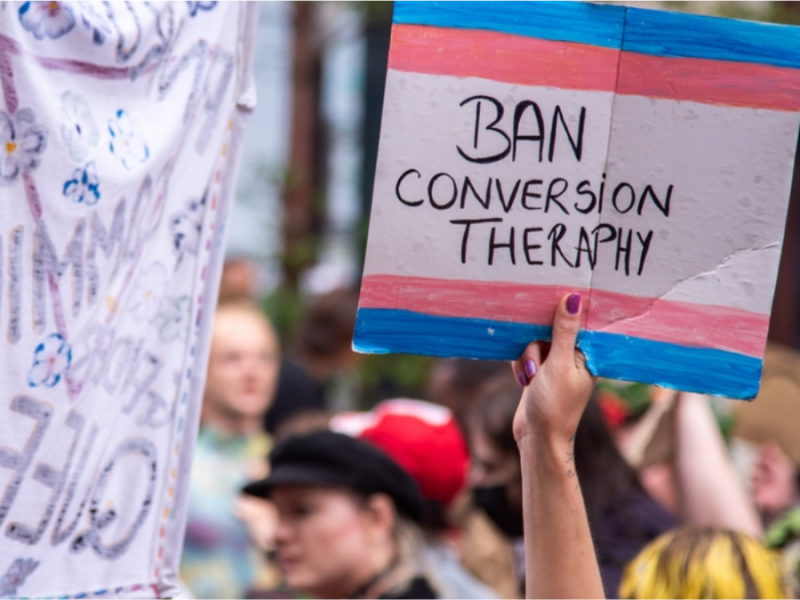
Fallout Over Supreme Court Ruling on Conversion Therapy
Despite the Supreme Court ruling, conversion therapists can still be sued for a practice the United Nations calls “torture.”

On No Kings Day, Millions Rallied to Denounce Trump and “Epstein War”
Anti-Trump protests took place in all 50 states, Puerto Rico and other US territories and in countries around the world.
