
Transforming Mental Health Diagnoses Through Blood Tests and Brain Scans
After a blood test picked up high levels of autoimmune markers, a mother experiencing depression was diagnosed with lupus.

Greetings, MindSite News Readers.
In today’s Daily, new research suggests that science could be ever-closer to identifying biological mechanisms behind certain mental illnesses – though that promising work is under threat following cuts to research.
In other news, diabetes patients’ GLP-1 use is connected to a reduced risk of anxiety and depression. And one man turns his past experiences of addiction and homelessness trials into service and triumph for his North Minneapolis community. Plus, remembering Margareta Magnusson, who introduced the world to the loving act of “death cleaning.”
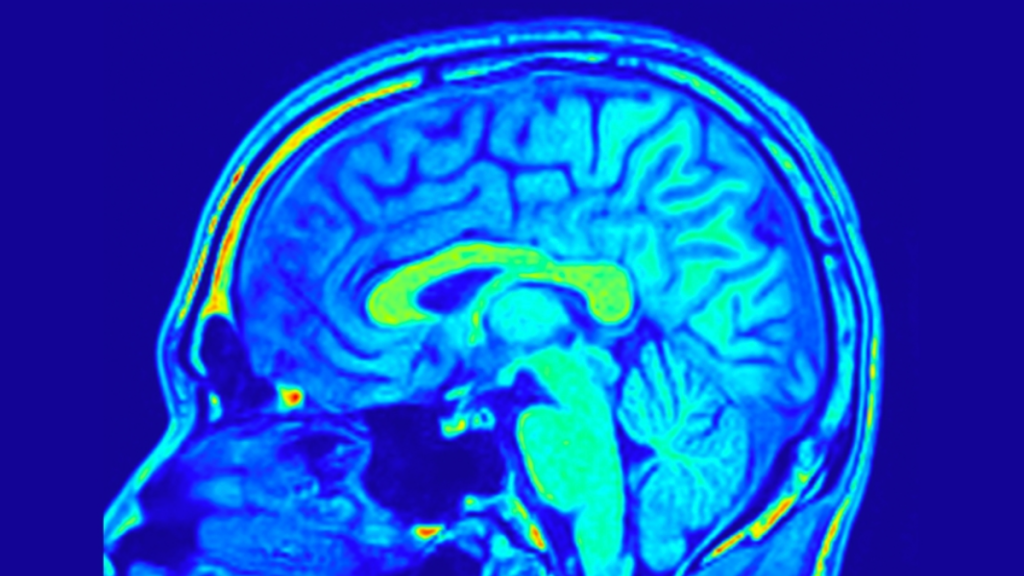
Could Blood Tests and Brain Scans Transform How We Diagnose Mental Illness?
Like many women, Amanda Miller experienced an onset of depression during a pregnancy – her second – and her symptoms only worsened after she gave birth.
Reasonably, she decided to get professional support from several psychiatrists. She’d be prescribed 6 different psychiatric medications over the next two years, she told KFF Health News, though nothing brought relief either for her mental health or for other new, mysterious health issues.
But after a blood test picked up high levels of autoimmune markers, a specialist followed up with more investigations, eventually diagnosing her with lupus, an auto-immune disease that’s notoriously hard to detect. A steroid prescription alleviated some of her symptoms within hours, and her depression lifted soon after.
A neuroscientist herself, Miller initially chalked the improvement up to the placebo effect. But, seeing her mental health remain stable as she continues to take the drug, she’s settled on a new thought – that her symptoms of depression might have been driven by inflammation all along.
Mental health has long been an outlier when it comes to diagnosis and treatment. With no biological markers to track or treat, decisions and interventions are almost exclusively based on symptom presentation.
Biomarker-based testing and treatment could change that, helping clinicians make faster, more accurate diagnoses, and then match patients to the most effective treatments.
It’s an exciting prospect, and one the American Psychiatric Association is looking at: in a paper published earlier this year, the organization outlined ideas for integrating biomarkers into the next volume of the Diagnostic and Statistical Manual of Mental Disorders, the field’s most influential diagnostic reference.
One potential example – about one-quarter of people with depression have higher levels of C-reactive protein, and preliminary research has found that those people do better when given dopamine-targeting drugs, rather than just selective serotonin reuptake inhibitors (SSRIs), the most popularly prescribed antidepressants.
As it stands, biomarker testing is available for other medical conditions including cancer and, in some cases, Alzheimer’s disease, but as KFF notes, it will take much more research to develop new tests and treatments for mental health conditions.
Ozempic and Other GLP-1 Meds Help Patients Manage Diabetes, Obesity and Maybe Some Mood Disorders

A new study suggests that, in addition to promoting better health through diabetes management and weight loss, GLP-1 receptor agonist medications like Ozempic and Saxenda may help improve mental health, The Guardian reports.
Researchers examining Swedish health records of nearly 95,000 people found that semaglutide, sold under the brand names Ozempic and Wegovy, was associated with a 42% lower risk of worsening mental health in patients who already had anxiety or depression alongside diabetes. Liraglutide, sold as Saxenda, showed an 18% lower risk.
The study, published in Lancet Psychiatry, tracked patients between 2009 and 2022, comparing periods when they were taking GLP-1s, or other diabetes medications, with when they weren’t.
Worsening mental health was measured through 1) records of psychiatric hospital admissions, 2) rates of sick leave from work for mental health, 3) hospitalization due to self-harm, and 4) death by suicide. Worsening depression and anxiety were also looked at separately – semaglutide was associated with a 44% lower risk of worsening depression, a 38% lower risk of worsening anxiety, and a 47% lower risk of worsening substance use disorder.
Interestingly, researchers cannot point to a clear reason as to why the drugs might work for anxiety and depression in patients with diabetes.
Markku Lähteenvuo, one researcher on the study speculates that there may be “direct neurobiological mechanisms involved, for example, through changes in the functioning of the brain’s reward system,” said.
Other experts urge caution before gaining too much excitement.
“From a clinical perspective, these findings are reassuring regarding the psychiatric safety of GLP-1 receptor agonists and suggest a potential role not only in preventing worsening but also, possibly, in improving mental health outcomes,” said Eduard Vieta, a professor of psychiatry at the University of Barcelona unaffiliated with the study. “However, they should not yet be interpreted as evidence of a direct therapeutic effect on depression or anxiety.”
After Once Harming His North Minneapolis Neighborhood, Emanuel Roberts Is Now Offering its Residents the Peace He Found
Emanuel Roberts, founder and executive director of Anything Helps, built the North Minneapolis, harm reduction-focused nonprofit from lived experience, having navigated addiction, homelessness and incarceration himself.
After attaining sobriety through an abstinence-based program, Roberts later became a certified peer recovery specialist, using his personal story to help others transform their lives.
He reflects that a lot of his past behavior “came out of untreated heartbreak and hurt.” His driving motivation, as he told the MinnPost, is protecting the peaceful sobriety offered him by giving it back to a community he once harmed as a drug dealer.
Anything Helps operates as a rare hybrid in Minnesota’s abstinence-dominated recovery landscape by providing and advocating for a harm-reduction approach; it is one of few Recovery Community Organizations (RCOs) in the state with a syringe service program.
Besides sobriety-related help, visitors are encouraged to explore what else the organization has to offer: showers, laundry, clothing, wound-care kits, food and a lounge where they’re encouraged to simply be.
It’s open and broad – that’s why they’re called Anything Helps, Roberts explained.
“Part of our mission is that if you walk through these doors we’re going to do anything we can to help you. Another piece is that we will work with anybody no matter who you are. You don’t have to feel invisible,” Roberts said. “You come in here and you’ll be treated with dignity. It is not a place where you just come in and grab supplies and go. You can hang out, watch a movie, eat some food, have community, and get what you need.”
Programming includes regular Wellness Wednesdays with health screenings and access to medication, as well as a weekly on-site medical bus staffed by a doctor, making healthcare accessible to people who might otherwise avoid traditional clinical settings.
In the same way that Roberts sees no contradiction between harm reduction and abstinence-based recovery, his approach to community care is open to collaboration with unlikely partners, including faith-based organizations that outwardly reject harm-reduction strategies. In those cases, Anything Helps have worked to foster cooperation toward their common goals.
“You might not want to offer syringes and safety supplies in a church, but… we help people, you help people. I can refer people to you and you can refer people to me. We can exist together as a unified front.”
In other news…
Margareta Magnusson, who introduced the world to döstädning, or death cleaning, died this month at 92. Her philosophy, shared through her 2017 book “The Gentle Art of Swedish Death Cleaning,” quietly transformed how many elders prepare for the end of their lives, reports The Guardian. Magnusson urged readers to thoughtfully sort and pass along their possessions – not as a pessimistic or morbid exercise, but as a gesture of love, sparing grieving family members the overwhelming task of doing it on their own.
Magnusson’s commitment to the practice came after her own experience sorting through what loved ones leave behind: first her mother, then her mother-in-law, and finally her husband of 48 years.
Noting that women are typically (and repeatedly) left with the responsibility, she challenged readers to the work plainly: “Why would your family and friends want to take time out of their busy lives to clean up your mess when you clearly could have taken care of it yourself?” As she often emphasized, doing so need not be sad.
Speaking to the i Paper, she said she wanted it to be “joyful and interesting.” Done right – or in any way at all – getting one’s literal house in order can help us all gently confront mortality, making room to make more memories with the ones we love while we still have time.
The name “MindSite News” is used with the express permission of Mindsight Institute, an educational organization offering online learning and in-person workshops in the field of mental health and wellbeing. MindSite News and Mindsight Institute are separate, unaffiliated entities that are aligned in making science accessible and promoting mental health globally.

Author

Related Articles

Michigan Program Cuts Infant Mortality in Half With Cash Support for Expecting Mothers
“This program reduces the stress on mothers and families…That’s what we need for healthy parents and healthy children.”