
Millions of Children and Parents Lose Food Benefits Due to Trump Cuts

Greetings, MindSite News readers. In today’s Daily, Reuters reports that nearly 5 million people have lost their food benefits due to Trump cuts in the SNAP program, forcing desperate parents to food banks. A new report from Children Now finds that many California youth manage their mental health struggles alone, and youth advocates hope to connect them to needed help. The FCC wants to eliminate gender diversity from youth programming to “help” families and children, but studies suggest doing so would have the opposite effect. And some fathers get postpartum depression, too.
Plus, the Trump administration says it will restore the specialized LGBTQ+ youth crisis line it eliminated last year, though some experts remain skeptical.
But first, 23-year-old Metairie resident Daniel Cressy is the first person in Louisiana to be functionally cured of sickle cell disease through gene therapy. The therapy, which edits a patient’s own stem cells in a lab so they no longer produce the defective cells that cause the disease, took Cressy two years from start to finish. “While many spend their lives searching for purpose, mine found me,” he said. “Now, instead of looking for meaning, I can spend my life fulfilling it.”
‘Nights of crying, not sleeping’: Cuts to federal food benefits put stress on families
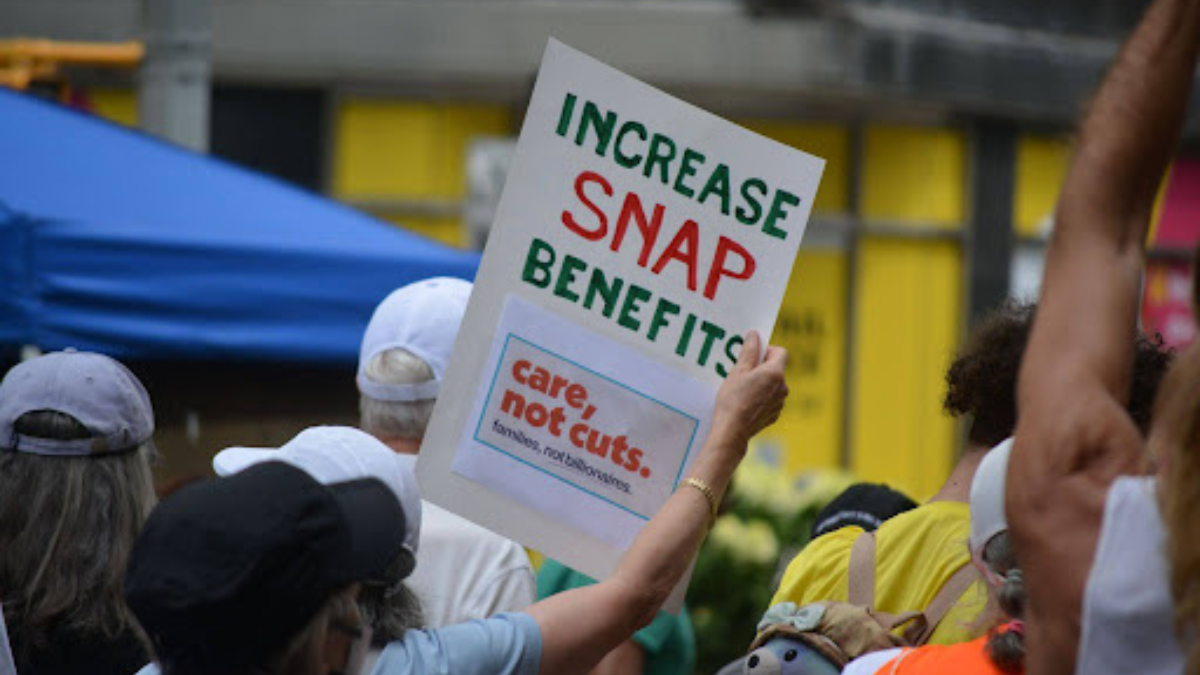
More than 4.7 million people across the country — about 11% of participants — have lost the food benefits they were receiving from the Supplemental Nutrition Assistance Program, also known as food stamps, since the passage of HR 1 last July. That’s according to Department of Agriculture data that runs through March and was obtained by Reuters.
The so-called “Big Beautiful Bill” — the signature tax and spending law passed by the Republican-controlled Congress at the urging of President Donald Trump — cut SNAP funding by $187 billion, around 17%, over the next 10 years, in part by increasing work requirements and cutting off benefits received by some immigrants.
The hardest-hit state, according to Reuters, is Arizona, where SNAP enrollment has fallen by half. One of those hit by the cuts is Myriam Flores, a mother of seven in Phoenix, who said she lost $1,100 a month in SNAP benefits in January.
“There are nights of crying, nights of not sleeping, when I lose sleep at 2 a.m. doing the math, deciding what to pay for and what to put off,” she said. – Rob Waters
Hoping to not be a burden, teens struggle with racism, mental health on their own

California’s youth are far from alone in their struggle with mental health — and a recent report suggests the scale of the crisis is hard to overstate. Ninety-four percent of California youth aged 14 to 25 report mental health concerns in an average month, with stress and anxiety topping the list, according to the 2026 California Children’s Report Card created by the California non-profit Children Now. For Black and Latino teens in particular, that struggle often plays out in isolation.
Part of the problem is structural, David C. Turner III, an assistant professor of Black Life and Racial Justice, told CalMatters. Turner, who also serves as a senior adviser at the Alliance for Boys and Men of Color, points to systemic racism, the overcriminalization of Black children and an education system that regularly pushes students out instead of supporting them.
“The overcriminalization of young people in schools oftentimes forces them to disengage from education,” he says. “It demonstrates to these young men that they don’t matter, their opinions don’t matter, how they learn doesn’t matter, and it creates a very dehumanizing environment for them.” That environment, he argues, is part of why many never make it to college. “Schooling has been a place of violence for them. When I say violence, I mean like having their spirit broken.”
That structural weight shows up in daily life, too. Elias Avalos, a 17-year-old senior and the child of Salvadoran immigrants, spent his junior year of high school juggling four advanced placement classes until he hit a wall. “I’ve been dealing with feelings of burnout and unbelonging for a while,” he says. Skateboarding offers relief, allowing him to de-stress from work.
With no model at home for processing emotions, he learned to keep things to himself, partly out of fear that anything he told a therapist would make its way back to his parents. “I didn’t want to be a burden to my family and friends with my problems,” he says. “Everyone is going through something. It’s just something I got to get out of myself.”
Through his internship at the RYSE Youth Center in Richmond, where he researches factors influencing young people’s mental health, Avalos is learning how isolation plays out beyond his own life. Others are navigating neglect, poor coping skills and a lack of youth-centered spaces to turn to for help, just like him. “I know many people in my neighborhood that have to sleep on the streets, sell drugs to support their families and people that I know lost their lives,” he says. “It’s a harsh reality that youth in Richmond really do face.”
As Avalos deepens his understanding of the issue, 16-year-old Bryce Collins has channeled his own experience into action. When he was about 12, he began to notice that non-Black people watched him differently when he entered certain spaces. Lately, the unique pressures of navigating life as a young Black man, preparing for college and navigating family sometimes lead him to shut down.
“Being a young Black male lets me know how I have to approach some of these areas… I can’t do what everybody else does,” he says. “I don’t get the privilege. I have to hold myself to a higher standard because that’s not how society views us typically.”
Still, isolating is a habit he wants to break. “My goal is to find better ways to manage my mental health besides going unresponsive to people,” Collins says. Since October, he’s worked with Students Deserve, an organization fighting to end the school-to-prison pipeline and expand mental health spaces in Los Angeles Unified School District.
Both teens’ stories point to a need for policies that meet kids where they are. Children Now backed a 2024 law allowing minors 12 and older to consent to their own mental health treatment and is now pushing Senate Bill 363, which would require insurers to report treatment denials. “We need to be responding with care, treatment, and services rather than with punishment,” says Kelly Hardy, one of the report’s lead authors. For teens like Avalos and Collins, that could mean the difference between carrying the weight alone and finally setting some of it down.
Trump administration claims it will restore the 988 Lifeline’s channel for LGBTQ+ youth
The option to push 3 and talk to a counselor that specializes in the needs of LGBTQ+ youth was eliminated by the Trump administration in July of 2025. Now, the administration says, it will be restored by the end of this year as a result of a law passed by Congress, The Advocate reports. The Substance Abuse and Mental Health Services Administration and Vibrant Emotional Health, which administers the lifeline, plans to reactivate the service, but says it must do so in accordance with Trump’s Executive Order 14168, which recognizes only two sexes and rejects federal recognition of trans and nonbinary gender identities. The administration hasn’t explained how the two mandates can coexist or whether transgender youth will be included at all in any restored program, according to The Advocate.
The uncertainty has fueled skepticism among advocates and lawmakers. Jaymes Black, CEO of The Trevor Project — the country’s largest suicide prevention organization focused on LGBTQ+ people — piloted the original program that reached more than 1.5 million youths before last year’s shutdown. He remains wary because of the administration’s commitment to the anti-trans executive order.
“The administration’s executive order rejects these youth entirely; they cannot be supported if they are not included,” Black said, noting that transgender youth face among the highest suicide risk rates in the country. Democratic Rep. Raja Krishnamoorthi from Illinois was more pointed, arguing that the law leaves no room for interpretation. “Executive orders cannot override federal law, and Congress already settled this question: the Trump Administration must restore these services, including for transgender young people.”
Erasure, not representation, harms gender diverse kids, no matter what the FCC says
The Federal Communications Commission has called for an investigation into whether TV ratings adequately flag “content related to gender identity.” Despite its vague phrasing, the move places shows featuring transgender and nonbinary characters under attack, Greater Good Magazine reports. The move is the latest extension of the Trump administration’s years-long campaign against trans and gender non-conforming communities, following efforts like fearmongering over trans people in bathrooms and restricting access to gender-affirming care. The premise — that depicting gender diversity is harmful and something to fear — isn’t just hostile, it’s incorrect. Research shows that the real danger isn’t representation, Greater Good notes, but its absence.
When depictions of trans, queer or nonbinary people are missing or stereotypical, researchers find it gives “license to hegemonically-inclined parents to stamp out gender-deviant behaviors in their children.” Queer kids who lack that parental support are more likely to be depressed and experience “higher levels of parental abuse.” A 2019 study in the journal Communication, Culture & Critique found that narrow, binary-only portrayals limit “understandings of what it means to identify as TGD [transgender and gender-diverse] in the world,” and may even worsen health risks for queer youth – one reason that one in three TDG children experience assault in primary school.
Inclusive representation, on the other hand, has measurable benefits. The animated Cartoon Network series Steven Universe — which explores themes of mental health and LGBTQ+ identity and has been flagged by supporters of the FCC inquiry — has been used in classrooms to teach social and emotional skills thanks to its handling of gender norms, mental health and queer relationships.
“Seeing characters you look up to be flawed individuals and love each other despite that is refreshing, and as a young viewer — I started in middle school — those lessons stick with you,” one young watcher told Teen Vogue. Researchers point to this kind of storytelling as a way of supporting empathy, identity development and belonging in kids who are still figuring out their identities. As the 2019 study put it, “media is one discourse that reflects and creates reality.”
The positive effect isn’t limited to kids who identify with what they’re watching — it extends to how viewers see other people, too. In a 2021 study, participants who watched a single 1992 episode of Star Trek: The Next Generation, in which a character begins a relationship with a person from a genderless society, came away with more positive views of transgender people and those living beyond the binary. Researchers chose the episode because it treated the gender-diverse character neutrally, concluding that similar media can help reduce discrimination and violence against trans people by building familiarity and empathy.
None of this means that representation alone is a cure-all, or that one TV show can fix a culture buoyed by a binary default. But the research is consistent: more expansive representation is a good thing, and restricting it only deepens the isolation and harm that gender-diverse kids already face.
The name “MindSite News” is used with the express permission of Mindsight Institute, an educational organization offering online learning and in-person workshops in the field of mental health and wellbeing. MindSite News and Mindsight Institute are separate, unaffiliated entities that are aligned in making science accessible and promoting mental health globally.

Author

Related Articles

Chicago Launches its First Psychiatric Street Team
Meet Chicago’s first Street Psychiatrist, a student of the street medicine pioneer Jim Withers. Plus, a look at the American Penal Press Contest.
Trump’s Student Loan Changes Cause Anxiety and Panic
Borrowers face rising payments under the Trump administration’s student loan changes. Plus: teaching emotional literacy to teen girls, and why the new CDC youth mental health report is facing criticism.

Rumors of Kids Quitting College En Masse Are Exaggerated
This week: what the data says about Gen Z students quitting college, and why postpartum mental illness is more than depression.