
He Almost Killed His Father. Now He Helps Others At Risk.
In today’s newsletter, we explore how one man healed after a dangerous psychotic break that nearly led him to murder.

Greetings, MindSite News Readers.
In today’s Daily, one mental health advocate shares the story of his terrifying break with reality that nearly led him to murder and a Kenyan researcher tells how her father’s early onset dementia diagnosis led her to a career helping family caregivers.
But first, participation in fine arts is linked to improved physical and mental health, according to a growing body of scientific research. The findings even include evidence of dance as an effective treatment for one youth in managing the pain of sickle cell anemia. “We understand now, because of the epidemiological evidence that we have, that access to the arts is a determinant of health and well-being,” Jill Sonke, a cultural policy fellow with Stanford University, told Reasons to be Cheerful. “If we don’t make access to the arts more equitable, we’re doing harm.”
Healing After a Psychotic Break – and Helping Others at Risk
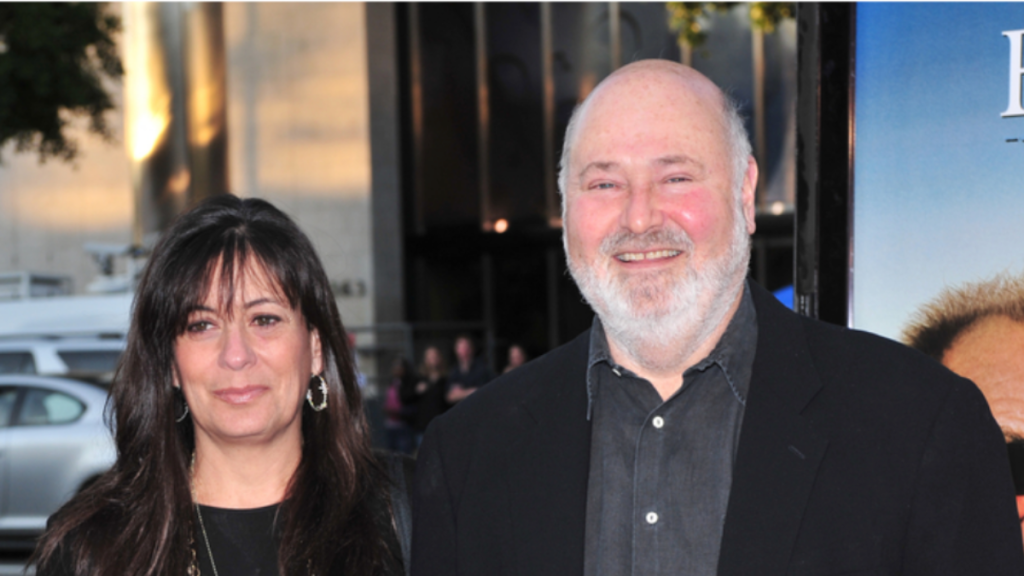
Many a breath faltered when news of Rob Reiner and Michele Singer Reiner’s passing broke last December. How could two people so beloved be gone so suddenly, and allegedly at the hands of their son?
The family had been open about Nick Reiner’s struggles with addiction, sharing their efforts to keep him supported. They’d loved him. If he was indeed responsible for ending their lives, millions are trying to understand why.
Cohen Miles-Rath has some idea: He nearly killed his father almost ten years ago during a psychotic episode. “I feel like I’m in a position to speak from a perspective that no one else can,” he told the New York Times, “because I did live through it, and I came out the other end.”
Many of the nation’s roughly 300 parricides per year occur under similar circumstances to Cohen’s case, the Times reports, executed by young men with serious mental illness who live at home and lash out against those closest to them.
It wasn’t immediately clear to Miles-Rath how ill he was. An injury had ended his distance running career in college, and, no longer required to stick to a training regimen, Miles-Rath began smoking cannabis every day, something he thinks contributed to his break.
Though he noticed some changes in his experience of reality, neither he nor his father were clear about the severity of his illness until it was nearly too late.
Warning signs went unheeded, in large part because of his father’s skepticism of psychiatry. A month before the assault, Miles-Rath was detained by police and committed to a psychiatric hospital for five days after alarming a professor with his behavior.
But on the ride home following his release, he admitted to his father that he’d lied about his symptoms to get out. Despite this, the two of them determined that the antipsychotic medicine Miles-Rath had been prescribed following the incident wasn’t necessary.
Each poor choice laid groundwork for the delusions that would lead to Cohen’s near-fatal stabbing of his father, Randy. Luck alone separated his story from Nick Reiner’s, Cohen said.
Miles-Rath served jail time for his actions, but he also received treatment for his mental illness. Now, he travels the country speaking to others about his experience of psychosis to help them understand what it looks like, and to show them that healing is possible, even after a terrifying episode of violence.
Miles-Rath, reportedly diagnosed with schizoaffective disorder, even wrote a book about the ordeal, detailing how he navigates the world with his diagnosis, something he’s now doing sans psychiatric medications.
The choice to wean off of his antipsychotics – under medical supervision – is a remarkable and controversial choice that Miles-Rath made because, as he sees it, his illness is chronic and lifelong, requiring close self-monitoring, crisis planning, good self-care, and a strong support system.
Dad’s Dementia Helped One Kenyan Researcher Find Purpose in Her Career

There are some endearing annoyances Wambūi Karanja will never be able to share about her father. He’s quite present in her life, but years ago, when she was a teen and he in his early 50s, he was diagnosed with early-onset dementia.
Now, Karanja is 32 and her father’s illness is so advanced that he is bedridden and no longer recognizes her. Still, she tells NPR, the pain and grief of her father’s dementia has partly revealed her purpose.
For some years now, she’s worked as a project manager at the Brain and Mind Institute in Aga Khan University, located in Nairobi, Kenya. Her efforts, recently acknowledged by the Alzheimer’s Association, are focused on training families in the art of caregiving.
It’s vital work in Kenya, where some dangerous myths perpetuate about dementia, causing people to delay or dismiss necessary care. Some say dementia simply happens with age, while others believe it has intangible, spiritual causes.
Karanja’s own mother was accused of placing her father under a spell because she is from a different ethnic community. In doing her work, Karanja helps families understand that “dementia is caused by changes in the brain,” enabling them to accept the truth of the diagnosis and preventing them from pursuing ineffective or costly treatments.
Her efforts also support caregivers themselves. With only 30 neurologists across a nation of more than 55 million people, Kenyan families navigate dementia with little professional support, relying instead on community members and, when possible, paid aides.
Building upon the idea that “dementia is a disease of moments” — a loved one may light up during music, then grow agitated minutes later — Karanja teaches families to cope with that constant shifting rather than search for explanations.
She also emphasizes that “a caregiver has to learn the skill of how to support themselves, because … if a caregiver is not well, they will not be able to look after the person with dementia,” adding, “find time for yourself to enjoy things.”
In other news…
Until four years ago, journalist David Oliver had been insulated from intense grief, never having to give it much thought. Then his father was stricken with Creutzfeldt-Jakob Disease — a rare, fatal illness — which took him in just seven weeks.
“Grief stormed into my life with Category 5 hurricane speed,” Oliver wrote in a personal account for USA Today. “It destroyed everything in its path and left me to clean up the debris of my shattered world.”
To work through it, he turned his pain into his work, reading and writing about loss, and interviewing mental health experts, eventually culminating in a panel, “How Death Became the New Wellness Frontier,” at this year’s SXSW Conference
The name “MindSite News” is used with the express permission of Mindsight Institute, an educational organization offering online learning and in-person workshops in the field of mental health and wellbeing. MindSite News and Mindsight Institute are separate, unaffiliated entities that are aligned in making science accessible and promoting mental health globally.

Author

Related Articles

Fallout Over Supreme Court Ruling on Conversion Therapy
Despite the Supreme Court ruling, conversion therapists can still be sued for a practice the United Nations calls “torture.”

On No Kings Day, Millions Rallied to Denounce Trump and “Epstein War”
Anti-Trump protests took place in all 50 states, Puerto Rico and other US territories and in countries around the world.
How Medicaid is Helping People Leaving California Prisons
Changes to federal law allows Medicaid to provide health and other services to people exiting prisons. California and some other states are making use of the program, but expansion efforts will depend on the Trump administration.
