
Smartphones Are Making Us Dumber and More Anxious
Greetings, MindSite News readers. Usually, I just help get out our MindSite News Daily with a little editing, but today I’m filling in to write it. And let me tell you, editing is a lot easier! So hats off to Courtney and Diana who write this newsletter on a regular basis.
In today’s edition, we hear from a computer science professor who wants both adults and kids to step away from nonstop screen-scrolling and allow our brains to recover and think deeply – before we lose the ability to do so.
We also share an inspiring story about the people who, after spending years in prison, are working to help those still incarcerated to transform their lives and cope with pain and trauma. Plus, a quick look at a recent study that suggests that helping people feel less lonely could reduce the suicide rate.
But, first: MindSite News and our partners won another journalism honor – first place for small newsrooms in the Katherine Schneider Journalism Award for Excellence in Reporting on Disability. A press release from the National Center on Disability and Journalism at Arizona State University said this:
First place in the “Small Market” category goes to “Policing the Vulnerable,” work by the staff of MindSite News, Medill Investigative Lab-Chicago, Invisible Institute and South Side Weekly. Their investigation explored the effects of years of start-and-stop police reforms on people experiencing a mental health crisis in Chicago.
Congrats to Chicago Bureau Chief Josh McGhee, who led the work for us, and to our fabulous partners.
Stop the endless scrolling, says computer science professor Cal Newport
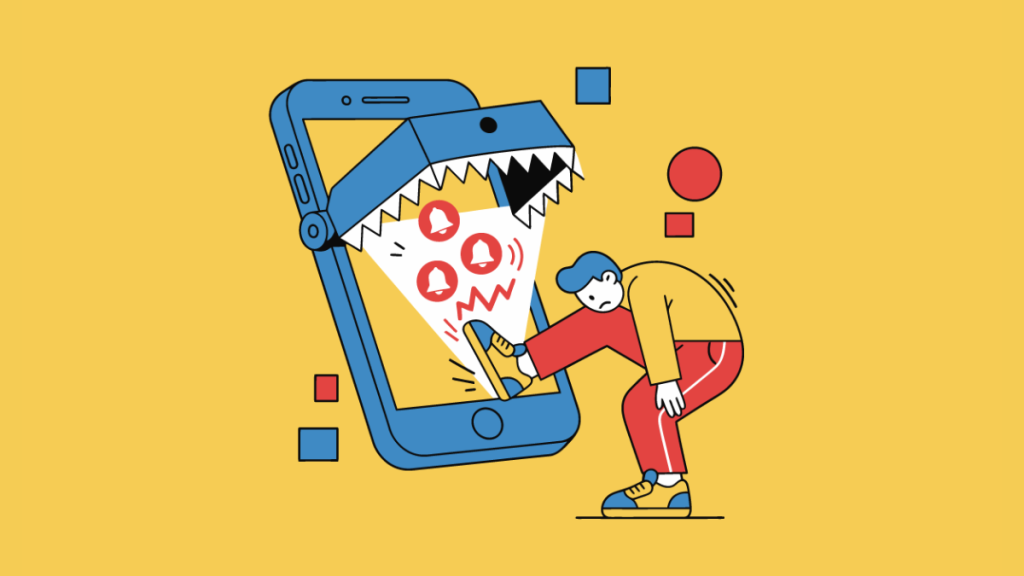
In 2016, Cal Newport, an author and professor of computer science at Georgetown University, wrote a book arguing that email and instant messaging were impeding our ability to focus on difficult mental tasks. He urged people to develop their capacity for sustained, concentrated thinking by setting aside time without digital interruptions. He called this process “deep work,” and titled his book “Deep Work: Rules for Focused Success in a Distracted World.”
Ten years on, the problem has worsened, Newport wrote in a recent essay for the New York Times. “In 2016 my main concern was helping people find enough free time for deep work. Today I think we’re rapidly losing the ability to think deeply at all, regardless of how much space we can find in our schedules for these efforts.”
Newport cites data from Gloria Mark, a professor of informatics at the University of California, Irvine, which suggests that our attention spans have dropped by two-thirds since 2004. The largest decline happened around 2012 – right around the time that smartphones started to become common. “This timing is no coincidence,” he writes. “A meta-analysis released last fall showed that consuming short-form video content, as delivered by apps like TikTok and Instagram, is associated with poorer cognition and reduced attention.”
Newport’s insights about the impact of smartphone technology have been prescient. His take on the influence of those insights, however, seems to have been overly optimistic – especially his prediction, made during a 2019 interview with GQ magazine, that attitudes towards smartphone use by young people would shift dramatically within five years. “You’re gonna look at allowing a 13-year-old to have a smartphone the same way that you would look at allowing your 13-year-old to smoke a cigarette,” he said.

Today, according to the Pew Research Center, up to 95% of 13- to 14-year-olds in the U.S. have smartphones. .
Historically, public health progress has come through the combination of both policy and cultural change. Lawmakers made seatbelts mandatory, which dramatically lowered deaths from car crashes. Restrictions on smoking in public places and anticigarette media campaigns made smoking far less socially acceptable and greatly reduced cigarette smoking and deaths.
Newport argues that policymakers need to do the same now. In his op-ed, he makes another analogy: to the change in policy and public attitude toward exercise, diet and heart disease. He tells the story of the heart attack that President Dwight D. Eisenhower suffered in 1955, at the age of 64. In the following years, Newport writes, the idea that diet and exercise played important roles in health and longevity “entered the national consciousness.”
Government policy can play a similar role in improving what Newport cleverly refers to as “digital nutrition.” Indeed, he issues a call to action – “a full revolution in defense of thinking, launched against the digital forces seeking to degrade it.”
He pushes for government policy:
In a move reminiscent of the Food and Drug Administration’s banning trans fats, Australia recently enacted legislation banning social media use for kids under the age of 16. In both cases, regulators looked at the evidence and concluded that the potential harms (whether it’s heart attack risk or damaged mental health) far outweighed the benefits.
The United States should follow Australia’s lead in this regard.
He calls for personal and family change as well. We should all “reject the constant companion model of phone use, in which we keep smartphones on us at all times,” he writes, and join the push for school districts to ban smartphones from classrooms.
“I’m done ceding my brain — the core of all that makes me who I am — to the financial interests of a small number of technology billionaires or the shortsighted conveniences of hyperactive communication styles,” he concludes. “It’s time to move past fretting about our slide into the cognitive shallows and decide to actually do something about it.”
Meet the formerly incarcerated mentors changing lives in California – inside and outside prison walls
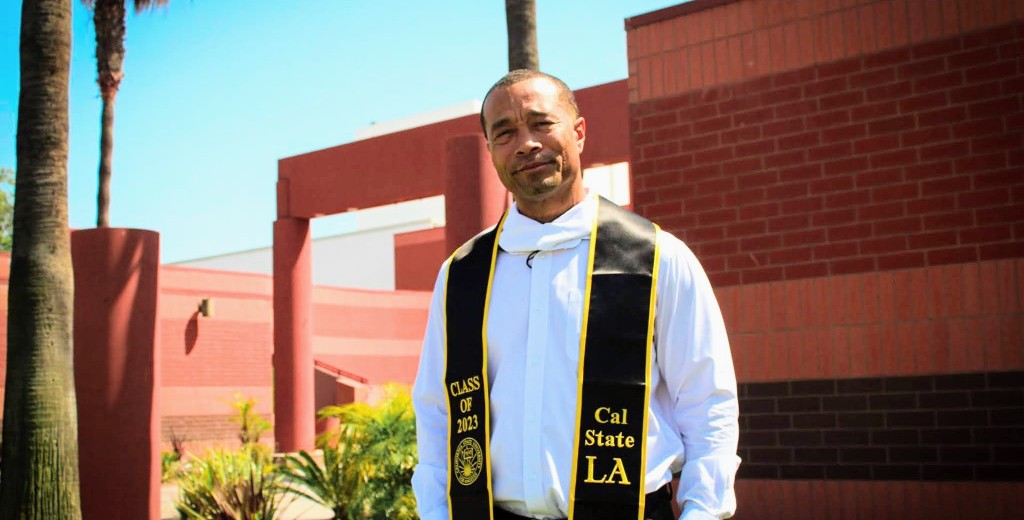
After Allen Burnett was sentenced to life in prison for his role in a fatal carjacking, he feared he would die behind bars. Despite that, he decided to live his life inside prison with meaning and purpose. He managed to earn a college degree magna cum laude while at the L.A. County state prison known as Lancaster and was part of an effort led by the men incarcerated there to create personal and institutional change. As the story notes:
Participants held one another accountable. Minor behavior resembling gang culture could lead to removal from the yard. The result was a culture where men serving life sentences focused on education, therapy and personal growth — even when many believed they would never leave prison. Burnett eventually confronted his own traumas — including finding his father dead from a drug overdose at age five — and the pain his crimes had caused to the family of his victim.
“Hurt people hurt people,” Burnett says. “But healed people help people.”
In 2019, California Gov. Gavin Newsom took notice of Burnett’s work and personal transformation and commuted his sentence. Today, he is the co-founder and executive director of Prism Way, a Los Angeles nonprofit that trains formerly incarcerated people to become certified peer support specialists and help others navigate life after prison. Our friends at Reasons to Be Cheerful just published a beautiful piece about Burnett and other formerly incarcerated people who have become peer support workers and we have republished it here.
These workers use their personal experience to provide mentorship and emotional support to the people they work with. Tyson Atlas was sentenced to life in prison when he was just 16. While incarcerated, he earned certification as a substance-use disorder counselor and learned counseling skills, group facilitation and recovery techniques. His sentence was commuted in 2024 and he now works with Burnett leading Prism Way’s peer support training.
“We harness our lived experience and come alongside people in their recovery,” Atlas told Reasons to Be Cheerful. “All the years someone spent incarcerated — those experiences can prevent someone else from going down the same path.”
For many, certification also provides a career pathway, helping address the employment barriers that often hinder successful reentry. Prism Way sometimes waives tuition for participants who cannot afford it.
“We know what it’s like coming home and navigating the workforce with that stigma,” Burnett says. “If we don’t help them, some might end up homeless or fall back into addiction.”
For people like Burnett and Atlas, the mission of helping others who face the same struggles they once faced is deeply personal. “I don’t want people to remember me by my crime,” he says. “I want them to remember me by the work I’ve done.”
In other news…
Loneliness often precedes suicide. Easing it may be a simpler way to save lives. Researchers trying to identify the precursors of suicide often look for symptoms of depression and anxiety among those who take their own lives. But a research team at Vanderbilt University Medical Center in Nashville took a different approach. They suspected that many people who die by suicide take that step after years of feeling isolated and lonely – in addition to feeling depressed or anxious.
The team, led by first author Katherine Musacchio Schafer, a clinical psychologist and assistant professor at Vanderbilt Health, looked at survey responses from almost 63,000 people who answered questions about the extent to which they experienced symptoms of anxiety, depression, loneliness and suicidal thinking. Schafer and her colleagues then examined loneliness as a mediating factor – to what extent does it influence whether people with anxiety or depression contemplate suicide? Their paper, published in “JAMA Network Open” last month, concluded that loneliness is a significant factor.
Their research points to the need for new tactics in the effort to prevent suicide. Historically, those efforts have focused on reducing symptoms of anxiety and depression – work largely performed by clinicians who are in increasingly short supply. A “more sustainable pathway,” they suggest, may involve trying to reduce people’s feelings of loneliness by helping them connect to others in their communities – the kind of work that could be led by family members, community health workers or peer support specialists.
“People struggling with anxiety and depression might be able to reduce their risk of developing suicidal ideation by reducing loneliness,” Schafer said in a Vanderbilt Health press release. “Even if people cannot access evidence-based mental health care that treats their underlying anxiety and depression, reducing their loneliness may help them feel better.”
The name “MindSite News” is used with the express permission of Mindsight Institute, an educational organization offering online learning and in-person workshops in the field of mental health and wellbeing. MindSite News and Mindsight Institute are separate, unaffiliated entities that are aligned in making science accessible and promoting mental health globally.

Author

Related Articles
Cornell Assault Prompts Parents to Talk With Their Sons
Sexual assault on campuses nationwide is still a grave problem.
The Unseen Toll: Depression, Anxiety Plague Black Women a Year After Being Fired by DOGE
When Trump cut DEI programs and allowed DOGE to gut the federal workforce, hundreds of thousands of Black women lost their jobs. Many are still reeling.

Exclusive: A Maternal Policy Expert Weighs in on Lindsay Clancy Mistrial
Policy expert Joy Burkhard discusses maternal mental health policy, postpartum psychosis misunderstandings, and new CA mental health parity laws.