
LA County’s Homeless Shelter System Is a Revolving Door
A new report reveals the LA homeless shelter system is failing to meet its targets, with nearly 60% of residents returning to the streets.

Greetings, MindSite News Readers.
In today’s Daily, a close look at the challenges unhoused residents of Los Angeles County face when entering the shelter system for temporary housing. Plus, how a rapidly changing street drug supply threatens progress in overdose death reduction.
But first, if you’re reading this, that means you made it into today. Take a moment to celebrate who you’ve become with one of my favorite poets.
For far too many, L.A. County’s homeless shelter system is broken
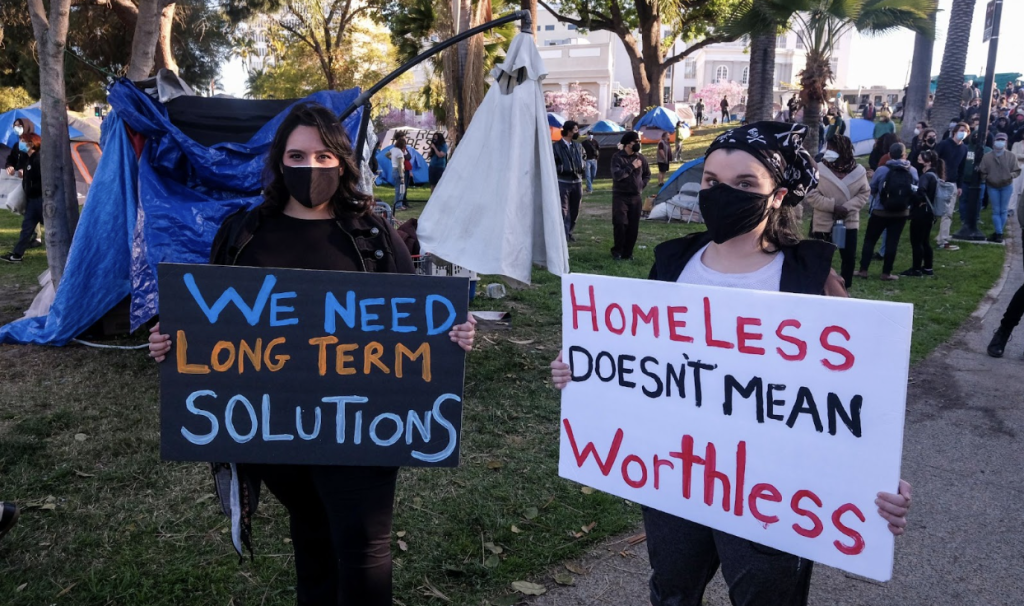
The goal of the Los Angeles Homeless Services Authority, or LAHSA, is that no more than 30% of the people who enter its interim housing system will return to the streets or fall off the radar altogether. Managing more than 12,000 interim beds, the agency contracts with nonprofit partners to run congregate shelters, motel-style units, and tiny home villages across L.A. County. Despite the hundreds of millions of taxpayer dollars invested in the interim housing system, a recent report from the L.A. Times reveals that nearly 59% of those who enter the system for shelter end up right back where they started – almost double the LAHSA target.
Months ago, Amanda Ponce was sent back to the streets. The 41-year-old mother of four, who suffers from chronic seizures and drug addiction, had been housed at a LAHSA site in Boyle Heights. One day, a disagreement between her and another resident ended with Ponce tapping the man over the head. Both she and the man agreed the incident wasn’t a big deal, but it didn’t matter. Ponce was expelled for the disruption. “They should have given me a second chance,” she said. “I don’t want to be on the streets.”
Some residents leave voluntarily – worn down by the site’s rules, craving privacy, or simply demoralized by the long wait for permanent housing. Others need the support of qualified mental health providers to stabilize and find their footing, but few shelters can afford on-site specialists. Many residents are left without the help they need to stay. “Some people just get tired and say, ‘I’m done. I’m leaving,'” said Ken Craft, CEO of Hope the Mission, one of LAHSA’s partners.
Kelsey Madigan, LAHSA’s director of interim housing, acknowledges the problem, noting that many of the agency’s partners are too quick to evict residents for disruptive behavior that doesn’t pose an actual danger. Residents “have experienced trauma most people could not fathom going through,” she said, which can cause stress and frustrations to run high. Staff should investigate what prompted an incident before expelling anyone, including whether mental health issues or substance abuse played a role and whether an ongoing safety or behavioral threat exists. The altercation Ponce described shouldn’t automatically result in removal, Madigan said.
Concerned, LAHSA took a close look at data from the first five months of the current fiscal year and found that one of its largest partners, Volunteers of America Los Angeles, recorded a 66% rate of exits to unknown or uninhabitable locations, compared with 59% for all providers serving a similar population. The finding is troubling since VOA runs 1,300 interim beds across 14 county sites. Ponce resided in a VOA tiny home village before she was expelled. Part of the issue, LAHSA learned, is that VOA had too broad a definition of a “direct threat” to safety.
Moreover, when residents are removed, their transition is often fraught. Ponce says that after her eviction, a VOA caseworker promised to help her secure a bed at another location but never followed up, leaving her with nothing. She wasn’t alone: Two other former VOA residents told the Times they also received no information about alternative housing after being expelled.
To halt the problem, LAHSA issued a corrective action plan against VOA from November 2025 through January 2026 that Madigan says could extend to other providers in the future. Under the plan, VOA was subject to surprise inspection visits across all sites, required additional staff training, and LAHSA approval to expel a resident.
There were immediate improvements. Problematic exits dropped from roughly 200 per month to 100 during the oversight period. Unfortunately, when the plan ended, that number swiftly climbed back up to 140. LAHSA acknowledged the issue, noting the importance of oversight but admitting that it lacks the capacity to sustain intensive oversight of multiple providers at once.
On the other hand, some housing advocates say the long-term systemic fix isn’t to focus on how to keep people in shelters, but rather to build more affordable permanent housing. As Margot Kushel of the Benioff Homelessness and Housing Initiative at UC San Francisco put it, better outcomes are possible “if you just had more options for people.”
A deadly synthetic opioid is poisoning the drug supply. It’s not fentanyl.
Naida Rutherford, the coroner in Richland County, South Carolina was stumped. She was investigating an overdose death that had all the hallmarks of fentanyl poisoning, “like the foam coming from the mouth and nose, as if they had an overdose,” minus the fentanyl. “Their blood tested negative for any substance, which was very odd,” Rutherford said. When standard toxicology tests failed, they kept digging and finally discovered cychlorphine, a new, highly potent synthetic drug spreading rapidly throughout the nation’s street supply. “This is the first time we’ve seen it in South Carolina, which is very scary because none of us knew to test for it,” she told NPR.
Experts describe today’s drug market as a “synthetic soup.” In the past, dealers distributed drugs derived from plants, like heroin and cocaine. Today’s street supply is increasingly adulterated with a range of chemicals such as a stabilizer used to protect plastics from ultraviolet rays.
“Once a month or every other month, we’re encountering something that we’ve never seen before, and we don’t have indications of it being seen in the United States before,” said research chemist Ed Sisco. The mixtures change so frequently in both substance and potency that street drug users have no way to know what they’re consuming – leaving them wholly unprotected from toxic batches that can cause intense sickness or death.
Worse yet, the cocktails don’t always respond to Narcan or naloxone, which are used to reverse opioid overdoses. Medetomidine, a veterinary sedative that came to prominence after wreaking horrors throughout Philadelphia’s drug supply, has also become more widespread. Medetomidine overdoses and withdrawal symptoms are also notoriously difficult to treat.
“The problem with medetomidine is that the withdrawal from it is life-threatening if you quit cold-turkey,” said Nabarun Dasgupta, a researcher examining street drugs and overdose patterns at the University of North Carolina. “That is not the case with fentanyl or xylazine,” another synthetic opioid.”
Still, there’s hope. While the drug supply is more deadly than ever, overdose deaths are dropping. The Centers for Disease Control and Prevention reported 71,542 deaths in a 12-month period ending October 2025 — a significant decline from the 113,000 recorded by the CDC in August 2023. “This is unprecedented and historic, for the longest consecutive months of decline,” said Lori Ann Post, a researcher at Northwestern University. “That is awesome.”
Experts credit several factors for the decline, including wider access to addiction treatment, increased availability of naloxone, and less potent fentanyl circulating in some areas. Notably, Post says that opioid-related deaths have dropped enough that stimulant drugs like cocaine and methamphetamine now account for more fatalities. Dasgupta also pointed to another remarkable and promising stat for younger adults: “No one in Maine under age 25 has died (from a drug overdose) in nearly 12 months. Zero is a meaningful number,” he told NPR.
While promising, experts urge extreme caution for people still struggling with substance use. Overdose deaths still happen because chemicals in the drug supply are increasingly dangerous. For his part, Dasgupta hopes that growing awareness of the dangers of adulterated fentanyl will halt people from continued use altogether.
(See MindSite News’ earlier story for more on Dr. Nabarun Dasgupta: ‘MacArthur Genius’ Scientist Warns Against Rolling Back Harm Reduction.‘”)
In other news…
Navigating chronic mental negativity: For understandable reasons, many Americans find themselves in a tough mental space right now. The U.S. launched a terrifying and haphazard war. The economy is tanking. Misinformation is raging. And if that’s not enough, some of our nation’s lawmakers are codifying discrimination back into law. Given all that, it’s hardly surprising that some folks are struggling to feel optimistic. Still, there are ways to feel our feelings without staying stuck in the proverbial valley, experts told The Washington Post.
If you have a friend that is struggling, therapists say the best help is counterintuitive – stop trying to get them to look on the bright side. Rushing to reframe negative feelings, even with good intentions, can leave people feeling unheard and ashamed of emotions that are completely valid. Instead, experts recommend simply listening and reflecting back what someone is expressing. Naming their feelings can be more powerful than any pep talk. And if you’re the one who’s struggling, the path forward is often fairly clear – if not easy to implement: A combination of quality sleep, exercise, time around people, and a few quiet minutes before bed to express your own gratitude can help tremendously. The goal isn’t forced optimism, one psychologist said. It’s seeing “the true, but positive.”
The name “MindSite News” is used with the express permission of Mindsight Institute, an educational organization offering online learning and in-person workshops in the field of mental health and wellbeing. MindSite News and Mindsight Institute are separate, unaffiliated entities that are aligned in making science accessible and promoting mental health globally.

Author

Related Articles

Chicago Launches its First Psychiatric Street Team
Meet Chicago’s first Street Psychiatrist, a student of the street medicine pioneer Jim Withers. Plus, a look at the American Penal Press Contest.

Trump’s Student Loan Changes Cause Anxiety and Panic
Borrowers face rising payments under the Trump administration’s student loan changes. Plus: teaching emotional literacy to teen girls, and why the new CDC youth mental health report is facing criticism.

Rumors of Kids Quitting College En Masse Are Exaggerated
This week: what the data says about Gen Z students quitting college, and why postpartum mental illness is more than depression.