New Hard-to-Detect Opioids are Causing Deadly Overdoses
Coroners and medical detectives are on the hunt for orphines, lethal opioid killers which don’t show up on routine toxicology tests.
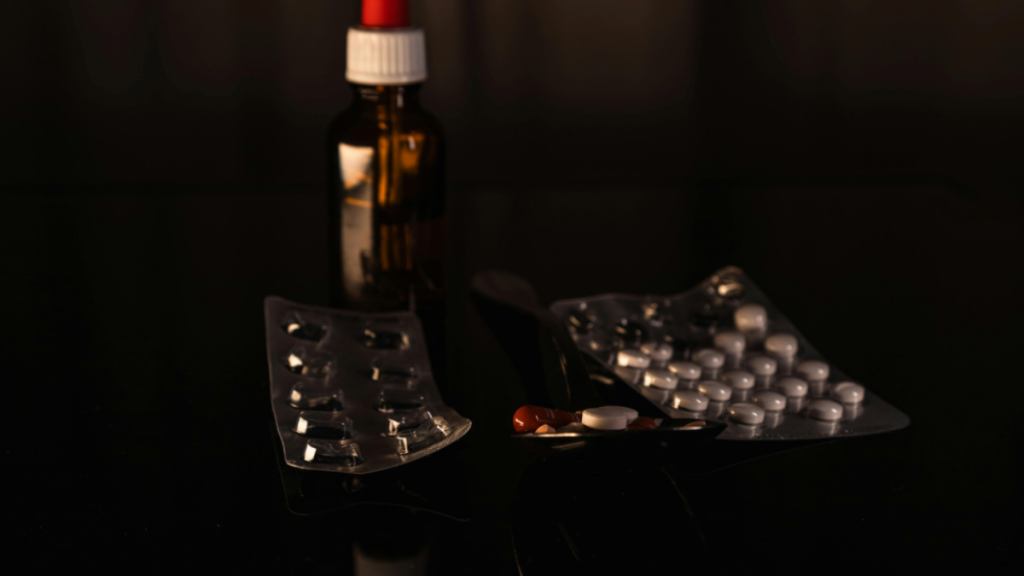
When a 52-year-old man was found dead in his South Knoxville, Tennessee apartment last October, the scene around him pointed to a drug overdose — but toxicology reports showed nothing but caffeine and nicotine in his system. Dr. Darinka Mileusnic-Polchan, chief medical examiner for three counties in the greater Knoxville area, wasn’t satisfied. After decades of tracing the final moments of the dead, she knew an elusive killer was hiding in his blood. “Please look harder, please look harder” Mileusnic urged.
She sent the blood sample to two other labs before finding her answer: The victim had died after ingesting cychlorphine, a compound in a new class of opioids called orphines that are 10 times more powerful than fentanyl.
According to the New York Times, cychlorphine has claimed at least 50 other Knoxville-area lives since October. So far, 11 orphine variants have been found worldwide, and in at least 14 states. Just a few sand-sized grains kill swiftly, often before the body has time to produce the typical signs of an overdose. Cychlorphine’s novelty means it isn’t included in standard toxicology screens and high costs for additional testing means that orphine casualties — lumped together as “unspecified narcotics” on many death certificates — are likely underreported.
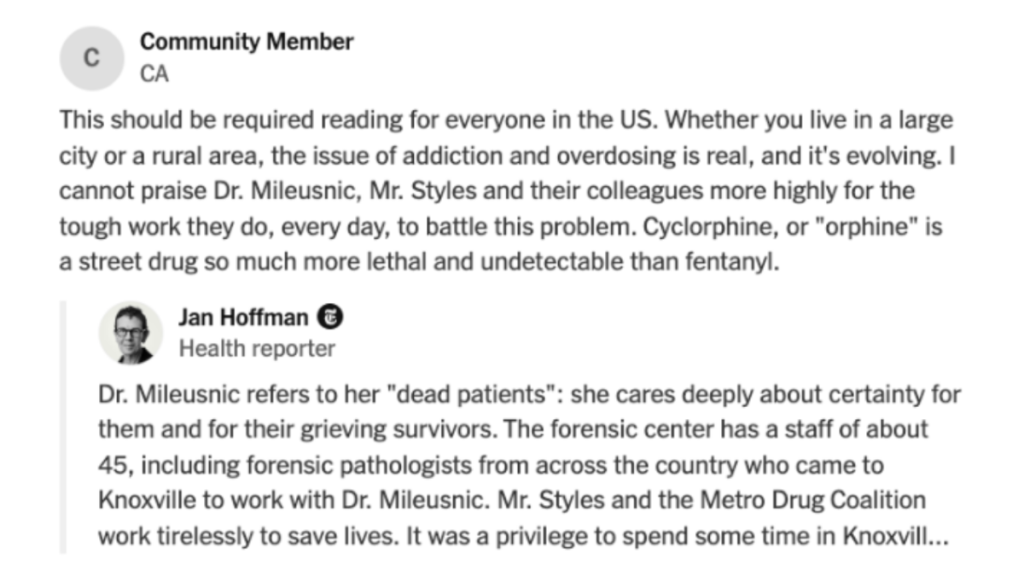
These facts make medical examiners like Mileusnic critical agents of public health. Since 2010, her office has published annual overdose fatality trends, tracking which drugs are driving deaths in the region. After noticing an odd trend among certain cases, she began to push for more testing, which later revealed cychlorphine.
Mileusnic also has formed a strong coalition for public health. Her office meets regularly with law enforcement, public health officials and street outreach workers, sharing the kind of ground-level intelligence that saves lives. When orphines entered the picture, that meant quickly spreading the word that multiple doses of naloxone, the overdose reversal drug better known as Narcan, are needed to bring someone back, rather than the standard single dose typically used for fentanyl. When the forensic center’s director noticed a spike in overdose deaths among day laborers, the task force responded by pushing naloxone directly into that community.
The result is measurable. In 2024, overdose deaths in Knox County dropped 36% from the year prior — one of the sharpest declines in the country. “I’ve always seen part of the medical examiner’s job as prevention,” Mileusnic said.
Most communities don’t have Knoxville’s resources. Many jurisdictions rely on elected coroners with no medical training and shrinking budgets, where the pricey but necessary follow-up tests Mileusnic uses to pinpoint a poison are a luxury they can’t justify. In those places, cychlorphine moves invisibly, and the deaths it leaves behind, experts say, are often counted as something else.
The name “MindSite News” is used with the express permission of Mindsight Institute, an educational organization offering online learning and in-person workshops in the field of mental health and wellbeing. MindSite News and Mindsight Institute are separate, unaffiliated entities that are aligned in making science accessible and promoting mental health globally.

Author

Related Articles

Take Aim, Let Go: How Archery Is Helping Women Heal
At the Woodley Park Archery Range in Los Angeles, Mindful Archery helps women process and prepare for everything from breakups to burnout.


The Quiet Trap of Using Cannabis to Sleep
Millions rely on cannabis as a nightly sleep aid, but a neurologist warns the relief is deceptive. THC helps people fall asleep faster while delivering less restorative rest, and quitting can trigger withdrawal that mimics the original problem. Here’s what actually works for insomnia instead.