
‘When Remembering Feels Unbearable’: Sexual Violence Traumatizing Palestinian Detainees
“My heart felt it might stop while talking to you about it just now. But I remember there are people still in there, so I speak up.”

Greetings, MindSite News readers.
In today’s Daily, we share heartbreaking reporting from New York Times columnist Nicholas Kristoff about the traumatic and routine sexual violence that Palestinian men, women and children say they’ve been subjected to in Israeli detention.
Also, how reducing poverty might also reduce suicides. And why plenty of us sleep but get no rest these days.
But first, check out the unexpected but endearing friendship forged between one man and a squirrel he calls Maxine.
‘There are moments when remembering feels unbearable’: NY Times report on the impact of sexual violence against Palestinian detainees

Palestinian men, women and children held in Israeli detention have been subjected to rape, sexual violence and systematic humiliation — and Israeli officials with the authority to stop it simply will not. Many have been too traumatized and ashamed to report or discuss it – until now.
That is the finding of a New York Times investigation by columnist Nicholas Kristof, who interviewed 14 men and women whose accounts were consistent in their details and devastating in their scope. Amnesty International, the United Nations, and Human Rights Watch have also reported “horrifying” torture of Palestinian prisoners in Israel.
“Whatever our views of the Middle East conflict,” Kristof writes, “we should be able to unite in condemning rape.” The Israeli government and prison service officially denied the allegations or any such conduct, but Kristof’s reporting suggests otherwise. The abuse described functions as “standard operating procedure” in the words of a United Nations report from last year — funded in part by American tax dollars.
“Israeli forces systematically employ rape and sexual torture to humiliate Palestinian female detainees,” said a report by Euro-Med Human Rights Monitor, a Geneva-based advocacy group that Kristof quoted. The report quoted a 42-year-old woman who said Israeli soldiers shackled her naked to a metal table and filmed themselves forcibly having sex with her over two days. Afterward, they showed her photos of the attack and said they would be published if she did not cooperate with Israeli intelligence.
“They were all hitting me, and one stepped on my head and neck,” freelance journalist Sami al-Sai recalled of his time in Israeli detention in 2024. “Someone pulled my pants down. They pulled down my boxers,” al-Sai continued, describing guards’ laughter at his pain and humiliation as they forced a rubber baton used to beat prisoners into his rectum. “Then I heard someone say, ‘Give me the carrots,’” and they forced a carrot inside him.
“It was extremely painful,” he said. “I was praying for death.” Another man recounted how prison guards restrained him so that he could be mounted and penetrated by a dog. Children, typically detained for throwing stones, told Kristof they’d been subjected to routine sexual threats.
Last year, a survey of children aged 12 to 17 who’d been held in Israeli detention, carried out by Save the Children, revealed that more than half witnessed or experienced sexual violence. Stigma and shame, Kristof notes, leave many unwilling to speak out: In conservative Palestinian communities, victims fear that disclosure will damage their families’ social standing or harm the Palestinian cause.
Silence, for many, is a survival strategy rather than a choice. But, Kristof also found, Israel’s abuse is so standard that Palestinian victims are now more willing to speak out.
“For six months I couldn’t speak about it, even to my family,” said Mohammad Matar, a Palestinian official who was attacked by settlers. He eventually went public and now displays a photograph taken during the assault on his office wall — a deliberate effort to reclaim his own story. A Gazan journalist who described being subjected to repeated sexual assault during detention made the same choice despite the possible personal cost.
“There are moments when remembering feels unbearable,” he told Kristof. “My heart felt it might stop while talking to you about it just now. But I remember there are people still in there. So I speak up.” Kristoff suggests that sexual violence was particularly intense towards Palestinians from Gaza in the aftermath of October 7th.
Sari Bashi, executive director of the Public Committee Against Torture in Israel, told Kristof that her organization has filed hundreds of complaints detailing horrific abuse against Palestinian detainees. Not once did they result in charges — essentially giving a “green light” to rape.
Nine reservist soldiers were detained in 2024 after a leaked video purportedly showed the torture of a Gazan prisoner, who was hospitalized with tears in his rectum and a punctured lung. But after Israeli Prime Minister Benjamin Netanyahu and right-wing members of his cabinet denounced the charges, calling them “blood libel,” the prosecution was dropped in March and the soldiers returned to duty.
Israel’s reliance on U.S. arms and aid gives the U.S. government leverage to demand an end to the violence, Kristof argues. Arms transfers to Israel could be conditioned on an end to sexual violence and a resumption of Red Cross visits to Palestinian prisoners. U.S. diplomats could meet publicly with survivors.
Similar actions taken by former New York Mayor Rudy Giuliani after a brutal in-custody rape of Haitian immigrant Abner Louima helped pave the way for prosecution and conviction of the officers who committed the atrocity and sent a message that perpetrators would be held accountable.
Kristof ends his report with a powerful note: “The horrific abuse inflicted on Israeli women on Oct. 7 now happens to Palestinians day after day. It persists because of silence, indifference and the failure of American and Israeli officials alike…”
The strongest suicide prevention tool may be a steady paycheck

Rei Scott is a transgender and nonbinary adult. But their gender identity isn’t what led them to consider suicide more than once. That can be credited to poverty. “There’s so many times in my life where I’ve thought if I had $5,000, I wouldn’t even be suicidal right now,” Scott told KFF Health News.
Some of those times include weeks in adolescence when Scott lived out of a car with four family members and their dog. During one such stretch, they dialed the national suicide hotline for help only to conclude that talking about their distress felt nice for a moment but ultimately resolved nothing.
“[W]hen you’re struggling to eat and you don’t have a roof to be under, I honestly don’t think words can go as far as you need them to,” Scott said. Decades of research affirms their logic. Studies on suicide’s relationship to unemployment, low income, high debt, unstable housing and food insecurity have shown that when people’s basic needs aren’t met they are more likely to kill themselves.
Likewise, when our systems change to reduce the difficulty of survival — increasing minimum wage, providing food assistance, offering tax credits and expanding healthcare — suicide rates fall.
One study found that expanding Supplemental Nutrition Assistance Program participation by just 5% could have prevented nearly 32,000 suicides over 15 years. Other high-income countries have made changes that acknowledge suicide isn’t always an individual or strictly psychological issue, but the U.S. is still catching up.
“We all need to be challenged to broaden our aperture, to broaden the lens of what is mental health,” said Benjamin Miller, a Stanford researcher and expert in mental health policy who argues that alleviating poverty, rather than expanding crisis services, would be the single most impactful strategy to reduce suicides in the U.S. today.
That “allows us to reconcile and solve for these conditions that put people in places of despair,” he said. “I don’t know what stronger intervention one could possibly have.”
Kacy Maitland sees that gap in real time. As chief clinical officer at Samaritans, a half-century-old Boston-based crisis line that fields upwards of 10,000 calls a month, she says financial stress, housing worries and unemployment are among the most common reasons people call the line — not some other imminent crisis. When SNAP benefits were delayed during a government shutdown, her phone rang.
“If people don’t have access to eat, to feed their children, to be alive, quite frankly, how are they able to move further through anything else?” Maitland said. Suicide prevention, she added, doesn’t always look like a crisis hotline. “Having your basic needs is also a form of suicide prevention.”
In other news…
Sleep doesn’t mean rest anymore: Eight hours of sleep no longer guarantees eight hours of recovery — and researchers are starting to understand why.
Sleep scientists are observing a quiet crisis: reduced time in slow-wave sleep, the stage most critical to cellular repair and metabolic recovery, even among people who follow a deliberate wind-down routine. The issue, researchers say, isn’t personal failure but disrupted biology. We live in a “constant state of reactivity,” leaving the brain’s reward system restless long after the screen goes dark, Penn State sleep researcher Orfeu Buxton told National Geographic. “You may end your day, but your brain hasn’t received the hormonal and neural signals that it’s safe to let go.”
The usual advice still applies: Reduce evening bright light and step away from screens a couple of hours before bed. But researchers say a mindset shift is equally important: actively “detaching” from the pull of notifications and unfinished demands. The brain, it turns out, can be retrained to recognize that the day is done — and when that signal becomes consistent, recovery can finally begin.
The name “MindSite News” is used with the express permission of Mindsight Institute, an educational organization offering online learning and in-person workshops in the field of mental health and wellbeing. MindSite News and Mindsight Institute are separate, unaffiliated entities that are aligned in making science accessible and promoting mental health globally.

Author

Related Articles
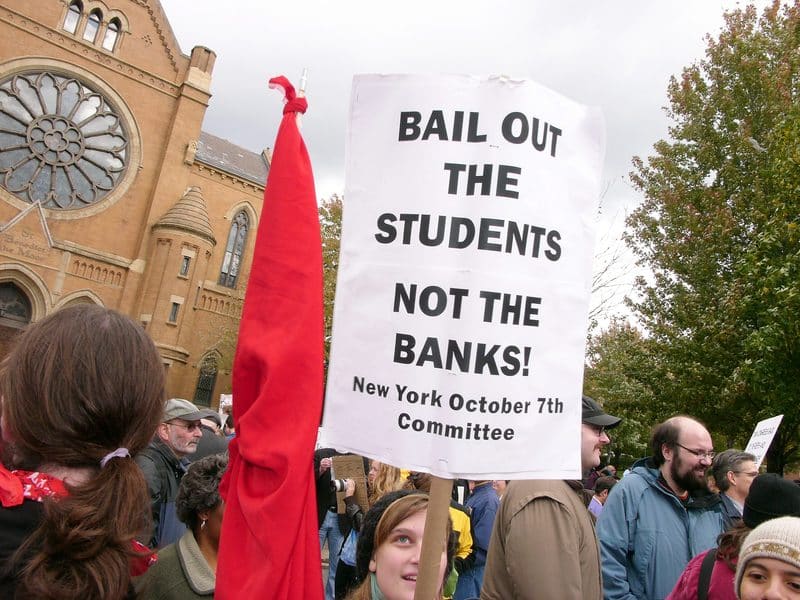
Trump’s Student Loan Changes Cause Anxiety and Panic
Borrowers face rising payments under the Trump administration’s student loan changes. Plus: teaching emotional literacy to teen girls, and why the new CDC youth mental health report is facing criticism.

Rumors of Kids Quitting College En Masse Are Exaggerated
This week: what the data says about Gen Z students quitting college, and why postpartum mental illness is more than depression.

Why Is Georgia Blocking Recovery Homes for Substance Abuse?
Georgia towns are using zoning loopholes to shut recovery homes down, even as addiction and mental illness surge statewide.