
CA Guards Force Violent Gladiator Fights Onto Youth in Juvenile Hall
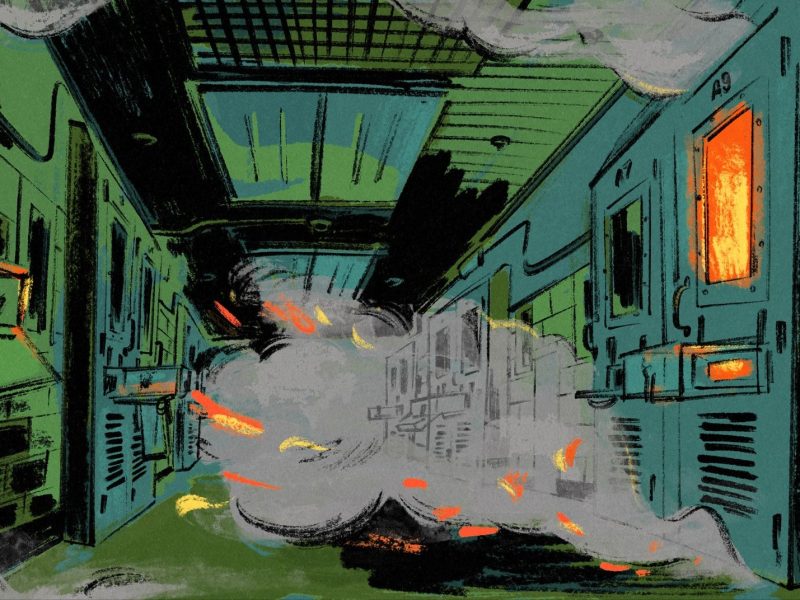
Inside a juvenile detention center in California where “gladiator fights” are part of a larger, violent guard culture.

Good morning, MindSite News readers.
In this issue of the Daily, we look at the seamy underside of a juvenile detention center in California, the mental health challenges of working from home, and ICE’s crushing blow to immigrant mental health. Plus: Mister Rogers makes a comeback.
Gladiator fights in juvenile hall expose ugly side of California

Many of us in California, including Southern transplants like me, prefer to think of our thriving, multicultural state as progressive – the Sweden of the United States. But while the state has rebranded its prison system as the Department of Corrections and Rehabilitation, there is still an awful lot of cruelty and sadism to be found in its jails, prisons and detention centers. An article published in Golden State Report and written by Brittany Friedman, associate professor of sociology at the University of Southern California, describes how youth prisoner “gladiator fights” are part of a larger, violent guard culture. Here’s an excerpt:
Last year, the public outrage over a video showing officers standing by as young juvenile hall detainees violently assaulted each other finally seemed to give way to actual accountability. Thirty Los Angeles County Probation officers were indicted in March 2025 for allegedly orchestrating 69 “gladiator fights” pitting detainees against each other at Los Padrinos Juvenile Hall in Downey.
A year later, many of those cases are falling apart. In April, the Los Angeles Times reported that prosecutors have dismissed charges against at least 10 officers. Four others accepted plea deals that will erase their indictments after they complete community service.
As a sociologist who researches criminal justice, I am not surprised by this. Cases like these that follow a familiar arc – whistleblower allegations, video footage then mass indictments – often collapse, no matter the outrage they generate at first or whether the people incarcerated are adult prisoners or youth detainees. The state prosecutes this abuse as if each time it has discovered a new batch of bad apples in an otherwise clean bunch, when my years of research shows a different reality: Gladiator fighting is deeply ingrained in a rotten correctional culture. Dismantling it will require a lot more than the occasional mass indictments that lead to failed prosecutions and continued abuse.
I have spent well over a decade interviewing survivors of correctional abuse, including officer-orchestrated gladiator fights. Among them was a man I gave the pseudonym Andrew, a Pelican Bay State Prison survivor who told me that the fights provide on-the-job entertainment for officers and act as a tool for spreading fear among incarcerated people. Their routine occurrence is an open secret in California, which incarcerates people at a rate closer to that of authoritarian Turkey than liberal democracies such as Italy or France.
Remote work is linked with increased anxiety, depression and isolation

Working from home is immensely popular, with most of us willing to sacrifice between 4% and 10% of our salary to do so. But a new study published in the journal Science has found a downside: People who work remotely are more likely to face increased anxiety, depression and social isolation, NPR reports. They’re also more likely to see mental health providers and take psychiatric medication.
Natalia Emanuel, an economist at Federal Reserve Bank of New York and the main author of the new study, said she and her colleagues found that workers in “remotable” jobs like marketing or software engineering experienced a 58% rise in hours spent alone compared to people who worked with others. Those working remotely also had a 72% rise in chances of spending their entire day without human contact.
“Not even like a wave to a barista,” said Emanuel. “Just no human contact at all.”
Perhaps worse, remote workers were also less likely to socialize after work. “We even see a decrease in spending time with friends after the work day relative to people in non-remotable occupations,” Emanuel told NPR. The jump in mental distress was also twice as high for those living alone as for people living with their families, researchers noted.
Remote workers were even more vulnerable to psychological distress if they lived alone, and 83% more likely to spend their days with no social contact than non-remotable workers. “It’s very easy to recognize that the commute is a pain in the neck and the traffic sucks,” compared to anticipating how missed social connections at work will impact us down the line, says Nicholas Epley, a professor of behavioral science at the University of Chicago’s Booth School of Business. (He was not was not involved in the study.) His own research has documented that people “underestimate how well things will go when we actually reach out to connect with other people.”
Gillian Sandstrom, an associate professor of psychology at Sussex University, notes that psychologists believe this feeling of human connection and belonging is just absolutely crucial to us as humans, that we cannot thrive, we suffer, if we don’t have that need met.” Since she frequently works at home, she makes sure to take walks, talk with her neighbors, play tennis and engage in other activities that bring her in contact with other people.
In other news…
Mental health is another victim of ICE: The relentless sweep of Immigration and Customs Enforcement raids has decimated mental health in immigrant communities, with reports of steep rises in anxiety, depression and thoughts of suicide. Human Rights Watch has documented “profoundly harmful” cases of immigrants seeking mental health care and being placed in solitary confinement instead, among numerous other violations and abuses. “The mortality rate in ICE detention in 2026 is on track to be the highest in 20 years,” HRW reports.
Mister Rogers’ Neighborhood is now officially on YouTube: the release includes the show’s 1967 premiere, according to the website goodgoodgood. For both old fans and those who never saw the shows, this is good news. “With its timeless messages of care and kindness, Mister Rogers’ Neighborhood is as relevant now as when it first aired,” said Ellen Doherty, chief creative officer and executive producer of Fred Rogers Productions, in a press release. “We think parents will connect with the authenticity of Fred Rogers’ messages. He was someone who really understood the big feelings and big questions of children — and of their grown-ups.”
The name “MindSite News” is used with the express permission of Mindsight Institute, an educational organization offering online learning and in-person workshops in the field of mental health and wellbeing. MindSite News and Mindsight Institute are separate, unaffiliated entities that are aligned in making science accessible and promoting mental health globally.

Author

Related Articles

The Lindsey Clancy Murder Trial
Women nationwide watch the Lindsay Clancy trial and see themselves in her story, plus an investigation into hospitals that fail patients with addiction.
Grief and Rehabilitation in a California Prison
This month: a DUI offender’s path to rehabilitation, Lindsay Clancy revisited, Illinois prison protests, a fatal cell fire, and Missouri’s competency crisis.

Meta Pays $17 Billion Settlement for Lawsuit Over Child Harm
Meta will pay up to $17.1 billion and reshape how its platforms operate after 47 states argued that they are harmful and also addictive to children by design.