
The Masked Men Around the Corner: As Youth Grapple with ICE Raids, Schools Get Creative to Protect Them
“Our students need to know that we’re here to fight for them,” says LA Assistant Principal Lorena Reynoso.
Text by Cora Cervantes. Photos by Julie Leopo for MindSite News/CatchLight.
This story was reported by MindSite News and was produced in partnership with CatchLight as part of its three-year Mental Health Visual Reporting Initiative.
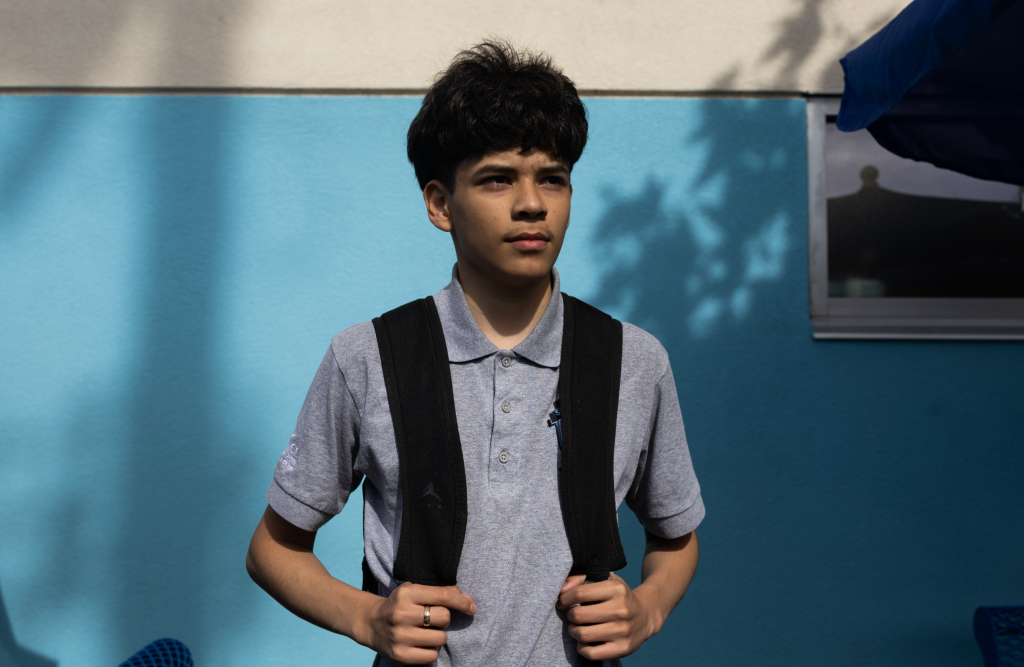
In June of 2025, Los Angeles became ground zero for the Trump administration’s deportation campaign and the first city to experience a “surge“ by immigration enforcement personnel. ICE agents, backed by National Guard troops and, for a time, Marines, flooded into the city, especially South Los Angeles, where more than half the population speaks Spanish and nearly 40% are foreign-born. For Axel Lopez, a junior at a high school in South Los Angeles, the threat came right to his backyard.
One afternoon in August, he and his older brother drove past a street where community members had gathered with megaphones, shouting “ICE! ICE! ICE!” to alert neighbors who might be at risk. The Lopez brothers honked in support and shot videos to document the scene. Then, as they drove away, Axel noticed a Durango pick-up truck following them. Axel recalls one of the men in the vehicle taking pictures of his brother’s car.
“They’re supposed to be protecting, but it seemed more like he was taunting,” recalled Lopez, who was 16 at the time. “I was super scared. I was shaking.”
Over the coming days, masked men wearing vests marked “police” followed Axel’s brother to his job at a South Los Angeles barbershop, and Axel spotted the Durango truck again when he and his mother stopped at a fast-food drive-through. “I felt like I was gonna throw up,” he said. “I was like, Mom, I don’t want to go to school.”
At school, Axel went to Assistant Principal Lorena Reynoso to tell her that ICE was following his family and he was scared.
“In that moment, I realized we’re serving a lot of families that do not know their rights,” Reynoso told MindSite News. “They don’t know what next steps to take. And I have to educate myself quickly, because I feel like I have a responsibility to also protect our students. It’s not just academics, it’s also their emotional well-being.”

While Reynoso searched for resources, Axel scrolled through social media sites and came upon a TikTok video that would soon go viral – and be covered by local TV. It showed a frantic scene: Masked ICE agents were trying to force their way into the barbershop where his brother worked while activists yelled at them.
“I see my brother, and he’s holding the doors while the ICE agents are trying to break it open,” Lopez recalled. As he watched the video, his panic rose. “I see that there’s a lot of people outside. They’re screaming. And my brother’s inside. He looked so scared.”
Reynoso asked how she could help. “He looks at me with tears in his eyes, and he’s like, ‘Miss, can you please go?’”
Reynoso debated for a moment. Then she and other school staff members drove to the barber shop and recorded from a distance.
“My student really wanted me to go, and I wanted them to know your school is going to do whatever,” Reynoso recalled. “This is beyond academics. This is you as a whole being.”
With help from neighbors, Axel’s brother and other members of the family made it back home that night. A GoFundMe was set up to ensure the family stayed inside and could cover rent while they stopped working and hid from immigration agents.
After the incident, Reynoso realized the school needed a plan to manage different contingencies. “What if ICE tries to come on campus? What are you going to do?” she asked.
She worked with on-site social workers, psychologists and school counselors to create a safety plan. Other staffers provided legal information and handed out “Know Your Rights” cards to families that needed them. A school community coordinator created a food distribution plan.
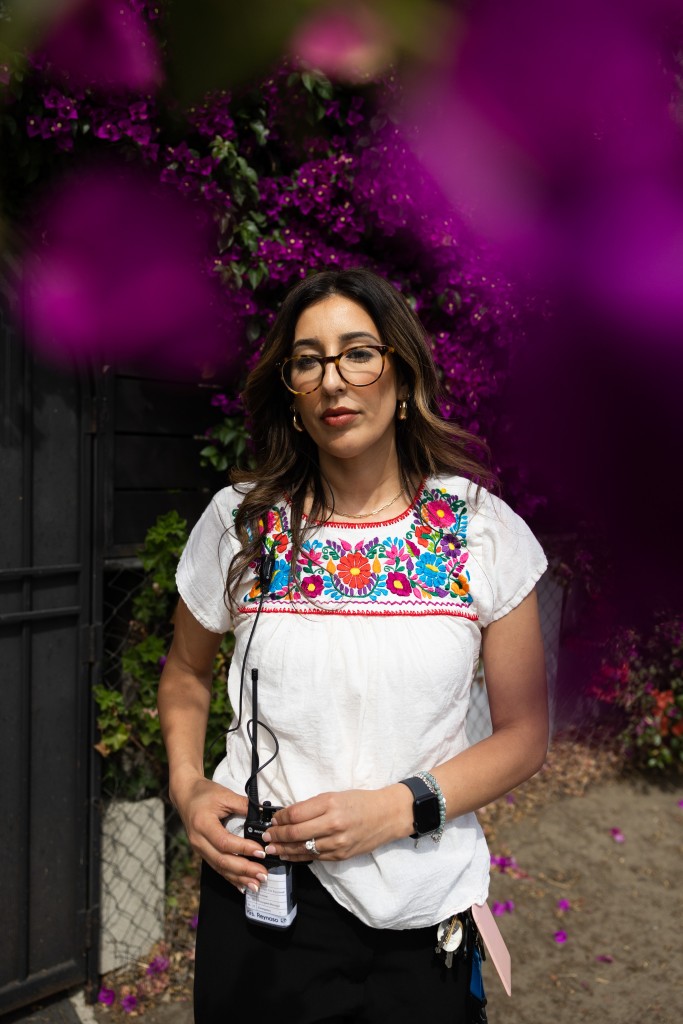
Meanwhile, the fear and anxiety caused by ICE agents’ aggressive tactics has led to an attendance decline of 7,000 students. Reynoso has spoken with many families who are considering leaving the country and students who don’t want to keep attending. She is working to connect with them and deliver a simple message.
“I need our students to know that every day that they miss, they’re harming themselves,” she says. “I understand the safety concern, and we recognize that. And our students need to know that we’re here to fight for them.”
Leadership of Los Angeles Unified School District also gave full support to immigrant students and staff members, reiterating a long-held policy to keep immigration agents out of district schools.
“Our responsibility is to ensure that every student feels safe, supported, and welcomed on our campuses,” then-Superintendent Alberto M. Carvalho said in a statement released by the district. “Schools must remain places of stability and belonging, and we will continue doing everything in our power to protect that promise for our students and families.”
(Carvalho resigned in June 2026, after the FBI raided his home and launched an investigation into alleged corruption. Some observers have suggested the investigation was politically motivated based on his strong criticism of Trump administration immigration policies.)
To Reynoso it’s also important to help build a sense of pride and community – so she and other teachers wear clothing embroidered with designs from their parents’ native countries. She says powerful actors “want them to walk around with shame, with guilt for being Black or brown, guilt for being undocumented. So part of our work has been having cultural pride.”
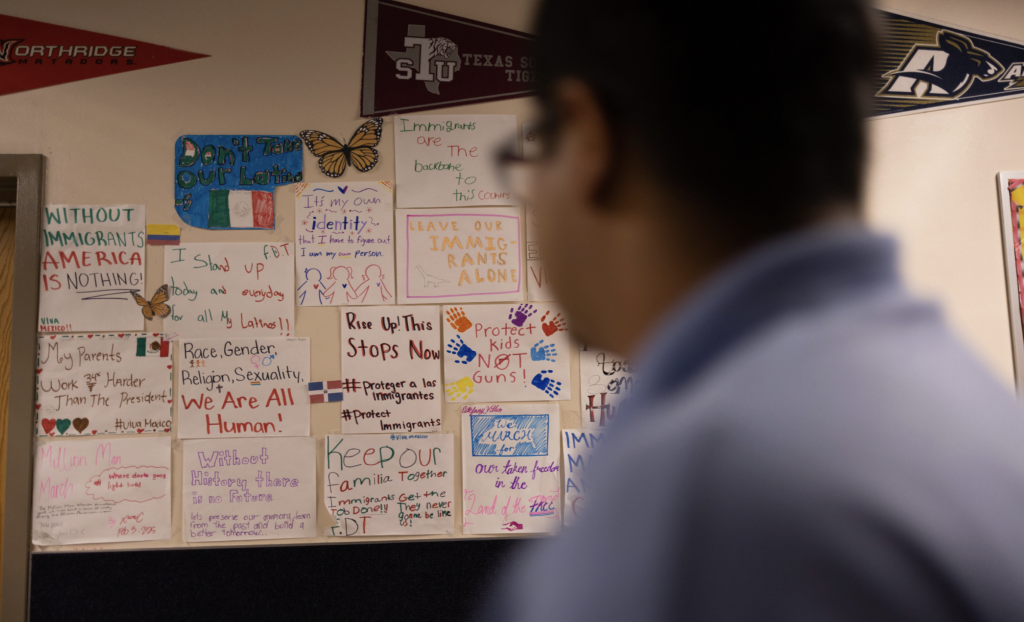
Children with strong ties to their parents’ culture experience positive health benefits, including stronger self-esteem and cognitive flexibility, says Joanna Flores, a licensed marriage and family therapist and clinical supervisor at Child Guidance Center in Southern California. Emerging research backs that up.
“Being able to connect with your roots is a protective factor,” Flores said. “A lot of the things that we emphasize in our clinic is building community, so really helping our youth identify people in their community that they feel connected to, or creating a community within their friend group, leaning into the things that they care about and that they’re interested in. And we encourage our youth to engage ways of resistance that are meaningful to them.”
To Dennis Dacarett Galeano, a UCLA psychiatrist, the broad targeting of undocumented communities amounts to a form of attachment trauma – and the best way to promote healing is to forge “a sense of security and belonging“ and a conviction that there is a community behind them, looking out for them. “People need to heal in community,” he says.
Henry Perez, the executive director of InnerCity Struggle, a nonprofit group that trains high school students to be community organizers, says the advocacy and organizing they engage in is itself a form of healing.
“We have been very intentional about creating space for the community to come together to celebrate their culture through events, and that is really helping our community to be in community with each other, and to help practice ‘neighborism,’” Perez told MindSite News. “High school students that we work with have definitely wanted to respond and have wanted to raise their voices.”
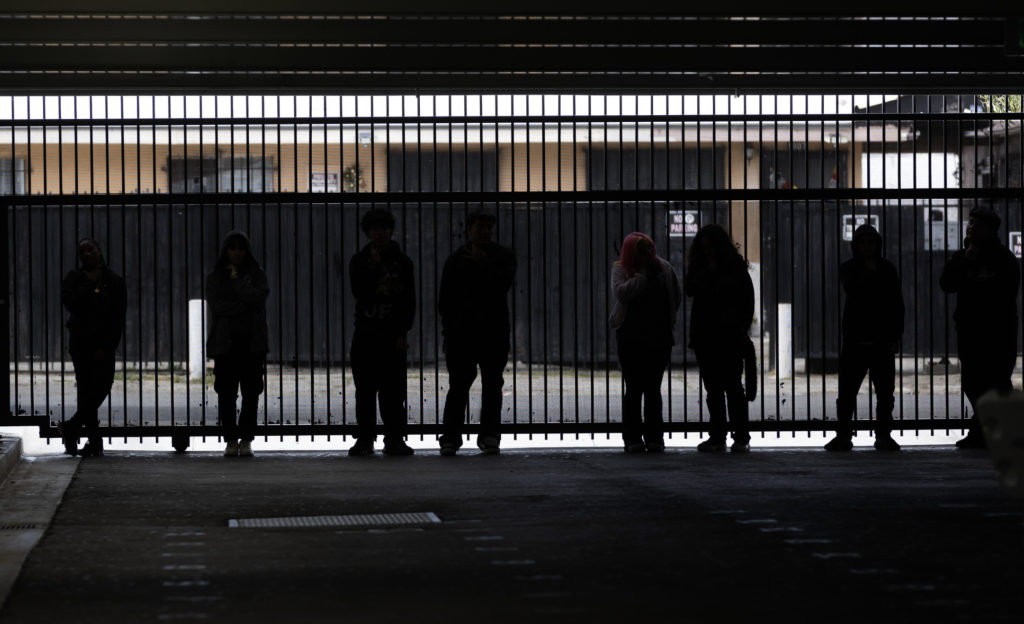
For Axel Lopez, the trauma of high conflict was followed by weeks of low-level but nearly constant fear as the family remained cloistered inside their home. “It’s tiring just being in your house. You want to go outside so bad, but you’re scared they might be outside.” He and other vulnerable immigrants are constantly on edge, worried about what might come next – and that, says UCLA’s Tatiana Londoño, takes a toll.
“If you are constantly in the hypervigilance state, you’re not going to know how to step away from that hypervigilant state,” said Londoño, an assistant professor of social welfare at the Luskin School of Public Affairs. “At a certain point, that’s just going to become your new normal.”
Being in this kind of activated state on a regular basis can lead to high levels of cortisol circulating chronically in the body, increasing reactivity and the risk of depression, anxiety and post-traumatic stress disorder, as well as cardiovascular disease and reduced immunity, research shows.
This kind of stress doesn’t only affect people who have direct interactions with ICE agents, it can put an entire community under stress, says Dennis Galeano, the UCLA psychiatrist. “Even if you haven’t experienced a specific traumatic incident, a lot of those same symptoms can come from the chronic stress that everyone is under,” he says.
And for adolescents, Galeano adds, this kind of vicarious trauma can impede emotional development and identity formation and disrupt their ability to regulate their emotions.
As traumatic as Axel Lopez’s experience was, he also learned that people were willing to support their immigrant neighbors. His father’s old manager stopped by to drop off money. Nonprofits provided food. Legal organizations offered assistance.
“Almost everyone that knew my brother (donated) to the GoFundMe,” he said. “We were just so appreciative of everything, all the donations.”
All together, the donations covered the family’s rent for six months – bringing them some comfort and a limited sense of safety. But one year after the Trump administration launched a series of militarized immigration raids in Los Angeles, the deportation campaign is once again intensifying. And families like Axel’s are still under threat.
The name “MindSite News” is used with the express permission of Mindsight Institute, an educational organization offering online learning and in-person workshops in the field of mental health and wellbeing. MindSite News and Mindsight Institute are separate, unaffiliated entities that are aligned in making science accessible and promoting mental health globally.


Authors


Related Articles
‘I Had to Get My Mind Right’: The Challenges to Loving Relationships After Being Laid Off by DOGE
After the federal firings, Black women felt betrayed and disillusioned. One longtime federal worker learned from experience the importance of community — that people who have experienced collective trauma need collective resilience.
Recovering From a ‘Gut Punch’: Black Women Fired by Trump and Musk Work to Overcome Shame and Self-Blame
Black women working for the federal government did what they were supposed to do. They got their degrees. They excelled at their jobs. They received awards for excellent performance. Yet their achievements could not protect them from the political winds.
Trump’s Proposed Changes Could Gut Mental Health Support for Kids in Head Start: The View from a San Francisco Classroom
The rule changes would eliminate the requirement that all Head Start programs use mental health consultants, prohibit expulsions, and other rules designed to promote a safe, nurturing environment.