‘You’re Not Alone in This Dumpster Fire’: Trump’s Student Loan Rule Changes Cause Widespread Fear & Panic
A California financial expert shares what all parents and college students need to know to best protect themselves.
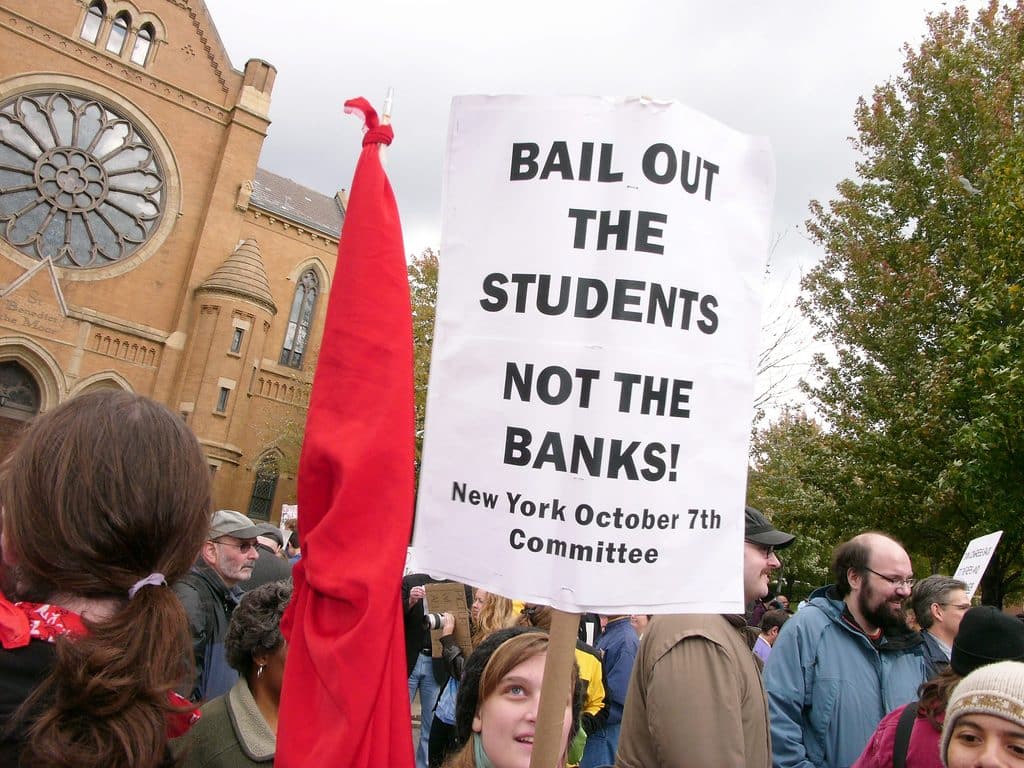
Recent changes to student loan repayment by the Trump Administration have made harder to get student loan forgiveness for public service work and doubled the monthly amount that many borrowers have been paying. The loan overhaul, which went into effect on July 01, 2026, is unmooring not only students, but parents who’ve taken out Parent Plus loans to help put their children through college.
“Our student loan payments are approaching the size of our mortgage payment. Eventually, something has to give,” said Chris Topher of Poplar Bluff, Missouri. He and his wife took out student loans to put themselves through school and later ParentPlus loans to get their five children through college.
“We are not asking to avoid our responsibilities,” Topher wrote in an August letter posted to the website Student Debt Crisis Center (SDCC). “We borrowed money, and we understand that loans must be repaid. What I am asking is whether repayment should be structured in a way that recognizes the difference between gross income and money actually available to a household. A family’s ability to pay cannot realistically be determined without considering taxes, housing, utilities, transportation required for employment, and other unavoidable costs of living.”
Leah Piccotti of Reno, Nevada, wrote a letter to the same site this July to report that she had greatly benefitted from the Biden administration’s 5% cap on the former SAVE college loan plan, but new changes under the Trump administration mean she is losing 24 months of credit toward the Public Service Loan Forgiveness program and extending her payments for 3 years. “But my payments will be jumping from $129 a month to $560!” she posted. “We are all struggling to keep up with inflation for our basic needs and now get slapped in the face with an increase (and no cap!) that no one can afford.”
On Reddit, members at r/studentloans are sharing their fear and despair after working toward student loan forgiveness through a public service loan for years through the SAVE program, only to see it disappear. “You’re not alone,” one user wrote. “I cannot stress that enough. You are not alone in this dumpster fire.”
To help readers understand the little-publicized loan changes, we turned to college financial expert Jennifer Finetti, director of student advocacy at Scholarship Owl, a service that connects students with a wide variety of scholarships.
Diana Hembree: I understand that a lot of the students and families are feeling anxiety, fear, and even panic about the Trump administration’s changes to student loans. What are you hearing about that from your sources?
Jennifer Finetti: Borrowers today are extremely stressed. A lot of anxiety, a lot of fear. It’s not just about the cost of college. It’s not just about paying it back. It’s also about their future career. Where does AI fit into this? Will they have a job? The career that they thought they were going to have, now that AI is encroaching so much, they may need to do something entirely different.
I know somebody who was planning on becoming an artist. She was going to be pursuing an art degree, was going to become a concept artist, she had a whole plan worked out. And within the last two years, she decided, no, I’m going to go into business instead. Some people would say, well, good for her. She’s making a sound decision. It’s reasoned, but at the same time, she’s abandoning something that she really wanted to pursue for her career,
So was that a good decision or not? Certainly she is disappointed because art was her passion, but intellectually, she knows she’s making the right choice for her based on the fact that she wants to be self-sufficient, independent, and able to survive in this economy.
Could you talk about some of the recent changes to student loans under this administration that I hear may make it harder for lower income and middle class students to get a college degree?
Yes, absolutely. So first of all, one of the biggest changes involves repayment options. In the past, if you were a student before July of 2026, you knew that when it came time to start repayment, you would be able to choose from a myriad of different plans – so it was easy to put it off to think about it till later. Not that it was the smart thing to do, but at least you knew there were a whole bunch of different plans you could choose from.
Now there are just two. And so today’s 17 or 18-year-old may not realize that that has changed, and their parents may not know. Of the two plans that are available, only one of them is income driven. That one is the Repayment Assistance Plan (RAP). Then there is the Tiered Standard plan, which is not an income-driven repayment plan.
Now, why does income-driven matter? Well, if you are interested in working for a public sector or nonprofit employer in hopes of seeking forgiveness through the Public Service Loan Forgiveness (PSLF) program, the only way that you can even begin to access that program is if you are in an income-driven repayment plan. So students who choose the Tiered Standard plan cannot access payment forgiveness through the Public Loan Forgiveness Program. That’s important to know.
That’s a huge change.
Yes, that’s a big deal. If you are in the Tiered Standard Repayment plan, you’ll never access forgiveness because of the way it is set up – and by the way, this is the default plan you’re put into if you don’t choose the RAP plan. There’s no way to access forgiveness because payments are divided based on the amount you took out, and then the plan determines how many years you have to pay it back. So if you took out 10,000 or less, you’ll have a shorter amount of time to repay. If you took 15,000 or 25,000 or 50,000, whatever you took out, it extends the number of payments you’ll have and the length of time, but it always divides out so that it’s the same payment amount over that extended period of time. So how can you possibly access forgiveness, even 20, 25, 30 years down the road? You’ll never get there. So that’s an important distinction.
But will loan forgiveness take place if you’re in the RAP program?
That is a great question. As to whether or not it’ll actually happen, I think it depends on who is in office at that time, realistically. The disadvantage of the Tiered Standard plan is that you cannot access public service loan forgiveness, the PSLF program, at all. You also can never access regular forgiveness just by paying on your loan for many years. So it’s not available to you at all. Now you might think, well, everyone should be in the RAP plan because it’s income driven. Why not?
Well, there’s also an issue with the RAP plan. And this is something that hardly anybody knows, If you’re not a wonk like me: The Repayment Assistance Plan is income-driven, which means that if you’re earning less money, your payment is lower. As your income grows, your payment will increase, but there’s never a cap on those payments no matter how much you earn. And it no longer takes into account your household expenses.
On top of that, the payment in the RAP plan is 10% of your adjusted gross income – the Biden’s defunct SAVE plan capped your payments at 5%. So for people who were on the SAVE plan and now they’re going to choose RAP, it doubles their payment automatically, plus there’s no cap (as to how high they can go as your income changes).
Can you talk about how this works out in practice?
Let’s say you start your career, you’re making 50,000 a year as a new college grad, and you’re happier to have the lower payment.
And then as you advance in a few years, maybe you’re making 75,000. Maybe a few years later you’re making 100,000 or 125,000 or 150,000 as you grow. There’s no cap, so if you’re making even $500,000 a year, not that many people are, your payment will continue to grow. And the payment amount you are bound to is 10% of your adjusted gross income. This is another thing that’s different. It used to be a percentage of your discretionary income. And that would be based on certain factors, like here’s your income, here are your household expenses, and we’re going to determine your discretionary income is X.
Well, now it’s based on your adjusted gross income on your taxes, which is actually a higher amount. On top of that, it’s 10% – the Biden’s defunct SAVE plan capped your payments at 5%. So for people who were on the SAVE plan and who now choose RAP, it doubles their payment automatically, plus there’s no cap.
And as soon as you hit six figures, as soon as you hit 100,000, you’re definitely paying 10% of whatever your income is. And it’s not 10% of your discretionary income or whatever, it’s just of your Adjusted Gross Income.
That is scary.
Yes, it is.
This will affect even high earners. Some people here in Berkeley, California make around 100,000 a year and their mortgage, including property taxes, is about $6000 a month – and the take-home pay after taxes, health insurance and so on is less than that, forcing them to supplement it with contract work or maybe Social Security if they are old enough.
It will be hard, maybe impossible for many people, to pay 10 percent of their adjusted gross income for student loans when they cannot even pay for their house and other expenses without a second job.
Yes. And the thing is, it doesn’t take into consideration what your expenses are. And of course, where you live dictates your expenses, whether you’re living in Arkansas or you’re living in California or New York. I’m in California, too, and in the Bay Area, even rent for a standard single-family home can easily cost over $5,000 per month. Your income isn’t going to go nearly as far here as it would somewhere else. Now, somebody might say, “Well, you should just move.” That doesn’t solve everything. Family’s here, all of that. So the fact that it doesn’t consider your expenses or where you live is huge.
What is your advice to prospective college students?
It’s really important that borrowers today understand there are only two choices. I’ve always, of course, encouraged students to try to avoid student loans to the best of their ability, but now it’s kind of a crisis. You really have to decide how much you really want to go to that particular school that has capped your financial aid offer. And so now you’re required to take out loans if you want to go.
To me, this is especially applicable to private colleges. Private colleges charge so much more than an in-state public university. And even if you’re getting, let’s say, a nice annual scholarship from the college, oftentimes your out-of-pocket costs will still be higher than if you went to a less expensive in-state public university that didn’t give you such a nice big scholarship.
What about community college?
I’m heavily encouraging students to go to community college first. This was always good advice that I would still give now: If you really want to reduce your financial loan liability when you graduate, start at community college. It’s a lot less expensive. And then you can work part-time while you’re in those two years of school; save that money. Maybe you can reduce your need for student loans for your last two years.
But these are big decisions. It’s always been hard for a 17-year-old to make these decisions when they have these aspirational dreams of where they want to go and what they want to do and what they want to accomplish in life. And their parents are like, “Yeah, I really want to support you. I want to help you out.” But parents are also saying, “Hold on, we can’t afford the cost of college anymore. We can help you this much, (but not) this much.” And so a lot of students today are really feeling like they’re forced to take out student loans to go to college. And it’s just very difficult. Very difficult.
I do advise students to try to work part-time during their last year of high school and to work during the summers to help pay for college. And when you’re there, it’s also good to look for work-study jobs on campus or to work off campus if you can.
What do you think about Parent Plus loans these days?
It’s good to know the risks. Now that there are caps on grad school, there are parents of kids that want to go to law school or medical school, and they’re thinking, “Well, maybe I’ll help pay for my kid’s college.” But then these parents are taking on the debt. But a lot of times what people don’t realize is a Parent Plus loan is the liability of the parent, not the child. So parents and kids will often work out a deal where mom and dad say, “We’ll take out this loan for you if you’ll pay it off when you graduate.” The child says, “Yes, I’m excited. I want this program — please take out this loan. I’ll pay for my student loans and your Parent Plus loans taken out on my behalf.” Then the student graduates and defaults because they don’t have enough money to cover all of the debts. And then the parents are on the hook.
One quick question: I’m assuming people can still pay off their student loans in one fell swoop if their circumstances change.
Anyone who wins the lottery is welcome to do so (laughs). They’re happy to have your money faster.
What is your opinion about the new loan caps?
As if all of this weren’t enough, there are also loan caps now that did not exist before for graduate students and parent plus loans. Now, I have mixed feelings about this. I think there are some positives about loan caps because I think people are borrowing too much in general for grad school and parents who are borrowing often too much to help their kids pay for college. But it’s still a concern.
So if you are in what is deemed to be a standard graduate program – a lot of graduate school programs would fall under the so-called standard title – then you are capped at a maximum of 20,500 per year and a maximum of 100,000 maximum lifetime for grad school. If you are in what they call a professional program, like a medical or law school, you can borrow up to $50,000 a year and $200,000 while you’re in school.
Now those caps, they might seem like that seems reasonable, except the fact that a lot of programs actually charge more than the caps.
Is this likely to hurt students from low-income homes who want to get medical, dental or law degrees?
Yes. And typically you cannot get graduate grants through FAFSA. You can get grants to pay for your undergraduate school, but you cannot get grants to pay for grad school. So you are limited to your own savings, your own earnings, loans, and family support and scholarships, of course. And it can be very expensive.
What advice do you have for students who want to go to graduate school?
I encourage students to always work a year or two in the field that they’re pursuing as an undergrad or after they finish their undergrad before starting grad school.
It’s about maturity, getting your feet wet in your field, making sure you love it, making sure it’s what you want to do before you pursue grad school – earning money so you can actually save and prepare for your graduate education should you decide to continue.
Also, there’s a big question, are MBAs really worth it? There’s a lot of discussion that you may have seen or heard about where people are saying not everyone needs an MBA. If you’re pursuing a field of something in the business field, maybe you’re spending money that doesn’t have to be spent. I think everyone needs to consider strongly whether or not grad school is for them, and they also need to consider the timing and how to pay for it.
Maybe you can work for an employer that’ll help pay for grad school. A lot of larger employers are offering tuition reimbursement and other education benefits. Why not find out if you can get a job with an employer that will help you pay for your graduate education, so you don’t have to take on so many loans? That’s always my advice.
The name “MindSite News” is used with the express permission of Mindsight Institute, an educational organization offering online learning and in-person workshops in the field of mental health and wellbeing. MindSite News and Mindsight Institute are separate, unaffiliated entities that are aligned in making science accessible and promoting mental health globally.


Author

Related Articles
‘It’s Incredibly Frustrating Lindsay Clancy’s Psychiatrists Missed Diagnosing Postpartum Psychosis When She Was Hospitalized’
An exclusive interview about the Lindsay Clancy case with maternal mental health expert Joy Burkhard

‘The Most Dangerous Days of Our Lifetimes’: Psychiatrist Renews Call to Remove ‘Mentally Unfit’ Trump From Office
Trump’s dementia and mental instability pose a grave danger to the United States and the world, mental health experts warn.
Mental Health Coalition Protests ICE Raids and Detention
Patients are avoiding health care, even in serious medical emergencies, because of ICE raids on clinics and hospitals.