
‘It’s Incredibly Frustrating Lindsay Clancy’s Psychiatrists Missed Diagnosing Postpartum Psychosis When She Was Hospitalized’
An exclusive interview about the Lindsay Clancy case with maternal mental health expert Joy Burkhard
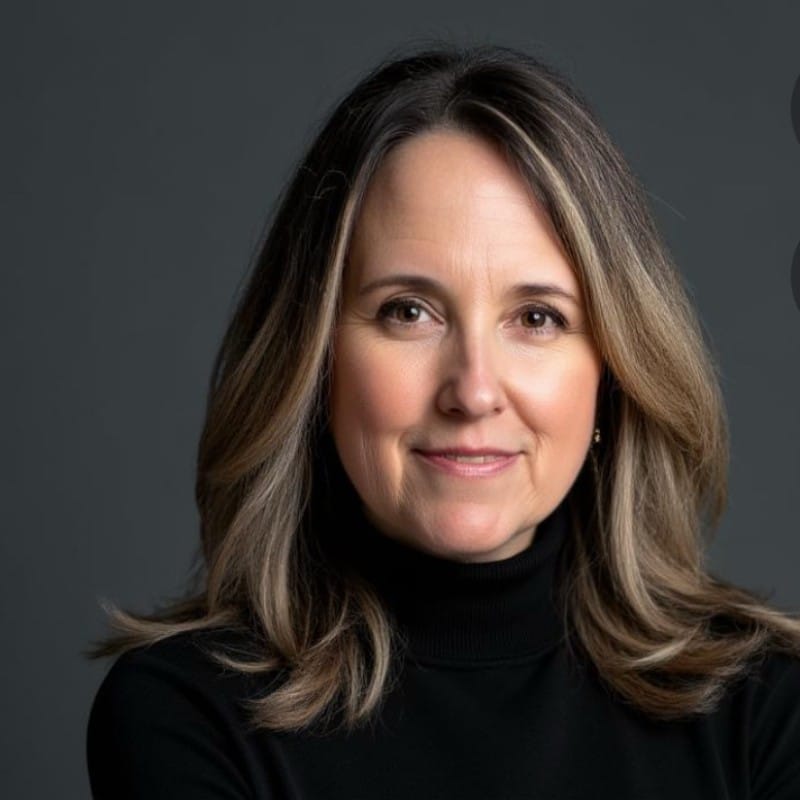
Joy Burkhard has led the Policy Center for Maternal Mental Health for the past 15 years. For most of that time, “postpartum psychosis” was not a widely used or understood term and discussions of postpartum mental health challenges were rare among the general public. That has changed radically in recent months as the tragedy surrounding Lindsay Clancy, the former labor and delivery nurse charged with killing her three young children in 2023, became front-page news, permeating the media and social media. Burkhard was a regular attendee at the trial, and has written about her impressions of the proceedings.
As much of the country knows, Judge William Sullivan declared a mistrial in the case earlier this month, and what happens next is unclear. Whatever does happen, the trial has pushed a rare and widely misunderstood condition into the national spotlight. While many people have heard of postpartum depression, few know about postpartum psychosis, which can be life-threatening for a mother and her children. Even clinicians can miss it. Burkhard says Clancy’s own psychiatrists did, even while she was hospitalized — and the Policy Center is working to change that. Its team has created tools to catch the condition earlier, including a postpartum psychosis symptom checklist for observers, health care professionals among them.
We spoke with Burkhard about what the case reveals about public understanding of maternal mental health, how the Policy Center is trying to educate the public and clinicians, and the changes she hopes the trial will spark. The interview has been edited for length and clarity.
Courtney Wise: What does the Clancy mistrial suggest to you about where public understanding actually rests relative to maternal mental health conditions, and especially postpartum psychosis?
Joy Burkhard: Though there has been a massive shift in awareness of maternal mental health disorders in the last decade, the trial illustrated that there are still significant gaps in understanding postpartum psychosis and conflating it with postpartum depression, which are two distinct conditions, though they can exist at the same time. To me, the evidence was clear that Lindsay Clancy was suffering from postpartum psychosis. Someone who is in the throes of psychosis or postpartum psychosis can still “plan,” and that’s confusing to people. We need to think about what the planning is based on: Is it reality? Or delusions, hallucinations and paranoia?
What is incredibly frustrating is that in this case, her psychiatrists missed diagnosing postpartum psychosis even when she was hospitalized. Postpartum psychosis can be difficult to diagnose, and I believe we must advance the diagnostics with urgency. Where else in medicine do we rely primarily on a patient questionnaire of self-reported symptoms as the basis for making a diagnosis? And when someone is suffering from a mental illness, the stigma and fear of judgment can absolutely interfere with a person disclosing honestly. To further complicate matters, when someone is in a state of postpartum psychosis, she can be delusional and paranoid, distrusting authority figures, which further compounds her ability to answer questionnaires accurately. We must advance diagnostics to include testing such as blood or saliva biomarkers, brain scans, and other technologies.
People who raise insanity defenses rarely prevail — and the rate of mothers who win with insanity defenses in filicide cases is even lower. Why do you think juries struggle with mental illness as a defense?
Compared to other industrialized nations, most U.S. state laws make it very difficult for a jury or judge to declare someone not guilty by reason of insanity in general, and in the case of infanticide, when a mother kills her child. The United Kingdom and Canada handle cases of postpartum psychosis and maternal harm differently from the United States by utilizing specialized infanticide statutes alongside traditional mental health defenses. We don’t have infanticide laws in the U.S.
However, the U.S. states’ general insanity defense laws are also more stringent than those of other countries. This wasn’t always the case. Following John Hinckley Jr.’s 1982 acquittal by reason of insanity for the attempted assassination of President Ronald Reagan, an unprecedented public and political backlash completely reshaped the legal landscape of the American justice system.
Prior to that verdict, the burden was generally on the prosecution to prove a defendant was sane. Hinckley’s acquittal sparked massive outrage, leading Congress to pass the Federal Insanity Defense Reform Act of 1984 for cases tried in Federal court. Following the federal government’s lead, more than 30 states radically overhauled their insanity defense statutes over the next decade.
Massachusetts is one state that didn’t reform its law to the same extent as other states. The burden of proof is still on the prosecution to prove beyond a reasonable doubt that a defendant was sane. This worked to Lindsay Clancy’s advantage, where there was only one juror who believed the prosecution did prove she was sane and aware of her actions.

Available data suggests that postpartum psychosis is a rarer complication than postpartum depression and anxiety. Does that change how screening should be designed? Or does a system built to catch depression catch psychosis too?
Postpartum psychosis is definitely rarer than postpartum depression or anxiety. We are working to move detection and assessment of risk for any maternal mental disorder upstream, anchoring in obstetric care – under the midwife, OB/Gyn, or Family Practice provider who delivers babies and maternity care (OB providers). At the time pregnancy is confirmed, OB providers should be taking a family and personal mental health history, not to mention a comprehensive medical history, including things like autoimmune disorders/symptoms, which can also play into mental health. This is recommended by the American College of Obstetricians and Gynecologists, but ACOG did not share a sample mental health history form, so we created one.
History, such as prior episodes of depression, a family member with bipolar disorder, places someone at risk for depression or psychosis in the perinatal period. Particularly, those at risk for psychosis need to be assessed before there is a mental health crisis. Knowing that this is still not standard practice, we also created a postpartum psychosis symptom checklist for observers, including healthcare professionals, to use to determine if someone may be in the midst of a postpartum psychosis, which can escalate in severity over time.
Clancy has many supporters, including mothers who remember coming close to similar tragedies when their own children were young. Still, others do not believe it is possible for a “loving” or “good” person, let alone a mother, to do such a thing. What do you say to people who just don’t believe her defense?
It is gut-wrenching that three innocent children were murdered, and murdered by their own mother. Those who don’t understand how something like this could happen think: She admitted to the murder, and someone should be held accountable, particularly the person who planned the murders and executed them. Those who understand how this could happen think: There is no rational argument for why a loving mother, a labor and delivery nurse, and an all-around good human being with resources and family to lean on, would do something like this. There was absolutely no motive for a person in her right mind.
I like the legal option that several states have: a “guilty by reason of insanity” verdict. This framing names someone as guilty but also recognizes that the person was insane at the time of the crime.
What improvements are needed as to how maternal mental health conditions are screened and treated within it?
First and foremost, because of the fragmentation of the health care system in the U.S., patients do not receive consistent care. It’s dependent on the provider’s preferences, protocol and knowledge. This is the case with maternal health and maternal mental health care, too. Though screening has been recommended for years, in 2023 the American College of Obstetricians and Gynecologists issued formal guidelines to screen, diagnose and treat maternal mental health disorders. If those were implemented by all OB providers, it would be transformative.
To enable that, OB providers all need access to a reproductive psychiatry consultation line, for real-time support from an expert reproductive psychiatrist regarding the range of treatment options, including medication types, dosages, etc. Some states have these programs, but not all. We believe the federal government could create a program through a private insurer tax that funds these state programs and provides a national number to route to these hubs, so OB providers in states without state consultation lines have access.
We also need to ensure that OB providers continue to serve as the home base for comprehensive postpartum care through 12 months (after delivery), or until the mother’s birth-related complications resolve . This will be possible with forthcoming payment changes for obstetric care, but it requires insurers to be deliberate about publishing their billing codes and providing more postpartum visits in coverage documents – to ensure that care is not discontinued.
What could help protect babies and young children whose mothers appear to be suffering from postpartum depression or psychosis?
Women with severe postpartum mental health challenges need to be offered a range of services and supports – first off, postpartum doulas and nurses should be covered benefits through all insurance plans and offered to anyone who is identified at risk (because of prior mental health history, medical complications, multiple births, etc), in addition to mothers in the midst of moderate or severe mental health challenges.
We also need to create both residential treatment programs for mothers and babies , as well as have at least one specialized inpatient maternal mental health psychiatric unit available to patients in every state. These units are particularly critical for mothers who have postpartum psychosis or feel they are a threat to themselves or their children. We track the availability of these programs in our state maternal mental health report cards.
As a Black mother, most of the informal conversations I’ve overheard have featured other Black moms, but also Black people, who believe Clancy is receiving such focused attention, empathy, and a robust defense because she’s white. What can you share about the gaps between how white women are assessed and diagnosed compared to other racial groups, particularly Black women, and how does the Policy Center’s work mitigate those gaps?
The Lindsay Clancy trial was perhaps the most ideal for our country to have had televised. Why? Because postpartum psychosis is complicated, mothers don’t kill their children, and if someone like Lindsay Clancy could, as a labor and delivery nurse, with access to what some consider the best mental health healthcare in the world, with financial resources and family to lean on, then maybe the general public could start to understand. And by the same token, we know that so many more women are experiencing the same symptoms under more life stressors, with different skin colors, and who may be dismissed outright.
We have much more work to do, including ensuring that Black women, Indigenous women, and other women of color have access to providers who understand them and love caring for them. We also have work to do in our legal system to ensure that conditions like this, unique to women, are taken seriously, are understood, and that the same support and legal standards are provided to women regardless of the color of their skin. The Policy Center and so many organizations in the maternal health and mental health space are monitoring and supporting these movements.
Do you feel like the conversation sparked by the Clancy trial is helping to reduce maternal mental health stigma or reinforce it?
Ultimately, this case has given our field the platform to help educate the public and mothers about maternal mental health. I am hopeful this case serves as a catalyst for bringing accurate information and improved diagnosis and treatments to mothers and families much more rapidly. It’s our duty –in the names of the children and women who have lost their lives – to use this moment to change the trajectory for maternal mental health.
You attended the trial as a spectator. Was there a moment you witnessed where you thought: This is the thing people outside this room need to understand?
The energy and tension on the ground was palpable. In the end, which some may find surprising, I felt a sense of peace. As I noted in my LinkedIn piece:
“…Though the Clancy jury did not reach a verdict, on the ground at the courthouse, it seemed to feel like a win (to both sides). There was calm in the air and less heckling, as people anticipated the likelihood that a verdict wouldn’t be reached. So perhaps this was the resolution America needed, given our nation’s division on so many things?
And for the field of (maternal mental health) and mothers on the ground, the defense attorney “Big Red” instilled confidence that 11 of the 12 jurors understood that severe mental illness, postpartum psychosis in particular, is real and can lead to these horrific tragedies.
As for Lindsay, I heard that the nurses who care for her at the hospital love her with all their hearts. I saw her mom and sister walk out of the courtroom and wondered which of them would take care of her when/if she is eventually released, and whether they have enough strength and resources to do so.
So I am left with a sense of peace. Knowing that we still have so much more work to do to close gaps in #MaternalMentalHealth, and that now many more people are listening.”
What did you notice in the courtroom that hasn’t already been reported?
Being on the ground and in the courtroom, even (people in) the media, who are well educated and have good intentions, got confused about the difference between postpartum depression and postpartum psychosis. There was also confusion over “intrusive thoughts” – something that is normal and not dangerous.
It’s really important that the media understand the difference. Postpartum depression is very common (impacting upwards of 25% of us), but it’s very rare for women to physically harm their children if they have postpartum depression. Women don’t want their children to be taken away; they want help for their depression, so this distinction is really important.
What is being left out of the coverage about this story, if anything?
The Child Abuse Prevention and Treatment Act (CAPTA) is a missing part of the story.
The CAPTA is a cornerstone federal U.S. law enacted in 1974 that provides funding and guidance to states to support child protective services, investigations and abuse-prevention programs. To receive these federal grants, states must comply with strict mandates, including maintaining a system of mandated reporting that, in many states, has a strict interpretation that anytime a patient discloses or hints at their children being at any risk, they must report the case to child protective services.
While designed to protect children, CAPTA can significantly interfere with pregnant women and mothers suffering from depression, anxiety or substance use disorders, creating a chilling effect that prevents them from speaking up or seeking mental health treatment. This was identified in the Federal Maternal Mental Health Task Force National Strategy as a top barrier, as released in a 2024 report. It’s also a top priority of the Policy Center and our allied organizational partners to address CAPTA so women do not fear seeking mental health support.
What policy, if any, can prevent other tragedies like this from happening? We just launched a new National Maternal Mental Health Accelerator this week with the support of 100 organizations, all of us ready to double down to close gaps in maternal mental health. The Accelerator will work together to advance these solutions. I always say, we have about 100 levers to pull to support maternal mental health in America. We have pulled some all the way down, (some) partially down, and have more to pull. Together, with our Accelerator members, policy makers, and with the right resources, I truly am confident we can do it.
The name “MindSite News” is used with the express permission of Mindsight Institute, an educational organization offering online learning and in-person workshops in the field of mental health and wellbeing. MindSite News and Mindsight Institute are separate, unaffiliated entities that are aligned in making science accessible and promoting mental health globally.


Author

Related Articles

‘You’re Not Alone in This Dumpster Fire’: Trump’s Student Loan Rule Changes Cause Widespread Fear & Panic
A California financial expert shares what all parents and college students need to know to best protect themselves.

‘The Most Dangerous Days of Our Lifetimes’: Psychiatrist Renews Call to Remove ‘Mentally Unfit’ Trump From Office
Trump’s dementia and mental instability pose a grave danger to the United States and the world, mental health experts warn.

Mental Health Coalition Protests ICE Raids and Detention
Patients are avoiding health care, even in serious medical emergencies, because of ICE raids on clinics and hospitals.