
Students Say Mental Health Isn’t Taboo – But Talking to Parents Is
Millions of teens experience depression or anxiety each year, but they say the hardest part is telling their parents.
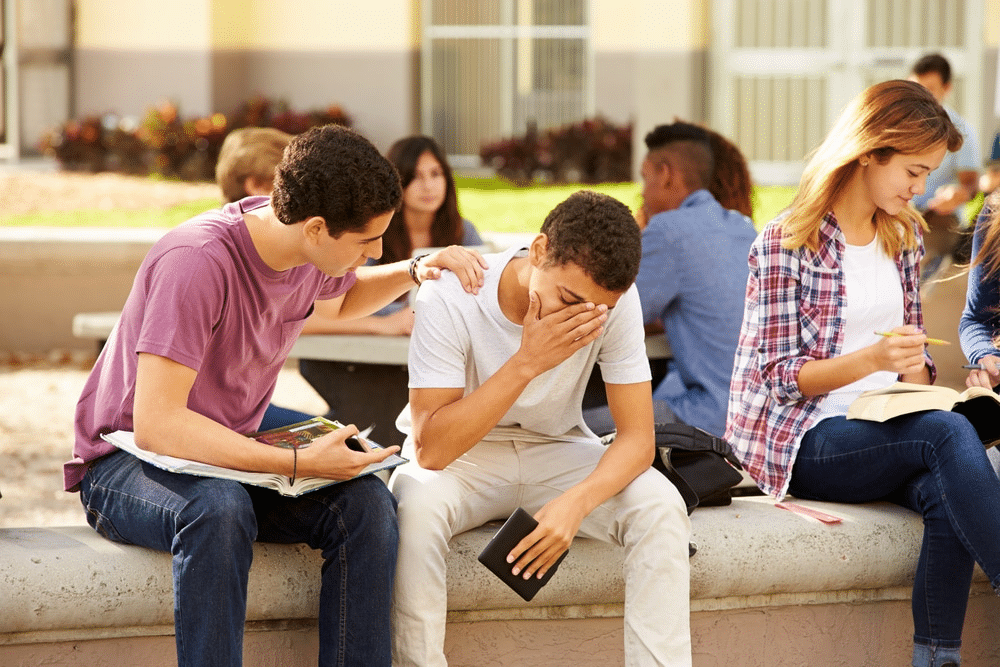
Until a Northern Virginia high school senior needed to go to the emergency department for depression last year, he had never told his parents how badly he was struggling.
“They aren’t really in touch with the subject,” said the Fairfax County teen, who attended Annandale High School and asked to remain anonymous. At the time, he remembered thinking, “They really wouldn’t care.”
He said a fast-paced online class and the constant negativity he saw on social media pushed him into a depression that became overwhelming.
When his mother realized something was wrong, she took him to the emergency department, and he spent nearly a week receiving mental health treatment in the hospital.
“I felt like it really helped,” he said. “I felt a lot better once I came out.”
Looking back, he wishes he’d felt comfortable asking for help sooner.
“Parents make it harder due to miscommunication and then not understanding,” he said.
His experience reflects a broader challenge facing many young people. Millions of U.S. teens experience depression or anxiety every year, but many say the hardest part is not recognizing that they need help; it’s telling their parents.
Depression and anxiety can have serious consequences, including thoughts of self-harm. About one in nine adolescents have serious thoughts of suicide each year, according to the National Alliance on Mental Illness (NAMI). That means in the state of Virginia, as of 2025, more than 88,000 adolescents think about dying by suicide each year.
And while for many teens the closest source of support during a mental health crisis is a parent, many students at Annandale High and other area schools say they have a hard time communicating their struggles with parents.
In some families, talking about mental illness is not culturally accepted, said Rawle Andrews, executive director of the American Psychiatric Association Foundation.
Black families, Andrews said, “had traditions around what happens in the house, stays in the house — don’t talk about our dirty laundry in public.”
That attitude is common in Hispanic and Latino families, too, according to NAMI. About 35% of Hispanics/Latinx adults who have mental health issues receive help each year in comparison to the U.S. average of 46% of adults, according to the federal data cited by NAMI. This can be due to language differences, poverty and a lack of insurance, cultural differences and other barriers, according to NAMI.
Dulcelena Flores, an Annandale junior said: “They don’t think it’s real. They don’t believe in stress or anxiety or stuff like that. So it’s very difficult for me to talk to them about what I’m feeling at the current moment.”
In a national study on mental health stigma and help-seeking among teens in the journal Focus, researchers from the Jed Foundation found that the main reasons teens hesitated to talk to parents were fear of being misunderstood, feeling uncomfortable talking about the problem and that parents would try to solve the problem instead of listening.
Students feel no shame about struggles
Parents aside, most teens aren’t afraid to talk about mental health, especially to their peers, and awareness and understanding among students is high. The trend reflects an overall lower level of stigma around mental health issues among younger people.
“I’m comfortable talking about mental health around my friends because I know they’ll understand,” said the Annandale teen who was hospitalized.
Most teens don’t feel shame when it comes to communicating about mental health struggles with one another, and they feel that there shouldn’t be any stigma around it.

“Mental health is not a taboo word and it’s ridiculous to consider it one,” said AHS junior Isabella Ha. “That’s like saying a broken knee is taboo. That would be pretty ridiculous, wouldn’t it?”
Almost three-quarters of teens say it is a sign of strength to reach out for help when it comes to their mental health, but 42% say they do not have the words to ask for help, according to the Jed Foundation study.
“I believe that mental health is very important and no matter who you are, seeking help doesn’t make you weak, but makes you strong for taking action,” said Carlos Mejia Gonzalez, a recent Annandale graduate.
Still, not all teens feel the same way, said Gonzalez. “A majority of people don’t take mental health seriously, because they believe it isn’t real, or it’s looked down upon.”
What’s being done to help
For the Annandale teen who was hospitalized, therapy has made the biggest difference in making him feel better, he says.
Efforts are underway to improve the ability of schools to address children’s mental health.The American Psychiatric Association Foundation’s Notice.Talk.Act program, for example, helps school administrators, teachers and students detect the early warnings of a mental health crisis, said APAF’s Andrews. He calls it the “stop, drop and roll” of mental health care. APAF reports the program has helped reduce students’ truancy by 70%, disciplinary referrals by 89% and “major mental health events” by 99%.
Teens at AHS said their school has been helpful in making it easy to talk about mental health issues, though some expressed reservations about talking to school counselors out of fear that their conversations would not be kept confidential.
But not all teens need professional help when managing the daily stress of school and life. Students also had a lot of suggestions about how to maintain mental health on an everyday basis.
“Self-care for your mental health could be listening to music, talking to your friends if you need to talk with someone trustworthy and just doing something you enjoy,” said 2026 Annandale graduate Carolina Maranon Herrera.

Other students said doing calming or enjoyable activities is another way to help cope with mental health struggles.
“High-key, find a hobby you’re good at, spend time with friends outside of school and your house,” said Isabella Ha. “It’s actually so much fun and makes you feel better about life. Especially when life feels gross.”
For the senior who was hospitalized last summer, therapy was the key to feeling better, and he recommends it to all young people as a preventive measure.
“I feel like it would be better for them to cope right now and have therapy than later on struggling with (their) mental health,” he said.
His other advice for young people? “Honestly, relax. Take care of yourself, eat a nice meal. Do something that’ll make you happy, and don’t be stressed with schoolwork or other personal things in your life.”
Julissa Sanders is a junior at Annandale High School in Annandale, Va., one of Youthcast Media Group’s journalism class partners.
The name “MindSite News” is used with the express permission of Mindsight Institute, an educational organization offering online learning and in-person workshops in the field of mental health and wellbeing. MindSite News and Mindsight Institute are separate, unaffiliated entities that are aligned in making science accessible and promoting mental health globally.


Author

Related Articles
‘I Had to Get My Mind Right’: The Challenges to Loving Relationships After Being Laid Off by DOGE
After the federal firings, Black women felt betrayed and disillusioned. One longtime federal worker learned from experience the importance of community — that people who have experienced collective trauma need collective resilience.
Recovering From a ‘Gut Punch’: Black Women Fired by Trump and Musk Work to Overcome Shame and Self-Blame
Black women working for the federal government did what they were supposed to do. They got their degrees. They excelled at their jobs. They received awards for excellent performance. Yet their achievements could not protect them from the political winds.
Trump’s Proposed Changes Could Gut Mental Health Support for Kids in Head Start: The View from a San Francisco Classroom
The rule changes would eliminate the requirement that all Head Start programs use mental health consultants, prohibit expulsions, and other rules designed to promote a safe, nurturing environment.