
‘This Is the First Time I’ve Touched Grass’: Inside the U.S. College Campuses Pioneering Social Prescriptions
As a mental health crisis overwhelms college students and counseling departments, universities are creating programs that prescribe nature, arts and belonging.
This story is the second part of a two-part series. Part 1 can be read here. Today’s story is being published in partnership with The Hechinger Report, a national news organization that reports on education.
In 1984, while studying at Cornell University as a graduate student and going through a “difficult” time, Don Rakow remembers escaping to the campus gardens. “They were my sanctuaries—those gardens were essential for me to maintain balance and to survive,” he says.
Thirty years later, that moment came back to the English-major-turned-plant-science professor, when he began teaching at Cornell. As Rakow and fellow faculty members discussed what it would take to respond to the growing mental health crisis among students today, he suggested an unlikely candidate: their campus, and all of the natural wonders on it. What if Rakow could help struggling students find relief through green spaces, just like he did when he was in their shoes?
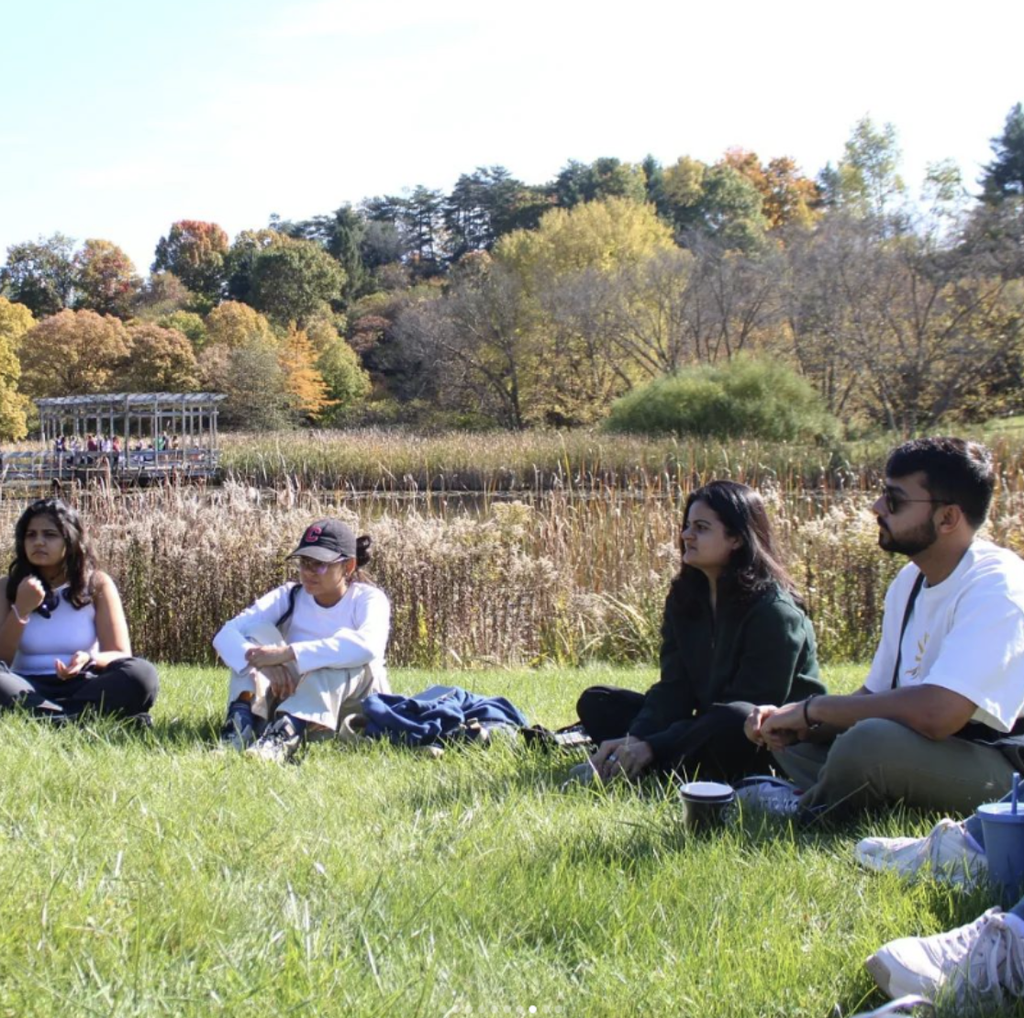
This experience led him to co-found NatureRx – one of the nation’s first dedicated programs designed to help students spend time engaging with nature as a way to improve their health. Today, in addition to operating as a student-run club that hosts nature-based activities, the program works with Cornell Health to support nature prescribing, through which on-campus physicians and counselors embed actual “referrals” for nature activities into students’ electronic health records – and then measure the results.
Dr. Jonathan Keffer, one of Cornell Health’s participating physicians, says the program helps students recognize how spending time in nature is more than just a nice-to-have. “This is actually physiologically proven medical treatment,” he explains, referencing the deep body of research demonstrating nature’s healing effects on stress, anxiety and depression.
Cornell’s NatureRx program is part of the growing movement for social prescribing — a practice through which a patient is referred to a non-medical, community-based activity, often involving nature, art, movement or service. Originating in the UK in the 1980s, social prescribing has been shown to boost patients’ health while reducing pressure and costs within health care.
Now, as more U.S. campuses struggle to keep up with demand for student mental health services, university-based social prescribing programs are cropping up around the country, from Michigan and California to New York and Arizona.
Rakow, who has since retired from Cornell, now co-directs the Campus Nature Rx Network, a separate LLC he co-founded in 2019 with professor Dorothy Ibes of the College of William & Mary, as a way to help universities build their own versions of the program.
Funded through support from the REI Cooperative Action Fund and tuition from a sliding-scale certificate program, the network offers free membership and resources to schools starting their own nature prescribing programs. To date, about 120 colleges and universities have joined.
“There seems to be greater awareness that there need to be more tools for addressing student well-being,” Rakow says.
‘I feel lighter’
While U.S. colleges have existed for hundreds of years, it wasn’t until 1910 that any college created a dedicated mental health service — when Princeton University noticed students were dropping out because of emotional issues and hired a psychiatrist to address it. But a historical review suggests it took another four decades for campus counseling services to become mainstream, and another six before mental health care demand would exceed what campuses could provide.
Between 2009 and 2015, counseling center use grew five times faster than student enrollment, and the underlying need grew, too; one study of 350,000 students across 373 campuses between 2013 and 2021 found depression rose by 135 percent and anxiety by 110 percent. During that period, the number of students meeting the criteria for at least one mental health problem doubled.
In the early 2010s, a series of student suicides brought heightened attention to mental health and well-being at Cornell, prompting the university to expand its response efforts. In addition to hiring more counselors and training faculty in bystander intervention, Cornell supported Rakow to co-found NatureRx.
“Spending time in nature is not a cure-all,” Rakow notes, emphasizing the program’s intention isn’t to fully replace counseling or medication, but to complement other approaches to student well-being. A large body of research finds nature can help with some of the symptoms that counseling and medication can support — studies show that time outdoors can meaningfully reduce anxiety and depression. A Cornell-led study that Rakow co-authored even finds that mental health benefits can kick in after just 10 minutes outside.
Physiological studies show that time in nature helps reduce stress, which can often precede anxiety and depression by activating the body’s parasympathetic nervous system. This measurably reduces cortisol — the body’s primary stress hormone.
This link between nature and stress reduction matters at a university like Cornell, where many students not only experience intense academic pressures, but also a stressful sociopolitical climate, says Rakow. “Concerns about climate change, the economy, loss of women’s rights and democratic rights, pressures brought upon by social media — there’s (a) long list.”
While flyers and campus maps of nature hotspots on and around campus can help students “self-prescribe” nature, many learn about NatureRx through their doctor or counselor. In practice, the process typically begins with a gentle conversation from a health professional, when a student seeks treatment for anxiety, depression, or sometimes “a physical complaint that has a substantial undercurrent of mental health,” says Dr. Kent Bullis, a physician from Cornell Health.
A student might come in for insomnia, for instance, “with difficulty sleeping and fatigue,” Bullis says, “and oftentimes, when you explore that in depth, it becomes obvious that stress is playing a role.” In those cases, he is careful about how he raises NatureRx: “I try to plant the seed that this could be related to stress without making them feel like I’m dismissing their symptoms entirely.”
Keffer, his Cornell Health colleague, similarly tries to offer a scientific explanation of the ways nature can help address certain symptoms. “I may medicalize it a little bit — talk about the vagal tone, (how nature) cools down the nervous system — to make it seem more like a treatment,” he says. Especially
when prescribing nature alongside antidepressants, he says he “tries to weave it into the treatment plan,”explaining that nature “can modulate your anxiety response, counter your sympathetic nervous system and enhance your more relaxing parasympathetic nervous system.”
From there, after physicians check a box in patients’ electronic health records to indicate NatureRx was discussed, students are encouraged to create their own nature prescription, whether that’s joining a nature excursion club or simply choosing to study outside. “We have a little card that providers can give out to help students make their own nature plan … and we give specific examples because some of our students are less familiar with what to do outside,” explains Emily Dunuwila, the health initiatives coordinator within Cornell’s NatureRx program.
Some of the most popular and reliable options — hosted all year long, even through the campus’ dark and cold winters — have been the student clubs. Since the program’s founding, there’s been the NatureRx club — an undergraduate-run group hosting indoor crafting sessions, outdoor bingo walks, and interactive discussions on topics like climate anxiety and the science of awe.
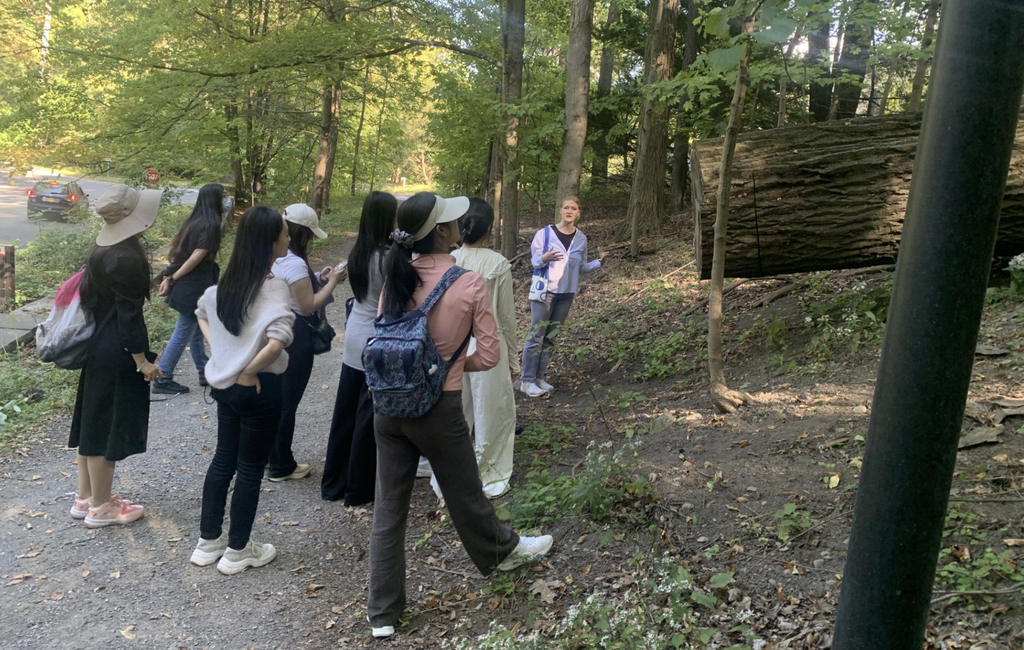
Today, Big Red Barn Guided Nature Walks — led by students – take place onWednesdays, rain-or-shine, with ponchos provided. Sofia Mattson, a master’s student in design and environmental analysis, founded the walking group after realizing that students were hardly noticing their campus’ unique natural wonders — from the waterfalls and gorges to the botanic gardens. “As a student, you only go to a couple locations a day, and generally, the only reason you’re outside is to get from one place to the next,” she says.
To break that pattern and encourage students to be more perceptive, Mattson encourages walkers to engage with their natural surroundings using all five senses. She invites them to find what she calls their “nature ally” — a squirrel, a rock, a bit of lavender sage or even a cherry from a cherry tree — and then to see, hear, touch, smell and sometimes even taste their way through it.
“After the walk, you can tell it really made a difference because people kind of stick around and talk to each other about life and say, ‘Wow, that was really nice, and it was so great to get out here,’” Mattson says.
Despite the formality of the prescribing process and availability of options, NatureRx is careful not to overwhelm students with an inflexible prescription. “It’s really customizable — it’s not necessarily ‘Join this group, join this thing’… it’s more of, let’s see how we can integrate this into your busy schedule in a way that works for you,” explains Dunuwila, the program’s coordinator.
And though that variability makes it hard to measure the program’s precise impact — some students may spend five minutes a day, while others may spend several hours per week — the data paints a promising picture: In 2024-2025, Cornell Health providers prescribed or recommended time in nature to more than 2,200 students, and according to responses from surveys sent to students who received a nature prescription, 88 percent reported an improvement in mood and 85 percent reported that they felt less stressed.
Though the survey results capture a small and potentially skewed picture of the program (only 30 percent of students who received the survey completed it), the physicians’ observations track with its positive results: The doctors said they’ve seen meaningful clinical improvements in the mental health of students they’ve given prescriptions to, as well as in their productivity and time management.
“When students got back to the work (after their nature prescription), they told me they felt more clear, more receptive,” says Keffer. He says he now frames NatureRx as not only as a mental health tool but also as an academic one, particularly for the many students who think they don’t have time for nature, he says. “It’s actually very impactful on decreasing procrastination — it can be looked at as a time saver, an investment.”
The student leaders also witnessed powerful transformations in their peers. In the NatureRx club, co-president Arianna Sprenger remembers the afternoon she led a club walk through the arboretum, when a fellow student shared out loud, “I feel so much lighter.” And for Mattson, she remembers a simple aha moment from one student who joined her Big Red Barn walk. “I have literally been on my laptop for hours today,” the student said. “This is the first time I’ve actually touched grass.”
‘All of my worries disappear’
Outside of Cornell and the 100-plus other campuses in the Campus Nature Rx network, some universities are designing their own social prescribing programs, as new data shines light on the need: According to the 2024-25 Healthy Minds Study, which surveyed more than 84,000 students across 135 colleges and universities, 37 percent of students reported moderate to severe depressive symptoms, and nearly 1 in 4 reported often feeling isolated from others. Meanwhile, according to a survey of more than 130 U.S. campus counseling leaders conducted by Timely Care, a provider of virtual mental health services to campus counseling centers, 86 percent of counselors say student mental health needs are increasing.
To help meet students’ mental health needs outside of clinical care, campuses like University of Arizona and Stanford University are partnering with SocialRx (formerly Art Pharmacy), an Atlanta-based, for-profit company that connects patients to community activities to improve their mental health. At Stanford, a network of campus organizations — from student affairs to athletics — refer students to a dedicated SocialRx care navigator, who learns about each student’s interests, challenges and schedule and can then prescribe up to nine “doses” of arts and cultural experiences. Those experiences could include everything from museum visits and dance workshops to pottery classes and live performances, all at no cost to the student.
The early results at Stanford are encouraging; according to data from SocialRx, 84 percent of referred students attended the activities, and 80 percent of those students reported improved mental health. Deborah Cullinan, vice president for the arts at Stanford University, says the arts and cultural partners providing the activities are equally enthusiastic.
“We thought we’d get about a half-dozen partners, but I think we now have 40,” she explains. “It wasn’t just us making the case that arts would be an important tool in the toolkit to support students — it really started to be the case that people are calling us.”
Some skeptics may wonder why social prescribing is necessary on college campuses, which typically are rife with social activities already. Lindsey Mortenson, a clinical assistant professor of psychiatry and chief mental health officer of student life at the University of Michigan, says that paradox puzzled her, too. “We started from a place of concern and curiosity about students’ loneliness and disconnection, because the problem that we have at Michigan is definitely not lack of opportunity … there’s no shortage of arts events almost every day on campus.”
To get a clearer picture of students’ loneliness, Mortenson and her colleagues ran a sample survey — posting QR codes across dining halls, housing, and student unions to understand why students weren’t showing up to existing activities.
“The number one barrier students cited was time,” Mortenson says, summarizing the 1,400 student survey responses. “But there was also this other factor — a lot of social anxiety, lacking social skills and social confidence.”
That survey, albeit informal, recently helped to catalyze two formal social prescribing efforts at Michigan. One is a student program, Experience Rx, which will actively prescribe students activities involving art, nature, movement, shared meals, and community service, making it one of the first comprehensive campus social prescribing programs in the country. The other is a research arm, the Institute for Social Prescribing, which will study the impact of ExperienceRx and other campus social prescribing programs.
“A lot of [students] are like, 70 percent of the way there — they just need someone to help them take that last step,” says Mortenson, who is now co-director of the institute.
As Michigan seeks to understand the research impact of campus social prescribing programs, other universities are taking a more grassroots approach. At the University of Oregon, teaching professor Lisa Abia-Smith leads what might be the nation’s first dedicated undergraduate course on social prescribing, in which students are invited to design their own programs and reflect on the concept.
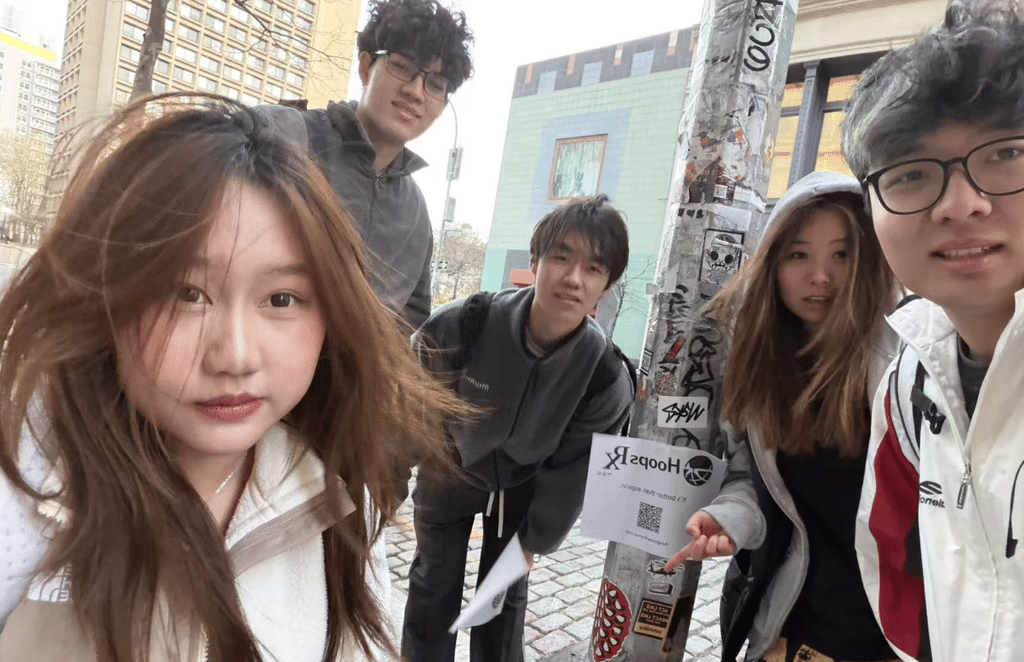
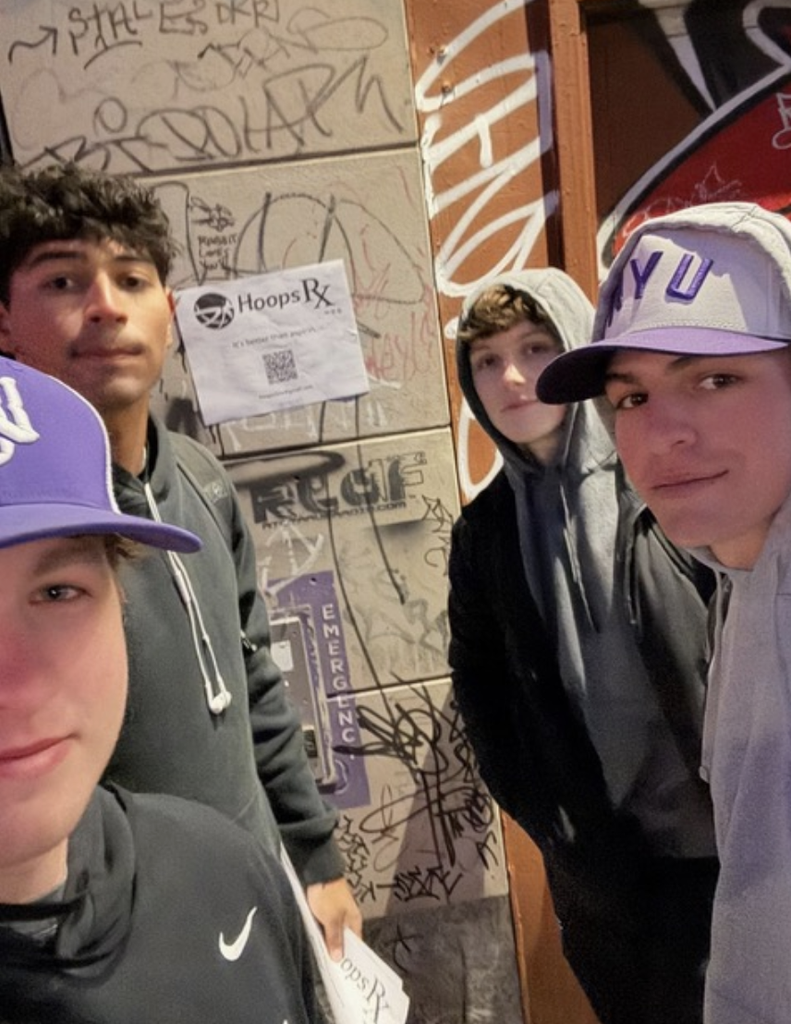
At New York University, David Hollander, an assistant dean and clinical professor, teaches a course called “How Basketball Can Save the World.” Through the course, students are taught about the ways basketball — with its components of movement, service and belonging — can serve as a social prescription. Then, they’re invited to lead a campaign promoting HoopsRx — a program connecting middle school students dealing with anxiety and loneliness to free, structured recreational basketball.
This past spring, Ani Minic, a sophomore studying sports management who also plays for Montenegro’s women’s national soccer team, was one of more than 100 students who spent an afternoon blanketing park benches and lamp posts with HoopsRx flyers. “Before you knew it, there were probably 1,000 plus flyers all around the city,” she says, with each one reading: “HoopsRx. It’s better than aspirin.”
For Minic, the campaign was more than a class assignment; it took her back to a revelation she made in childhood and which she recalled when she recently stumbled across her old journal. “A lot of people say their ‘happy place’ is at a beach or somewhere peaceful and relaxed,” she read, quoting her 12-year-old self. “However, my happy place is on the fields … I step on the field, and all of my worries disappear.”
This article was supported by The Carter Center for Mental Health Reporting. The writer, Julia Hotz, is a 2025-2026 Carter Center Mental Health Fellow.
The name “MindSite News” is used with the express permission of Mindsight Institute, an educational organization offering online learning and in-person workshops in the field of mental health and wellbeing. MindSite News and Mindsight Institute are separate, unaffiliated entities that are aligned in making science accessible and promoting mental health globally.


Author

Related Articles
Go Fish! The Rise of Youth Social Prescribing
A UK-born healthcare movement that “prescribes” community activity to struggling young people is spreading to Canada, Australia, and the US.
‘I Had to Get My Mind Right’: The Challenges to Loving Relationships After Being Laid Off by DOGE
After the federal firings, Black women felt betrayed and disillusioned. One longtime federal worker learned from experience the importance of community — that people who have experienced collective trauma need collective resilience.
Recovering From a ‘Gut Punch’: Black Women Fired by Trump and Musk Work to Overcome Shame and Self-Blame
Black women working for the federal government did what they were supposed to do. They got their degrees. They excelled at their jobs. They received awards for excellent performance. Yet their achievements could not protect them from the political winds.