
Meet Chicago’s First Street Psychiatrist
Sam Jackson was once a student of James Withers. This week, the pioneer of Street Medicine watched Jackson take over Chicago’s Street Psychiatry pilot program.
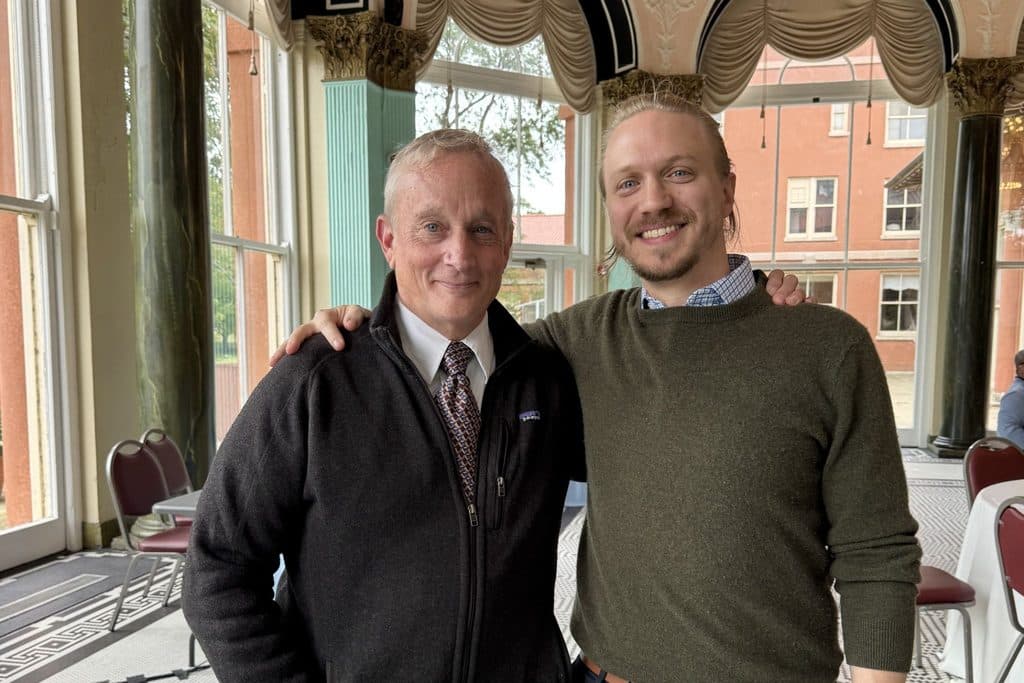
To the young Sam Jackson, now a Chicago psychiatrist, his Uncle Mike was the All-American Man: quarterback and captain of the football team. And handsome with a curly-q cowlick like Elvis.
But, when Mike got sick — paranoid and hearing voices, symptoms of his schizophrenia — that all changed. There was no more school and no more football. He became a wanderer — not just around Iowa, where he grew up — but the country: Pittsburgh, Denver and Boston. Then, one day police burst into Uncle Mike’s apartment and shot him in the arm and stomach while he was holding a knife.
“The apartment manager knew he had an illness, knew he was off his meds and called for help specifically to get him to a hospital,” Jackson told MindSite News. “He was in the hospital for months, and in sort of a twisted sense of justice, the police department sued him for assault because he had a knife. He ended up in prison for several years for essentially the crime of having a serious mental illness and being in his home with a knife while people broke down the door and shot him.”
That incident, which occurred when he was just 10 years old, would propel his journey to become Dr. Sam Jackson, Chicago’s first street psychiatrist, he said Wednesday afternoon on the South Side at the official launch of the city’s Street Psychiatry pilot program. Two five-person teams composed of a psychiatrist, psychiatric nurse, social worker, peer responder and an addiction specialist have been working the streets since July.
Currently, the teams, which cover the entire city, have about six patients each. The goal is for each team to serve 25 patients, which they’re meeting at shelters, public transit stations, parks, park district buildings and, even, Cook County Jail. Each patient is seen at least twice a week.
“As a provider, there’s no feeling more defeating than knowing someone needs help and not having the tools, resources or flexibility to meet them where they are,” Ryann Billitteri, project manager for the Officer of Substance Use and Recovery Services, said at the launch event. “Programs like these are changing that.”
Chicago’s Street Psychiatrist: The Beginning
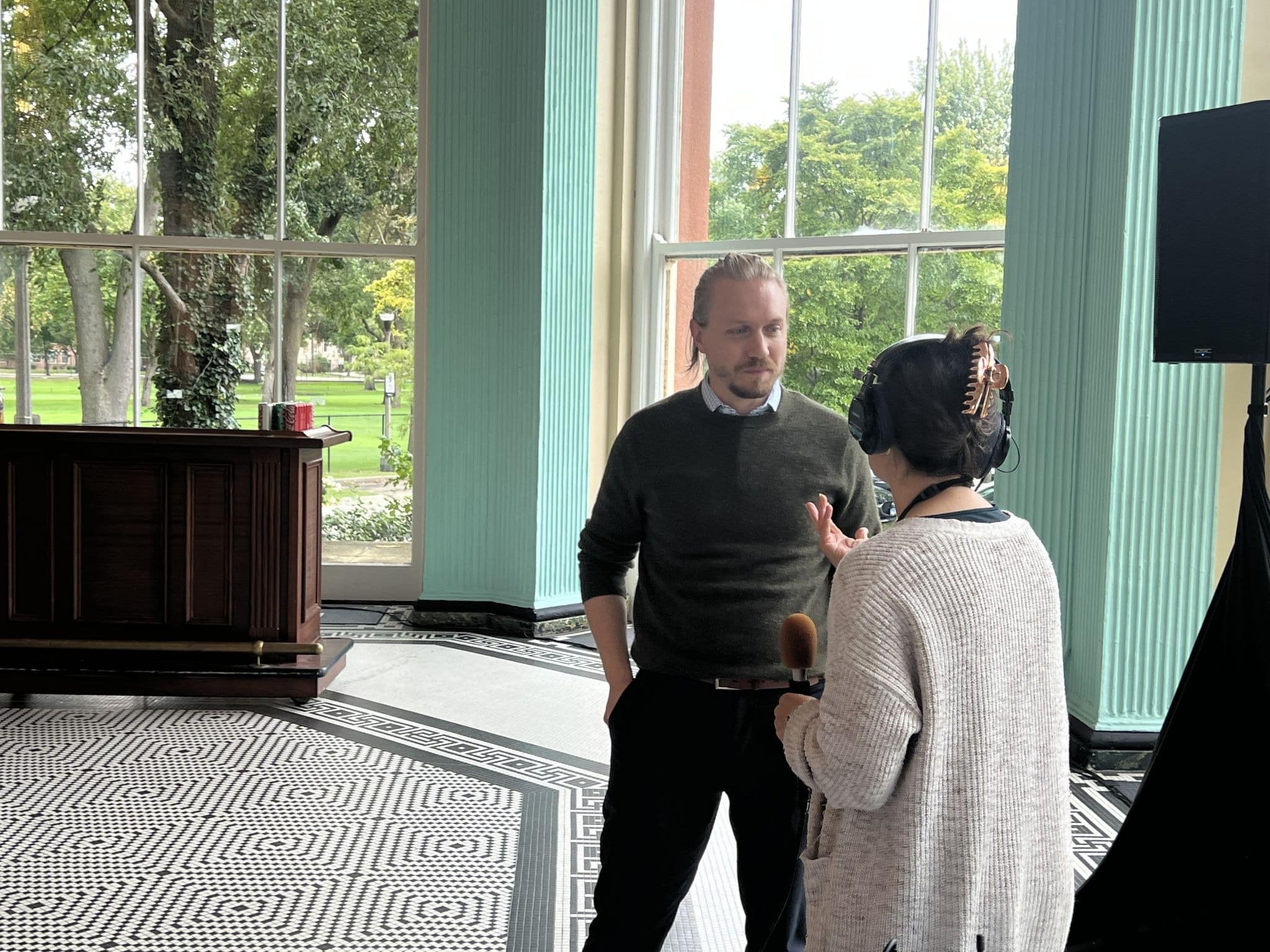
Jackson began working with the unhoused by volunteering at homeless shelters. Eventually, he met Dr. Jim Withers, who walked the streets of Pittsburgh in the early 1990s delivering medical care to the unhoused. After speaking with Withers, he aspired to become a street psychiatrist, especially after he saw how many people were already doing the work.
Still, his uncle’s story didn’t come to the forefront of his mind until George Floyd was shot in 2020, he said.
“I reflected not just on the community violence that I was seeing in Brooklyn by police, but also my own family’s trauma,” he said.
He interviewed his uncle and his grandmother because the details of the incident weren’t shared or discussed. That’s when he was given a box of medical records and court filings about his uncle.
“I was given the torch of injustice — figure out what you can do. As a psychiatrist, I wanted to have non-police crisis response. I wanted to improve our crisis response system generally, but I also wanted to dedicate myself more upstream to prevent the crisis,” he said.
Eventually, he was inspired to learn from Withers, a 2015 CNN Hero and founder of the Street Medicine Institute, on the streets.
Withers, who is considered a pioneer of street medicine, has introduced his methods to small groups of students for years taking them under the viaducts and into the woods where the unhoused live. Even after three decades of teaching students, Jackson was a memorable standout, Withers told MindSite News.
“He came with his own deep sense of purpose, commitment and imagination. I had hopes for him, but I think he’s exceeding them with his leadership in making this a field of medicine — street psychiatry — and his ability to collaborate with people,” he said. “I watched him in action yesterday, and the people love him that he serves.”
The pilot program is funded for a year with the option to renew for an additional two years. Grants and funding aren’t the key to success, but commitment and collaboration are, according to Withers.
“It’s about people that have gotten to know their sisters and brothers on the street and won’t turn their back on them no matter what,” he said. “A successful program has to have people with lived experience guiding them on the street, but also holding the team accountable for whether we’re drifting off the real needs of real people. When you’re in the street you realize, I can’t do this by myself. I have to get to know the other services, I have to talk to them. I have to find a way to make this work, not just get polarized.”
The name “MindSite News” is used with the express permission of Mindsight Institute, an educational organization offering online learning and in-person workshops in the field of mental health and wellbeing. MindSite News and Mindsight Institute are separate, unaffiliated entities that are aligned in making science accessible and promoting mental health globally.


Author
Related Articles
Superstar Athletes Open Up at Project Healthy Minds 5th Annual World Mental Health Day Festival
Bringing together athletes, entertainers, and mental health experts, the 5th Annual World Mental Health Day Festival featured candid conversations on identity, screen time, and emotional resilience.

The Salon Experience on Rikers Island That Some Hope Could Scale Across the Country
How the Beauty Beyond Bars salon brought renewed confidence and hope to three women preparing for release from Rikers Island.

Students Keep a Roof Over Each Other’s Heads
Aggie House provides transitional housing for UC Davis students facing housing insecurity, offering peer support and low-cost rent.