
MindSite News Welcomes Jariel Arvin as Our New Reporting Fellow
A Boston transplant – by way of Vietnam – sprouts local roots to help MindSite News deepen its Bay Area connections.
Earlier this month, Jariel Arvin joined the MindSite News team as our first full-time Bay Area reporter. He comes to us as a fellow in the California Local News Fellowship program, a graduate of the UC Berkeley Graduate School of Journalism and a master’s candidate in Asian Studies with real-world experience as a teacher, international traveler and (good news for us!) newsletter writer.
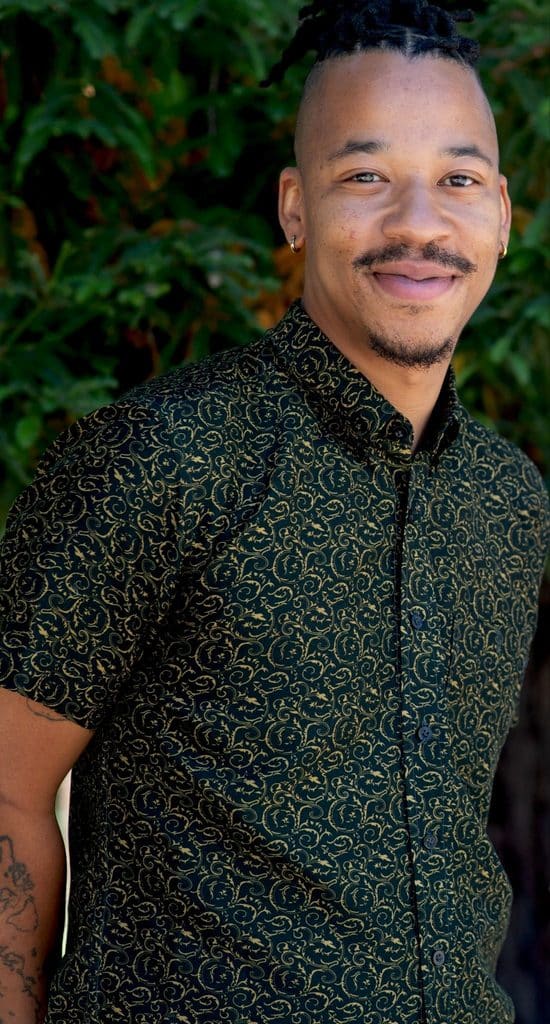
Arvin spent nearly six years in Vietnam teaching English – and then taught English at Oakland High School for two years through the Teach for America program before turning to journalism. He spent two years at the digital news site Vox, covering climate change and writing a national newsletter.
His time at Vox convinced him that he wanted to make a career in journalism and he decided to get more training and support. He received a fellowship to attend UC Berkeley and completed his master’s degree in journalism there in June.
MindSite News founding editor Rob Waters sat down with Arvin to learn more about his back story and motivation for joining the team.
To start, what made you want to be a journalist? And what made you want to work with MindSite News and focus on the mental health beat?
I think I’ve always had an interest in journalism since I was a young person, growing up in Boston. My parents were big fans of the Boston Globe. And in high school, I had a mentor who worked for the Globe. I’ve always been really curious about the world and how it works and why things are the way that they are. Growing up, I had close family members who struggled with their mental health and we never really talked about it. One of my earliest memories was a close family member experiencing a mental health crisis. It was always a part of my life and always impacted me. But we were more focused on survival – so we were focused on making it through day to day.
You just finished up a journalism masters program at UC Berkeley. But before that, you had some pretty diverse experiences teaching both in Oakland and in Vietnam.
As an undergrad, I went to Skidmore College, a little art school in upstate New York. I was an English major there, and I also did a minor in international studies, and that’s what brought me around the world to different places. While I was an undergrad, the 2008 financial crisis happened. So there were a couple years, right when I graduated, where the economy just wasn’t looking great. I had a friend who had moved to Vietnam to teach English, and I went there for a brief period of study abroad. I met him in Hanoi, and we went out on his motorbike, and he showed me around and told me all about his life, and I was just pretty much sold. So I went back to Skidmore, finished my final year, and me and my best friend, we just booked one-way tickets to Vietnam, and moved there. I didn’t have a job or anything.
So how long did you stay in Vietnam and what were your impressions and experiences there?
Vietnam is such an amazing and dynamic place – things change very rapidly. When I first got there, I was one of the only Black people that I would see in the streets ever. Naturally there was curiosity – you know, people not having seen a Black person. There was a bit of staring and stuff. I started to learn Vietnamese pretty soon after getting there, and I think that definitely helped enrich my experience and my worldview. And I was able to get teaching jobs.
When I left, there were so many more Black people who came to teach and from all around the world to do different things in Vietnam. When I went back this past summer, there were groups celebrating Juneteenth. There was an African restaurant that was really popular. So just in that 10-year period, I’ve just seen so much more diversity and so much more acceptance of different cultures and worldviews and ways of life. It happened very quickly in Vietnam.
Did you experience anything that you would think of as racism in Vietnam?
Yeah, I did. Me and my best friend, who is white, we graduated together at Skidmore, we both were English majors. We had similar GPAs. And when we first applied for jobs, we had our pictures on our resumes. We sent them out to all the different language schools that we could find. He got offers and I didn’t. And then once I took my picture off, I started to get some of the emails responding. And then there were also times where I went for jobs and they looked me up online – my LinkedIn on my social media or whatever, and they basically replied, “Sorry, we’re looking for native speakers — and by native speaker, we mean white.”
They said that?
Yeah, they said that very explicitly. So I was confronted with my race. In America, it’s a lot more insidious — it’s less like, directed in your face. But there, they were basically like, ‘Sorry, you’re Black. That is not what we mean by native speaker.” They wanted a white face in the classroom.
Wow.
That was tough, but I was kind of used to it, having traveled around the world a bit. I was kind of prepared. It didn’t turn me off of Vietnam or make me resentful. If anything, it made me want to, like, work harder. There were times when I would go into the classroom and feel that the students are kind of nervous – like, who is this black guy in front of us? But I always found ways of just breaking through. So by the end of the lesson, I would just be having a good time, and they would be having a good time. It kind of became like my duty after a while –I felt like I needed to show that Black Americans are great, you know? It was almost like a role that I took on after a while.When I met people who were Black and came to Vietnam, I’d always talk to them to see how they were doing, to almost be like an ambassador, making them feel comfortable, making them like Vietnam.
I know you also spent some time teaching in Oakland.
After teaching in Vietnam for almost five years, I applied for Teach for America, a national program that seeks to put teachers, mostly who are just starting out their careers, into high needs schools. I think I picked the Bay Area third on my list, and they were like, you’ve been hired, and your community is Oakland, and you’ll be teaching 10th grade at Oakland High School. And so I went from teaching in Hanoi to teaching in Oakland, which, as you can imagine, is a completely different animal, but still quite similar.
There was a bit more work I had to do outside the classroom in Oakland to make sure that things in the classroom went well – getting to know students and their parents, talking to other teachers and finding out what the students need. Because I was meeting some of these students in 12th grade, so they’ve been through the whole education system already before me. I was just kind of trying to put out little fires where I could, and help them achieve what they could in the short time I had them in my class.
And how did you end up working at Vox?
I did a program about climate change and global sustainability, and kept coming back to thinking about how to communicate about climate change, which then turned into me wanting to write about climate change for news audiences. In 2020, I got a job at Vox, which was my first introduction to journalism, a fellowship covering climate change and world news. It came to me in 2020, in a bittersweet moment of newsrooms, after the death of George Floyd, wanting to provide opportunities for journalists of color to enter the field. So I took the shot, and I miraculously made it.
It was a year-long fellowship. They had like over 1,000 applications for five or six roles. My editor at the time – she was the editor for foreign news – and she really liked me because I was a teacher in my past life. She was like, “All of my family, they’re all teachers. Let’s give you a shot.” And so she hired me, and that was like a crash course in journalism. I learned a lot, kind of by doing, like how to navigate a newsroom, how to speak up for yourself and advocate for the things that you need. I also got experience developing sources and just kind of just how to do journalism. And then after my 1st year, as the fellowship ended, I got hired to write their weekly newsletter, and I did that for almost the next 2 years while I was applying for different jobs. Then I ultimately decided to go to journalism school, ’cause I wasn’t landing the kinds of jobs that I wanted.
At MindSite News, you’ll be covering mental health in the Bay Area, which includes Oakland, where we’re based. What did you learn about Oakland and how do you think it’ll help you?
I’ve had experience being an outsider in many different ways – first in Vietnam, and then moving to Oakland for the first time and not being from here. And that is such an important part of what it means to be a community member. The students are very much, like, “Where you from, how long have you lived here?” Teaching in Oakland has taught me the importance of being part of the community. I had to earn my stripes, to show up, and continually prove my worth, and show that I did care about Oakland, that I now lived in Oakland. So showing up to events, and being part of the community – I learned that’s so important, and it’s definitely a lesson that I take.
I really want to get to know people because I think the best way to do reporting is to be tapped into what’s happening and how news is affecting people in their daily lives. That’s something I’ve learned through being in Oakland. Next year will be 10 years I’ve been living in Oakland, or in the Bay. I’m not from Oakland, but I feel like I’m a community member.
No longer a carpet bagger.
Exactly. I’m not just dropping in.
What are you excited about with this new position?
I’m excited that Mindside News is a nonprofit because I think nonprofits are the future of news. I know that there are some difficulties around funding, but I’m excited to have the opportunity to work for a nonprofit that has a distinct vision. It’s a lot easier for me to focus on becoming a good reporter because there’s a mission that I believe in.
And mental health – I couldn’t think of a better beat to be covering right now because it touches on so many things. I like topics that everyone has to, in some way or another, come into contact with. So I’m interested in covering all the ways that mental health intersects with people’s daily lives, how people get access to mental health and who isn’t getting access to mental health. Covering mental health as an accountability story is also really important to me. I’m working on a story now about neurodivergent people in the workplace.
And what might people find you doing when you’re not tracking down mental health stories?
Good question. I spend a lot of time in nature. I like to get outside, like to go on hikes, and right now, I’m really interested in boxing as an outlet. So I’m trying to find a gym right now where I can go and punch a bag to get out some of my aggression.
The name “MindSite News” is used with the express permission of Mindsight Institute, an educational organization offering online learning and in-person workshops in the field of mental health and wellbeing. MindSite News and Mindsight Institute are separate, unaffiliated entities that are aligned in making science accessible and promoting mental health globally.


Author

Related Articles
Superstar Athletes Open Up at Project Healthy Minds 5th Annual World Mental Health Day Festival
Bringing together athletes, entertainers, and mental health experts, the 5th Annual World Mental Health Day Festival featured candid conversations on identity, screen time, and emotional resilience.
The Salon Experience on Rikers Island That Some Hope Could Scale Across the Country
How the Beauty Beyond Bars salon brought renewed confidence and hope to three women preparing for release from Rikers Island.

Students Keep a Roof Over Each Other’s Heads
Aggie House provides transitional housing for UC Davis students facing housing insecurity, offering peer support and low-cost rent.