
$1 Million to Help Heal Minnesota’s Cascade of Trauma
In today’s newsletter, NAMI Minnesota has launched a new grant-giving initiative to help agencies doing crucial work to support mental health.

Greetings MindSite News readers.
In today’s Daily, NAMI Minnesota has launched a new grant-giving initiative to help agencies doing crucial work to support mental health. Five immigrants from Texas who were held in ICE detention recount appalling conditions. And California passes a law that could usher in a new approach to reducing homelessness.
But first, a group of formerly incarcerated women sued to get air conditioning inside Texas prisons — and won. “It has been said that the degree of civilization in a society can be judged by entering its Prisons,” U.S. District Court Judge Robert Pitman wrote in his order. “As described below, the record in this case paints a clear picture: in a state where outdoor heat indexes exceed 130 degrees, inmates in Texas prisons are suffering — and in some cases dying — in extreme heat every summer.”
NAMI Minnesota invests $1 million into grassroots healing
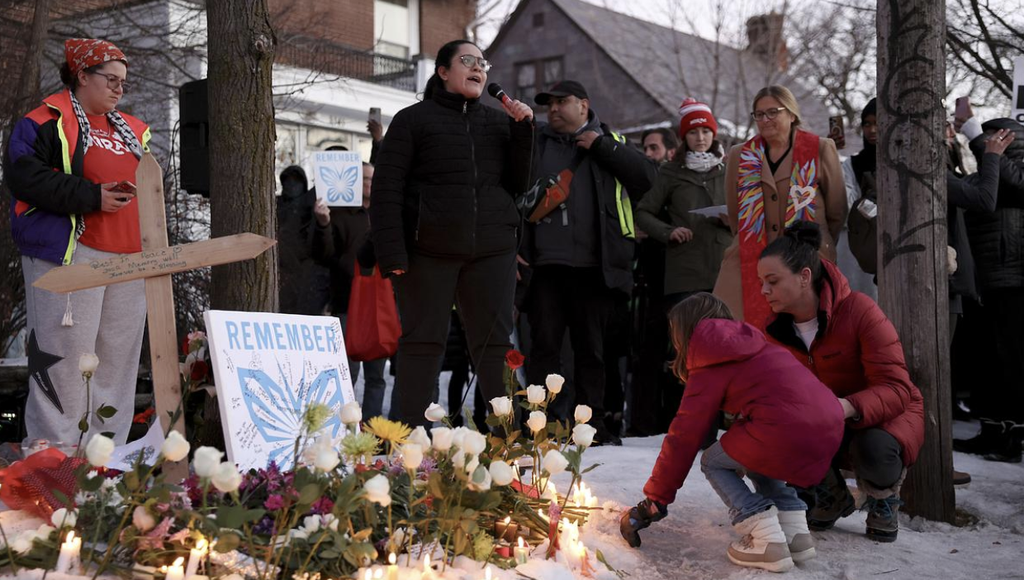
In recent years, Minnesotans have felt their collective traumas stack up. First came the COVID pandemic, then George Floyd’s murder and the unrest it triggered, followed by the Annunciation School shooting. Then Operation Metro Surge, the federal immigration crackdown led to the killings of two Minneapolis residents and drove many families into hiding earlier this year.
“It has rattled all of our communities,” said Marcus Schmit, the new executive director of NAMI Minnesota. In an interview with MinnPost he said his state chapter of NAMI – the National Alliance on Mental Illness – has been besieged this year by a record number of requests for mental health support.
Schmit and his NAMI colleagues wanted to do more to help so they took a look at what existing organizations were doing right as they worked to serve residents. “We saw a lot of community-based organizations set up response systems to meet emerging mental health needs,” Schmit said. “We wanted to help support and sustain that work.”
One organization NAMI looked at was Por el Amor a los Nuestros, a group offering mental health support for Spanish-speaking immigrant families in the Twin Cities metro area. Co-founder Mahry Torres-Castillo remembers the onslaught of calls from families begging for food during the ICE surge. The immigration sweeps sparked a panic so great that people feared leaving their homes to take their children to school, the doctor or even the grocery store.
“Our collective strength and our resiliency was really put to the test,” said Torres-Castillo. Months after the ICE drawdown, some families still hesitate to leave home even to go to work.
So, rather than start from scratch, NAMI Minnesota embarked on an ambitious goal: to raise $1 million to back efforts like Por el Amor through a new initiative called Healing Minnesota. With support from The Medica Foundation, The Andersen Foundation, HealthPartners and NAMI National, they succeeded, and are distributing the funds without a formal application process.
“We’re relying on partners and communities to help us get connected to efforts that are underway,” Schmit said. “Now we want to be helping to lead the effort to show the world how we are going to recover.” So far, five nonprofits have received $65,000 in grants ranging from $5,500 to $20,000.
Por el Amor received $20,000, which has helped cover transportation, childcare, food, program facilitators and legal help to secure official nonprofit status. For Torres-Castillo, though, the check means more than money. “Beyond the funding, what means the most to us is knowing that someone believes in our community,” she said.
‘In there, everything is lost’: Why ICE detainees in Texas try to kill themselves
At his inauguration last year, President Donald Trump vowed to conduct the largest mass deportation campaign in U.S. history. His agents would find and remove “the worst of the worst,” he said, targeting supposed droves of immigrants with violent criminal histories. In reality, the Trump administration has enacted a nationwide campaign of terror, placing more than half a million people into ICE custody, most of them with no criminal conviction. According to federal data published in early August, only 31% of those detainees have a criminal record.
Five Texas immigrants — born in Mexico, China, Iran, Cuba and Venezuela —shared their stories with The Texas Tribune. They all face deportation and have been confined to detention centers across the state. Some arrived under Temporary Protected Status, only to see the rules change when Trump took office. Some stayed in the US, even though their visas expired, to escape danger in their native countries. And others entered legally and were in the process of obtaining their green cards. None are convicted criminals.
They tell of filthy, bug-infested facilities where guards treat people worse than stray dogs, sick people are left to languish and edible food is scarcely available. People in need of medical care receive it too late.
“The food and the water were so bad they made you sick,” said Venezuelan Yeferson Francisco Sequera Ruiz, who was arrested on November 6 and detained at T. Don Hutto Detention Center in Taylor. “The air conditioners blew out dust. If you wake up with a cold, you’d hold back from going to the doctor because they would confine you for five days.”
In such harsh conditions, detainees began to lose their minds, attempting suicide as though all was lost, he said, “because, in there, everything is lost.”
California orders Sacramento County to work with five cities to reduce homelessness
California lawmakers recently passed legislation that will compel Sacramento County to work collaboratively with five of its cities to reduce homelessness, CalMatters reports. The county, and the cities of Sacramento, Elk Grove, Rancho Cordova, Citrus Heights and Folsom have until January 2028 to launch a new joint powers authority, though elected officials from each locale have already started meeting as a joint task force.
“Homelessness does not stop at jurisdictional boundaries,” Gov. Gavin Newsom wrote in a note explaining the new law, “and no city or county can solve this crisis alone.”
The split in responsibility between counties and cities can have ripple effects on mental health care. Across California, cities typically provide shelter beds while counties control mental health and addiction treatment. But counties also receive dedicated funds from the state to address homelessness while cities do not — leaving the two to dispute who should pay for what. Former Sacramento Mayor Darrell Steinberg said that his voters saw people suffering on the streets and demanded he do something, but Steinberg had little power to help.
“There was just a major gulf between my accountability to the people and my authority to be able to actually make the difference that the people expected,” he said.
That’s why supporters of the law see it as a first step towards resolving a statewide issue. They argue that cities and counties need each other to address homelessness, but they rarely cooperate well. Opponents of the project argue that partnerships only work when they’re voluntary and that a state mandate sets a troubling precedent.
“It’s an unnecessary cost,” Sacramento County Supervisor Patrick Kennedy said. “It’s an unnecessary layer of bureaucracy, it’s an unnecessary burden that’s just going to slow down processes.”
While local governments often share authority over services that cross city lines, like sewers and transit, only three joint authorities in California handle homelessness according to Joe Colletti, CEO of the nonprofit research organization HUB for Urban Initiatives. The most prominent is the Los Angeles Homeless Services Authority, which the Trump administration has blocked from accessing federal dollars, alleging that it is mismanaging public funds. The move “puts at risk almost $300 million that LA area service providers count on to help California’s largest homeless population,” according to CalMatters.
Supporters of the new law point to Solano County, where a similar partnership has operated since 2022.
In other news…
Life as a death doula: Plenty of us have heard of doulas who support families at the start of life, but there are also doulas who help people navigate death. Darnell Lamont Walker is among them, and last year he published a book that highlights precisely how death doulas do their jobs. “Never Can Say Goodbye: The Life of a Death Doula and the Art of a Peaceful End” is a deeply vulnerable book that packs humor and honesty in an accessible and necessary contribution to works on end-of-life planning, especially for men, Black folks and other people of color. Be sure to check it out.
The name “MindSite News” is used with the express permission of Mindsight Institute, an educational organization offering online learning and in-person workshops in the field of mental health and wellbeing. MindSite News and Mindsight Institute are separate, unaffiliated entities that are aligned in making science accessible and promoting mental health globally.


Author

Related Articles

Helping Trick-Or-Treaters With Autism Feel Welcome
This year, make Halloween more inclusive for autistic children with these six tips for welcoming neurodivergent trick-or-treaters.

How AI Is Erasing Our Core Relationships
Researchers warn that AI chatbots may contribute to loneliness and social isolation by replacing human relationships, calling for better oversight and research.

The ‘Free’ Drug Rehab that Stranded Oklahomans in California
California drug rehab recruiters allegedly lured Oklahomans into treatment, with some patients left without adequate care or a way home.