
Star Athletes Open Up About Mental Health at Healthy Minds Festival
Athletes shape how Americans picture strength, which puts them in a unique position to show that male vulnerability belongs in that picture.

Happy Thursday, MindSite News readers.
What does resilience look like to you? For basketball star Karl-Anthony Towns, it means admitting that winning an NBA championship is amazing — but doesn’t heal the grief of losing a loved one. Towns shared his story at Project Healthy Minds’ World Mental Health Day Festival in New York City, where star athletes talked openly about loss, therapy and redefining what it means to be tough.
Also, we take a peek into the Rose M. Singer Center on Rikers Island, where a one-day salon pilot gave three incarcerated women a dose of dignity as their release date approached. In other news, we get a glimpse of a solution for homeless students at UC Davis and a look at NatureRx for stressed-out students back east.
Superstar athletes open up at Project Healthy Minds 5th Annual World Mental Health Day Festival
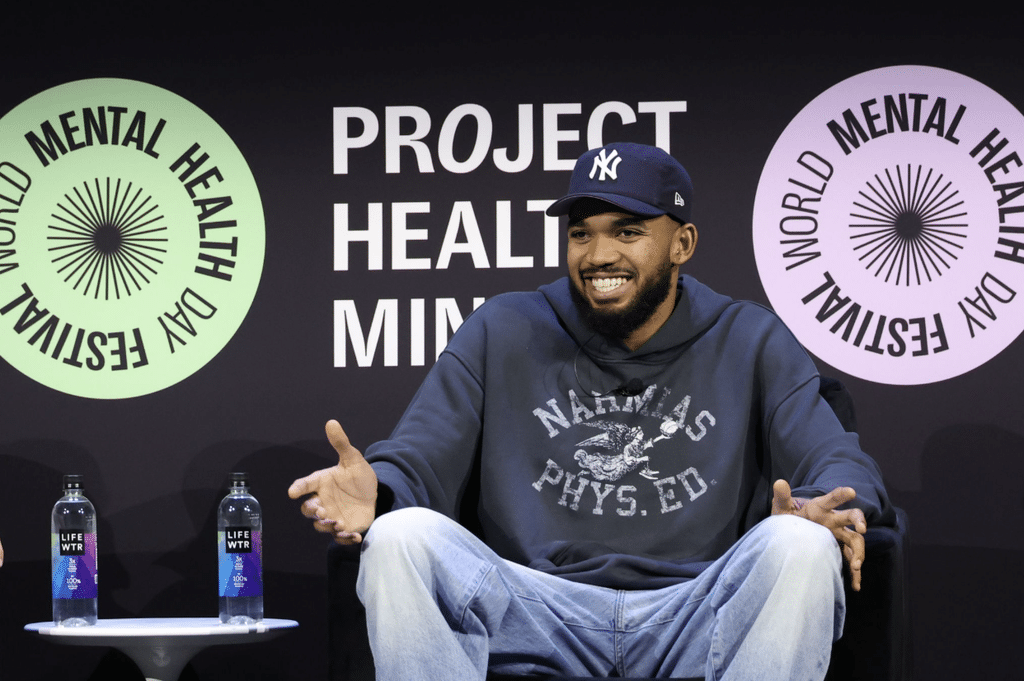
Months ago, Karl-Anthony Towns won his first NBA title with the team for which he grew up rooting, but he’s still grieving the death of his mother, who passed in 2020 of complications from COVID. The loss left him feeling hollow, and he even considered ending his basketball career. “I didn’t know if I wanted to do it anymore,” he said last Saturday at Project Healthy Minds’ World Mental Health Day Festival in New York City. “I had to really search within myself to hear the words she would tell me, and I had to carry it by myself now,” he told the audience.
Towns reflected on grief, resilience and mental health in conversation with Rich Kleiman, co-founder and CEO of the sports and entertainment company Boardroom and a new member of the Project Healthy Minds board of directors, the AP reported. Now in its fifth year, the tech nonprofit’s free, full-day festival brought entertainers together with mental health experts and advocates to discuss what organizers call the “defining public health issue of our time.”
Participants at the festival moved between several tracks, including Move, Connect, Create and Reflect. Activations ranged from a morning run or rooftop yoga to a conversation on fatherhood led by Joe Gonzales, founder of Brooklyn Stroll Club. Experts from New York University guided art therapy and certified instructors led meditation and breathwork sessions.
Leaning on athletes as spokespeople is deliberate. Project Healthy Minds CEO Phil Schermer told the AP that athletes shape how Americans picture strength, which puts them in a unique position to show that vulnerability belongs in that picture, especially for men. The nonprofit runs a free online marketplace to help people find therapy, psychiatry and support groups, and plans to lean further into sports in the months ahead.
On the main stage, social psychologist Jonathan Haidt, author of “The Anxious Generation,” warned that a steady stream of short-form video consumption leaves young minds no time to process what they take in. “Our creativity and our mental health require taking some stuff in and then having lots of time where you’re not taking stuff in,” he explained. “It’s the digital immersion, the cognitive fragmentation, the lack of time to process, the constant assault of quick, disconnected stuff. I think that is really causing massive cognitive destruction as well as mental health destruction.”
Haidt later warned: “Long stories are good, quick short videos are bad. That’s the simplest principle I can give you. I think short videos will turn out to be one of the biggest contributors to the declining test scores and the declining reading.”
But Rachel Janfaza, founder of the Gen Z research firm The Up and Up, added a hopeful twist. She said that young people used the recent FIFA World Cup and the New York Knicks’ historic championship run earlier this year to rebuild the in-person communities that they lost during the pandemic. “We’re seeing this swing,” she said, “and it’s really incumbent upon schools and employers and anyone who has a vested interest in helping this generation thrive to actually celebrate this.”
Identity and change were also major subjects of conversation. Actor and former NFL player Terry Crews spoke to anyone whose sense of self is tied to a job that’s shifting beneath them, encouraging listeners to treat themselves with the generosity of a kid trying something new. “Courage is not the absence of fear, but the recognition that something is more important than it,” he said. “The level of importance beats the level of trepidation or fear. And I learned how to turn fear into excitement.”
The salon experience on Rikers Island that some hope could scale across the country
When the time finally came for Daesha Holloman to “activate her bob,” jail staff watching from the hallway burst into Eve’s “Who’s That Girl?” Some had tears in their eyes. They’d gathered as the day went on to watch Holloman, 31, Adia Charles, 28, and Lizette Lugo, 47, enjoy a day of beauty and care just before the end of their short sentences at the Rose M. Singer Center on Rikers Island. The three women were selected for a one-day pilot program offering hair and makeup makeovers before heading home, and agreed to let Allure magazine and the nonprofit Beauty Beyond Bars document the experience, including on social media.
Founded by 21-year-old criminal justice reform advocate Lea Nepomuceno to get essential beauty and hygiene products to incarcerated people, Beauty Beyond Bars partnered with Julie Dastine, founder of Manhattan’s Citryne Rose salon, and makeup artist Maricela Saucedo for the program.
There is a real need for what Beauty Beyond Bars proposes. Hygiene and beauty products from the commissary are expensive and limited, leaving most incarcerated women with little more than shampoo, grease and a comb unfit to detangle thick curls, Holloman said. Still, that hasn’t stopped women from innovating ways to make themselves feel beautiful. “The Department of Corrections can (make) you lose yourself, for a lack of better words,” Holloman said. “You have to be strong enough to not fall into the dehumanizing situation…You have to look at the end of the tunnel. It’s hard. I have my days where I forget I am going home.”
But the small act of care reminded the women of who they were before they found themselves confined to Rikers, reigniting their hope in themselves. “We have real beauty. Like natural, actual beauty,” Holloman said. “You take programs like this, opportunities like this, and you run with them and you give the best version of yourself…I’m bigger than being incarcerated, and there’s people who actually believe in me,” she added.
Nadely Tavarez, who directs programming at the Singer center, concurred, adding there are practical reasons for such a program to support people nearing their exit from jail. “I try to teach my child that hygiene is everything, but it’s not just to look nice,” Tavarez said. “It’s because people will treat you a certain way. I feel that these women can gain confidence after going through such a traumatic time in their lives.”
That Beauty Beyond Bars got in the door at Rikers is a significant accomplishment. The complex is among the most infamous jails in the country for its long, documented record of violence and unsanitary and unsafe conditions, including sexual assault. The stylists and jail staff who took part in the pilot say that they’d like to see the program return, though no date had been set at press time. Nepomuceno hopes to expand beyond single-day events to start career training inside prisons and help salons hire graduates on the outside.
Even so, one day of beauty and attention for three women is a good thing. “Providing this type of service on one day to just a few women, I don’t know if it’s going to make a dent in changing carceral policy,” said Duke University professor Lauren Brinkley-Rubinstein. “But we also know that individual differences can be made with the smallest adjustments or kindness.”
Holloman is holding onto the experience and has high hopes. “I really want to hit the ground running when I leave here,” she said.
In other news…
Students keep a roof over each other’s heads: Even with a job and financial aid, some college students can’t afford a place to live. Faced with that dilemma, undergraduates at the University of California, Davis founded Aggie House in 2021 for their schoolmates facing housing insecurity. “I think sometimes, in general shelters, it can be harder for people to understand what a student is going through,” Hayven Angelique Pfister, a fourth-year human biology major and the external co-president of Aggie House, told Reasons to Be Cheerful. “It’s easier (and) more comfortable,” she added, because every resident and volunteer is also a student.
Aggie House, a collection of low-rent apartments, is modeled on two older student-run shelters in Los Angeles: UCLA’s Bruin Shelter, which opened in 2016 as the nation’s first shelter for homeless college students, and USC’s Trojan Shelter. Only UC Davis students are eligible for Aggie House, and each potential resident is vetted for need through an application and interview. Many are referred by the university’s basic-needs center.
Residents can stay up to a year, with rent starting at $200 to $300 a month — roughly 90% less than the average rent in Davis. Rent then rises $50 each month to encourage residents to move toward permanent housing. Like its predecessors, Aggie House is built on the simple premise that no student should be left without a place to live.
The name “MindSite News” is used with the express permission of Mindsight Institute, an educational organization offering online learning and in-person workshops in the field of mental health and wellbeing. MindSite News and Mindsight Institute are separate, unaffiliated entities that are aligned in making science accessible and promoting mental health globally.


Author

Related Articles
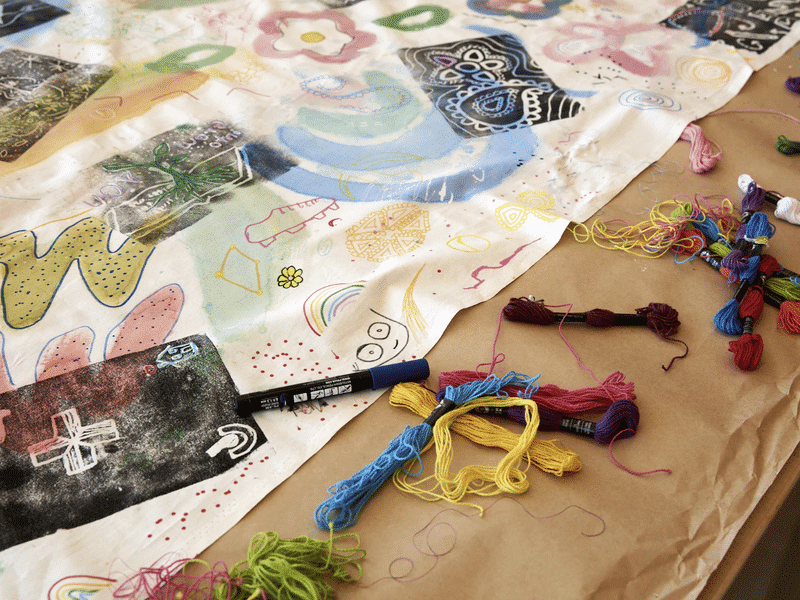
Nature Rx: A Prescription That May Save Your Life
A healthcare movement that “prescribes” time outdoors and in community to people struggling with their mental health.
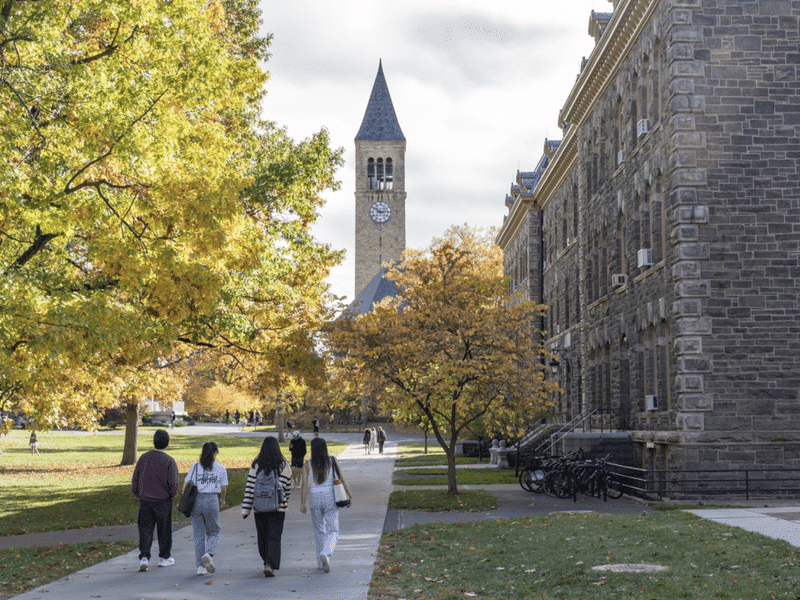
Cornell Assault Prompts Parents to Talk With Their Sons
Sexual assault on campuses nationwide is still a grave problem.
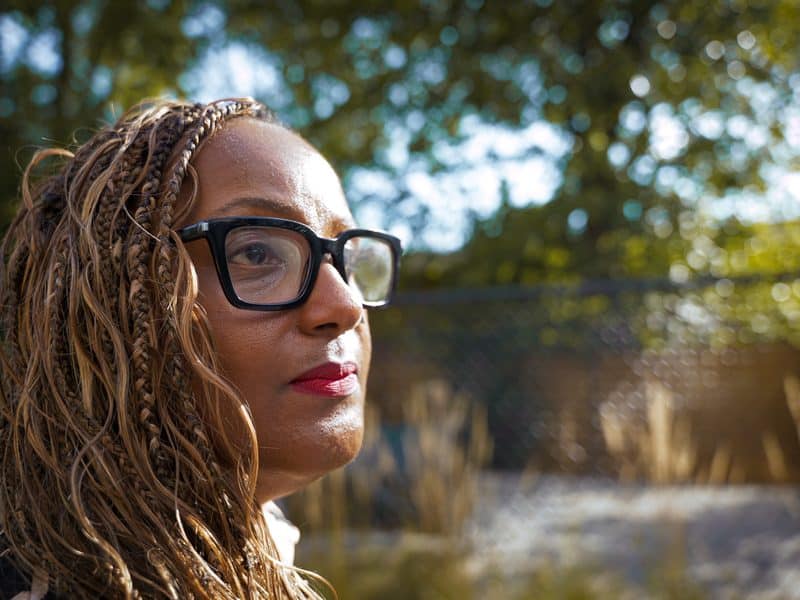
The Unseen Toll: Depression, Anxiety Plague Black Women a Year After Being Fired by DOGE
When Trump cut DEI programs and allowed DOGE to gut the federal workforce, hundreds of thousands of Black women lost their jobs. Many are still reeling.