
As Third Places Disappear, NYC Teens Claim a Fifth Avenue Library as Their Own
The remodeled library’s Teen Center helps youth combat isolation and loneliness by connecting with each other
Billy Parrott carries with him a printed copy of an article almost everywhere he goes. It tells the story of how a librarian at New York City’s Mid-Manhattan Library helped a young Barack Obama connect with the organization that later hired him as a community organizer in Chicago — a pivotal part of his journey to the presidency.
For Parrott, it’s a physical reminder of how meaningful his work is.
“That’s the power of libraries. We’ll hear about it next week when the person gets a job, and sometimes we’ll hear about it in 20 years when the person changes the world,” said Parrott, director of the Stavros Niarchos Foundation Library (SNFL) in New York City.
Remodeled library offers a safe space for teens to connect
As young people in Gen Z and Gen Alpha cope with mounting feelings of isolation, political division and over-dependence on screens, they’re also searching for “third places” – places outside of home and school – where they can connect and have social time free of the pressure in the rest of their lives. A recently remodeled branch of the New York City Public Library offers a Teen Center where kids can learn music production and other skills, get help with job applications and spend time together in a safe space.
Formerly the Mid-Manhattan Library – the same library that referred a young Obama to his first community organizing job – SNFL recently underwent a four-year renovation, supported partly by a $55 million gift by the Stavros Niarchos Foundation. As the flagship of the New York Public Library system serving the Bronx, Manhattan, and Staten Island, it offers the libraries’ largest Teen Center, welcoming teens ages 13 to 17.
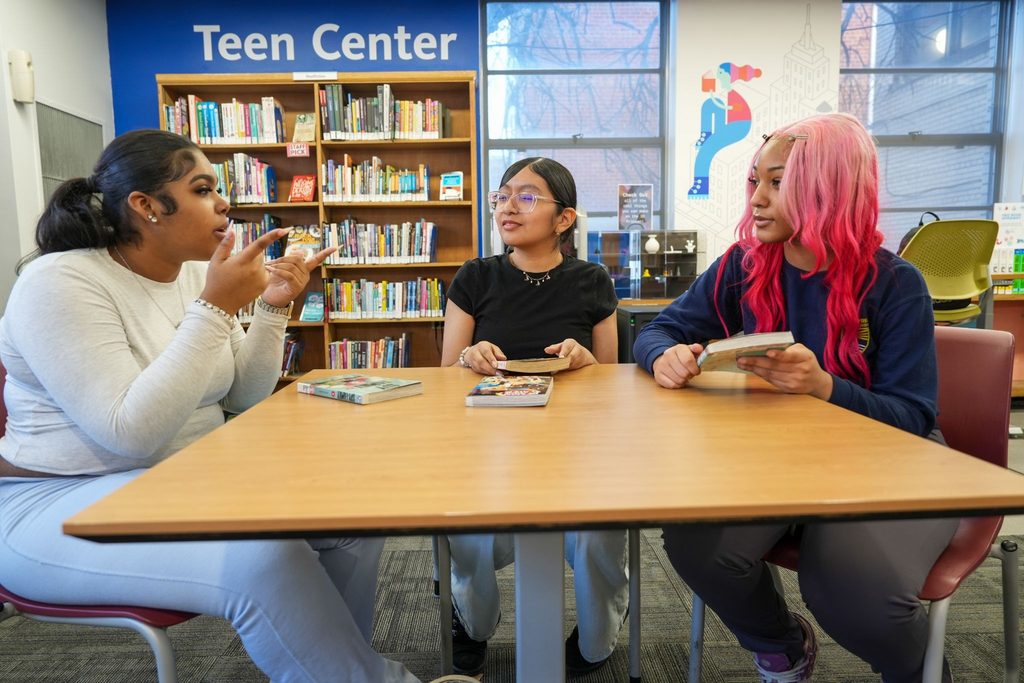
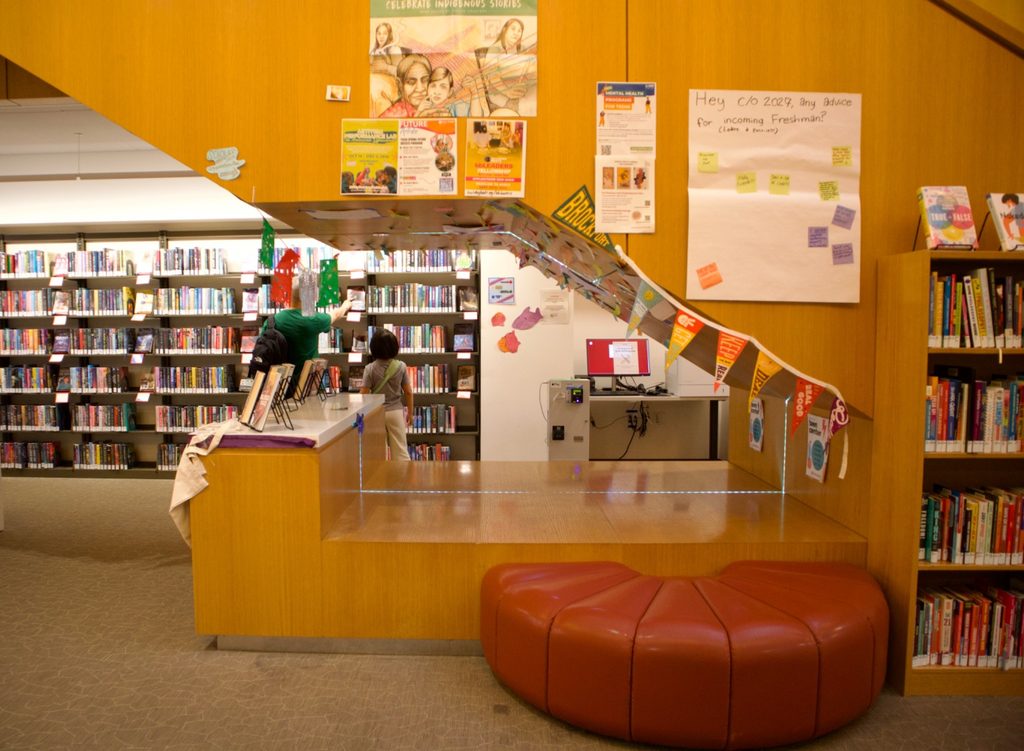
At a recent visit to the branch’s Teen Center – one of 23 teen centers among the 92 public libraries in New York City – some students were on laptops in the study rooms or absorbed in a book, while others were huddled together planning a highly anticipated Teen Takeover – an afterhours Halloween themed party at the library full of dancing, games, costumes, karaoke and more.
Teens were also hanging out in the colorful lounge and talking to each other. Casper P., who was crocheting as she caught up with a fellow patron, has been coming to the Teen Center once a month every Friday. “It’s really nice, it’s very welcoming,” she says. “It’s so nice where you’re allowed to be yourself without it being high school, because high school sucks.”
One of the regulars is Yassin Khalifa, a rising senior at Brooklyn Tech, a public high school specializing in science, technology, engineering, and mathematics in New York City. He says he can’t remember what he did with his time prior to visiting the branch, only that he would often go home directly from school.
Yassin was visiting the branch during the 2025 school year with the intention to hunker down and study for Advanced Placement exams when he stumbled onto its music studio. Curious to take a look, he inquired about how to use the equipment, and since that day, the library has transformed his life.
“I can come here and know there is a safe space waiting for me that I can spend a few hours in each day to relax, decompress, and also do the things I love most in life,” he said.
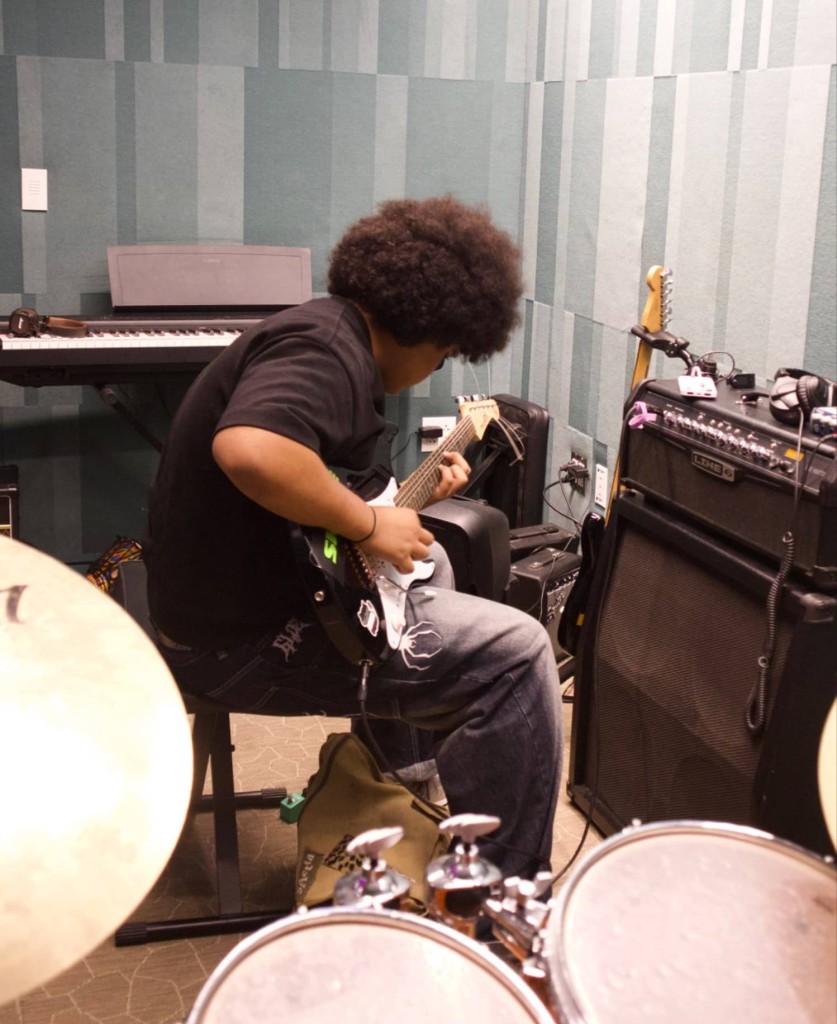
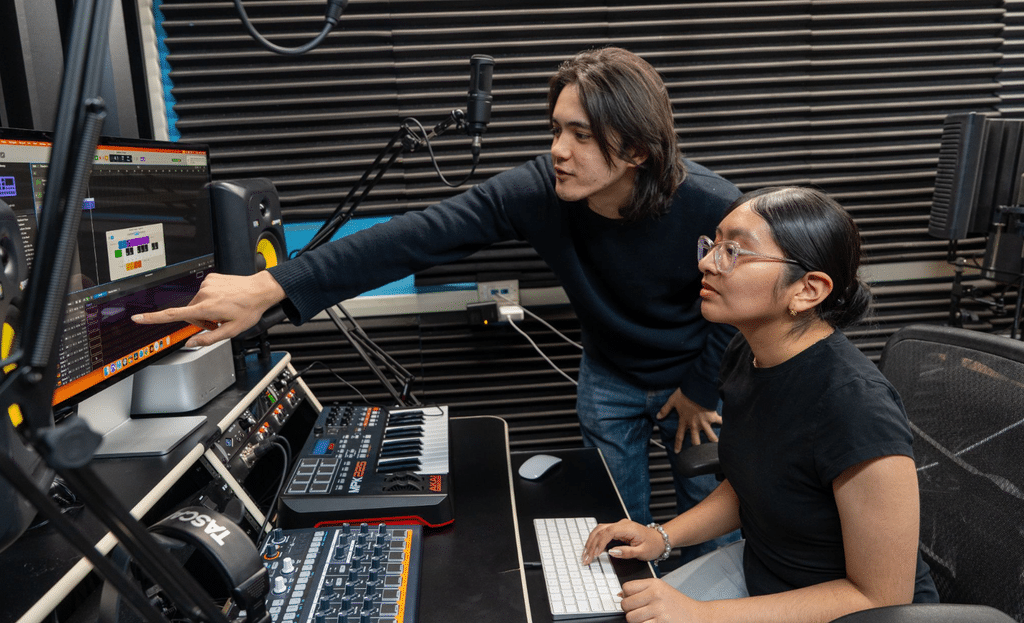
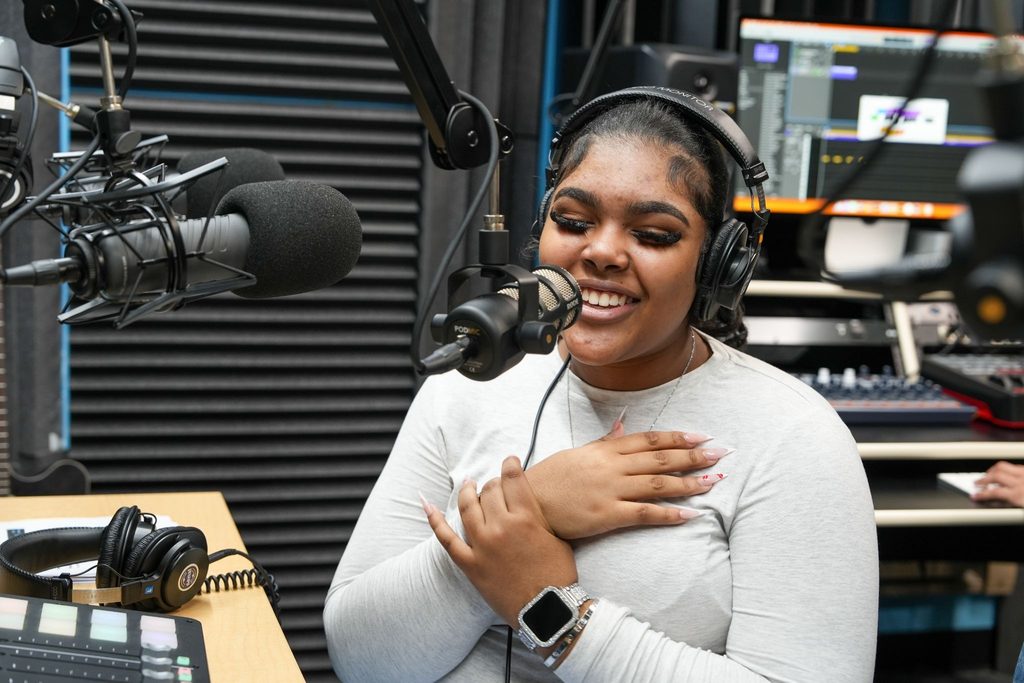
Among other things, he was able to explore his passion for music at the Teen Center’s recording studio.
Besides a recording studio and one of the largest collections of books in the system, the Teen Center sports a media lab where patrons can record podcasts, digital tools including a 3D printer, consoles for gaming, study rooms and academic support, workshops and opportunities to participate in event planning.
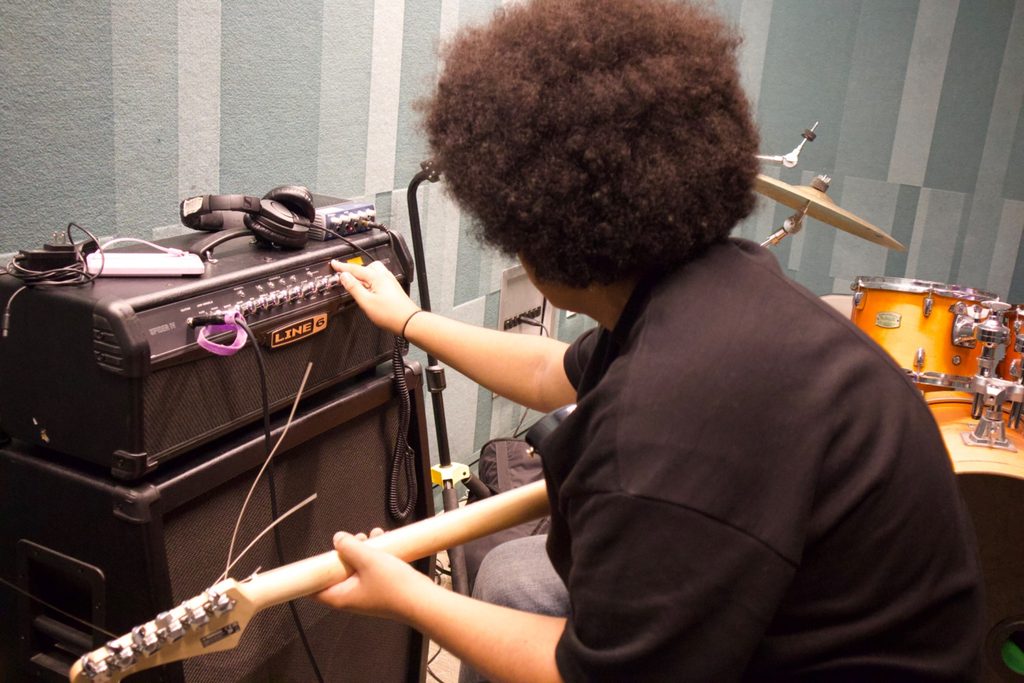
His time at the library also helped Khalifa develop strong friendships with other teens, and he has found trusted mentors in the studio’s music teacher and other adults. “I have people who support me, people who do care if I ever need to talk to someone,” he says.
An essential “third place” for teens to gather
The city’s public libraries offer a wide array of free resources for all age groups, funded by a mix of private donations and public funds. After years of budget cuts and battles, Mayor Zohran Mamdani announced in May a $31.7 million boost in the baseline budget, bringing total funding for the 2027 fiscal year to $530 million – a sharp reversal of fortune.
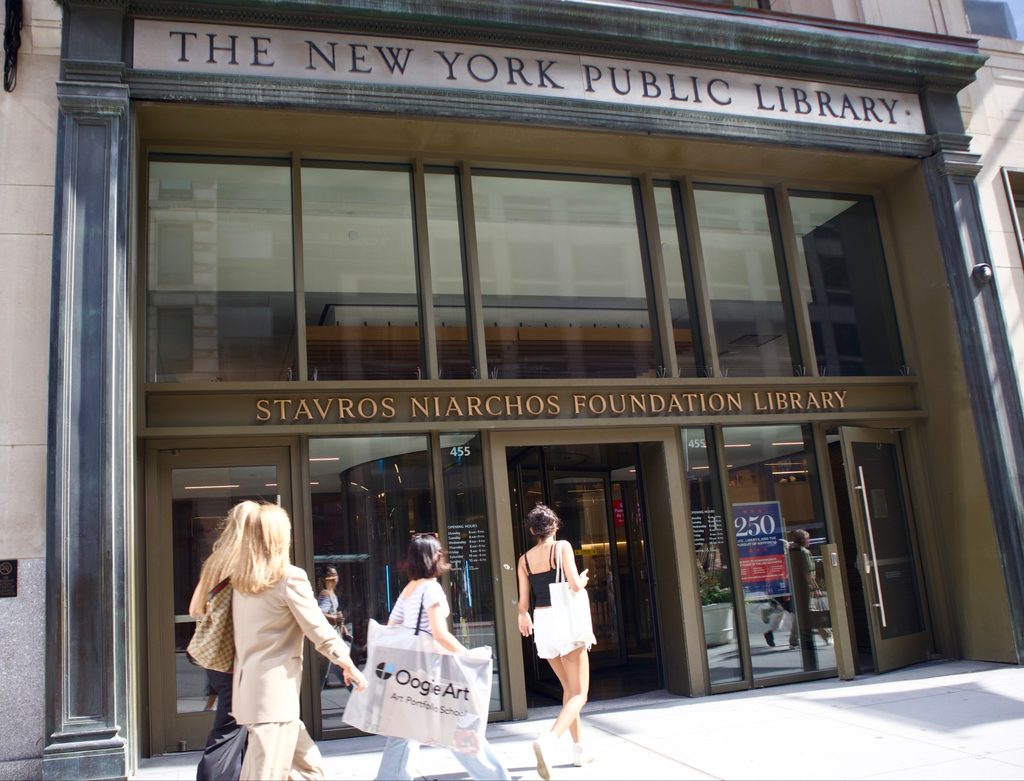
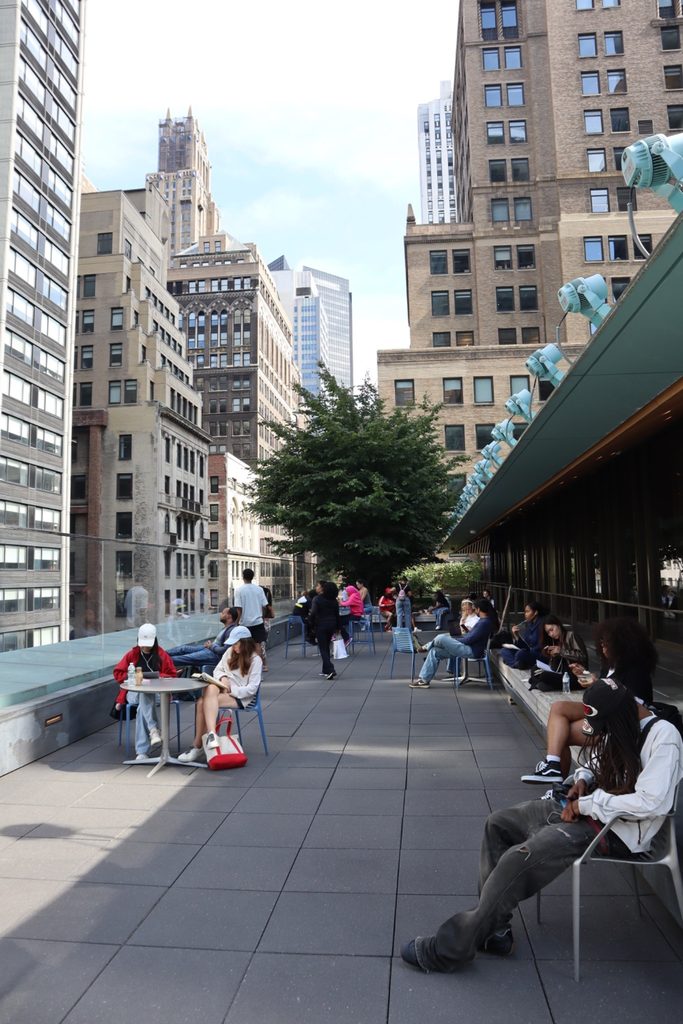
Located on the southeast corner of 40th Street and Fifth Avenue, the SNFL is the city’s largest library branch, comprising eight floors, including the only free, accessible terrace in Manhattan. For adolescents across the city, the branch’s Teen Center is the biggest draw, offering new technology that other branches don’t tend to have. For its young patrons, it serves as an essential third place, an informal space to gather outside of home and school.
Free, accessible third places have long held significant importance in society, but their role is arguably more important today as technology has made it more challenging to make real-life connections.
The library’s expansion comes during a time when so-called third places have been disappearing across the United States, even though they have become increasingly important to today’s children and adolescents.
Young people in Gen Z (born from 1997 to 2012) and Gen Alpha (born from 2010 to 2024), in particular, contend with high rates of loneliness, depression and addiction to screens. The COVID-19 pandemic exacerbated their feelings of isolation. Studies show that kids who were in high school during the pandemic are less prepared for college, socially and emotionally, with first-year college students scoring significantly lower on “emotional control and expressivity.”
Among the adults overseeing the Teen Center is Ricci Yuhico, managing librarian for youth services at the branch, who describes working with adolescents as a “labor of love” that requires shared values among librarians. She says consistency and making sure every teen who walks in feels welcomed and accepted by greeting them, making eye contact and acknowledging them go a long way.
Part of Yuhico’s job is to teach teens with different personalities to be in community with each other and instill soft skills that they may not get taught at home or school. In her nearly 10 years working with youth, one of the most rewarding parts of her job is watching teens form friendships and nurture them outside the library.
“The great, incredible thing is they’re making friends that they wouldn’t have made in school because they met here — the new third place that they have come to,” she said.
“Teens are used to being told where they shouldn’t be and what they shouldn’t be doing without being offered spaces specifically to them,” said Andreas Dracopulos, co-president of the Stavros Niarchos Foundation, in an email. “SNFL’s Teen Center and its wonderful librarians have created a warm and welcoming public space that teens feel belong to them — not because we’ve said it does, but because they’ve made it so by showing up and enthusiastically embracing it.”
Grappling with family issues and loneliness
In a recent national poll from Hopelab, teenagers nationwide reported loneliness, family problems, schoolwork, and worries about debt, along with academic pressure and having no clear path, to be the top issues affecting their mental health. Other problems they reported include a tough job market, affording basic necessities, climate change, friendship issues and racism.
That’s where the library comes in.
Such in-person socializing is especially important since a 2023 study by The U.S Surgeon General Advisory found social media use by teens exceeds three hours a day, which can double the risk of severe anxiety and depression.
Social media also offers easy exposure to harmful content involving self-harm, suicide, and ‘perfect’ body image issues that can result in eating disorders.
A recent study published in Technology, Mind and Behavior, in fact, has shown decreased use of social media for extended periods of time leads to children and adolescents feeling happier, more positive and less anxious.
At the library’s Teen Center, Yassin feels right at home. Channeling his creativity into music, he has produced so much music he has lost count – and with the help of the branch’s music studio and its teacher, he hopes to one day pursue music production professionally. He has also explored photography and acting, borrowing equipment free of charge and collaborating with fellow teen patrons.
Yassin also visits the branch to take a break from the looming pressures of having to apply to colleges and decide what he wants to do for the rest of his life. Sometimes he spends so much time in the music studio that he needs a break. “Sometimes it’s really nice when I am trapped in (the music studio) for hours to go to the roof to just breathe,” he said. “It’s really relaxing up there.”
His experience is exactly what the library hopes to encourage – helping teens transitioning into adulthood build a path to a successful future. As Brandy McNeil, deputy director of the NYPL’s branch programs and services and manager of SNFL’s Pasculano Learning Center, puts it, “Our whole goal is to empower people. How do we empower the youth to be able to take advantage of their own future?” McNeil said.
Libraries across the city, he notes, offer teens more than just books; they offer patrons the guidance they need to succeed, including English classes, help with job applications, college application support, tech education, housing and food resources, and much more.
Parrott was reminded of how important these resources are a few years ago when the cashier at a Manhattan sandwich shop approached him.“You don’t recognize me, but you helped me with my resume a couple of weeks ago and that is how I got this job,” the cashier told him.
Helping people is so at the core of every librarian’s mission that it’s easy to move on to the next person and forget how much impact you make on someone’s life, Parrott said.
As for Yassin, he would like a future where teens feel less pressure to be perfect, but he finds hope and deep gratitude for places like the library’s Teen Center.
“I’m incredibly grateful for the people here and the resources that they provide,” he said. “The people here have changed my life for the better.”
Yesenia Barrios is a freelance writer in New York City who specializes in mental health issues and immigration.
The name “MindSite News” is used with the express permission of Mindsight Institute, an educational organization offering online learning and in-person workshops in the field of mental health and wellbeing. MindSite News and Mindsight Institute are separate, unaffiliated entities that are aligned in making science accessible and promoting mental health globally.


Author

Related Articles
‘This Is the First Time I’ve Touched Grass’: Inside the U.S. College Campuses Pioneering Social Prescriptions
As a mental health crisis overwhelms college students and counseling departments, universities are creating programs that prescribe nature, arts and belonging.
Go Fish! The Rise of Youth Social Prescribing
A UK-born healthcare movement that “prescribes” community activity to struggling young people is spreading to Canada, Australia, and the US.
‘I Had to Get My Mind Right’: The Challenges to Loving Relationships After Being Laid Off by DOGE
After the federal firings, Black women felt betrayed and disillusioned. One longtime federal worker learned from experience the importance of community — that people who have experienced collective trauma need collective resilience.