
Before ‘The Pitt,’ Chicagoans Fought for a South Side Trauma Center. This Surgeon Now Runs It
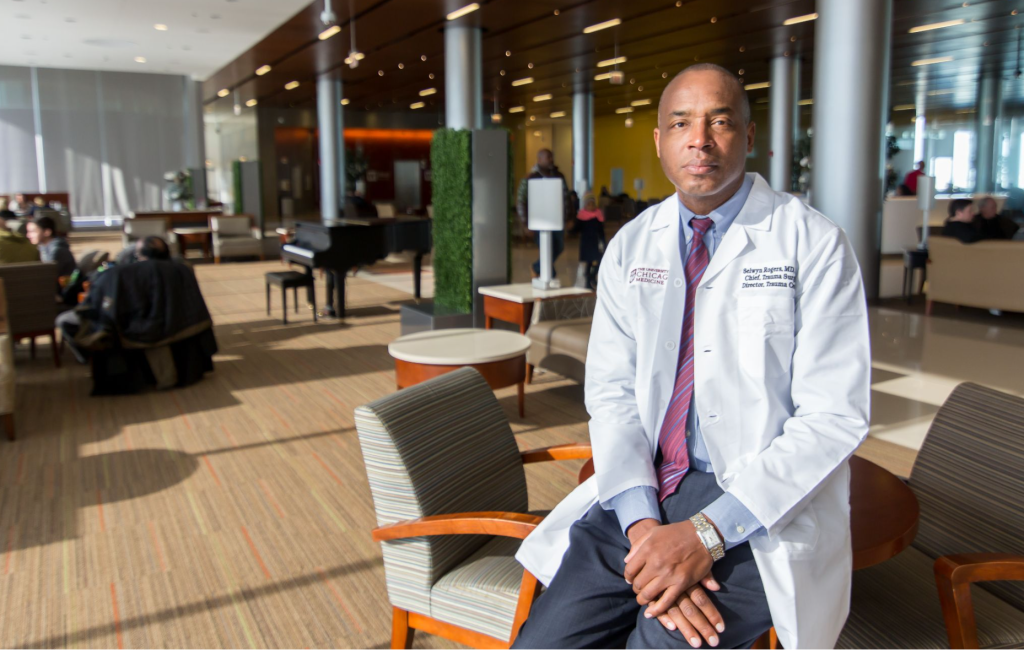
Dr. Selwyn Rogers, Jr. leads the South Side’s only Level 1 trauma center. He wants to go beyond treating shooting victims to help heal the gun epidemic.
A few weeks ago, an annual picnic held by the former residents of the Robert Taylor Homes ended in a volley of gunfire.
What started as an end-of-summer celebration at Washington Park on Chicago’s South Side turned into chaos around 11:30 p.m. as shots rang out and sent 200 people scrambling. Minutes later, shooting victims started appearing at the University of Chicago hospital across the street.
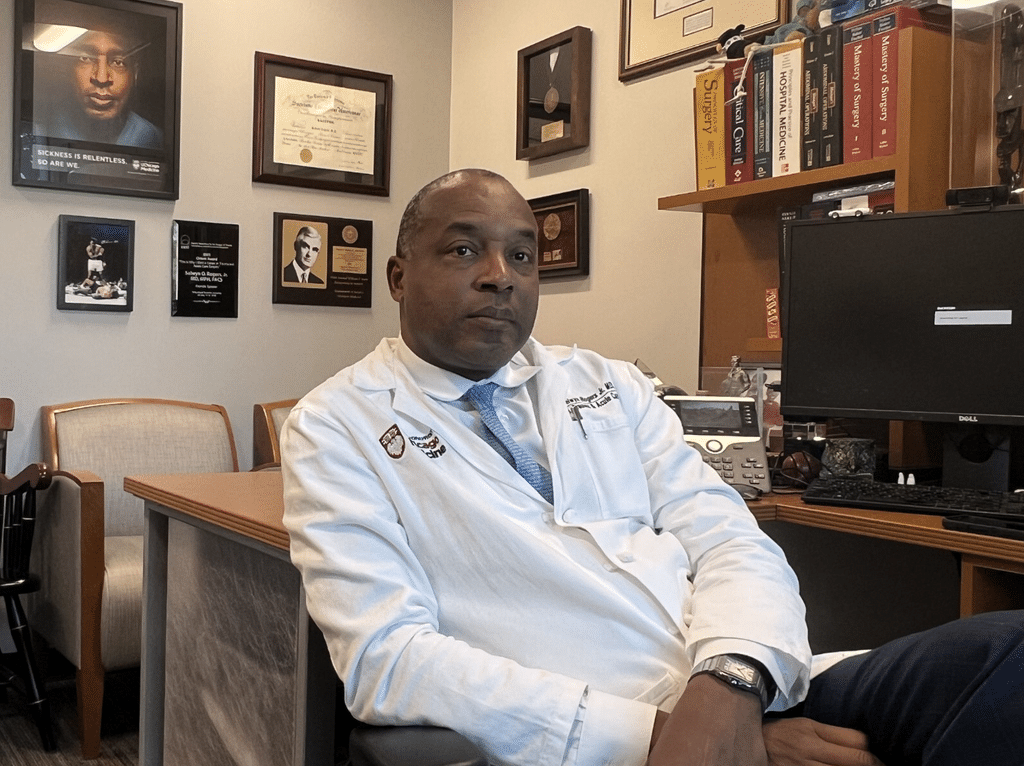
Ready to receive them that night was surgeon Dr. Selwyn Rogers and his corps of trauma specialists.
“Only one patient died that night, partly through the grace of God, but also our skill, expertise, and the fact that most of the patients didn’t have immediately life-threatening wounds. All it takes is one bullet in the right place and you die,” Dr. Rogers told me in an interview at his office. “With a semi-automatic weapon you can shoot 20 people in three minutes with one pull of the trigger. And those bullets are indiscriminate; they don’t have a target; they just spray. My team, sadly, are very well rehearsed.”
A decade ago, this mass shooting would’ve almost certainly ended much worse: more injuries, lost limbs or even more fatalities. Until 2018, the South Side, a neighborhood of roughly 1 million people – nearly 80% of whom are Black or Latino – had no level 1 adult trauma center. People with traumatic injuries would be forced to travel eight to 10 miles across the city to the nearest trauma center, losing valuable minutes when seconds could mean the difference between living or dying.
Back then, I was a reporter for DNAinfo Chicago, which attempted to report on every homicide in the city. I’d spend my early mornings at the morgue then on the phone with the Chicago Police Department categorizing every shooting that occurred over the last 12 hours. I would write hundreds of 200-word blurbs with little more than the age, sex and block where the victim lived. When I did my job well, I’d sit with family and friends who would color in the details of who this person was before they became a statistic.
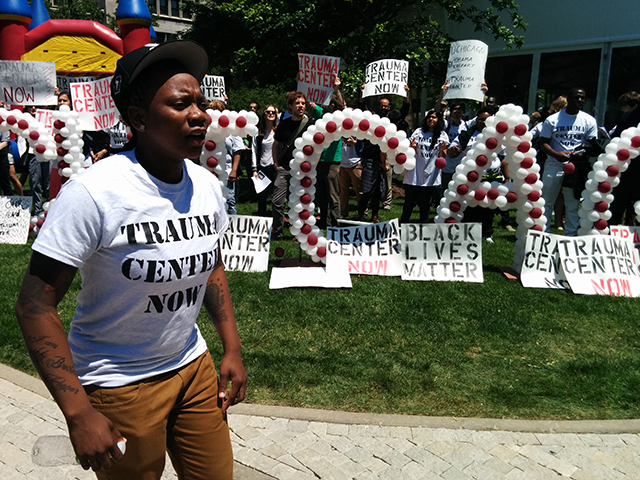
As we reported on these deaths, students and activists protested and held sit-ins demanding the University of Chicago open a trauma center. When officials at the university finally acquiesced after five years of pressure, Rogers was tapped to relocate from Texas and lead the transition.
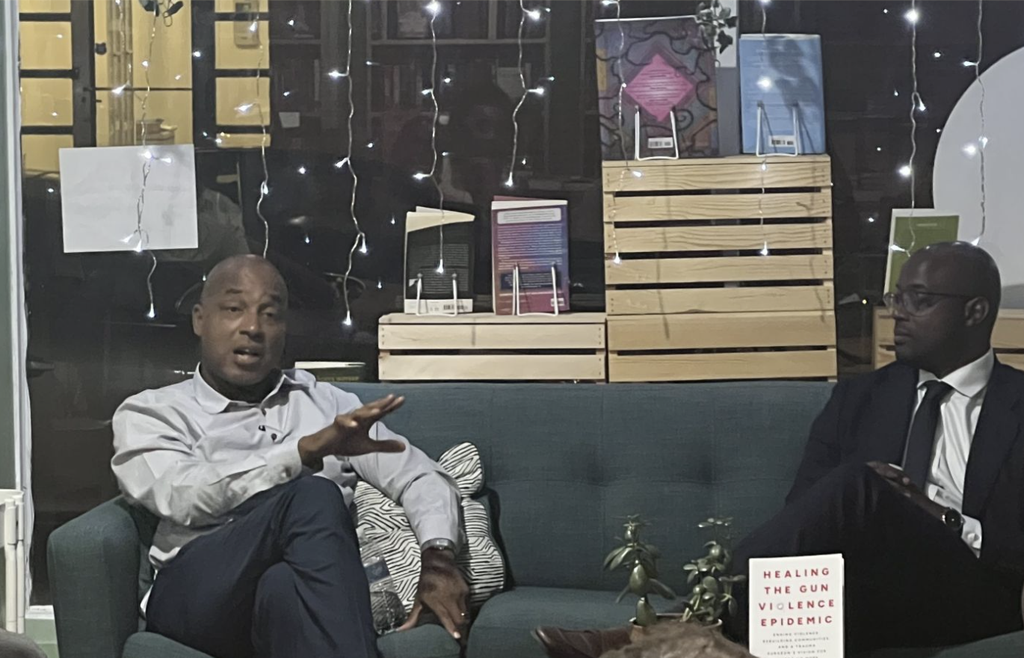
He has spent the last eight years leading the unit, which has saved hundreds of lives. He also has had the grim task of having to relay the news of a loved one’s death to hundreds of other families. The experience led Rogers to write “Healing the Gun Violence Epidemic,” a book that explores his vision for how to address the violence, rebuild communities and restore hope.
As the hospital’s public relations manager leads me through the maze of turns to his office in the hospital, I picture the surgeon and noted jazz fan placing a needle on a Miles Davis record, and sneaking in some much-needed sleep on an uncomfortable office couch. Instead, I find him coffee’d up in his swivel chair listening to the “Old Kanye” of pre-2011 vintage.
This interview has been edited for clarity and brevity.
What called you to this work?
That’s a long answer to a short question. The best way I could summarize it is I grew up in a household of chaos — early childhood divorce. With a stepfather, who was a good man, but a bit of a philanderer. And a strict Caribbean mother who was in her own way violent, but a tiger mom willing to protect her cubs at all costs. There was a lot of arguing, a lot of chaos, a lot of waking up in the middle of the night to books being thrown around and various other altercations. I grew to hate chaos. For me, becoming a trauma surgeon, with lots of twists and turns along the way, was my way of remaining faithful to a calling of running into chaos to control and create order.
I had been a trauma surgeon in Boston, Nashville, Philadelphia and immediately before coming to Chicago, I was chief medical officer at the University of Texas Medical Branch in Galveston, a largely administrative role. In 2016, during the Hillary Clinton (versus Donald Trump) election, I was living a pretty comfortable life with very little chaos. When I was asked to look at this job of starting a Level 1 trauma center here, my first reaction was: “What do you mean there was no trauma center near the University of Chicago?”
I’d actually never given it any thought. I’d never seen the campus. I’d been to Chicago lots, but I’d never stopped to think there was no adult trauma center on the South Side of Chicago for 27 years. It never crossed my mind. But the reality of righting an injustice, the opportunity to build it from the ground up, to use my crystalized knowledge of a quarter century to put in my heart and soul and mind to standing up a Level 1 trauma center was compelling and became a reason for my existence.
I had done a couple significant things over the course of my life up until that point and I wanted to do something of impact. This was too compelling not to say yes.
The theme of your book is how to address gun violence in a way that reduces its hold on American lives. How do we do that?
Some would say “what other countries have done,” which is pretty simple: get rid of guns, the agent. But the second amendment has the right of citizens to bear arms in a militia and that has extended in sometimes perverse ways so that militia now means my individual home, school, church, supermarket. The perversity of that interpretation of the second amendment has left there to be more guns in America than there are people. I know from a public health perspective that victims of gun violence are agents in a complex web of multiple factors, and that there are both risk factors that put people at risk and protective factors that protect people from that same risk. Knowing that made me want to think about risk reduction strategies and not simply focus on the gun.
It’s easy to demonize the person who uses a firearm as a form of power over another, but we don’t talk about another form of gun violence, which is actually more pervasive than mass shootings, more pervasive than community violence, more pervasive than domestic violence, which is suicides. More Americans die by suicide — 55% depending on the year. Year over year, more than 20,000 Americans die at their own hands with a firearm that they legally own, but that doesn’t get reported often because there’s not a desire to have a lot of mass media about suicides. So it’s also very private.
If you look at a 30-something-year-old human who’s otherwise walking on the street well one day and then you hear they’re no longer alive, the odds are that was a suicide. If you read an obituary of a 65-year-old white guy in rural America and you don’t have any details, but you know its a closed casket… more likely than not, that was a suicide.
Because it’s not in the public consciousness, we don’t link gun violence to those deaths, as we do community violence or mass shootings, which are appropriately sensationalized.
Why is it important that there is a trauma center here on the South Side?
I’m going to make an old reference to the show M*A*S*H. M*A*S*H was a military hospital close to the line of war in Korea. In it, you saw trauma surgeons, nurses, chaplain, the entire team taking care of victims of gun violence related to the war. During the Vietnam War, it became very clear that for people who are the most severely injured, one of the biggest opportunities to save their life is rapid access to a trauma center.
You have someone who is bleeding to death from a hole in an artery. An artery loses blood, if it’s fully open, about five liters a minute. It doesn’t take very long to bleed to death. Time is tissue. Time is life. The faster you can get to a trauma center to stop the bleeding and reverse the process, the more likely the person is to not only survive but also have less morbidity, be it a loss of a limb or other complications.
The University of Chicago closed their trauma center in 1989. Then in 1991, Michael Reese Hospital closed their trauma center. And there was no remaining trauma center in proximity of the South Side.
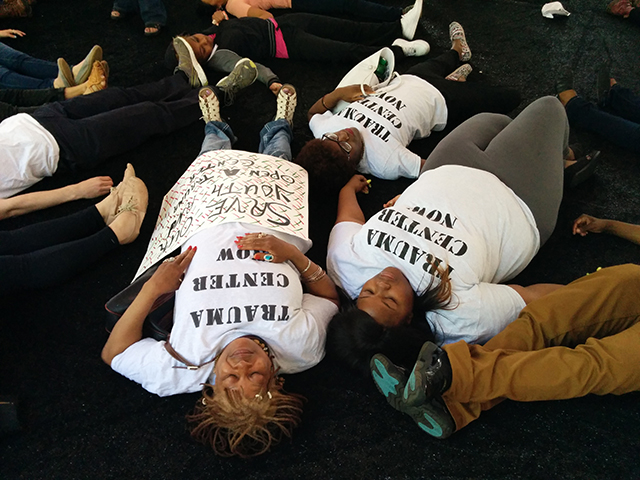
Damian Turner was an 18-year-old Black male who was a social influencer, an advocate for change around rent control and other social issues on the South Side. He was shot four blocks from where we’re sitting right now and because we weren’t a trauma center, he was whisked to Northwestern, where he arrived dead. The next day — August 15th, 2010 — his mother said “If the University of Chicago had a trauma center, my son would still be alive.” And that got picked up by the New York Times.
Damian Turner had led an organization called FLY, Fearless Leading by the Youth. After his death, instead of advocating for all the other things they had been advocating for, they focused on one and one thing only: “Trauma Center Now.” A coalition of faith leaders, students, faculty, community members coalesced around the idea of a trauma center on the South Side, specifically here at the University of Chicago. That journey took another six years. I got recruited in January of 2017 and took a year-and-a-half to build a team, do training, simulation, planning, and build a new emergency department in order to reopen the trauma center here on May 1, 2018.
How does tending to a gunshot victim affect the mental health of the trauma team?
The fact is we’re no different than anybody else. We are human. We have families. We have friends. We have kids. We have pets. We have people we care about. We have hopes, dreams, aspirations just like anybody else. In the context of the patients that we serve, the community that we serve, we’re often proximate.
Being in proximity, how can you not vicariously suffer trauma? That vicarious trauma is holding a mother after you just told her her son has died, then she shares a story that this is not the first son, this is the third son. Telling a 14-year-old boy who got shot in the back and survives that he’s now paralyzed. That he got shot on the basketball court and he can never be on that court again to play basketball, and he turns to you and says “can you put my tennis shoes on.” The same tennis shoes that will never take a jump shot again.
It’s hard not to process that and feel sorry and ask yourself: “Why did this happen? Why does it keep happening?” We in the medical community call that secondary trauma or vicarious trauma and that does take a mental health toll. I’ve been doing this for 35 years. I’m not going to say I’m immune. In fact, the day that I no longer care is the day I retire because it’s caring that propels me to come back.
In your book you describe the way you speak with family members of gun-shot victims. What’s your process like going into that moment?
The process of giving the worst news of someone’s life – that their son, daughter, brother, cousin, best friend is now dead: I know it’s going to be heavy. This is someone I’ve never met before. Often I’ve gone just minutes before from doing everything humanly possible to bring this person back from the grips of death and failed.
I have to change my mindset from that intense therapeutic, aggressive mindset. It’s kind of like people who do the biathlon. They ski for distance, so they have to get their heart rate up in order to ski fast, and then they have to slow down their metabolism and heart rate in order to shoot a stationary target.
You have to rev up aggressively to do the trauma-care piece and lead the team in a choreographed, rehearsed way that at times seems seamless and at times chaotic because of the nature of injuries that you don’t fully understand. But when the outcome is death you have to change your mind. You have to reset.
What I typically do is I pause. It doesn’t take a long time to pause. You reframe your mind to what you’re about to do: walk into a room, go to people that you’ve never met before and look them in the eye, establish trust and tell them the worst news that they never wanted to hear. And then do that in a way that conveys two things: we did everything possible and yet still it was not possible to save their life. I do that with simple words because people often either suspect the worst, are praying that’s not what you’re going to say and actually don’t hear what you just said.
So I say “your loved one has died.” Then I stop. I actually don’t say anything else and I wait for their reaction, wait for their question. I’m not anticipating what they’re going to say because I’ve been doing this for 30 years. I can’t predict. I’ve had everything from anger to cursing to “go back, you can save my child,” to silence. Then they get up, walk out and I never see them again. You can’t predict how people will grieve.
You reference after these moments, coming back here and playing Miles Davis’ Kind of Blue. How does jazz help you at these times?
There’s joy all around us. In my book I talk about pathological optimism. I love people. I love relationships. I love the quirky things that my three sons or my wife tells me. Or the times they just keep me so humbled to be in their presence and to be loved unconditionally. For me, jazz is something I’ve been listening to for some 60 years now.
I was 10, listening to George Benson. I was like “this is some good stuff.” One of my college roommates was a huge jazz fan and had all these jazz classics. Even back then, I remember Miles Davis struck me. Kind of Blue I would just play over and over again. That album was released in the summer of 1959, seven years before I was born and still resonates to this day. Best-selling jazz album of all time.
What’s the magic of Miles Davis or Bill Evans? What’s the magic that makes music timeless? After 67 years, that album still finds a way to touch your brain, to touch the essence of who I am. Something about it is very calming. A guy that I never met still touches my life. That is the power of human connection. I love the music because it makes me feel a certain way because I have all these memories tied to it.
If Miles can do that today, how am I touching people today? How am I showing up when I tell the mother of the father or the cousin or the brother that their loved one is dead? Can I remain true to my calling and do that in the way I want it done for me or for my kid if I was on the receiving end? This is a form of fellowship.
How is mental illness affecting our views and our relationship with guns?
In two ways. Despite how easy it is to demonize the mentally ill, the mentally ill are not committing the vast majority of community violence. Someone with schizophrenia or manic depressive illness is no more dangerous than any other person walking on the street.
Having said that, social disconnection, depression, anxiety is increasingly pervasive in our society. We are less deeply connected now than we’ve ever been.
When I was a kid growing up in the Virgin Islands, if I spat on the street a mile from my house, my mother would know about it before I got home. I give that as an extreme example, but there was a community of people who looked out for me and saw me. Some people don’t even know who their neighbors are across the way. It takes a village to raise a child. How many of us have villages these days?
When people are challenged with depression or anxiety, it used to be you’re taken care of by a village. Who takes care of you now, especially on the South Side? There’s a dearth of psychologists, a dearth of psychiatrists and even greater dearth of culturally dexterous psychologists and psychiatrists. The needs from a mental health perspective are huge. On top of that, hurt people hurt people and I don’t mean physical hurt. I mean emotionally, psychologically, sexually abused and neglected. All those are hurts and they manifest in dysfunctional ways and sometimes that eventuates in gun violence.
Mental health is just one part of health. When people have been impacted by loss, adverse childhood experiences, trauma, disinvestment in their communities, deprivation, structural violence, racism, discrimination – those are all things that add up to the maelstrom that we see in our society.
What’s the connection between substance use and gun violence?
The after-effects of a bullet going through your body or even a bullet going near you and not touching you, profoundly messes with your mind. How could it not? Even if you physically recover, you always have this mindset: Am I lucky or am I unlucky? Am I going to get shot again? My friend that I was with died and I’m here, so I have survivor’s guilt.
When a soldier sees something horrific or they’re injured — after the event, they have hypervigilance, anxiety, nightmares, a constellation of symptoms that can really disturb their sense of self and their connections to other humans. That’s post traumatic stress disorder.
But when a 16-year-old gets shot and they survive and go back to school and the same neighborhood, it’s not really post-traumatic stress because the stress reaction hasn’t gone away. They’re still living in the same community, the same environment.
The reason why many people who are victims of violence ultimately have challenges with substance abuse is that they’re using that substance – be it weed, alcohol or other drugs – to treat how they are feeling.
The name “MindSite News” is used with the express permission of Mindsight Institute, an educational organization offering online learning and in-person workshops in the field of mental health and wellbeing. MindSite News and Mindsight Institute are separate, unaffiliated entities that are aligned in making science accessible and promoting mental health globally.


Author
Related Articles
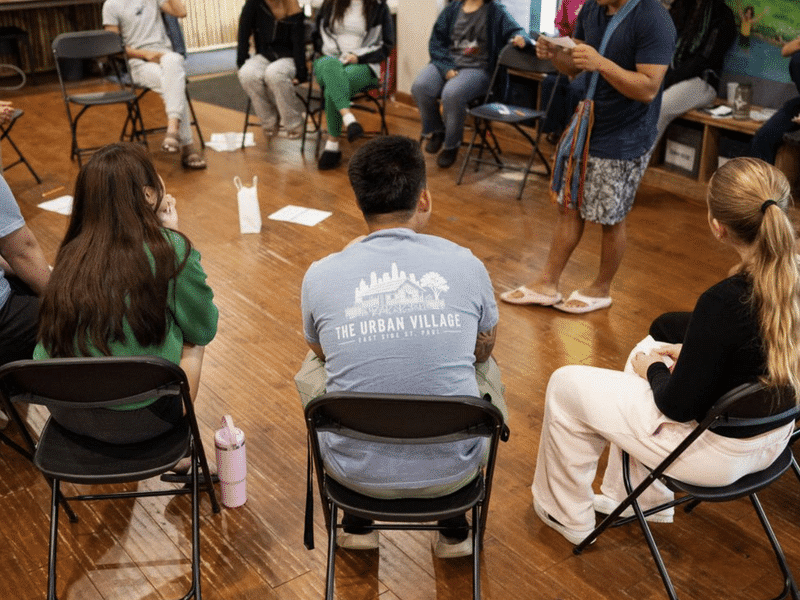
‘I’m Sticking to My Sobriety’: Minnesota’s Karen Teens Navigate Two Cultures and an Opioid Crisis
In St. Paul, community collaboration is the ‘secret sauce’ helping the fight against opioid addiction among Karen and Karenni youth.

As Third Places Disappear, NYC Teens Claim a Fifth Avenue Library as Their Own
The remodeled library’s Teen Center helps youth combat isolation and loneliness by connecting with each other
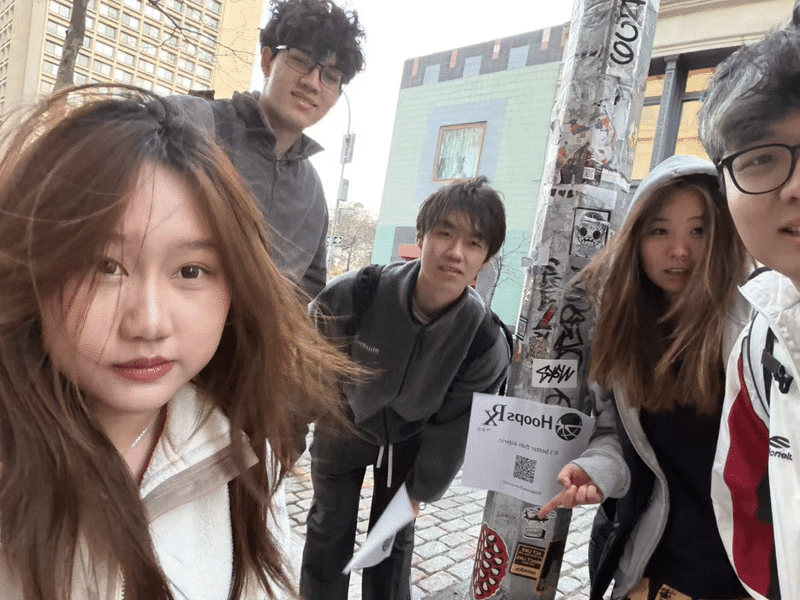
‘This Is the First Time I’ve Touched Grass’: Inside the U.S. College Campuses Pioneering Social Prescriptions
As a mental health crisis overwhelms college students and counseling departments, universities are creating programs that prescribe nature, arts and belonging.