
Medicaid Work Rules Are Coming. States Just Got a Little More Time.
The Trump administration announced a 6-month Medicaid work requirements delay, giving states until July 1 to enforce rules projected to cut 5.3M from coverage.
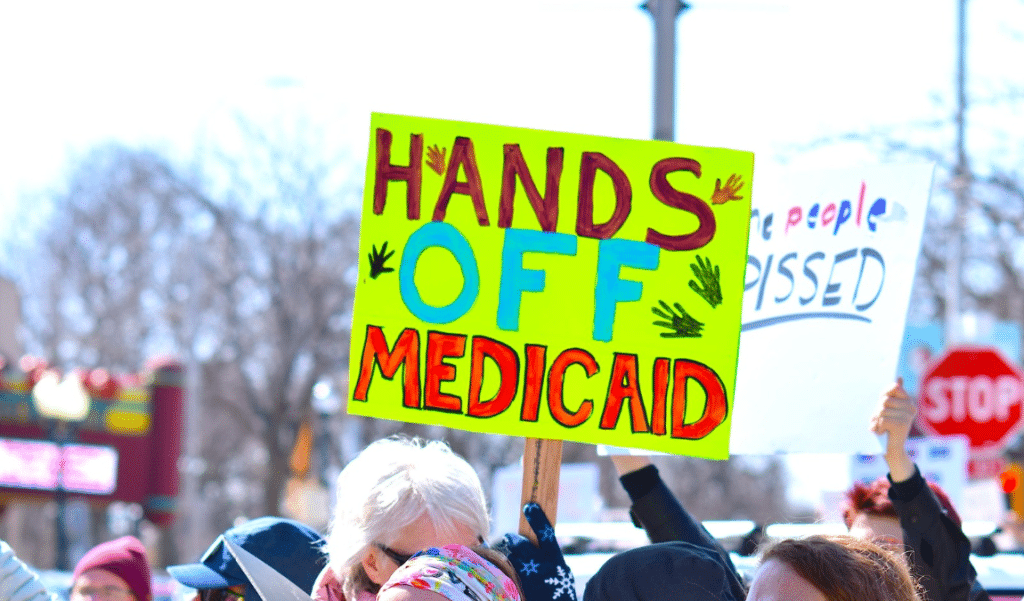
The Trump administration is giving states more time to prepare for a controversial new rule that requires people enrolled in Medicaid to work in order to use the federal health insurance program for people with low incomes. But the delay doesn’t change the core policy or the likelihood that it will eventually cause millions of Americans to lose their health coverage – unless the cuts are stopped by resurgent Democrats.
Following their sweep in the midterms, Congressional Democrats said a top priority will be reversing the cuts to Medicaid and food assistance passed by Republicans in the last Congress. The delay will give Democratic leaders six months to try and pass legislation that accomplishes that. Democratic House leader Hakeem Jeffries vowed to hold a vote on reversing the work requirement and other Medicaid cuts in the first 100 hours of the new Congress assuming power on January 3. “We will keep the pressure on until these cuts have been completely and permanently reversed,” Jeffries wrote on his X account after the administration announced the six-month delay.
“Today’s news lets states delay the harm,” Sarah Lueck, vice president for health policy at the Center on Budget and Policy Priorities, wrote on social media after the announcement.
The first state to roll out the new Medicaid work rules – Nebraska – has already seen around 1,100 people lose their Medicaid coverage, not to mention at least one elderly man with diabetes, a severe lung disease and cancer being told to go to work even though he was in line for surgery.
The national impact is likely to be far greater. The Congressional Budget Office estimates that the work requirements alone will leave 5.3 million more people uninsured by 2034 and save the federal government $317 billion – part of a plan to cut Medicaid by nearly $1 trillion.
The so-called “big, beautiful bill” passed by Republicans last year that created the tough new rules exempted people with a “disabling mental health disorder“ or substance use disorder from having to meet the work requirement. But many mental health advocates have worried that people with moderate or mild mental health conditions may have a difficult time completing the paperwork required to prove they are working or volunteering.
“This 6-month extension likely means that fewer people with mental health conditions and substance use disorders will lose Medicaid coverage than if it had not been granted, “ Tim Clement, senior vice president of policy and advocacy at Mental Health America, told MindSite News in an email.
He noted that while the law requires states to use claims data or other information it already has to exempt people with mental health conditions and substance use disorders from work requirements, “many states needed more time to implement this requirement.”
The guidance issued Friday allows states that aren’t ready to enforce the requirements to take a six-month delay without federal penalties. The rules are still set to take effect on January 1, and states can begin checking whether beneficiaries meet the requirements. Those opting to take advantage of the grace period won’t be liable for enforcing the rules until at least July 1.
The pause is a significant departure for an administration that has spent months justifying the new requirement, a cornerstone of President Trump’s tax and spending bill, which the Republican Congress passed last year. State officials and health care advocates have repeatedly warned they don’t have enough time to set up systems to administer the rules and that eligible people could lose coverage because they’re confused about what they need to do to maintain their eligibility.
The rules apply to many able-bodied adults under 65, who must work, volunteer, or attend school for at least 80 hours a month to maintain their Medicaid coverage. The administration says the requirement will promote employment, eliminate waste, and ensure benefits go to those who actually need them.
Pressure to slow the rollout has been growing. Last month, five Democratic governors wrote to Health Secretary Robert F. Kennedy Jr. asking him to delay the launch because state agencies aren’t ready. A federal judge has also stayed part of the administration’s rules for the very frail, warning the policy could accidentally cause some people to lose coverage.
The name “MindSite News” is used with the express permission of Mindsight Institute, an educational organization offering online learning and in-person workshops in the field of mental health and wellbeing. MindSite News and Mindsight Institute are separate, unaffiliated entities that are aligned in making science accessible and promoting mental health globally.


Author

Related Articles

The Cost of Keeping Teen Social Media Lawsuits Quiet
Inside the confidential payouts used to settle teen social media lawsuits ahead of trial, and what those deals mean for youth mental health accountability.

SNAP Cuts Make it Harder for Parents to Feed Their Kids Healthy Food
SNAP cuts are making healthy food less affordable for low-income families, putting children’s health at risk.

A Teenage Boy in Delhi Asked Why Period Pain Didn’t Get the Same Care as his Broken Toe
Aadvik Jain is challenging period stigma in India through Team Period, educating young people and expanding access to menstrual health resources.
