
In Teens, Social Anxiety Often Looks Like Anger
A study finds that some teens’ aggressive behavior may be due to social anxiety, not straightforward reactivity.

Greetings, MindSite News Readers.
In today’s Daily, a new study finds that social anxiety in adolescents doesn’t always look like shyness. In other news, one year after two unhoused children died while asleep in their family’s van, a look at whether Detroit’s promised improvements to its shelter system were actually rolled out.
Plus, if young adults’ attention spans are diminished to the point that even film students struggle to finish a whole movie, how should professors teach them?
But first, Aura V became the youngest-ever Grammy winner this week when “Harmony,” her collaboration with her father Fyütch, won the award for Best Children’s Music Album. In his acceptance speech, Fyütch, whose name is Harold Simmons II, spoke to the power of music to shore up a brighter collective future:
Children’s music is more than a genre. It is an intention of artists who have dedicated our crafts to educating, entertaining, and empowering the next generation, which is our highest calling – to care for our children globally. And I don’t think I’m being controversial when I say this: We are failing our children. Any time we vote against feeding, protecting, clothing, and educating our kids, we are condemning our collective future. That’s why I made this album. That’s what called me to children’s music. This is mission. This is activism. This is revolution – modeling these things like harmony, community, (and) self love, because you can’t love other people unless you truly love yourself.
Teen Social Anxiety Can Look Like Anger and Aggression

Social anxiety is often pictured as being quiet, shy, or avoiding people, but new research confirms that this is only part of the picture – especially for teenagers, PsyPost reports.
A study of 298 adolescents aged 12 to 17, nearly evenly split between boys and girls, found that some teens manage social anxiety through impulsivity and aggression rather than avoidance, suggesting that some teenage aggression might be a result of underlying social anxiety rather than straightforward reactivity.
Participants completed online surveys covering social anxiety, impulsivity, aggression and two types of narcissism: vulnerable, feeling insecure or easily hurt; and grandiose, feeling superior or attention-seeking. Researchers then grouped them into three profiles based on their survey responses.
The largest group, about 46%, showed low social anxiety, narcissism, and aggression, reflecting a generally well-adjusted group. Roughly 30% scored high on vulnerable narcissism and social anxiety but low on grandiose narcissism and aggression. They would fit the classic image of a socially anxious adolescent – withdrawn and shy.
The remaining 25% or so were moderate in social anxiety but high in impulsivity and aggression – a seemingly unconventional profile for social anxiety. They also showed high levels of vulnerable and grandiose narcissism, which was in line with similar research on adults. This is useful information, said study author Mollie J. Eriksson, not cause for alarm.
“These profiles are not diagnoses or fixed categories,” Eriksson added. She and her team weren’t able to establish if narcissism caused the more aggressive presentation of social anxiety, or if the two developed in parallel. Notably, boys were more likely than girls to fall into the aggressive profile, which fits with social expectations around masculinity discouraging boys from being openly vulnerable.
Through future longitudinal study, researchers hope to understand how these profiles develop. Understanding those pathways could help parents and clinicians recognize warning signs earlier and better support youth whose anxiety doesn’t look like shyness, but still causes real harm.
“No Beds”: Despite Improvements, Detroit’s Shelter System Continues to Let Families Down
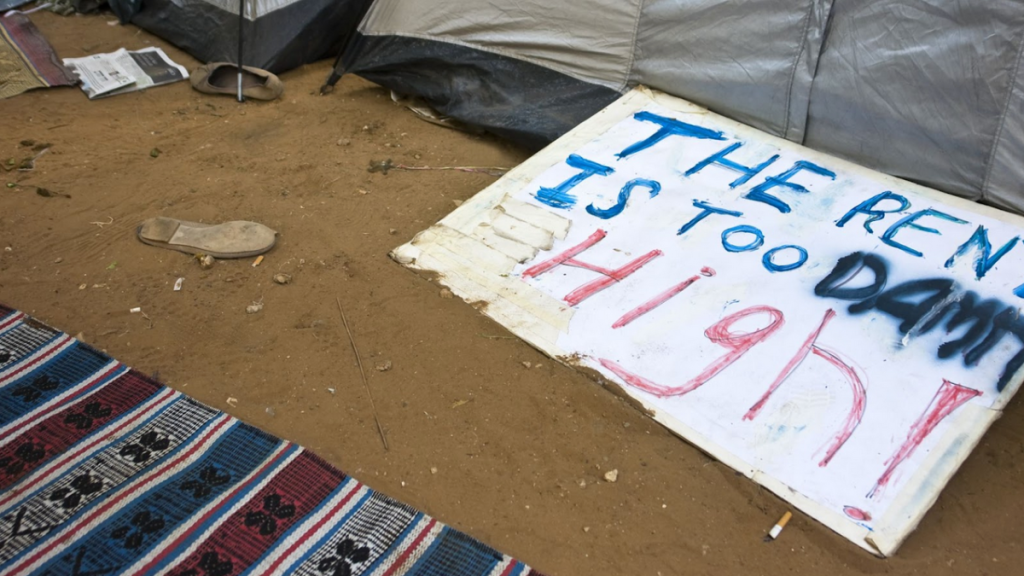
When Detroiter Symone Wilkes and her two young sons faced homelessness last year, she sought help from the city’s safety net.
Former Mayor Mike Duggan had rolled out a seven-point plan following the tragic death of two children living in their family’s van last winter expanding services and assuring unhoused residents, particularly those with children, that they could be placed in shelters immediately if they called the city’s Coordinated Assessment Model (CAM), which is supposed to streamline shelter placement.
But Wilkes and her sons spent about four months bouncing between friends’ homes as she called the line day in and day out.
“You’re waking up every day calling a phone number, waiting 20 minutes to even get somebody on the line,” Wilkes told the Detroit Free Press. “Each day you gotta keep telling CAM why you’re calling.”
And each day they’d say there were no beds, though she was occasionally offered a chair. It was demoralizing. She eventually found a subsidized place on her own.
Wilkes’ experience underscores the persistent failings of Detroit’s shelter system. While grassroots workers say they’ve noticed some improvements, including expanded call-line hours and greater awareness around available resources and drop-in beds, the gaps in service remain overwhelming as homelessness continues to grow.
In Detroit, Hamtramck and Highland Park homelessness rose 16% from 2023 to 2024, according to the latest data from a one-night count of unhoused residents taken each January. Available data for 2025 points to a 2% increase in people living in emergency shelters and other housing programs year-over-year, though unsheltered numbers aren’t yet available.
According to CAM data, families spent an average of 154 days on a waitlist for shelter in September, up from 85 days in January 2025. And while those running CAM would like to do more, they say the system can only refer to available resources; it can’t make more beds open up.
So while the entry points may be expanding – the seven-point plan doubled the number of emergency drop-off beds – there is still nowhere for people to go down the line. Families are staying for as long as six months in centers meant to house people for two weeks at most.
With that strain, more and more people are complaining about conditions in shelters, which don’t normally get funding for maintenance.
Last month, Detroit Mayor Mary Sheffield announced a new Department of Human, Homeless and Family Services, uniting relevant, formerly separate departments under one umbrella.
“Our hope is that this department will… provide the wraparound services and the accountability that is needed to ensure people are placed into housing,” Sheffield said.
The real issue though, says Cheryl P. Johnson, CEO of the Coalition on Temporary Shelter (COTS), is over-prioritizing shelter but not treating the development of more affordable housing as equally urgent.
“If you don’t have the end in mind in terms of more affordable housing and putting resources there,” she said, “you’re going to have people stuck in a shelter system, which is horrible.”
In other news…
Students’ short attention spans clash with classic cinema: If you need more evidence that technology is fundamentally changing our brains, consider this from Rose Horowitch who, in her latest for The Atlantic, spoke to 20 film-studies professors from around the nation who told her that their film students have, over the last 10 years or so, increasingly struggled to sit through a full film.
Why? No surprise – it’s our tethering to smartphones. We spend hours infinite-scrolling, chasing dopamine hits from short-form video content designed to keep us glued to tiny screens. Students say they feel bad about it, but that doesn’t change how they behave.
Horowitch paraphrases one professor’s observation that his students “remind him of nicotine addicts going through withdrawal during screenings: The longer they go without checking their phone, the more they fidget. Eventually, they give in.”
Some professors have adjusted their teaching – having students watch shorter films, or breaking them up over multiple viewings. Still others are committed to retraining their brains.
“I try to teach films that put their habits of viewing under strain,” said Rick Warner, director of film studies at the University of North Carolina. “I’m trying to sell them on the idea that a film watched properly can actually help them retrain their perception and can teach them how to concentrate again.” It takes some adjustment, but he says students come to relish the challenge.
Former SNL writer Harper Steele joins “What Will I Become?” documentary as executive producer. The film, expected to debut later this month at the Berlin International Film Festival, features the personal experiences of directors Lexie Bean and Logan Rozos, alongside the stories of two young trans men, Blake Brockington and Kyler Prescott, who died by suicide.
The directors said they “made this film for people who internalized feeling like a burden, people who had not seen a model for who they wanted to become, and believed the world was better off without them.”
“As someone who’s been steeped in trans culture for more than a decade, this film was an education,” Steele told The Hollywood Reporter. “As trans people come under increasing attack from all directions, it is essential to show the harm transphobia enacts on the community, but equally important is to show the joy they can never take away. ‘What Will I Become?’ achieves both.”
The age of maternal anxiety: New motherhood has always come with worry – apparently, our brains actually change to help us focus on caring for our newborns, making us more prone to anxiety – but today’s world also comes with additional, harmful static.
It’s louder and harder to escape, clinical psychologist Lilly Jay writes in New York Magazine, thanks to 1) ever-present misinformation on the internet and from AI, 2) a federal government that undermines science and cuts off sources of support, and 3) a society that saddles us with ever-more responsibility but dwindling community care.
So, what can we do about it? Organize and advocate for what we know works: a public and proverbial village. While parents need support from their personal circles of family and friends, grandparents need to be able to retire if they’re to be able to help. Jay argues our nation also needs to provide paid parental leave.
The US is the only wealthy country in the world that does not offer paid parental leave for moms, and many comparable nations offer leave for moms and dads – along with affordable housing and universal healthcare.
The name “MindSite News” is used with the express permission of Mindsight Institute, an educational organization offering online learning and in-person workshops in the field of mental health and wellbeing. MindSite News and Mindsight Institute are separate, unaffiliated entities that are aligned in making science accessible and promoting mental health globally.

Author

Related Articles
He Almost Killed His Father. Now He Helps Others At Risk.
In today’s newsletter, we explore how one man healed after a dangerous psychotic break that nearly led him to murder.

Fallout Over Supreme Court Ruling on Conversion Therapy
Despite the Supreme Court ruling, conversion therapists can still be sued for a practice the United Nations calls “torture.”

On No Kings Day, Millions Rallied to Denounce Trump and “Epstein War”
Anti-Trump protests took place in all 50 states, Puerto Rico and other US territories and in countries around the world.
