
Does Contemporary “McMindfulness” Reinforce Our Suffering?
A Buddhist teacher and professor argues that a commodified mindfulness solely focused on the self is only a stopgap fix.

What’s the point in modern mindfulness? Popular apps like Calm and Headspace promote a practice that “is nothing more than basic concentration training,” says Ronald Purser, author of “McMindfulness: How Mindfulness Became the New Capitalist Spirituality.”
Part of the book’s argument is that mindfulness has been commodified and co-opted into little more than a pacifier shushing us amidst intolerable, overwhelming conditions, as Purser explains in a Q&A with The New Yorker’s Jay Caspian Kang.
Rather than apply the practice in full – including its demands to “go beyond self-interest” – Western practitioners use mindfulness to remain isolated, disconnected and inwardly focused, he says.
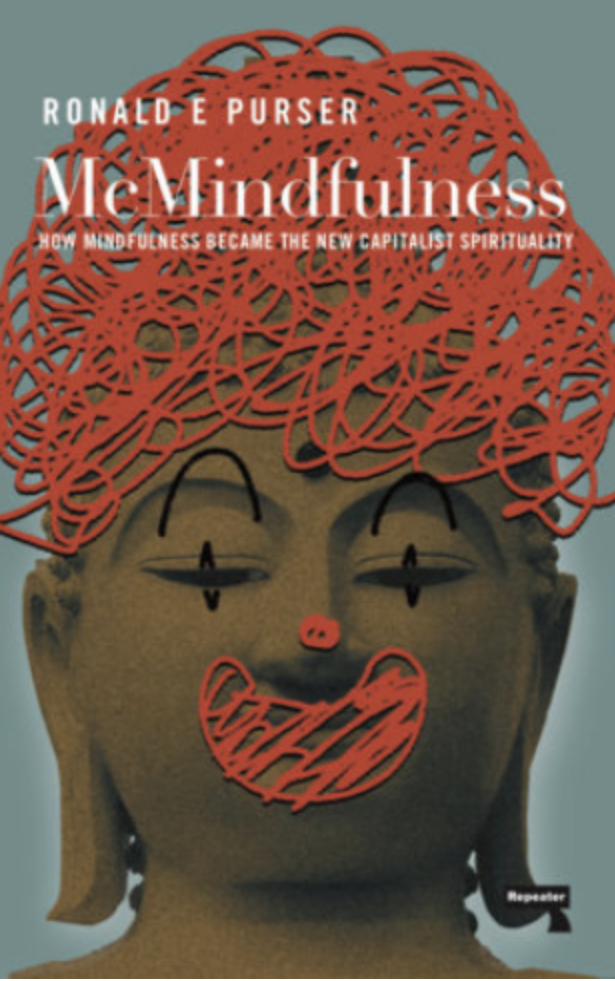
“Although derived from Buddhism,” Purser writes, “it’s been stripped of the teachings on ethics that accompanied it, as well as the liberating aim of dissolving attachment to a false sense of self while enacting compassion for all other beings. What remains is a tool of self-discipline, disguised as self-help. Instead of setting practitioners free, it helps them adjust to the very conditions that caused their problems. A truly revolutionary movement would seek to overturn this dysfunctional system, but mindfulness only serves to reinforce its destructive logic.”
That’s not to say that Purser, a Buddhist teacher and professor at San Francisco State University, discourages meditation to resolve personal distress; quite the contrary.
But, he argues that a mindfulness solely focused on the self is only a stopgap fix – a long-term solution to collective suffering within a harmful system that requires collective resistance against it. There’s got to be a change to the actual structure causing our stress in the first place — but it requires a collective awareness of the problem.
“Justice and compassion aren’t just moral duties that we impose from the outside,” Purser says. “They grow out of a revolutionary change in consciousness – a recognition of interbeing, radical interdependence. When you really see that, you act differently. Not because you should, but because you can’t help it.”
Radical interdependence means a return to communal practices. The real need, Purser says, is for people to gather together, engage one another and look back to spiritual, collectivist traditions that reinforce our common humanity. The mindfulness that we need, he argues, is not the profitable, isolated practice we’ll find online.
“You can’t think your way into this,” he says. “You have to live it. But you can’t live it until you ground yourself in it, until you discover and nurture it with other people.”
The name “MindSite News” is used with the express permission of Mindsight Institute, an educational organization offering online learning and in-person workshops in the field of mental health and wellbeing. MindSite News and Mindsight Institute are separate, unaffiliated entities that are aligned in making science accessible and promoting mental health globally.

Author

Related Articles

These 9/11 Survivors Found Healing in Helping Others
Twenty-five years after the World Trade Center attacks, survivors share their stories and how helping others sparked post-traumatic growth.

How Much of Your Personality Lives in Your Genes?
A massive genome study reveals how much of your personality is genetic, linking 1,260 DNA variants to Big Five traits and real-world behavior.

Are We Reaching People in Crisis — or Just Counting the Ones Who Call?
Billions were spent on the 988 lifeline, but fewer than 1 in 5 people in crisis use it. Here is what research reveals about the gap in mental health care.