
Trump Administration Breaks its Promises to Veterans with Mental Health Issues
Since Trump’s return to office, the strained staffing situation within the Department of Veterans Affairs is now “at a breaking point.”

Greetings, MindSite News Readers.
In today’s Daily, a look into the Department of Veterans Affairs’ failed promises to provide veterans much-needed mental health care and an example from one of Denmark’s national agencies that’s using the power of story to reduce stigma around mental illness.
Plus, while plenty of adults assert that cannabis helps them manage anxiety and depression, scientists say more research is needed to determine if and how it really works.
But first, Ron Blake credits a joke from Stephen Colbert with saving his life. Four years after surviving a horrifying home invasion and sexual assault that left him with dissociative amnesia and PTSD, Blake planned to end his life one night, Good Good Good reports. But The Late Show with Stephen Colbert was on in the background and for just a moment, the host made him laugh. “At 10:44 that night I paused the TV and I just thought, ‘I can’t do this. There’s still something good left in me,’” Blake said. Now he travels North America telling his story and talking about the power of comedy to save lives.
Despite Promises, Veterans in Need of Mental Health Care Are Left Flailing Under Trump
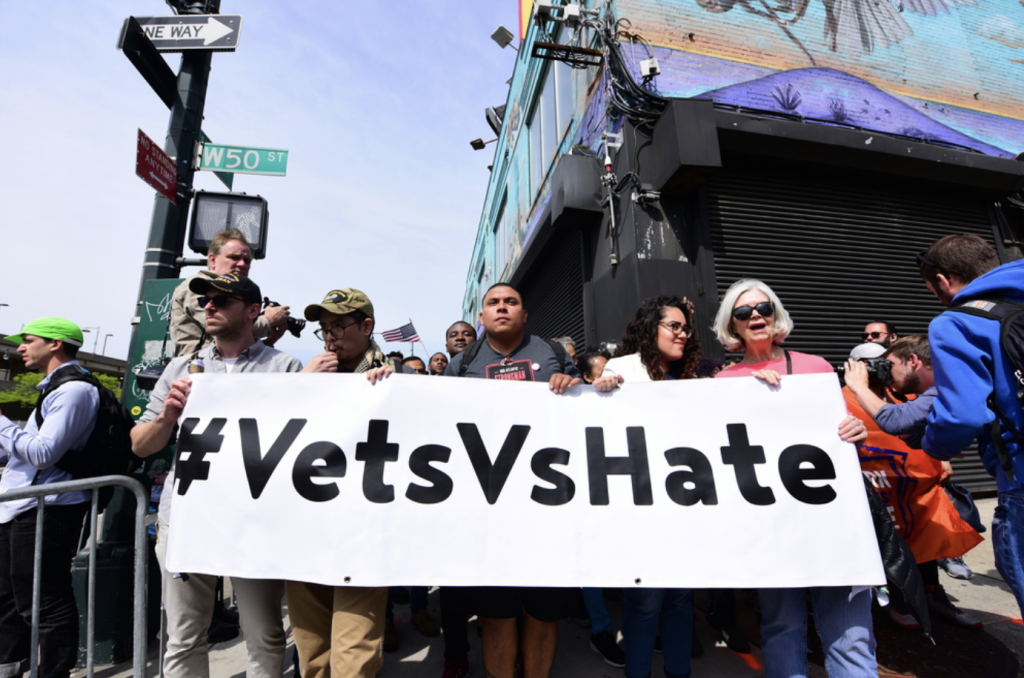
Since Trump’s return to office, an “always bad” staffing situation within the Department of Veterans Affairs is now “at a breaking point,” according to one of dozens of veterans and mental health clinicians who spoke to ProPublica for its investigation of declining mental health services in the military.
Perpetually understaffed, the VA lost roughly 500 psychologists and psychiatrists between January 2025 and 2026, with several interviewed attributing their exits to the Trump administration’s anti-DEI policies and push for therapy staff to return to agency offices – despite many of those offices being unsuitable for confidential treatment.
“I was angry that veterans were in that position,” said Nancy McCarthy, a social worker and therapist who left the VA after 10 years and has since started her own practice. “I was angry that I was in that position. It just felt like an unnecessary thing to have to navigate.”
McCarthy was particularly worried that the administration’s stance on DEI would make it impossible for her to discuss or document (within session notes) serious matters to her patients, including issues about race.
It wasn’t alarmist thinking. Psychologist Mary Brinkmeyer, a former LGBTQ+ care coordinator for the VA, quit last February after her supervisors ordered her to cease conducting staff training on best practices for caring for LGBTQ+ patients and told staff to remove all identity-affirming literature, symbols, and program brochures from the VA facility.
Amidst it all, veterans suffer the most. Russell Lemle – onetime chief psychologist for the San Francisco VA Health Care System, now an analyst at the Veterans Healthcare Policy Institute – put it plainly: “VA psychologists are best in class. They have research and training and decades-long experience… When you lose them, the veterans are the ones who pay the price.”
In addition, “support is no longer there to provide ethical and good care for these veterans,” one unnamed Indiana-based clinician wrote in an exit survey examined by ProPublica. “Scheduling issues are incredibly high due to poor staff hiring and retainment.”
It was a VA social worker who helped Jason Beaman, a 54-year-old Navy and Army Reserve vet, get back on his feet about a decade ago. Beaman’s poor mental health had left him homeless, but VA support helped him find a home, a job, and therapy. But he gave up trying to get an appointment after three false starts with VA therapists last year.
“I just quit. I don’t want to mess with the therapist anymore,” he said, despite still believing he needed professional care. After months in which the companionship of his therapy dogs and playing video games helped him hold it together, he finally got an appointment in January.
With hundreds of mental health staff leaving, either by choice or by force, the VA has suggested pouring billions of dollars into “community care” in which veterans are looked after by private providers, but for now that system is also overwhelmed and understaffed.
In December, it took patients an average of 25 days just to get a confirmed appointment date – nearly four times the department’s stated goal. Despite this, VA Secretary Doug Collins has dismissed criticism that the department has a systemwide problem connecting veterans to mental health care.
He asserts the VA is meeting its target wait time for new patients of 20 days, telling a Senate committee, “if you need emergency care, or are in a crisis situation, you have immediate care.”
Collins also claims mental health appointments have actually improved since the Trump administration took over, pointing to a 4% increase in appointments overall.
But that figure is misleading. It counts both group sessions and individual therapy, including group virtual appointments hosting as many as 35 veterans, and one-to-one sessions that lasted as briefly as 16 minutes. Other VA officials have, however, acknowledged the problem, and many of the veterans interviewed by ProPublica were contacted by the department after the outlet made inquiries regarding their cases.
The fact that it took media questioning for them to get help frustrated many of the patients. The VA didn’t respond to a number of ProPublica’s questions, and declined requests for interviews.
Announcing job cuts early last year, Collins said “this administration is finally going to give the veterans what they want,” but that doesn’t seem to be the case for those who shared their stories. One, Gwyn Bourlakov, said trying to get help was “just like shouting into the wind.”
How Denmark Is Using Storytelling to Erase Stereotypes About Mental Illness

For Giuseppe Parlatore, shame has become intimately familiar. The feeling would wash over him anytime he revealed he had schizophrenia and people responded with fear. At a class reunion a few years ago a former teacher visibly recoiled at his diagnosis. “Oh, then you’re dangerous,” the teacher said.
It’s a reaction he wanted to disrupt, he told the New York Times, but how could he? What protest can be successfully lodged against someone who has already decided you’re no more than the worst stereotypes about your illness?
For a long while after his 2009 diagnosis, he existed the way the stereotype prescribes – “more or less a vegetable.” But he’s worked hard since, first to manage voices and reclaim his life, and then on a program from Denmark’s Ministry of Health – one that specifically needed people like him to challenge our biases against mentally ill people.
The program, One of Us, invites “ambassadors” with serious mental illness to share their personal stories with health care workers, law enforcement, and others – uplifting their humanity and, ultimately, destigmatizing mental illness.
The program’s design addresses concerns that general awareness campaigns don’t work, at least not in the long term. Posters, public service announcements and language guides build knowledge and sympathy, but research suggests that they rarely shift people’s underlying attitudes.
What does work, according to a 2022 analysis of 216 systematic reviews, is direct social contact. Meeting people with a mental illness while they’re not in crisis allows all parties to meet on equal footing, says mental health services researcher Sara Evans-Lacko, offering everyone the space to recognize their shared humanity.
And when ambassadors do talk about their worst experiences, it’s with a view to improvement. They speak plainly about their conditions and recovery, intentionally offering solutions people can apply to future encounters, said Anja Vedelsby, program manager for One of Us.
“Even if it’s a really bad story about encountering discrimination, ambassadors will always say, ‘I wish this had happened instead,’” she said.
The trainings are transformative for ambassadors and their audiences – sometimes especially for public professionals used to seeing mentally ill people in moments of crisis. Christina Philipsen, a social nurse at Amager and Hvidovre Hospital in Copenhagen, was, along with her colleagues admittedly “a little more strict and rough” with patients that made her nervous, like those with schizophrenia, worrying that their behavior might become unsafe.
But after hearing from several ambassadors who visited her hospital in 2023, she learned about their fear, and the dismissive treatment they’d experienced. It was typical for them to wake up in a hospital totally confused about what was happening and ask for clarity, only to be physically restrained in response.
Likewise, police trainee Julie Andersen learned how critical it is to remain patient with people displaying signs of a crisis, repeating instructions if need be. More chances to listen can really help people with schizophrenia –their brains have to claw through a din of hurtful voices to focus on the one they should abide.
Having heard from ambassadors, Andersen reflected that “sometimes we can do a lot of harm, but we don’t always have to.”
Early data suggests that the One of Us program is working, but it’ll take time to see if the positive changes last. In the meantime, Parlatore already knows the work requires patience, persistence, and hope.
“I don’t feel like we’re losing the war,” he said. “It’s a generational project — at least for me.”
In other news…
Can cannabis medicinally treat mental illness? Science says we just don’t know yet. Cannabis is a “complex substance” requiring deeper study, researchers told NPR. A wide review of 45 years of cannabis research – the largest of its kind – found little to no high-quality evidence that marijuana effectively treats mental health conditions.
Anxiety, depression, and post-traumatic stress disorder are the psychiatric conditions most often cited by medical marijuana users, but the review found no evidence that it helps with their symptoms. Published in The Lancet Psychiatry, the analysis examined more than 50 clinical trials, though only data from fewer than 2,500 patients made it into the final analysis.
Lead researcher Jack Wilson said “we clearly need to do more research on cannabis medicines,” but concluded that, “in the absence of evidence at this time, the routine use of medical cannabis products really should be rarely justified for the treatment of mental health disorders.” That’s not to say that some people don’t experience mental health benefits, just that there’s no evidence their experience is reliably replicable for anyone else.
Much more study is required to determine which formulations, types, and doses of cannabinoids might be fit to treat mental illness. Ziva Cooper, director of UCLA’s Center for Cannabis and Cannabinoids felt like the Lancet study’s strict criteria cut out some promising research, like this small study in which CBD-assisted therapy improved patients’ anxiety symptoms.
The name “MindSite News” is used with the express permission of Mindsight Institute, an educational organization offering online learning and in-person workshops in the field of mental health and wellbeing. MindSite News and Mindsight Institute are separate, unaffiliated entities that are aligned in making science accessible and promoting mental health globally.

Author

Related Articles

On No Kings Day, Millions Rallied to Denounce Trump and “Epstein War”
Anti-Trump protests took place in all 50 states, Puerto Rico and other US territories and in countries around the world.
How Medicaid is Helping People Leaving California Prisons
Changes to federal law allows Medicaid to provide health and other services to people exiting prisons. California and some other states are making use of the program, but expansion efforts will depend on the Trump administration.
Google and Meta Found Negligent in Apps’ Mental Health Harms
Meta, Instagram’s owner, and Google, Youtube’s owner, neglected to protect a user from their apps’ addictiveness, a jury rules.
