
‘Remembering Is a Form of Protest’: Japanese Prison Camp Survivor Satsuki Ina on the Trauma of Detention
Satsuki Ina on Japanese American imprisonment, the legacy of cultural trauma,
and speaking out against detention centers.
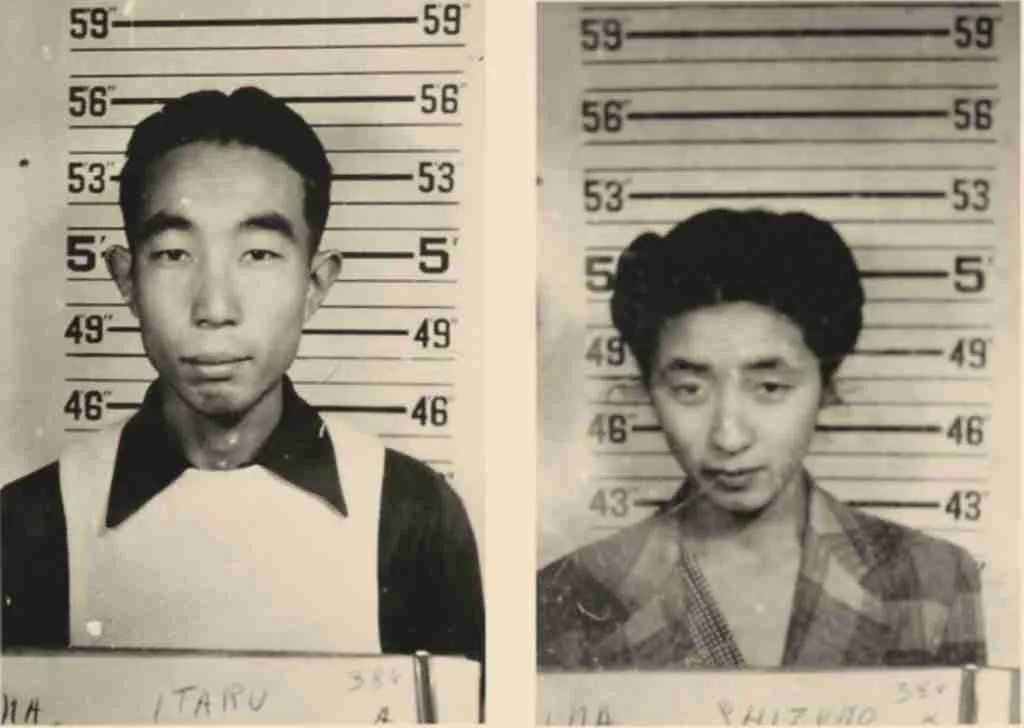
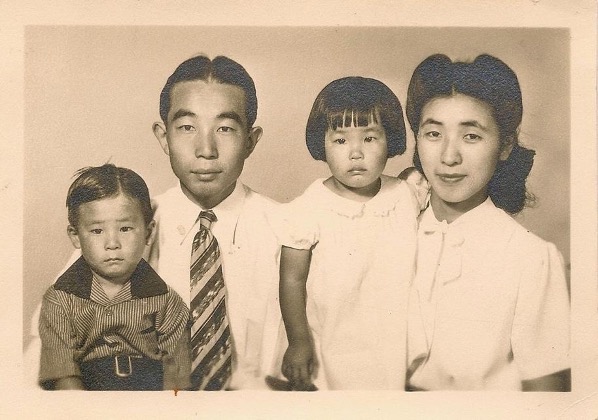
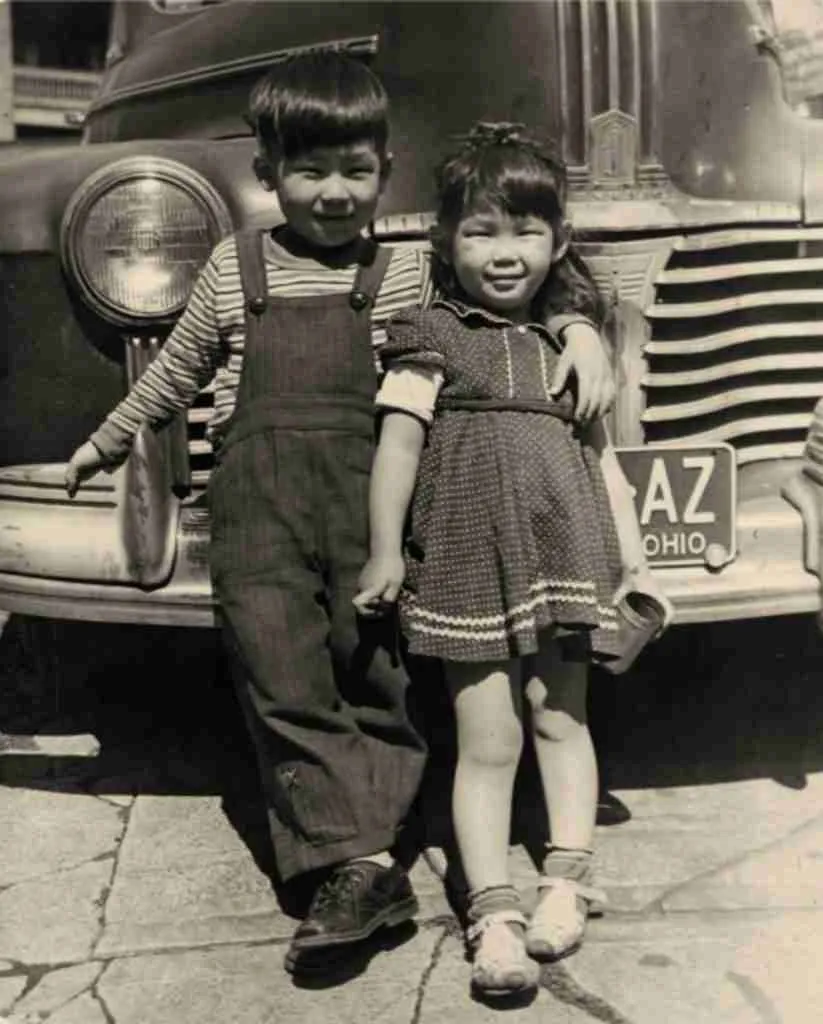
This interview is part of Unseen, a MindSite News series by Simran Sethi on the impact of federal immigration policy on Asian communities and supported by the Nova Institute for Health. All photos are from The Poet and the Silk Girl: A Memoir of Love, Imprisonment, and Protest by Satsuki Ina (c) 2024, reproduced with permission from Heyday.
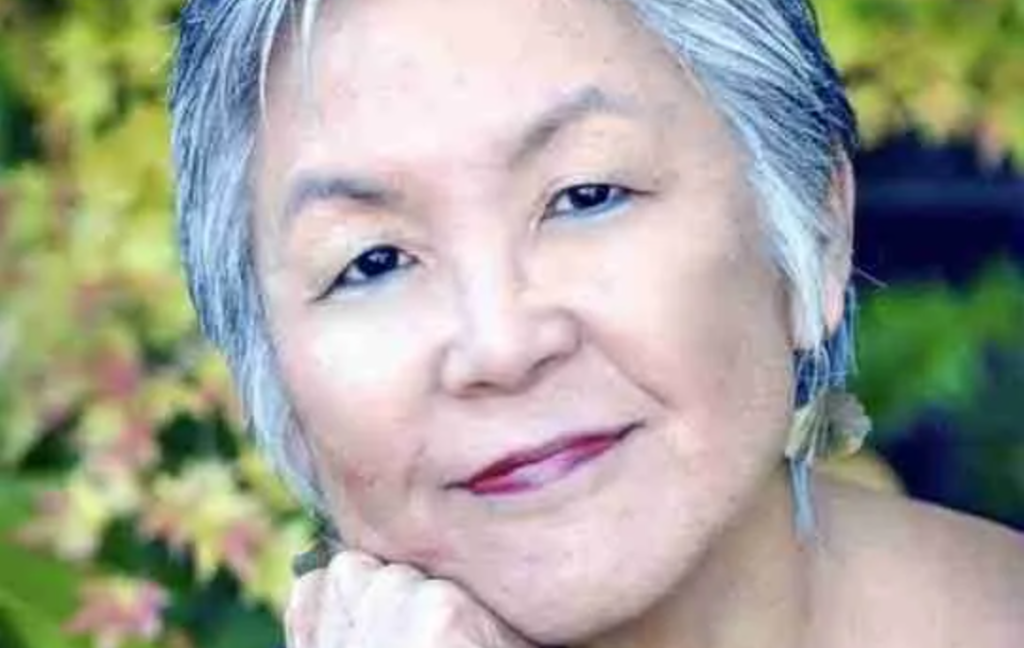
“I was born doing time,” says Dr. Satsuki Ina, a consulting psychotherapist, documentarian and co-founder of Tsuru for Solidarity, a nonprofit dedicated to Japanese American mental health and community healing. Dr. Ina was born in Tule Lake Segregation Center, the largest high-security prison camp built to hold Japanese Americans, who were universally deemed “disloyal” during World War II.
Following the attack on the Pearl Harbor Naval Base in 1941, President Franklin D. Roosevelt signed Executive Order 9066, which resulted in the forced removal of people of Japanese ancestry from the West Coast into fenced and guarded sites the government called “relocation centers” and “internment camps.” The 10 sites across six western states held about 122,000 people for up to five years. Nearly 70,000 detainees, including Ina and her American-born parents, were citizens. Over half were children.
Dr. Ina’s parents became, in her words, “prisoners in their own country.” Over the course of four years, they were forcibly held in six different prison camps. She recalls in the documentary Children of the Camps how her father was taken in the middle of the night when she was still an infant and transported to a prisoner of war camp in North Dakota. Her mother – held behind barbed wire, alone with two babies – wrote in her diary: “I wonder if today’s the day that they’re going to line us up and shoot us.” For two years the family was kept apart.
The injustice of their imprisonment did not end with the war. There were also financial costs: total property and income losses were estimated by the 1983 Commission on Wartime Relocation and Internment of Civilians report at up to $2 billion. The psychological toll – then and now – has never been fully calculated.
In this interview, Dr. Ina reflects on the experience and the ways in which the community has, over time, channeled pain into empowerment and healing. The conversation has been edited for length and clarity. All photos are from The Poet and the Silk Girl: A Memoir of Love, Imprisonment, and Protest by Satsuki Ina (c) 2024, reproduced with permission from Heyday.
Simran Sethi: Today, detention of immigrants is at the highest levels we’ve ever seen in American history. The American Immigration Council says that “ICE could potentially acquire enough detention beds to house 135,000 people at any given time, more than three times the entire capacity of the system at the time President Trump took office.”
This dovetails with calls for increased denaturalization of foreign-born U.S. citizens. According to recent reporting from The New York Times, U.S. Citizenship and Immigration Services officials hope to increase denaturalization cases to 100-200 cases per month within a system that once averaged 11 cases a year.
Asians have made up the largest share of naturalized citizens for nearly a half-century, according to data from the Department of Homeland Security and Office of Homeland Security Statistics. We’re speaking about your family and others of Japanese ancestry who lost their citizenship during World War II. Does this moment feel distinct to you – or like a continuation of what your community has faced?
Satsuki Ina: Some people have challenged the idea that it’s the same, saying you can’t compare the two.
Why is that?
That’s my question, too. The rationale is because we’re not at war, as if being at war somehow justified the [abuse of] executive powers and loss of freedom.
We’re not at war, and still executive powers are relinquishing civil liberties and due process. For me, it’s mind-boggling.
I was a public-school kid in North Carolina in the 1970s and ‘80s, and the history of Asians in America seemed to be relegated to a few paragraphs and written in ways that presented devastating circumstances as mostly benign. The imprisonment of people of Japanese ancestry on U.S. soil was described as time in “assembly” and “relocation centers” or “internment camps.” I was struck by your 2019 interview with Democracy Now! where you said: “The term ‘concentration camp’ is a way of describing the reality of what was done to us, and not using the language that the government imposed, distorting the reality of what happened to us.”
We’re very aware of the ways in which euphemistic language and stories blame the victim. So much of our history and our trauma had been covered up by the efforts of the government to tell the story of what happened to us in a way that excused them from any responsibility.
The lack of accountability was exacerbated by the idea that Asians are the so-called “model minority.” The concept was seeded by the work of a white sociologist who wrote a story for The New York Times Magazine called “Success Story, Japanese American Style.” He asserted that, despite the extreme hardships Japanese Americans had endured during and after World War II, by leaning into cultural values and working hard, the community excelled. That narrative was then extended to Asians as a whole. It not only erased, and erases, the trauma and the systemic racism Asians in America have experienced, but it pits communities of color against one another by creating this false hierarchy of who is a “model” citizen – and who is not.
The goal after the prison camp experience was to figure out how to belong – how to fit in. We were actually programmed after our incarceration experience to be the model minority: to strive, to convince ourselves and others that we were worthy of being American citizens. We put our heads down and did what was complicit with the false narrative that [imprisonment] wasn’t very harmful to us, that to lose four or five years of our lives that way – to be traumatized as children with parents who were overwhelmed with anxiety and fear of the unknown – was okay.
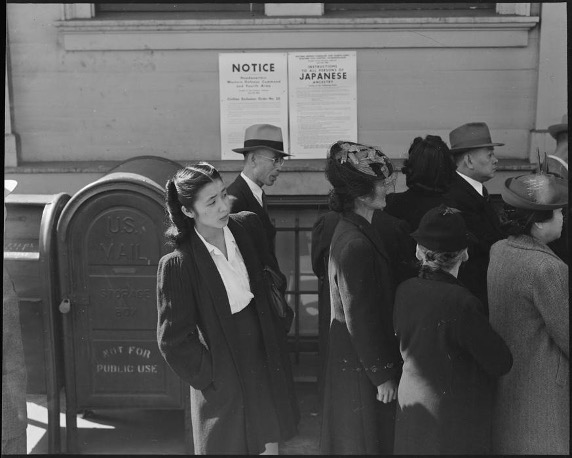
Shizuko Ina waits in line with others to register for imprisonment at Kinmon Hall in San Francisco Japantown. Famed photographer Dorothea Lange took this photo.
In your extraordinary memoir The Poet and The Silk Girl (excerpted here), you describe how, while your community lost everything, just miles away life was normal.
My mother described how it was so confusing for her emotionally to see life going on through the chain-link fence with the barbed wire on the top of it. People taking their Sunday strolls, children laughing and playing and running along the sidewalks while she’s on this side of the fence with no idea what’s going to happen to her. She’s pregnant, she has no way of knowing how to protect her baby.
You learned of her feelings through over 180 diary entries and letters that you and your colleague spent two years translating …
And my father’s haiku poetry, which is a very intimate way of understanding what their day-to-day experience was. I feel they saved those items and passed them on to me as a form of resistance; of saying, “We’ll not forget what happened.”
Your father’s haiku from the day that he, your mom, and other people of Japanese descent were rounded up and forcibly moved to “assembly centers” was:
cold early spring
I prepare for the journey
not knowing when I will return.
At that point, your parents had been married for nine months. They were sent to the Tanforan Racetrack and housed within a converted stable that still smelled of horse feces; it was enclosed in barbed wire and guarded by armed soldiers. You described it as a memory your mother “never forgot” because it foreshadowed years in which they would be treated as “less than human.”
Dr. Donna K. Nagata, a professor of psychology at the University of Michigan and the daughter of incarceration survivors, has written extensively of the trauma families like yours experienced. In her 2019 paper on Japanese war trauma, she and her colleagues write:
“With less than two weeks’ notice of their removal and restricted to taking only what they could carry, Japanese Americans were suddenly forced to sell life’s possessions at a fraction of their worth and leave behind homes, businesses, unharvested crops, and family pets. The stress of grief and loss was exacerbated by the fact that they had no information about where they were being sent or for how long.”
It’s almost overwhelming to see how it could actually be happening again.
Your parents saved their writing but in the aftermath of the prison camps there was a collective silence in the Japanese American community that you attribute to shame. “Shame so choking,” you write, “that it would prevent my mother and father from speaking up when they were shortchanged in a store, spoken to rudely, ignored in restaurants, called racist names, spit on. Shame that was passed down to us children about who we were, how we looked, and what we deserved in life. We learned not to complain, to avoid being vulnerable, and to bear a never-ending need to strive for approval. Mental and emotional toughness was what it would take to endure whatever life brought our way.”
Shame has been very corrosive to our communities and our senses of self.
For collectivist Asian cultures, shame isn’t just personal; it’s relational. Researchers explain it as someone’s actions not only impacting a singular self but being perceived as bringing shame onto their family or community, too.
Besides the years lost in terms of productive life, it was the humiliation, the loss of dignity in the camps. In Japanese cultures, like many other collective cultures, the idea of being cast out – whether you’re innocent or not – is shameful. That’s the layer that has kept my community from speaking out until this time.
But now you are.
The purpose of my nonprofit organization, Tsuru for Solidarity, is to activate Japanese Americans to own their moral authority regarding what’s happening today and use their stories as a way of protesting: writing legislators, showing up at gatherings, organizing communities and speaking up on behalf of people who are being targeted. It isn’t easy, but we must tell the story as we lived it, not as we were told we lived it. Remembering is a form of protest.
You have spoken about how sharing this trauma also offers the opportunity for repair, both within the Japanese community and in indigenous communities that have suffered in resonant ways, including seeing their ancestral lands being turned into concentration camp sites.
For many [in my community], this has been empowering. Especially for people in their 80s and 90s who were children when they were imprisoned and are using their stories as a way of protesting what’s happening now. There’s a repair element for us in using our voices that we couldn’t use when we were the targeted victims – and there’s a powerful repair in cross-community work because prison camps were created on Indigenous land and reservations.
In the 1970s, tribes bought land from the government to create a college in Bismarck, North Dakota for Native American students. Five years ago, they met with a group of us and said they wanted to give us some land to create a memorial to the Japanese American story. This last year, we completed a memorial called the Snow Country Prison Memorial. It’s based on one of my father’s haiku poems:
The war has ended
but I’m still in
The snow country prison
To initiate the building of this memorial, we had what I called a “groundbreaking.” The president of the college said, “We don’t call it groundbreaking; we call it ground blessing.”
I have to tell you, I cried. I said, “Of all people giving us land, how do we ever express our gratitude?”
At the event, Japanese Americans and Native people gathered together for the opening of the Memorial, where the names of all the men who were incarcerated there are engraved on a wall. The Native American drummers and the Japanese American taiko drummers came together to perform a joint drumming event that was so amazing. We were sitting next to each other, hugging, feeling like this is how we build our strength, through cross-community support. This is how we keep fighting. This is how we strengthen our demand for equal treatment under the law. It’s all based in compassion and love.
It takes so much heart and courage to do this work. I’m recalling how, when you were a student at UC Berkeley in the 1960s, your mom asked you not to protest …
My parents had that residual fear, but in the 1980s, we did resist and protest. We demanded redress and reparations for our incarceration during World War II. To do so went against another very strong cultural value – about respecting people in power. To question or criticize the president of the United States and other leaders was very risky, especially given our history.
What weighs especially heavily is what you write about how there was no public support for Japanese who were being taken from their communities and detained, some for up to five years: “Through their silence and inaction, the American people abandoned not only their neighbors and friends, but also their own humanity.”
When we were removed, there were no petitions. No marches. That is why – if ever there was a time for us to show up on behalf of people who are being targeted – it’s today.
Even if it goes against cultural norms.
Even so.
I mentioned Dr. Nagata earlier. In her paper on wartime incarceration and racial trauma, she and her colleagues surveyed about 400 Japanese immigrants and their citizen children and found both generations showed symptoms of avoidance and attachment associated with PTSD – and didn’t speak of incarceration for decades. “Silence frequently serves as a means for individuals or communities to cope with trauma,” they wrote, “but it does not signify that the trauma has healed.”
In order to speak out, we [survivors and descendants] have had to face both our own fears and the way in which we had been conditioned to survive. It’s reparative to show up now but it is also heartbreaking as we put ourselves inside the stories of people who are dealing with this every day.
You hold their stories and your own.
This time triggers memories and stories about what happened to our families. It strikes fear in us and in community members who were not even in the prison camps during World War II; younger generations who fear that anybody who isn’t white is at risk. As I have said before, “We were American citizens. We never committed a crime, except to have the face of the enemy.”

You write in The Poet and The Silk Girl that Executive Order 9066 marked “the perpetration of a profoundly damaging, psychological trauma, which would go unacknowledged by both victim and perpetrator for decades. To be victims of mass incarceration is, by definition, traumatic. To be deemed guilty by reason of race, over which one has no control, is, by definition, racism. What Japanese Americans suffered was government-perpetrated racism trauma. The betrayal by a trusted source – in this case, their own government – complicated the response of the victims.”
It evokes outrage in ways that I feel are very healing. And it’s really important to be able to manifest it – to use that anger as a form of resistance and speak out.
There are two distinct echoes of history coming to the fore. The first is that the Trump administration has used the Alien Enemies Act to deport Venezuelan nationals. The Act allows for the detention and deportation of people identified as “foreign enemies” and was last used during World War II to justify the internment of Japanese. The second is that an army base named Fort Bliss where Japanese were imprisoned during World War II is now the largest ICE detention camp in the country.
Right now, three identified prison camps are being reactivated where Japanese Americans were held that we’re actively following and tracking. We are using our outrage as a way of calling out the fact that this is a repetition of our history. We want to name it; we want to claim it and not get caught up in the rhetoric that says we have to build hundreds of more warehouses to put people in because they’re a threat to national security. It’s exactly the language and the justification used for our incarceration. There was no due process. There was no way to counter it. It was just a statement made by the authorities.
You mentioned warehouses. ICE is purchasing them as a way to escalate mass deportation. The larger facilities are intended to house up to 10,000 detainees at a time. According to internal planning documents, there will, ultimately, be 8 of them plus 16 smaller facilities. The United States hasn’t detained people on such a scale since the incarceration of Japanese. Yet in a press release on the legacy of Fort Bliss from the Japanese American Citizens League, the Trump administration stated that “comparisons of illegal alien detention centers to internment camps used during World War II are deranged and lazy.”
When someone in your community reads about Fort Bliss or one of the other ICE detention centers, what comes up?
In the beginning, there was a lot of denial and dissociation. It was a way of preserving a sense of integrity about how people in my community had collectively decided how to survive. We go to school; we get good grades; we don’t ask questions; we remain safe – quietly safe. But for many of us – particularly elders who’ve used that strategy to raise their children – the intergenerational transmission about caution, security and safety first has stunted a lot of our creative energy. In my generation, there are fewer comedians and actors and artists because there was so much pressure from our parents to take careers that were not risky [but rather] secured our place in American society.
When we see the government doing exactly what they did 80 years ago, it’s unsettling; there is a triggering and the reactivation of traumatic response. What’s coming up for a lot of people right now is the anxiety and depression that there is no safety. After decades and generations of striving along this correct path for acceptance, the realization that, however hard people try to belong, if they’re not white, they’re always at risk.
Your parents were born in Seattle and San Francisco; they were unequivocally American. You and your brother were born here, in the camps. And today, when we look at the larger Asian groups in the United States, people of Japanese descent are the only ones who are majority native-born, meaning also born here. But …
It is happening again to others – and it can happen to us again. We’re owning that. We’re really embracing that as a possibility. But we’re also embracing how important it is for us to protest on behalf of others. We are finding a pathway to participate in protests in ways that we haven’t in the past. It’s heartwarming to see people like me, who are in our 80s and 90s, carrying posters and signs; protesting, chanting and using our taiko drums to bring attention to the fact that this happened to us and we’re not going to stand by silently.
It was scary at our first demonstration at Fort Sill. The night before, we had talked about what it was going to be like. We had turned in our keys and told our families that it is going to be civil disobedience and we could go to jail again. But the next day, there we were. The uniformed guard is yelling at us to get out. I am 5’2″ and this guy with a gun must have been 7 feet tall. But we were not going to move. We’ve been moved too many times.
Your presence is protest. Japanese Americans were on those sites then – and now.
In May 2016 you were approached by Carl Takei – an ACLU lawyer whose grandfather had been held at Tule Lake, the same concentration camp where you were born. At the time, you had over 20 years of experience working as a child therapist. Mr. Takei shared the extremely emotional experience he had visiting a newly created detention center in South Texas for women and children. The detainees were from Central America and, you explained, were seeking asylum due to violence in their home countries, yet were being “criminalized and held under indefinite detention.” You write, “He described to me, in halting speech overwhelmed by emotion, the freshly stocked supply cabinets proudly shown to him, filled with ‘rows and rows’ of little shoes.”
He asked you to come and visit the center as a religious observer since outside professionals weren’t being allowed in. You hadn’t been to Texas since your early days in the prison camp. I’ll pull out a few more sentences you wrote about this experience: “We were met by uniformed guards … Not one child went to play with the toys. Instead, they clung to their mothers … The stories the mothers told me were heart-wrenching … I felt shaken in a way I’d never experienced before … The so-called family residential center was, in fact, a family prison.” These pages made me cry. They were what you describe as the “detention as deterrence” policy under Barack Obama.
That’s right. It’s important to keep into perspective that this isn’t just a temporary blip in the Constitutional history of the U.S. Rights have always been always at risk, particularly for people of color, religious minorities and other [marginalized] groups. Oppression is a repeated theme.
What has changed, according to the National Immigration Law Center, are new forms of family detention brought on by the “One Big Beautiful Bill.” Entire families – including infants and children – can be held in detention for however long their immigration cases take.
The presumption of disloyalty because you’re not white is implicit in all of the rhetoric that’s being used to justify mass deportation and the mass detainment of children inside of prison camps. At some level, there’s also an economic underpinning used to justify the mistreatment because of the underlying intention of economic profit and power.
You write, “One of the most corrosive psychological effects of captivity is being forced to relinquish one’s own moral principles and betray friends and family in service of approval from the oppressor.” Although they were U.S. citizens, after years of imprisonment, fearing for you and your brother and any future they could have in America, your parents answered “no” to a loyalty pledge to the United States and eventually renounced their citizenship.
One of the slippery slopes that hasn’t been really understood or acknowledged adequately is the whole process of the renunciation of citizenship. The government portrayed [renunciation] as evidence that Japanese Americans were disloyal all along and happy to give up their American citizenship when, in fact, it was a no-win situation. They were in prison, incarcerated with their children, with no hope for any future possibility for their lives there because they’d lost everything. They renounced their American citizenship not because they were politically trying to make a statement, but as a survival decision as parents wanting to protect their children from continued harm. Giving up hope for their life in America was heartbreaking for them.
What I am, again, hearing is how belonging was – maybe is – conditional and precarious.
Precarious is a good term. Idealistically, we think of birthright citizenship as fixed and irrefutable, yet there’s a whole history of citizenship being at risk at various times.
On one hand, being born in a prison camp on U.S. soil made me an American citizen. But when I did research on my family in the FBI files of my parents, there was also a face sheet on me. At 2 months old, I was designated an enemy alien. History proves we can never get complacent about privilege or belonging, and that democracy isn’t a fixed thing. It is variable, influenced by those who are in power. It is up to us to keep leaders on track, particularly as people who belong to a community of color. It is very important to be vigilant; to speak up and speak out. We can’t take any of this for granted.
The name “MindSite News” is used with the express permission of Mindsight Institute, an educational organization offering online learning and in-person workshops in the field of mental health and wellbeing. MindSite News and Mindsight Institute are separate, unaffiliated entities that are aligned in making science accessible and promoting mental health globally.


Author

Related Articles
“Eating Bitterness” (吃苦): Civil Rights Advocate Annette Wong on How ICE Policies Harm People of Chinese Descent
About one-third of people who have died in ICE custody since January 2025 are of Asian origin, the majority of whom are of Chinese descent.
Collateral Damage: The Emotional Toll of Trump’s Immigration Policies on Asian Children and Families
An investigation into the trauma caused by ICE and its potential long-term harm in Asian youth.