
Twenty-Five Years After 9/11, These Survivors Find Healing By Helping Others

Greetings, MindSite News readers.
In today’s Daily, twenty-five years after the horrors of 9/11, a group of survivors continue to find healing in helping others and letting their lights shine. A new study suggests that our personalities, in part, are connected to our genetics. And we raise awareness on a bill that will hopefully soon take effect and help journalists in California.
But first, school started last week, officially ending summer for scores of children across the nation. It also wrapped up Abner Gaston Jr.’s latest summer reading challenge. Though at age 98, Gaston’s childhood has long been over, he told the Washington Post he delights in visiting his local library to get out into the community. “It gets you involved,” Gaston said, “and gives you the knowledge of other people.” Selecting mostly children’s books and the Bible to read this summer, he plans to participate in next year’s challenge, at age 99.
These 9/11 survivors found healing in helping others
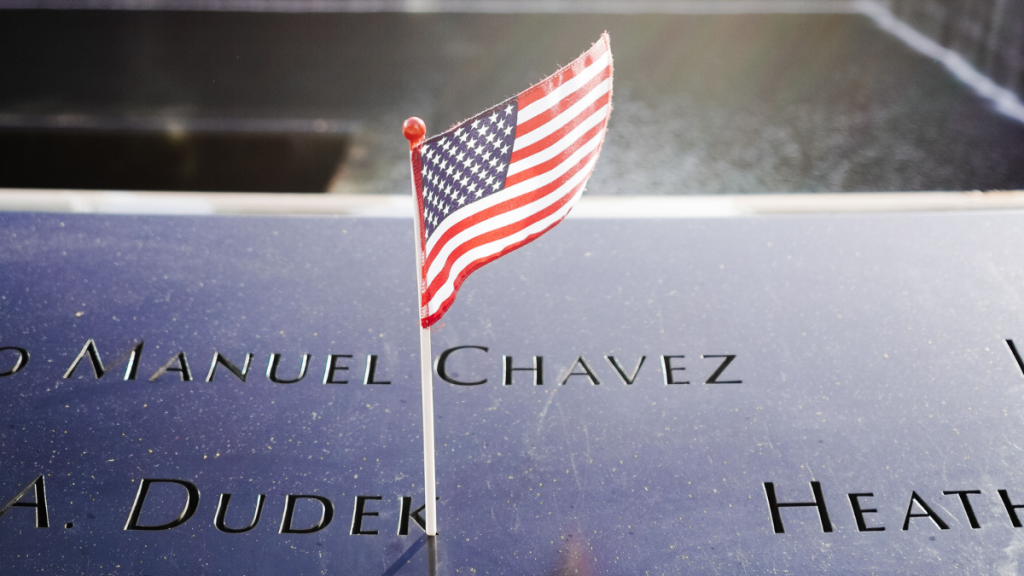
On the morning of September 11th, 2001, Lolita Jackson was in a meeting at Morgan Stanley’s offices in the South Tower of the World Trade Center when a plane suddenly struck the North Tower. Following the instructions of building security, Jackson and many others, including her longtime friend and colleague Tom Swift, rushed to evacuate. But, for a moment, Swift stepped back to call his wife. He would never make it out of the building — one of nearly 3,000 people killed that day.
The loss shattered Jackson and the other surviving members of their tight-knit team. “For the life of me, I just don’t know why he died on 9/11 and I didn’t,” Doug Brown, who worked alongside Jackson and Swift, told The Washington Post. “It just was so random.” But what came after the devastation is an atypical story about that morning — one of what psychologists call post-traumatic growth.
The term describes the measurable ways in which some people rebuild themselves after catastrophe. “We’ve been focused in mental health on symptoms of disorder for a long time and not looked at the other side of the picture,” says Richard Tedeschi, a psychologist and executive director of the Boulder Crest Institute for Posttraumatic Growth. Trauma can shatter our most basic assumptions about the general safety of the world and our future in it. Though reconstructing those beliefs is often painful, it can also change people or the better. One of the most reliable pathways through trauma, Tedeschi says, is helping others.
Jackson and her Morgan Stanley friends did just that. “People recognized, okay, working at these firms, making the money I was going to make, maybe that’s not all there is,” Jackson said. “I think for a lot of us, particularly those of us affected by someone we knew really well dying, that was enough to shake people up.” She soon left finance for a new career in public service, eventually landing in the mayor’s office and helping to train the New York City employees who would help residents recover from Hurricane Sandy. Better yet, she leapt into her personal passion and began regularly performing as a jazz singer. In the years since the attacks, she’s graced stages from NYC to Edinburgh, Scotland.
Brown, for his part, jumped into volunteering as a tutor to help elementary students improve their reading. He found the work so fulfilling that, after a few years, he transitioned to full-time employment with literacy nonprofits.
Their friend Nancy Karole Kennedy, who remembered passing Red Cross volunteers as they all fled the towers, soon became a disaster-response volunteer herself. She later worked for the Red Cross. “I wanted to be a person running in instead of a person running out,” she said. Kennedy is now director of development for the cancer center at Hackensack Meridian Health, where many of the patients that her work supports are 9/11 survivors and first responders who became ill from exposure to debris and toxins from the attacks. “I’m a kinder person than I was before,” Kennedy said. “It made me more compassionate.”
Critically, experts note that post-traumatic growth and suffering often coexist. Finding meaning in horror by helping others doesn’t erase the pain. But believing you’ve learned something from the worst day of your life can restore a sense of agency, says Eranda Jayawickreme, a psychology professor at Wake Forest University who studies post-traumatic growth. “You don’t feel like this passive victim of the cosmos,” he said.
Twenty-five years after the attacks, Jackson and her friends remain close and continue to heal by sharing as much light and goodness as possible with others. Theirs is the aftermath of trauma that Tedeschi wants more survivors to realize. “When [people] go through something that seems horrific and impossible to live with, it’s not the end of the story,” Tedeschi said. “The story looks pretty grim at times… but there’s a pathway through it that leads to things that are just surprising.”
How much of your personality lives in your genes?
For decades, psychologists have sorted human personality into the “Big Five” traits: openness, conscientiousness, extroversion, agreeableness and neuroticism. We’re also all a blend of nature and nurture, but if you’re anything like me, you’ve long wondered how much of your personality is tied to DNA. Considering the stories of children accidentally switched at birth, I often think of this pair of siblings separated at birth, who, though loved by their unwitting adoptive families, stood out like “oddballs” in their family units until reuniting with their immediate biological relatives.
Stories like theirs make it tempting to chalk personality up to nature alone. But a sweeping new study published in Nature this month suggests that the truth is more tangled, Smithsonian magazine reports. Researchers pooled 46 groups of participants — between 611,000 and 1.14 million people who had both submitted DNA and taken personality questionnaires — and scanned their genomes for patterns. They surfaced more than 1,260 common genetic variants tied to at least one Big Five trait, over 800 of which had never been identified before.
The variants the researchers found tracked with real-world outcomes. People carrying extroversion-linked variants were more likely to catch COVID early in the pandemic. Those with agreeableness variants were less likely to be suspended from school or run away from home. High-conscientiousness-variant carriers showed less substance use, more time playing sports, fewer hospital stays and healthier aging.
One finding in particular stood out to Dalton Conley, a Princeton sociologist who wasn’t involved in the research. The data challenged a long-held assumption that neuroticism is driven largely by serotonin, the mood-related brain chemical many antidepressants target. “I wouldn’t say it’s slaying that theory forever,” he said, “but it’s definitely casting doubt.”
Still, researchers say, you can’t predict personality from genes — so don’t go assigning all your interests and behaviors to your parents or grandparents just yet. Genetics explains only 5 to 13% of personality variance from person to person, depending on the measurement. The rest comes down to environment, experience and everything else that shapes a life. So why the excitement? Well, mapping the variants provides scientists new tools to study how our traits connect to health and behavior across whole populations – and hopefully to ask better questions about where conditions like anxiety and depression truly begin.
In other news…
A California bill supporting those who make the news: A statewide bill, the Community NEWS Act (AB 2222), just passed with supermajorities in the state Senate and Assembly. The legislation would direct more than $40 million a year to California’s local news outlets through journalist employment credits, and it needs just one more signature to become reality: Gov. Gavin Newsom’s! As a publication led by journalists rooted in the Bay, MindSite News is helping raise awareness about the bill in an effort to urge Gov. Newsom to sign it before the September 30th deadline. Its enactment will enable us to continue providing the crucial and original mental health reporting that is important to you.
We hope others in our readership community will spread the word, too: news stories, editorials, op-eds and social media posts all help make the case, as does rallying any journalism associations or trade groups to which you belong behind the effort. AB 2222 isn’t perfect, but is a meaningful step forward for a local news industry starved of support. Reasonably, you’ll want to know more about it before taking action. To that end, here’s a more thorough explainer of the bill.
The case for fighting with people you love: If you’re conflict-averse, a brief comic from NPR’s Life Kit might change how you think about a good argument. Illustrated by Navied Mahdavian, it’s inspired by the work of Priya Parker, a longtime conflict-resolution facilitator and author of the new book “The Art of Fighting: The Transformative Power of Conflict.” Conflict isn’t a sign your relationship is doomed, Parker writes. It’s a signal that something matters and deserves attention. Handled well, conflict is how close, authentic relationships grow stronger.
The name “MindSite News” is used with the express permission of Mindsight Institute, an educational organization offering online learning and in-person workshops in the field of mental health and wellbeing. MindSite News and Mindsight Institute are separate, unaffiliated entities that are aligned in making science accessible and promoting mental health globally.


Author

Related Articles
The Lindsey Clancy Murder Trial
Women nationwide watch the Lindsay Clancy trial and see themselves in her story, plus an investigation into hospitals that fail patients with addiction.
Grief and Rehabilitation in a California Prison
This month: a DUI offender’s path to rehabilitation, Lindsay Clancy revisited, Illinois prison protests, a fatal cell fire, and Missouri’s competency crisis.
Meta Pays $17 Billion Settlement for Lawsuit Over Child Harm
Meta will pay up to $17.1 billion and reshape how its platforms operate after 47 states argued that they are harmful and also addictive to children by design.