
Street Medicine Woes in Phoenix
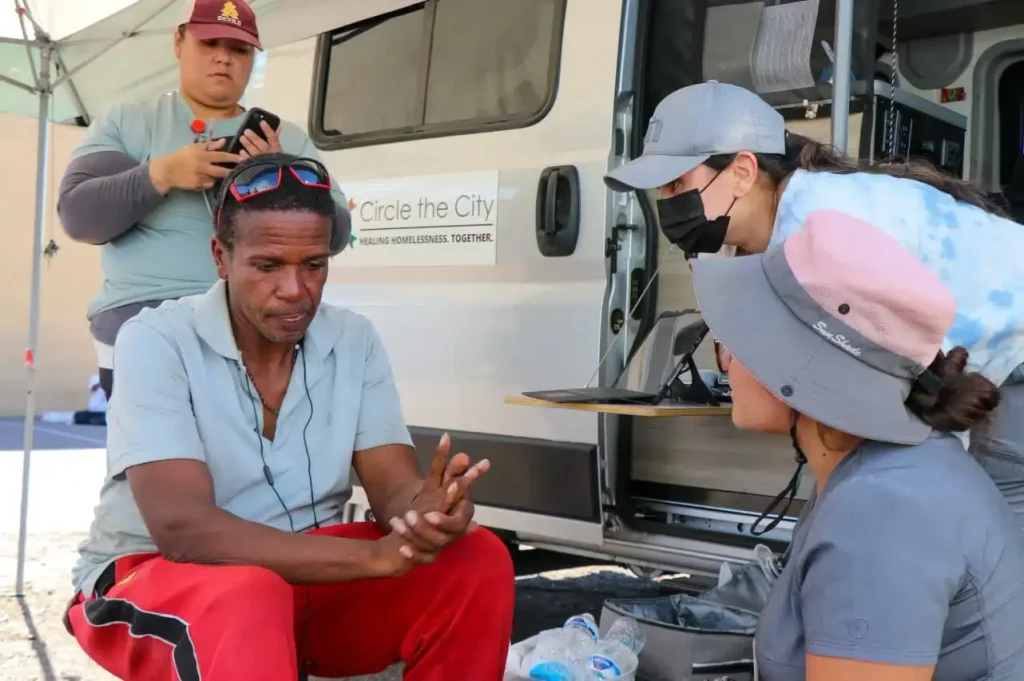
During the summer, Perla Púebla and her street healthcare team can hit the streets of Phoenix as early as 5 a.m., moving in sync with the unhoused community to avoid the heat, which can climb beyond 115 degrees.
The team, which includes a nurse practitioner, medical coordinator and behavior therapist, spend their days at encampments, resource centers and other locations frequented by the unhoused. They offer medical check-ups, water and naloxone — the life-saving opioid overdose reversal medication. While not everyone is always willing to accept their help, the team can care for wounds, administer IV drops, prescribe and dispense medicine for those who do all from the shade of their van.
Street medicine teams offer healthcare and social services to people experiencing homelessness on their own terms, and they may be more important than ever as more local governments enact policies that criminalize homelessness, according to Shelterforce, an independent newsroom that reports on housing. Chicago officially launched a street psychiatry team last month.
Earlier this year, Phoenix passed an ordinance restricting food distribution and medical care in parks without a permit. The law, which took effect in June, allows only two permits per park each month and bans needle exchanges.
While nonprofits have been fighting against the law in court with mixed results, Púebla and her team have continued to see their patients outside of the parks.
To read the Shelterforce story on street medicine in Phoenix, click here.
The name “MindSite News” is used with the express permission of Mindsight Institute, an educational organization offering online learning and in-person workshops in the field of mental health and wellbeing. MindSite News and Mindsight Institute are separate, unaffiliated entities that are aligned in making science accessible and promoting mental health globally.


Author
Related Articles
Going Beyond Consent: Teaching Boys to Speak Up
Raising boys to respect consent, challenge peer pressure, reject rape culture, and stand up against sexual assault on college campuses.
After Deadly Oregon School Shooting, Experts Offer Advice to Grieving Families and Advocates Renew Call for Stronger Gun Laws
Following the tragic shooting in Bend, Oregon, grief experts share advice for families while the debate over federal and state gun laws re-emerges.