
Overdose Prevention Centers Don’t Boost Neighborhood Crime, Study Finds
Safe injection centers not only haven’t led to more crime in nearby blocks, crime and trespass complaints have declined. And more.


December 5, 2023
By Don Sapatkin

Good Tuesday morning, Mindsiters! In this edition, we look at ways to curb the opioid overdose epidemic. Contrary to popular belief, supervised injection sites do not lead to an increase in neighborhood crime, a study finds.
Other studies find that while homelessness contributes to overdose deaths, supportive housing alone may not be enough. However, research shows that distributing overdose prevention kits in supportive housing, shelters and jails saves lives. Plus: A library in Canada is equipped to treat homeless patrons for overdose and mental health crises. And more.
Neighborhoods often oppose overdose prevention centers, fearing they increase crime. They don’t, study finds

Supervised injection sites have operated legally for years in Europe, Australia and Canada and are believed to have saved quite a few lives, although research to prove it is difficult to conduct. People use drugs under staffers’ watchful eyes. The harm reduction approach recognizes that some people addicted to drugs like heroin don’t have access to treatment and that many can’t or aren’t ready to stop – a “meet them where they are” strategy that also builds trust necessary for them to consider treatment.
The U.S. has been hostile to the idea for decades, although the opioid crisis is weakening opposition in some states as well as the White House. New York City opened the first government-authorized locations two years ago. Neighborhood opposition has stymied safe injection site plans for years in Philadelphia, eventually leading a responsive City Council to essentially ban them this September, largely because residents feared increased crime, disorder and more drug use.
Findings of the first research study in the U.S. to measure those concerns suggest that they’re baseless. University researchers gathered data for two years before and one year after the opening of two supervised injection centers in New York City, which the city refers to as overdose prevention centers. They compared reports in the two centers’ immediate vicinity as well as the surrounding neighborhoods with equivalent areas for 17 syringe exchange programs that serve similar clientele but don’t offer overdose prevention services.
The results, published in JAMA Network Open: No significant changes were detected in violent crimes or property crimes after the centers opened. A statistical regression analysis found that the total 911 calls made were about the same but nearby crime and trespass-related complaints declined by more than a quarter relative to the syringe exchange locations, medical calls were down by nearly half, and overall nuisance calls to the city, which include drug activity, noise and homelessness, were roughly flat. Similar trends were found in the wider neighborhoods. Nearby arrests for drug possession dropped by more than three-fourths and weapons possession by half, although the study authors noted that enforcement had been relaxed to lessen drug users’ fear of arrest for possession.
Still, rational arguments don’t easily change political opinion, wrote Maia Szalavitz, the author of “Undoing Drugs: The Untold Story of Harm Reduction and the Future of Addiction,” in an essay for the New York Times. She pointed out that New York Gov. Kathy Hochul recently refused to approve funds from the opioid litigation settlements to support overdose prevention sites, despite the state settlement fund advisory board’s recommendation to do just that.

Armed with naloxone, innovative library and housing programs work to curb overdose deaths
This fall a Canadian newspaper reported a “staggering” rise in opioid overdose deaths among the homeless, with one in every six overdose deaths in Ontario among people who were unhoused, according to research from ICES Western and Lawson Health Research Institute. Earlier studies cited in the Harm Reduction Journal have reported that overdose is the leading killer among the homeless, with overdose rates up to 17 higher than those in the general population.
In Edmonton, Canada, nurse Tabatha Plesuk spends a lot of time responding to opioid overdoses. But rather than working at a hospital, she’s based at the Stanley Milner Library, where she carries naloxone and works on mental health crisis with outreach worker Blake Loathes. “We see youth — we’ve had like people as young as 14 years of age to somebody who’s been houseless for 14 years,” Plesuk told interviewers.
Public libraries may be especially effective because they are welcoming places, said Siobhan Stevenson, a University of Toronto professor, in an interview with CBC Radio. “They’ve become, especially in core areas, sort of the last place people can go to get warm or to use a washroom or to sleep or to feel safe or to get on the net. They’ve become a real Mecca for that.”
Housing can help protect against drug overdose and a host of other ills, according to the U.S.-based National Coalition for the Homeless, which recently kicked off its Bring American Home Campaign. But the type of housing matters, as does harm reduction training. Putting homeless people in deteriorating single-resident occupant (SRO) rooms – often found in hotels plagued by roaches, rodents, violence, water leaks, and other hazards – can exacerbate the problem, experts say. Pre-pandemic research found SRO tenants were 19 times more likely to die of an accidental overdose compared to non-SRO residents.
However, a pilot project in which SRO and supportive housing patients were supplied with the overdose reversal drug naloxone saved many lives. The DOPE SRO Project, which distributed 41,000 naloxone kits to SROs, jails and homeless shelters in San Francisco, resulted in 9,200 successful drug overdose reversals.
– Diana Hembree
In other news…
There’s no evidence that cannabis reduces long-term illicit opioid use despite some short-term studies’ claims that medical marijuana could be used to treat opioid addiction, The Guardian reported, citing a long-running study that examined the reciprocal relationship between cannabis and heroin use. Researchers followed individuals entering addiction treatment in Australia for over 18 to 20 years. An increase in cannabis use 24 months after baseline was significantly associated with an increase in heroin use at 36 months compared with controls, according to findings in the American Journal of Psychiatry. Conversely, an increase in heroin use at 24 months was associated with a decrease in cannabis use at 36 months (and other time intervals).
Fifty-four severely mentally ill homeless people have been removed from New York City streets and placed in stable housing or medical centers for treatment since Mayor Eric Adams announced a program a year ago to involuntarily hospitalize chronically homeless people experiencing mental illness, ABC7/Eyewitness News reported. Hundreds more living on the streets and believed to have untreated severe mental illness have been connected to hospitals for evaluations, Adams said at a news conference. And in California, mental health “CARE Courts” created as part of Gov. Gavin Newsom’s far-reaching overhaul of mental health care have received more than 100 petitions to compel treatment since launching in seven counties in October, the Associated Press reported. Seattle, Portland. and other cities with overflowing homeless populations have also embarked on highly controversial plans to force seriously ill people into treatment.
If you or someone you know is in crisis or experiencing suicidal thoughts, call or text 988 to reach the 988 Suicide & Crisis Lifeline and connect in English or Spanish. If you’re a veteran press 1. If you’re deaf or hard of hearing dial 711, then 988. Services are free and available 24/7.
Recent MindSite News Stories
If you’re not subscribed to MindSite News Daily, click here to sign up.
Support our mission to report on the workings and failings of the
mental health system in America and create a sense of national urgency to transform it.
For more frequent updates, follow us on Facebook, Twitter and Instagram:

The name “MindSite News” is used with the express permission of Mindsight Institute, an educational organization offering online learning and in-person workshops in the field of mental health and wellbeing. MindSite News and Mindsight Institute are separate, unaffiliated entities that are aligned in making science accessible and promoting mental health globally.
Copyright © 2021 MindSite News, All rights reserved.
You are receiving this email because you signed up at our website. Thank you for reading MindSite News.
mindsitenews.org

The name “MindSite News” is used with the express permission of Mindsight Institute, an educational organization offering online learning and in-person workshops in the field of mental health and wellbeing. MindSite News and Mindsight Institute are separate, unaffiliated entities that are aligned in making science accessible and promoting mental health globally.


Author

Related Articles

He Almost Killed His Father. Now He Helps Others At Risk.
In today’s newsletter, we explore how one man healed after a dangerous psychotic break that nearly led him to murder.
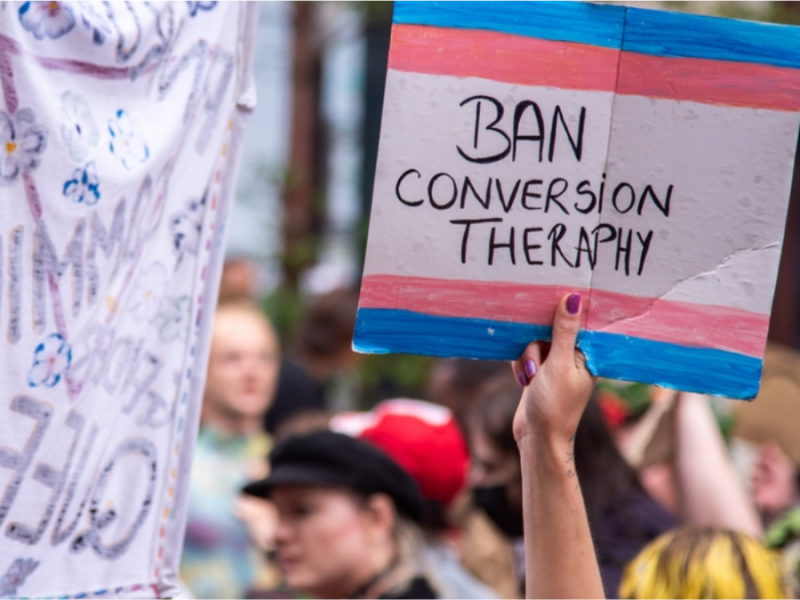
Fallout Over Supreme Court Ruling on Conversion Therapy
Despite the Supreme Court ruling, conversion therapists can still be sued for a practice the United Nations calls “torture.”

On No Kings Day, Millions Rallied to Denounce Trump and “Epstein War”
Anti-Trump protests took place in all 50 states, Puerto Rico and other US territories and in countries around the world.
