
Firefighters’ Trial by Fire as Earth Gets Hotter
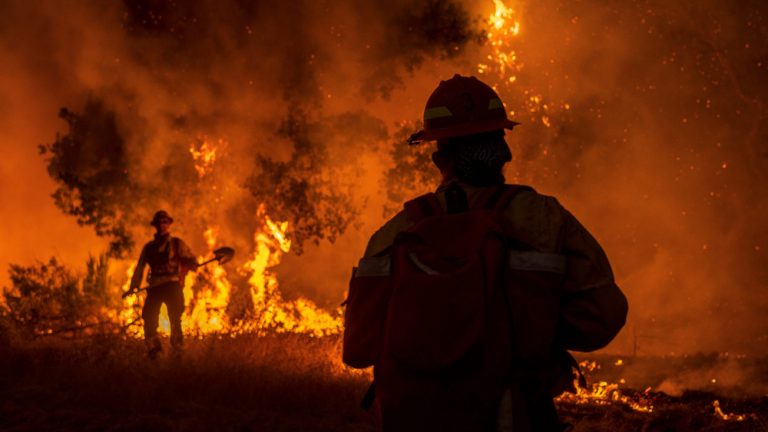
With 14 wildfires larger than 300 acres this year, California’s firefighters face mental health challenges and a shortage of therapists.

July 30, 2024
By Courtney Wise

Greetings, MindSite News Readers. With 100 wildfires blazing across the country and California’s latest fire scorching more than 585 square miles – an area bigger than the city of Los Angeles – we take a look at the mental health issues firefighters have to overcome after risking their lives to save people and property.
As firefighters struggle to contain the Park Fire, California’s largest wildfire this year, we highlight a new article on firefighter PTSD and revisit an older CalMatters series on firefighters and burnout we republished: It’s still one of the best inside looks into the mental challenges that firefighters face in an increasingly hot world. We then cross the pond to see the mental health risks that lawyers face from burnout, many of which their U.S. counterparts also struggle with.
Plus, European regulators outright reject the Alzheimer’s therapy drug, Leqembi, arguing that its benefits fail to outweigh its risks. And Crissle West, co-host of the hit entertainment podcast The Read, shares why she decided to become a therapist.
California’s firefighters face mental health challenges and a therapist shortage

If you ask any of Cal Fire’s 12,000 firefighters, paramedics and other personnel, they’ll tell you: Scores of them suffer from severe mental health issues. Post-traumatic stress disorder and suicidal thoughts are common, hallmarks of what CalMatters found a few years ago to be an epidemic among those tasked with fighting California’s ferocious and deadly wildfires.
In a recent online survey of current and former wildland firefighters nationwide, researchers found that high rates of depression, anxiety, PTSD, alcohol use and binge drinking, and thoughts of suicide at levels 2-10 higher than the general public.
Todd Nelson spent nearly 30 years battling California’s wildfires and survived. Now, the constant echo of what he witnessed makes each day in retirement a battlefield, as do the memories of those he could not save. Just retelling his firefighter nightmares to a CalMatters reporter triggered a psychogenic non-epileptic seizure. He’s suffered such seizures for years, along with complex PTSD and dissociative identity disorder. Ironically though, he seems a “lucky” one.
Nelson has a committed wife, Leticia, who half-jokingly calls herself his “service dog,” for the ways in which her life revolves around his care, and a therapist, Jennifer Alexander, who specializes in treating first responders with trauma and PTSD. Providers like Alexander are hard to find at all, let alone in the rural Nevada County where Nelson lives. “It’s an absolute specialization,” said Alexander. “There’s not near enough of us. In the larger Sacramento area, there are less than a dozen competent providers.”
The good news is that more firefighters are seeking mental health support and therapy.
“Mental health awareness has always been a touchy subject in the past because this career is a bravado, machismo tough men type thing, but if and when you need to seek help when you get that bad call, don’t hesitate to get the help that you need,” Jose Zamora Jr., a firefighter and paramedic in Arizona, told the news station KYMA.
Another firefighter, Barry Wise, told KYMA he began to hate his job after he was unable to save some victims during a fire. “Even though I know I did everything I could do, it’s still something that you struggle with,” said Wise. After he began seeing a counselor, he was able to come to terms with his grief and open up more to his family and friends. With his new perspective, he began a mental health podcast for firefighters and has a new outlook on his work.
Young lawyers risk their mental health to earn big bucks
Earlier this year, Quinn Emanuel, a global law firm with headquarters in Los Angeles, announced that its London-based, entry-level associates will earn £180,000 annually. But despite other medical, family, and fringe benefits, The Guardian asks, is it really worth it? The pay is great, but the trade-off in such a demanding environment may be sacrificing one’s mental health, said Leah Steele, a lawyer based in Bristol, England. “The culture in law is that everyone pretends they are fine,” Steele said. “There is a feeling that everyone is coping except me, and who am I to feel that I can’t cope when other colleagues have it so much worse.”
Except everyone isn’t coping. The 2023 death of Vanessa Ford, known at work as Vanessa Heap, a partner at London-based Pinsent Masons, has drawn international attention to the hazards of burnout. After weeks of 18-hour days, with no breaks, to complete the sale of Everton Football Club to a private equity firm, she was reportedly “wracked with guilt” about not being able to spend more time with her school-age sons. She left a note about her feelings of helplessness, consumed a large quantity of alcohol, and fell on a railway line, where she was hit by a train, according to one report. The coroner’s report concluded that there was “clear evidence” that she had suffered an acute mental health crisis, but there was also “insufficient evidence” that she intended to end her life. Mourning her loss, colleagues and her husband praised her character, noting Ford’s extreme commitment to her work.
LawCare, a UK-based legal mental health charity, told The Guardian that their requests for mental health support jumped 14% in 2023, with a significant number citing workplace bullying. Others requested help managing stress, anxiety and workplace harassment.
Advances in technology also discourage work-life balance, with employers and clients alike reaching out 24/7—and lawyers feeling obligated to respond. A 2021 study found that 28% of associates feel required to be available at all times, and 65% said they must check emails outside of work hours. Besides a desire to do well for clients, some lawyers say they have an obligation to contribute a minimum to their firm’s bottom line. They told The Guardian that associates at large firms are expected to bill between 1,900 and 2,200 hours a year. In the United States, that number can reach 2,400 hours a year, keeping lawyers working from 9 am until midnight six days a week. That’s unsustainable, said Richard Martin, chief executive of the Mindful Business Charter.
“We know that the legal profession suffers some of the highest levels of mental distress in society,” he wrote in an open letter following Ford’s death. “Partners in our law firms need to have an honest discussion with each other as to their values and shared purpose and to the balance they are prepared to make between the profitability of the firm and the lives of the people who work in it, including their own.”
How to manage social anxiety – and know when to get professional help
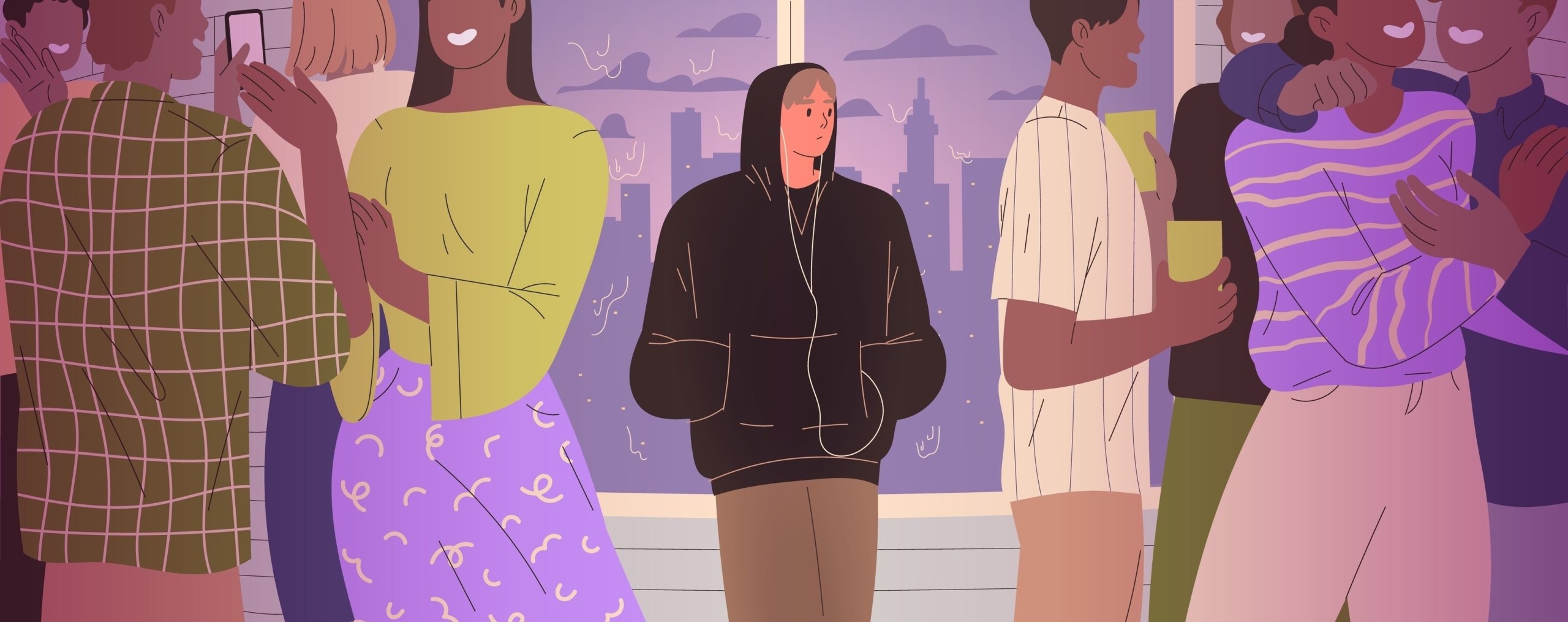
The thing about the human experience is that there are so many emotions we all share. Social anxiety is among them. It’s that feeling that comes when we know we’ve got a big performance, major interview or have to join a new team. There’s an expectation of judgment, and all we hope is to be accepted and not embarrass ourselves. A little bit of social anxiety every now and then is normal. But when intense fear and stress about pending social interactions is persistent, or even prompts you to avoid socializing altogether, it’s a problem requiring professional help, clinical psychologist Juanita Guerra told USA Today.
Milder forms of social anxiety can be calmed or resolved with several strategies, including preparation. This might look like logging into a website to see the venue and agenda for an upcoming event so that you know what to expect upon arrival. Role-playing for certain interactions can also be helpful, even for moments that seem like low stakes, including shaking hands or introducing yourself. If interviews freak you out, there are tons of practice questions online from various industries that you can use to help you prepare.
More challenging is the practice of actually putting yourself into social situations so that you have more opportunities to become comfortable with it. It’s exposure therapy, said Guerra. “Once you do it and realize that it did not kill you or result in something disastrous, you will be able to see that the fear in your head was much worse than the actual reality.”
If these options do not work, the next step is professional mental health support. Proven treatments include talk therapy, cognitive behavioral therapy, and in some cases, medication. “However you choose to deal with your social anxiety, be patient with yourself,” Guerra urges. “Progress can be slow but never underestimate the power of taking baby steps.”
In other news…
A European Medicines Agency committee rejects Alzheimer’s drug, Leqembi: The European Commission is considering whether to approve Leqembi for treatment of Alzheimer’s therapy—but a negative review from an EMA committee whose recommendation the commission typically follows indicates they are unlikely to do so. “The observed effect of Leqembi on delaying cognitive decline does not counterbalance the risk of serious side events associated with the medicine, said the EMA in a statement, citing the frequent occurrence of ARIA — a potential side effect of the drug that manifests as potentially fatal brain swelling or bleeding, STAT News reports. 21% of patients in a clinical trial who used Leqembi developed ARIA, though it was asymptomatic in most cases. Two patients in an open-label extension of the study died. Eisai and Biogen, the companies that make the drug, said they plan to appeal the determination.
Longtime entertainment podcaster Crissle West recently became a licensed therapist because getting therapy changed her life and she wanted to know how her therapist learned to help her. Listeners of West’s popular, NSFW show, The Read, which she co-hosts with Kid Fury, have heard the changes in her approach to listener letters on the show – and in the way she handles her own stress. In this special episode of Therapy for Black Girls, West shares her journey to becoming a therapist and tells why none of her listeners can ever make an appointment.
Amy Andrews is following her own advice: Fans of Metro Detroit’s local Fox station look for longtime anchor Amy Andrews – and have noticed that she’s been away from the desk. Thankfully, she’s all right and is using her platform to remind people of the importance of stepping away to care for your mental health. The Detroit Free Press shared a post that Adams made online, informing viewers that she’s on medical leave for severe depression and anxiety. Two years ago, she faced a similar challenge and stepped away from the desk, but even before that, Andrews began volunteer work with the American Foundation for Suicide Prevention’s Michigan Chapter to honor her friend and fellow Fox 2 anchor, Jessica Starr, who died by suicide in 2018.
If you or someone you know is in crisis or experiencing suicidal thoughts, call or text 988 to reach the 988 Suicide & Crisis Lifeline and connect in English or Spanish. If you’re a veteran press 1. If you’re deaf or hard of hearing dial 711, then 988. Services are free and available 24/7.
Recent MindSite News Stories
The Burnout Crisis Isn’t Over. Here’s What We Can Do About It.

Healthcare and social services workers are experiencing enormous burnout. But a closely evaluated pilot program offering therapy, wellness sessions and coaching is helping lower depression and anxiety in three-quarters of participating healthcare workers. Continue reading…
‘I Was Terrified, Actually. It Could Be Me Next’

Even before the Israeli-Hamas war broke out last October, rates of depression among Palestinian adults in the West Bank and Gaza were 10 times the global average. Among children, the rates were higher still. Continue reading…
Relief Funds Offer Help for the Mental Health of Farmers with Land Poisoned by ‘Forever Chemicals’
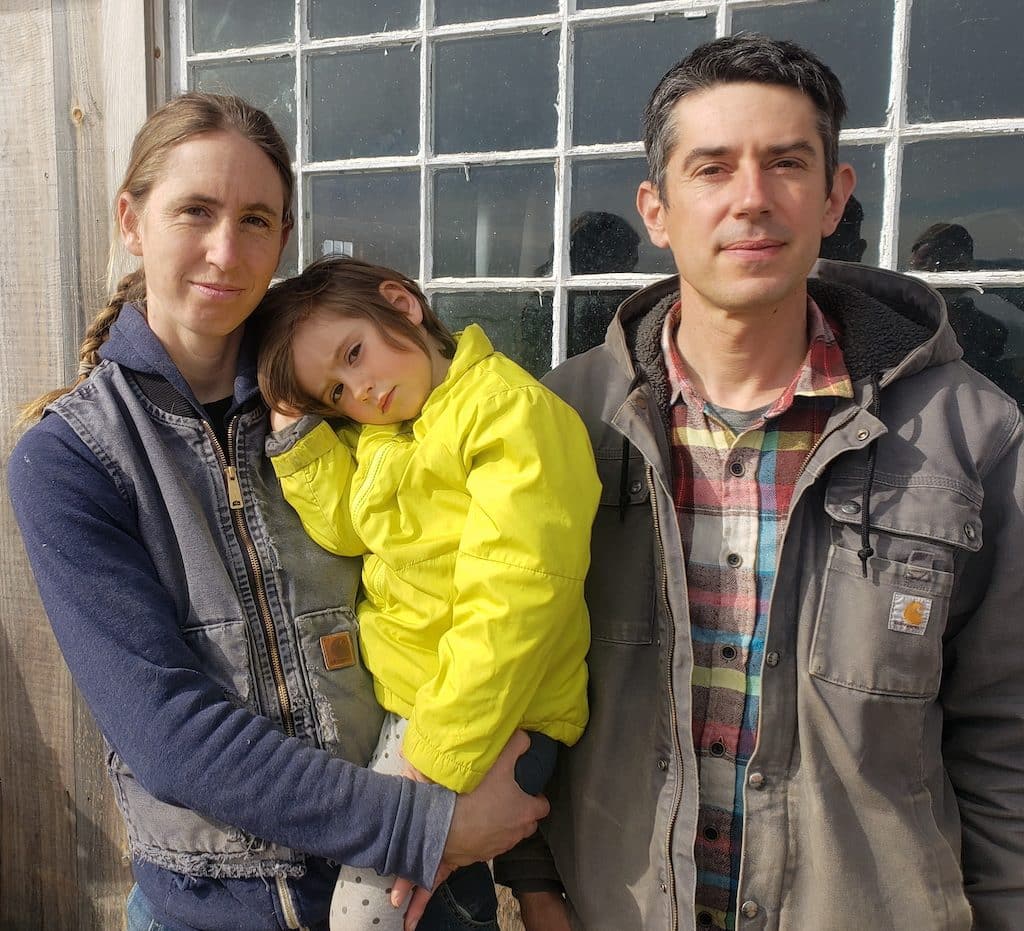
In Maine, state agencies and nonprofits are working to help farmers distressed by the discovery of PFAS – better known as “forever chemicals” – on their land.
If you’re not subscribed to MindSite News Daily, click here to sign up.
Support our mission to report on the workings and failings of the
mental health system in America and create a sense of national urgency to transform it.
For more frequent updates, follow us on Facebook, Twitter and Instagram:

The name “MindSite News” is used with the express permission of Mindsight Institute, an educational organization offering online learning and in-person workshops in the field of mental health and wellbeing. MindSite News and Mindsight Institute are separate, unaffiliated entities that are aligned in making science accessible and promoting mental health globally.
Copyright © 2021 MindSite News, All rights reserved.
You are receiving this email because you signed up at our website. Thank you for reading MindSite News.
mindsitenews.org

The name “MindSite News” is used with the express permission of Mindsight Institute, an educational organization offering online learning and in-person workshops in the field of mental health and wellbeing. MindSite News and Mindsight Institute are separate, unaffiliated entities that are aligned in making science accessible and promoting mental health globally.


Author

Related Articles

How Some Black Women Are Coping in a Time of Stunning Job Loss and Racism
An essay by Sheree Crute on finding solace and even joy in these dark times.
Helping Farmers Weather Uncertainty, Stigma and Depression
Farming is one of the industries with the highest risk for suicide. Mental health experts say financial pressures are a common reason why.
1 of 1 CA Guards Force Violent Gladiator Fights Onto Youth in Juvenile Hall
Inside a juvenile detention center in California where “gladiator fights” are part of a larger, violent guard culture.
