
Helping Farmers Weather Uncertainty, Stigma and Depression
Farming is one of the industries with the highest risk for suicide. Mental health experts say financial pressures are a common reason why.

Hello, MindSite News readers! Today we’re bringing you a story about the plight of farmers — part of a group of stories on climate change produced by Call to Mind and Minnesota Public Radio. We’ll be discussing some of these issues tomorrow – Thursday, June 11, at 12 pm PT – in a live virtual event about climate change, stress and mental health called Weathering Uncertainty with a panel of experts and our colleagues from Call to Mind.
You can register for the event here.
The story resonated deeply with me because both my parents came from farming families that lost their land in the Great Depression, when thousands of banks suffered massive losses that wiped out the life savings of millions like them.
My father was 6 at the time his parents lost their farm. He remembered walking beside a horse-drawn wagon carrying all the family’s belongings and leading the family cow with a rope as they went from farm to farm looking for work as sharecroppers. They almost starved to death the first winter because a cheating farmer refused to pay them after the season ended, he said. They survived thanks to the peas they had picked on halves, plus some cornmeal and cooking oil from a relative working at a textile plant.
“Then as now, sharecropping was a losing proposition,” he told me. He recalled how, as a small boy in Georgia harvesting crops with his family, he was sometimes so exhausted he would lie down and nap in the cool, fresh-plowed earth between rows of cotton and peas.
As a child, I spent time with some older relatives in Alabama on my mom’s side who had somehow managed to hang onto their tiny family farms. Between collecting eggs and looking for salamanders in the creek, they were magical places for a child. At school we learned that the South had gotten electricity by the 1950s, but that wasn’t true for my great-aunts and uncles in Ashland: They had no electricity or running water, but at night their oil lamps gave the rooms a lovely glow. By the time they died, years later, their children had moved to nearby cities and their small farms passed out of our family forever.
One of my beloved uncles in Alabama, who used to tell me stories while milking the cow, later shot himself. Back then, I was told it was an accident. Years later, I learned it was likely due to financial troubles and depression. Uncertainty about weather, pests, crop failures, natural disasters and the rising costs of everything from fertilizer to transportation was – and still is – hazardous to farmers’ mental health. In fact, farming has one of the highest risks of suicide of any line of work.
The story below discusses the importance of combating depression in the farming community. It is a reminder that – in addition to government support – farmers need and deserve respect and support for their mental health. –Diana Hembree
The trade war has a human cost. For farmers, it can be fatal
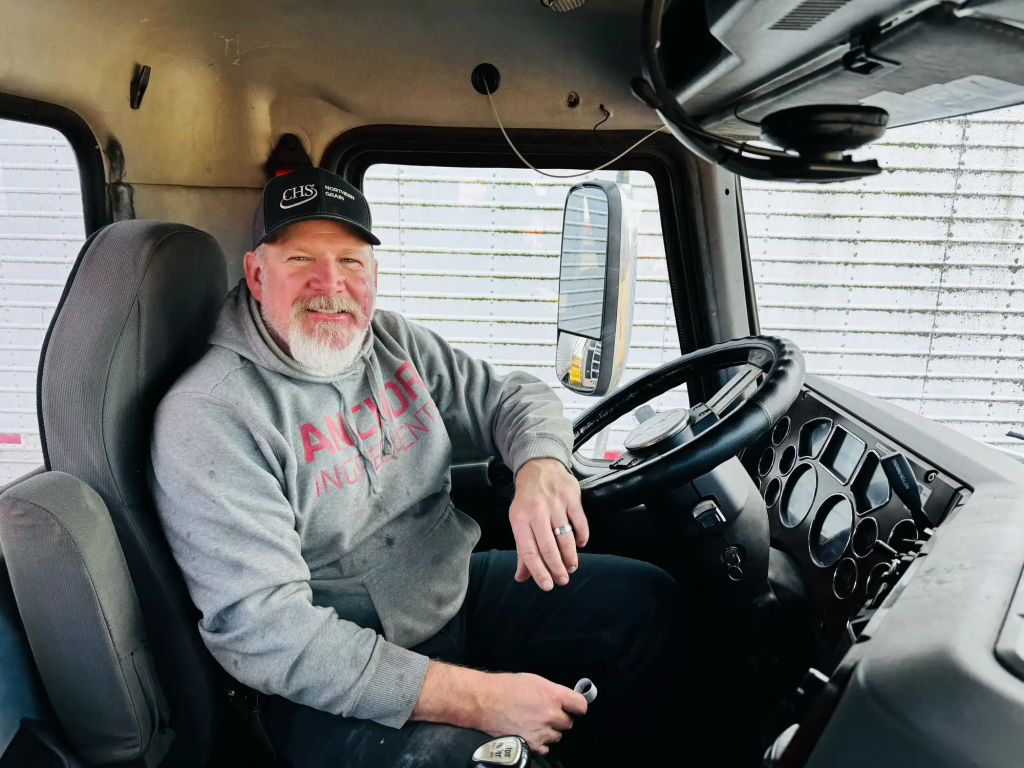
This story was originally published by MPR News. Want to dig deeper? Tune into Weathering Uncertainty, a live virtual event from the producers of Call to Mind and MindSite News on Thursday, June 11 at 12 pm PT. Register for the webinar here.
For four generations, the Garry family has farmed in Polk County, dating back to the Great Depression. They’ve weathered multiple crises, coming out on top each time, although it hasn’t been easy.
Dennis Garry, who is 85, remembers a pivotal moment from his childhood that forced him to become a full-time farmer much earlier than planned.
“I was 16 years old, and my father had a very bad heart attack,” Dennis said. “He couldn’t do the work anymore, so I took over from there.”
He’d eventually get married and start a family of his own, which included his son Dave. Dave grew up during the 80s farm crisis, a tough time for the Garry clan. He remembers that his dad tried his best to keep the family’s financial troubles a secret.
“Oh, at times you could tell. Pops would be working harder, and you’d see that he wasn’t getting as much as he should in crops or whatever,” Dave said. “You always had a sense of things going on.”
Dave, now in his 50s, faces his own challenges as the only child who stayed to take care of the family farm.
A few years ago, a business he contracted with to sell sunflower seeds went bust and nearly forced him into bankruptcy.
“If it wasn’t for Pops, I wouldn’t be farming today,” Dave said. “I didn’t have the collateral or equity to borrow enough money to continue on, and he did.”
The ag economy remains volatile today. Dave says he and his wife have both felt stressed as a result.
“She’s like, ‘ Why do you want to keep doing this?’ Well, it’s in my blood. I don’t know what else to do,” Dave said. ”I don’t want to be the generation that loses the family farm, but it’s getting tougher and tougher to hold on every year.”
When farmers need help
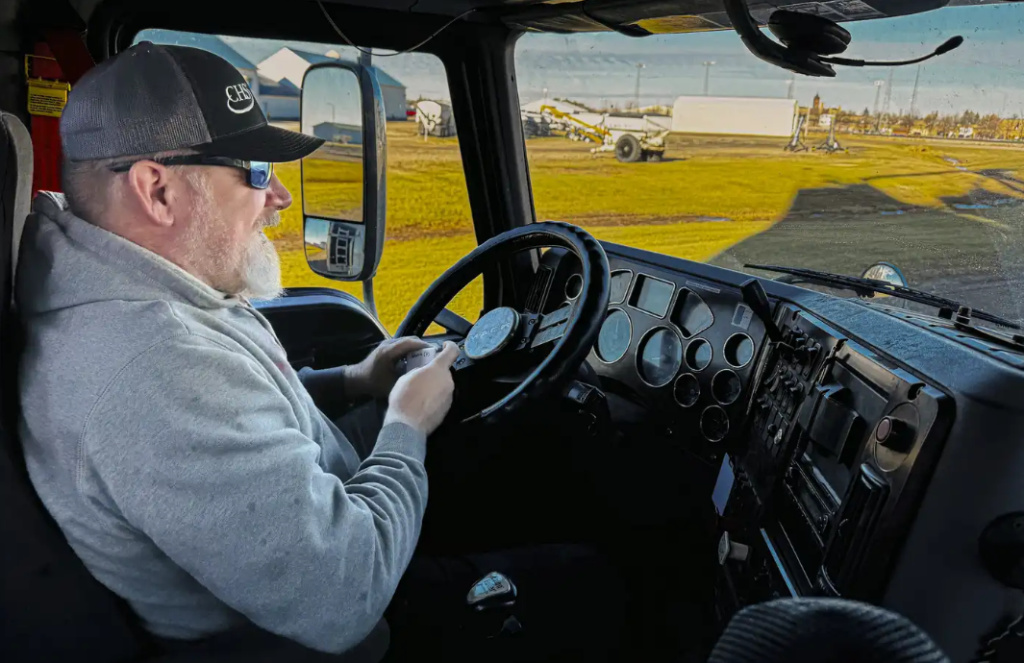
Farming is one of the industries with the highest risk for suicide. Mental health experts say financial pressures are a common reason why.
A recent survey of farmers from Purdue University found that the “percentage of producers who expected good times in the next five years was 37 percent, which is 12 percent lower than the share reported in March 2025.”
Bad crop prices from trade turmoil with China, and now, increasing operating costs stemming from the Strait of Hormuz’s closure, have continued to squeeze farmers’ margins.
Cynthie Christensen, a therapist in Rochester who has counseled farmers for 18 years, said it can be hard for farmers to come to therapy when it means talking to a stranger about their problems.
“They’re very independent, so I think they just really try to solve their own problems,” Christensen said.
Christensen grew up on an Iowa cattle farm and says she understands how farmers also can feel judged for admitting they’re struggling.
“There’s a lot of stigma attached to seeking a therapist in the rural environment,” Christensen said. “I wish I wasn’t saying that, but I think it takes a lot of courage for somebody to call me.”
So, if mental health professionals want to help more farmers, Christensen said the industry needs to rethink how it provides services.
Read the rest of the story here.
The name “MindSite News” is used with the express permission of Mindsight Institute, an educational organization offering online learning and in-person workshops in the field of mental health and wellbeing. MindSite News and Mindsight Institute are separate, unaffiliated entities that are aligned in making science accessible and promoting mental health globally.

Author

Related Articles
Cornell Assault Prompts Parents to Talk With Their Sons
Sexual assault on campuses nationwide is still a grave problem.
The Unseen Toll: Depression, Anxiety Plague Black Women a Year After Being Fired by DOGE
When Trump cut DEI programs and allowed DOGE to gut the federal workforce, hundreds of thousands of Black women lost their jobs. Many are still reeling.
Exclusive: A Maternal Policy Expert Weighs in on Lindsay Clancy Mistrial
Policy expert Joy Burkhard discusses maternal mental health policy, postpartum psychosis misunderstandings, and new CA mental health parity laws.