Reveling in Apricity
Feeling SAD? Try “reveling in apricity.” Assisted suicide may soon be available to Canadians suffering from mental illness. And cardiac psychologists know you can’t separate the body and the mind.


Thursday January 4, 2024
By Courtney Wise

Greetings, MindSite News Readers. Congrats: You’ve nearly wrapped the first work week of the year! In today’s Daily: Feeling SAD? Try “reveling in apricity” (see below). Assisted suicide may soon be available to Canadians suffering from mental illness. Cardiac psychologists know you can’t separate the body and the mind. Plus, the Hidden Brain podcast kicks off 2024 with an episode on mistakes.
Our newsletter schedule is a day off this week so I’ll be back tomorrow with our Spotlight on Kids, Youth and Family.
Feeling SAD? Try reveling in apricity
Do you find yourself stumbling through the short days of winter, feeling grumpy or depressed, as you succumb to seasonal affective disorder (SAD)? In her Substack, The Clearing, bestselling author Katherine May shares her strategies for “how to light the dark months.” She has a few great suggestions:
Get outdoors while it’s light every day, even if just for a few minutes. Enjoy moonlight, too. Indoors, use lots of warm lamps and candles. Bring splashes of color into your home. Sleep more if sleep is what you need.
My personal favorite? “Revel in apricity” – bathe in the light of the winter sun.
Medically-assisted death may soon become available to people with mental illness in Canada
On March 17, Canada is set to make physician-assisted suicide legally available to citizens with mental illness. To say the measure is controversial is an understatement. Medical Aid In Dying (MAID) has been available to Canadian adults who are terminally ill or living with physical disabilities or chronic, incurable conditions since 2016. A provision expanding the option to people with mental illness was added early last year but has yet to take effect due to concerns that it will enable people to seek death even when holistic mental health treatment might effectively manage their condition.
“I’m trying to keep my patients alive,” Ontario-based psychiatrist John Maher told the New York Times. Maher specializes in working with patients who require years of treatment to see improvement, and he worries that they might simply opt for assisted death instead. “What does it mean for the role of the physician, as healer, as bringer of hope, to be offering death?” he asked.
People like Jason French and Lisa Marr have a different view. They each have undergone years of mental health treatment, and they each made multiple suicide attempts. They insist there is no option for real relief other than death. “My goal from the start was to get better,” said French, who has severe depression. “Unfortunately, I’m resistant to all these treatments and the bottom line is, I can’t keep suffering. I can’t keep living my life like this.” Marr has bipolar disorder, depression, and excoriation disorder, which causes her to pick her skin. She told the Times she’s attempted suicide about 15 times.
If MAID does expand to mentally ill people this March, Marr and others won’t be able to immediately walk into a doctor’s office for the service. There is a 90-day waiting period for all eligible patients. Their request must also be approved by two independent physicians, one of whom must specialize in the patient’s illness or have consulted with a specialist. Some officials and the experts they consulted say it’s time. “The work has been done. We are ready,” said Mona Gupta, a psychiatrist and bioethics researcher who chairs a government-appointed expert panel.
But even the experts can’t say for certain whether – and which – treatments can improve quality of life for people who are suffering. “The research that we have shows psychiatrists are no better at identifying who’s not going to get better,” said Maher. “It’s not a short term process. When people have been sick for years, healing takes years.”
Cardiac psychologists help people with heart disease protect their mental health

Cardiac psychologists – who knew there was such a thing? Not me, but apparently they do exist and their goal is to help people navigating heart disease protect their mental health so their hearts also stay well.
Margery Quackenbush was 69 and attending the board meeting of a psychoanalytic association when she felt a stabbing pain in her chest, she told STAT News. Doctors later discovered a blocked artery and she had surgery to place a stent. Shortly therafter, she began attending a support group with Robert Allan, a psychologist who helped coin the term “cardiac psychology” in a 1996 book, Heart and Mind: The Practice of Cardiac Psychology.
The relationship between heart and behavioral health is largely overlooked, because physicians focus on mending bodies. “The technology of cardiology is locked down. People get that,” said Sam Sears, a psychologist who studies the impact of psychological interventions on heart health. “What’s not locked down is the patient experience. The human factors in all this just don’t get addressed as a standard of care.”
Integrated cardiovascular care is vital, says clinical psychologist Matthew Burg, “because the needs of the patient are more than what a physician and nurse can deliver.” And there’s abundant evidence that poor mental health can negatively impact our brains and bodies.
Fifteen years after her heart episode, Quackenbush still attends Allan’s weekly support group. In addition to emotional support, the group helps her stay physically fit, with an active lifestyle and a heart-healthy diet. That’s no surprise to Allan. Support groups “help motivate people to change,” he said. “They support healthy living through communication and validation.”
In other news…

Skip the New Year’s resolutions and gain empowerment. That’s a principle of Mental Health First Aid. Many people make resolutions every January because they feel the need to start the year off right. But how many keep them? And how many beat themselves up when they don’t?
If you’re content with where you are and want to work toward self acceptance, surround yourself with people who love you and set new goals when you’re ready.
Mistake? No, a missed take! I recently attended a session of Vocal Anonymous – in essence, a group therapy session on singing for singers. One of the instructors pointed out that most people at the session were hesitant to sing out because they feared hitting the wrong note. Her response? Rehearsal exists for a reason. Classrooms exist for a reason. Use them to practice and reframe your idea of mistakes. They are missed takes – and you have a chance to try again. In that spirit, the Hidden Brain podcast kicks off 2024 with an episode on turning mistakes into constructive failures.
Want to expand your community and strike back against the loneliness epidemic? Open yourself up to friendships with people of different ages, Annie Midori Atherton writes in The Atlantic. “The age stratification of American culture doesn’t just keep potential friends apart and contribute to workplace discrimination,” she notes, “it also confines people to a narrow worldview. A society that mingles more freely across generations would be less lonely and less ageist. It would also free people to pursue life as they choose – whether that means knitting with a friend four decades their senior or closing down the pub into their 80s.”
If you or someone you know is in crisis or experiencing suicidal thoughts, call or text 988 to reach the 988 Suicide & Crisis Lifeline and connect in English or Spanish. If you’re a veteran press 1. If you’re deaf or hard of hearing dial 711, then 988. Services are free and available 24/7.
Recent MindSite News Stories
As ‘Succession’ Heads To the Emmys, Our Writer Looks Back at a Master Class in Dysfunctional Family Dynamics
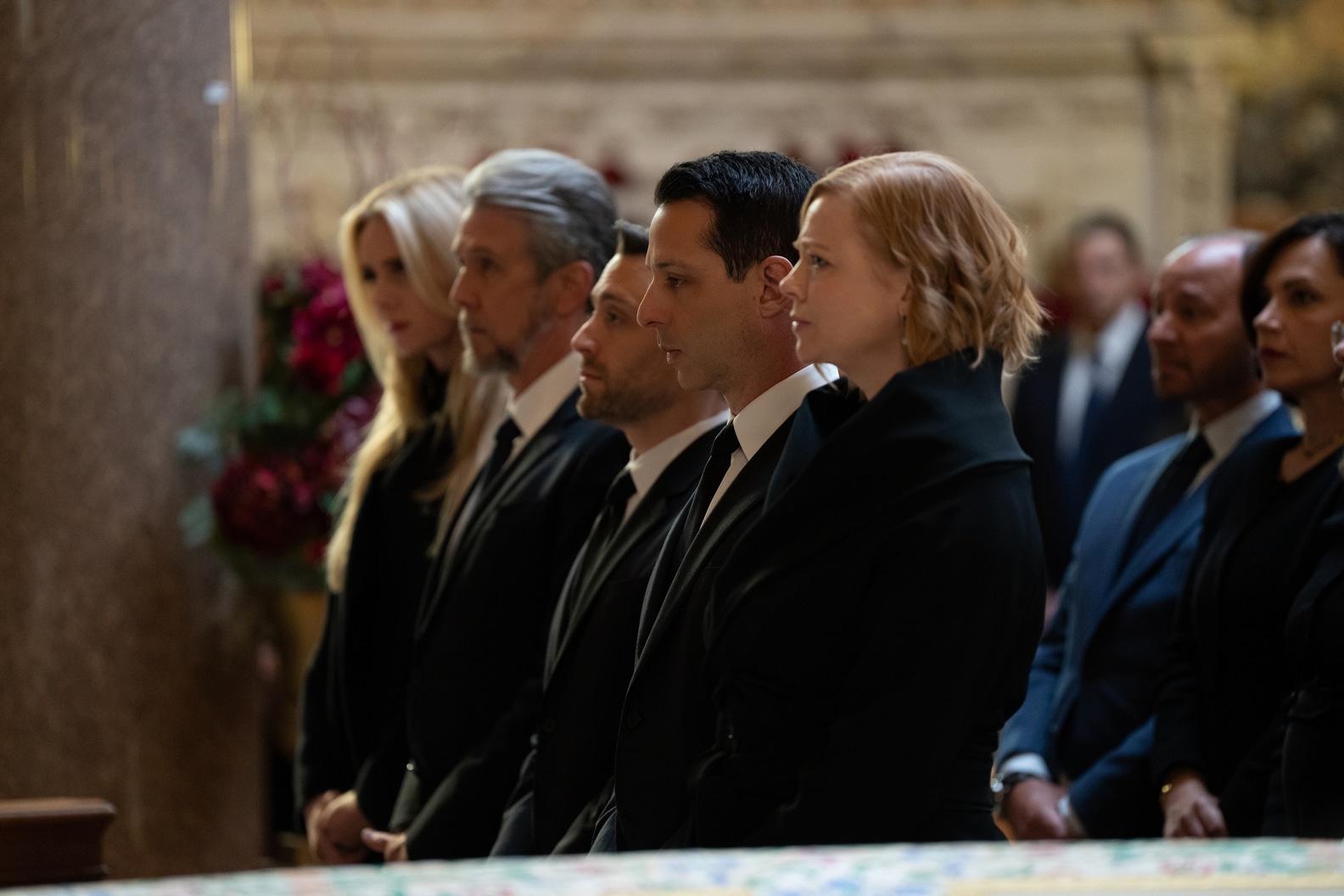
The popular HBO series, which ended in 2023, examined intergenerational trauma along with the worst kind of horrible bosses and conniving colleagues.
Building Hope in Philadelphia Neighborhoods Under Siege

Teachers and staff at YouthBuild Philly Charter School provide love, support and a safe haven for students in an area with high gun violence.
Latino Next-Gens Face Off With Parents in Cultural Divide Over Mental Health

The Latino community, which faces continual stress and anxiety from racism and immigration issues, is one of the groups least served by mental health professionals.
If you’re not subscribed to MindSite News Daily, click here to sign up.
Support our mission to report on the workings and failings of the
mental health system in America and create a sense of national urgency to transform it.
For more frequent updates, follow us on Facebook, Twitter and Instagram:

The name “MindSite News” is used with the express permission of Mindsight Institute, an educational organization offering online learning and in-person workshops in the field of mental health and wellbeing. MindSite News and Mindsight Institute are separate, unaffiliated entities that are aligned in making science accessible and promoting mental health globally.
Copyright © 2021 MindSite News, All rights reserved.
You are receiving this email because you signed up at our website. Thank you for reading MindSite News.
mindsitenews.org
The name “MindSite News” is used with the express permission of Mindsight Institute, an educational organization offering online learning and in-person workshops in the field of mental health and wellbeing. MindSite News and Mindsight Institute are separate, unaffiliated entities that are aligned in making science accessible and promoting mental health globally.


Author

Related Articles
How Neighbors Are Saving Lives Through Overdose Reversal
How many community people transition from life savers to ‘super savers.’

More Teens Are Turning to AI for Emotional Support
For many youth, chatbots are their primary source of guidance.

Sober Living Gyms and Hangouts Aid Addiction Recovery
This month, we look at abuse of opioid settlement funds, another state investing in the Norway prison model and a trans woman’s story about surviving solitary confinement