
More Teens Are Turning to AI for Emotional Support
For many youth, chatbots are their primary source of guidance.

Greetings, MindSite News readers.
Today’s Daily centers on some troubling news: more and more teens and youth choosing chatbots over humans for emotional support, and the gap in mental health care for families navigating the loss of an infant.
But first, retired OB-GYN Dr. Art Ulene wants you to know that you’re uniquely equipped to meet the challenges of your life. Having climbed Mount Kilimanjaro for the second time earlier this month, reaching the summit on his 90th birthday, he told USA Today that not even age is an excuse to give up. “People ask, ‘Well, why are you doing this?’ And, for me, mountains have become a metaphor for my life. Mountains have peaks and valleys. So does life. Ups and downs,” he said. “If you’re not willing to climb the mountain, then you are missing so much of your potential.”
Teens increasingly depend on AI for emotional support

A new report from Hopelab and Harvard’s Center for Digital Thriving identifies a trend that many parents have already sensed but may not fully understand: Adolescents and young adults are increasingly turning to AI chatbots like OpenAI’s ChatGPT, Anthropic’s Claude and Google’s Gemini for emotional support, instead of the people in their lives. The report’s findings are based on one-on-one interviews and focus groups conducted this past spring with 30 young people ages 14 to 22, a group researchers intentionally diversified by oversampling LGBTQ+ participants and/or people of color. Not all respondents turned to AI for support — some flatly rejected the idea — but for a growing number, chatbots have become a primary source of guidance.
Researchers urge parents and guardians to first respond with curiosity, not alarm. Their goal, they write, is to give “caring adults a clearer understanding of how this use is already unfolding, what young people feel these tools provide that humans may not, and where the support falls short.” AI use among teens is already common, and for a meaningful subset, it’s deeply personal. National survey data cited in the report shows that 64% of U.S. teens use AI chatbots, with 12% engaging them for emotional support. That usage is especially high among young people who are lonely, struggling with their mental health or facing barriers to traditional care.
When researchers asked why youths turned to AI, answers spanned six broad reasons:
- Not wanting to burden friends or family already carrying enough of their own stress (“you don’t want to trauma dump all over your friends, obviously,” as one young woman put it).
- Safety from judgment and the sense that what they share can’t be used against them later.
- Chatbot’s responses feel relatable and understanding, even if they don’t come from a real person — one young woman said that a chatbot’s replies felt like a response from someone that “went through the exact same thing I went through.”
- Round-the-clock availability.
- A feeling of neutrality from the chatbot as a sounding board.
- Detailed, practical advice that some participants felt was otherwise inaccessible from parents who, in one teen’s words, offered little more than “a quick Band-Aid.”
But those same qualities also worry researchers. According to The Rithm Project, nearly half of teens who use AI for emotional support already turn to it more often than they turn to people in their lives — and some described growing impatient with actual friends as a result. “I started to get really irritated when my friends wouldn’t respond fast,” one young adult admitted, after growing used to a chatbot’s immediate responses.
Most concerning, researchers found that AI chatbots are more likely than humans to affirm unethical, harmful or even illegal behavior, reducing users’ willingness to take responsibility or apologize after a real conflict. One teen named the pattern herself, noting that AI “agrees with whatever you want to hear” and asked, pointedly, “why would you go talk to somebody who might disagree with you?”
There’s a privacy risk, too: many young people assume their chatbot conversations are private and consequence-free, unaware that AI behavior can be unpredictable and that the companies behind these tools have their own incentives and uses for the data they collect. And because most teens who use AI this way don’t tell anyone, not even their parents, researchers warn that the shift is largely unfolding outside adult supervision, at precisely the age when kids need the most guidance on how to navigate these experiences.
“We can’t design safer, more supportive futures for young people without designing them alongside young people,” said Emma Bruehlman-Senecal, research principal at Hopelab. “What we heard from this research should shape not just how AI is built, but how families, schools, and mental health systems show up for young people.”
Dr. Emily Weinstein, co-founder and co-director of the Center for Digital Thriving, added that the research shouldn’t be interpreted to suggest that young people are rejecting the people in their lives. “The young people we spoke with aren’t rejecting human connection. Many of them are protecting it or looking for it in places it hasn’t yet shown up,” she said. “The work ahead is to make sure the adults, organizations, and systems around them are ready to meet that need. And that all starts with listening to young people.”
For Black families in California, grief after infant loss often comes with nowhere to turn
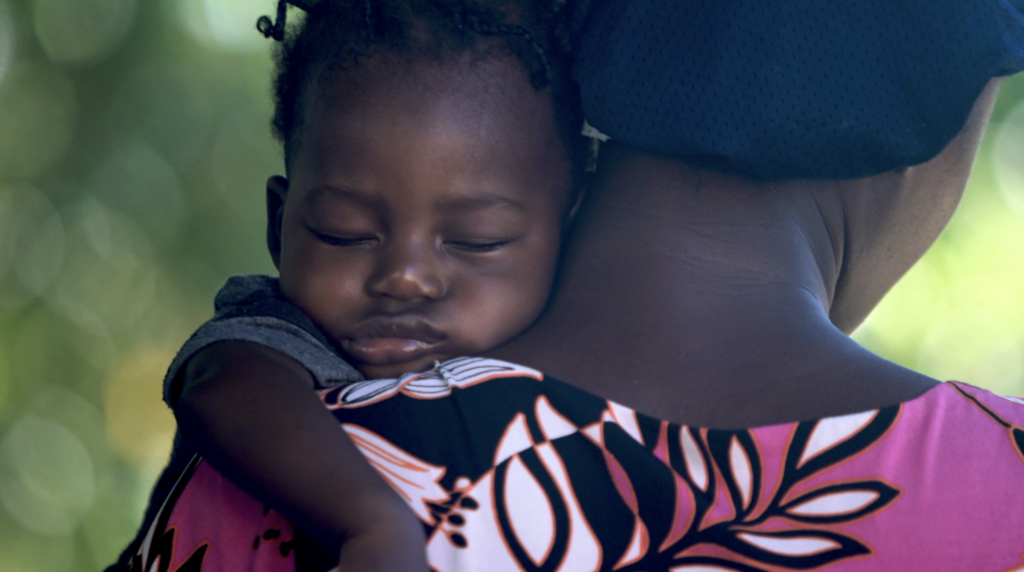
Five weeks after she was born, Kairis Aurae Hill died before ever sleeping in the nursery her parents lovingly prepared for her in their Bakersfield, California home. One year later, the room looks practically the same; a white crib remains nestled in the corner, just across from a dresser filled with tiny clothes. “We thought we’d be bringing her home to this room,” said Kairis’ mother, Kimisha Gill. Against their deepest wishes, Gill and her husband, André Hill Sr., joined the oversized set of Black parents across the United States grieving the loss of their baby.
They are far from alone; the statistics are outrageous. Black parents in this country experience twice the rate of infant loss faced by their white counterparts. In California, the outcomes are even worse, Observer Group reports, with Black babies dying at nearly triple the rate of white babies. In Kern County, where the Hills live, poverty enables the disparity to persist, with Black infants dying at three times the rate there as well.
Worse yet, grieving parents are left with little support. California’s major maternal health programs are built for pregnancy, new parenthood and prevention of Sudden Unidentified Infant Death rather than bereavement, leaving a gap in care. Medi-Cal does cover broad doula services when ordered via physician referral, including doula care that specializes in pregnancy and infant loss. But doula care isn’t a replacement for grief counseling or clinical care for those grieving and overwhelmed after the death of their baby.
Studies find that parents who experience stillbirth and infant loss have elevated risk for depression, anxiety, post-traumatic stress disorder and complicated grief, leading mental health professionals to call for more long-term support rather than short-term crisis intervention. It’s why Trinity Brown, a Black resident of Bakersfield, established the Noel Alexandria Foundation.
Named in honor of her daughter, who died when Brown was 36 weeks and five days pregnant, the foundation focuses solely on perinatal loss and maternal mental health. Besides funeral assistance and their signature Comfort Kits, which include a teddy bear the size and weight of a newborn, NAF provides bereavement training to medical health professionals. They also offer families a range of services, including Silent Cry, a parent support group, community behavioral health services and academic scholarships for students affected by pregnancy or infant loss. It helps families connect with others who understand their unique grief.
“Leaving the hospital without your baby…you still feel alone and isolated when other people haven’t gone through that experience,” Brown said. “You will hear people say, ‘You can always have another baby. Everything happens for a reason. At least you know you can get pregnant.’” But those words just deepen the wound, she said. NAF allows families to join at any time during their grief journey, and to stay as long as they need. “We don’t tell the family that they’re no longer able to attend because they’ve done six weeks,” Brown said. “We’re here with open arms all the time. We’re a family. We are here to support each other. It’s a lifelong journey.”
Since its founding in 2018, NAF has served more than 6,500 bereaved families in Kern County and reached additional families through hospitals and birthing facilities across California, Texas, Alabama and Wisconsin. Brown intends to expand the foundation’s work further nationwide so that more grieving families can find community.
Back in Bakersfield, Gill and her husband carry their grief together with their joy. They have another daughter now, Kienna Aurielle Hill, to fill their family home with coos and cries. “It’s a bittersweet feeling,” said Hill. “On one hand, we still miss our angel baby, Kairis, dearly, while simultaneously being thankful for her sister Kienna’s arrival. We’re just doing our best to stay present and embrace the joy that comes with our new addition to the family, and still honor the feelings of grief when they arise.”
The name “MindSite News” is used with the express permission of Mindsight Institute, an educational organization offering online learning and in-person workshops in the field of mental health and wellbeing. MindSite News and Mindsight Institute are separate, unaffiliated entities that are aligned in making science accessible and promoting mental health globally.

Author

Related Articles

Trump’s Student Loan Changes Cause Anxiety and Panic
Borrowers face rising payments under the Trump administration’s student loan changes. Plus: teaching emotional literacy to teen girls, and why the new CDC youth mental health report is facing criticism.

Rumors of Kids Quitting College En Masse Are Exaggerated
This week: what the data says about Gen Z students quitting college, and why postpartum mental illness is more than depression.

Why Is Georgia Blocking Recovery Homes for Substance Abuse?
Georgia towns are using zoning loopholes to shut recovery homes down, even as addiction and mental illness surge statewide.